I am grateful to Mediaweek for their interest in the impact of a possible sale of Are Media for local small business newsagents.
Magazine health check: What the industry has to say about the current state of mags
byPosted on

With Are Media for sale, Mediaweek spoke with Mark Fletcher, Jackie Frank, and Nate Vella to consider the health of the local magazine industry.
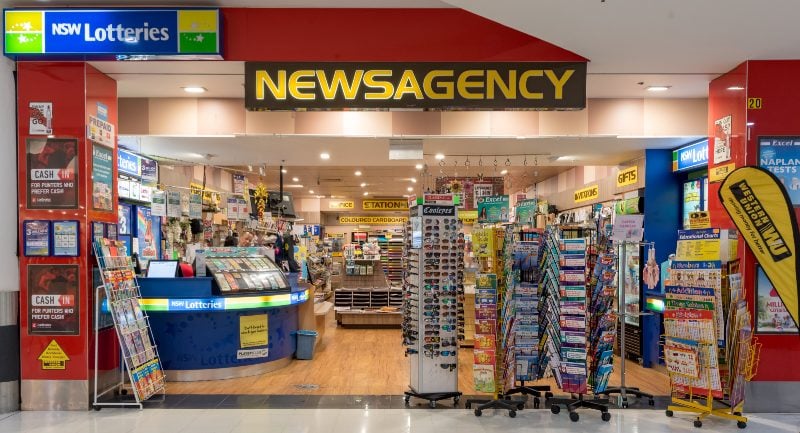
Fifteen years ago, Mark Fletcher predicted that magazine publishing in Australia would face such a steep and sustained decline that newsagents would need to diversify quickly or risk shutting down altogether.
Fletcher, who is the CEO of newsagency marketing group NewsXpress and has been at the coal face of what he describes as print’s “slow and steady decline”, was anything but surprised when Are Media officially went up for sale last week.
With prospective buyers now kicking the tires on Are Media, Mediaweek took the opportunity to consider the health of the local magazine industry. Along with Fletcher, Mediaweek also spoke with Bench Media Head of Strategy Nate Vella and the vocal Jackie Frank, founding editor of marie claire Australia.
Unit sales continue downward trend
According to Fletcher, overall magazine sales in newsagents have dropped significantly in 2025.
“What we’re seeing so far in 2025 is that we’re sitting at around a 10% unit sale decline across the board. A lot of that decline is occurring in high-volume weeklies and monthlies.”
While many mass-market titles are losing ground, he says niche and puzzle magazines are proving more resilient.
“Special interest titles, such as Victorian Railroad Lines or Model Railway, are selling well… crossword year-on-year decline is sitting at around 2% or 3%.”
TikTok and portfolio overlap among key pressures
Fletcher sees digital platforms—particularly TikTok—as a major challenge to general-interest and entertainment-led print brands.
“Because Are Media is producing mass titles, they’re facing the challenge because that’s where you’ve got the biggest competition from TikTok and elsewhere.”
He also highlights a misalignment between Are Media’s focus and the categories showing the most growth:
“Special interest titles generally account for 20 to 25% of all magazines sold… women’s weeklies… account for about 8% now. 20 years ago, they would have accounted for easily 35 to 40%.”
He argues Are’s current magazine portfolio is too crowded: “Part of the challenge for the portfolio is how do they rationalise the portfolio rather than creating so much content that’s similar across different mastheads?”
“Right now, in terms of weeklies, you’ve got New Idea, Woman’s Day and Who, and for our marketplace, that’s probably at least one too many titles.”
Format stability and retail strategy shifts
Fletcher contrasts the volatility of lifestyle magazines with the reliability of formats like puzzles and established brands.
“You’ve got a tentpole product like Women’s Weekly, which is fantastic… but it’s so much cover-dependent.”
Meanwhile, puzzle publications attract steady buyers: “If people enjoy doing crosswords daily, they’ll likely continue… They can use their backpack, handbag, or whatever, and just do it whenever they’re on the train, tram, or road.”
Newsagents are adapting by shifting store layouts and diversifying offerings.
“Previously, a typical news agency would have prime real estate taken up by magazines and newspapers. Now that prime real estate is for gifts and homewares.”
“Magazine customers are still satisfied, and the news agency can diversify… Intelligent news agents have adapted their businesses… less competent news agents have ended up closing as a result.”
Reps from our channel are not always heard on matters like this. Mediaweek listened.