My approach to early returning of magazines is not changing because Network Services is closing down. I am not engaging in a mass cull of Network titles prior to the end of the month. I am not acting out of ear or malice. No, it is business as usual.
The approach being taken by Network to handling returns as the business winds down is as it has said from then outset. The people running this side of the business have long term newsagent relationships at heart. I am sure of that.
If you really return magazines you could authorised have sold based on your historic sales data then you are only hurting yourself.
I urge all newsagents to serve their businesses well as to serve the magazine publishers they hope to represent into the future.
Several newsagency businesses have been hit by ransomware in the last week, malware loaded onto the computers blocking future access until a ransom is paid. Without appropriate precautions, the operational and financial implications of recovery for a business can be considerable.
To protect your business, ensure you have regular reliable off-site backups in a secure firewall protected location for easy recovery.
Do not click on any link in an email you do not trust or were not expecting.
Never click on a link in an email relating to a prize offer.
Never click on a link in an email purporting to be from a bank or the tax office.
Read emails before clicking on anything. If you are unsure, do not click.
It is vital you protect your business by managing emails in a thoughtful way.
One business last week was shut down for more than a day because of poor protection. Once they got back up and running they had lost days of data because of inadequate backups. Trying to sell a business with such a data hole could be expensive.
Warnings like this will be ignored by too many people.
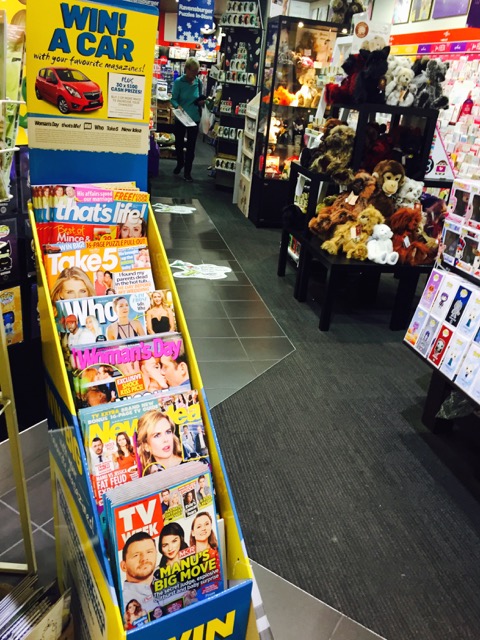
We have noticed a nice uptick in sales of weekly magazines from this display unit placed on the lease line facing into the shopping mall. While we are also promoting the MPA competition deep in the magazine department, it is this front of store pitch that works best for us. being in a shopping centre opposite a Coles it is good to have something they do not have supporting weekly magazines. We have moved the unit a couple of times to help it not get missed.
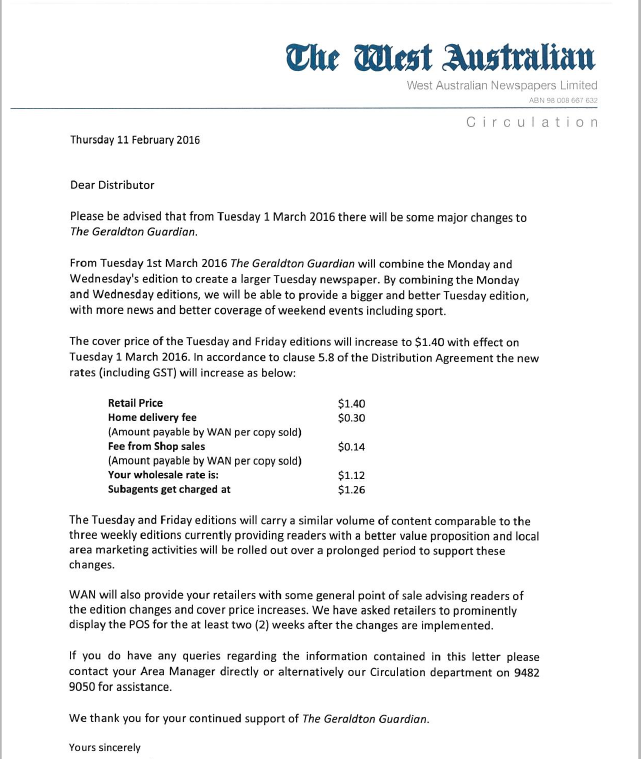
The Monday and Wednesday editions of the Geraldton Guardian are ceasing with a larger Tuesday edition to take their place. West Australian Newspapers has made the announcement to newsagents. handling the attendant data changes will be straightforward for retail newsagents and a bit time consuming for distribution newsagents. I expect we see more changes like this soon in response to circulation challenges.
They have also provided a list of ‘Transition’ issues – title issues that will be dispatched by Network Services but will be returned to Gordon and Gotch. There are 150 issues on this list.
Newsagents will need to ensure their software is appropriately setup to handle the transition.
It was a thrill to spend two days at the New York Toy Fair this week. Serving a US domestic market of $22B, you can imagine the scale of this event.
Covering 415,00 square feet and covering a broad range of segments, this trade show was extraordinary for its size, the range of products covered, the nature of supplier engagement and the fresh ideas revealed.
While clearly aimed at national buyers there were plenty of small business representatives there. There was a strong Australian contingent too. I ran into a couple of other Aussie retailers as well as several wholesales representatives.
Looking back on my photos on the flight home, I took more at this trade show than any of the six international trade shows I have attended already this year. I have been inspired on product range, visual merchandising, marketing and innovation. The inspirations will play out in what I do over the next couple of months.
While I expect the Toy Fair in Melbourne next month to be good, it cannot compare to the New York experience because of the sheer size difference between our markets. There are plenty of opportunities from New York I know we will see in Australia in the coming months. The race is on.
London is a newspaper town. Many daily newspapers are readily available in shops from newsagents to supermarkets. You can’t miss them. Newspapers are readily available for free in the afternoon on street corners. Newspapers are everywhere in London – not only in shops but you can see plenty being read on trains, in the streets and elsewhere.
It is hard to find newspapers now in New York. While there are newsstand kiosks in some streets, most will have one or two titles and even then they are tucked away. The newspaper space is taken by convenience likes like umbrellas, drinks and candy. Newspapers appear to be nowhere in New York – despite plenty of foot traffic on the streets.
While I have been to both cities plenty of times in recent years it was only when I visited each in the last week that the difference became obvious to me. I wonder why it is so? Is it a reflection of the place of newspapers in the respective countries? Is it as a result of publisher commitment? I don’t know. What I do know is that in London I get the feeling that newspapers are relevant while in New York I get the feeling that the medium is dead.
I am grateful to have been at the Spring Fair in Birmingham last week. This is the biggest card / gift / homewares fair for the UK – over twelve massive halls, some with their own side hall extensions. Our largest fair in Australia is tiny by comparison.
In the greeting card space alone there were between 40 and 50 companies with creative product on display.
The halls are arranged by product category, making comparison easy and intensifying the competition.
The Fair was insightful in that I could see what some of our local distributors do not pick up for the Australian marketplace. It also introduced me to suppliers not represented in Australia and, of particular interest, product lines not currently available in Australia that could work well.
I especially appreciated spotting trends that I can expect to hit Australia in the second half of this year and into next.
Being able to connect with brands we already sell was terrific as it builds relationships not only for my but for the Australian distributors.
While I appreciate it is challenging for retailers to travel overseas for shows like this, I encourage people to consider it sad the insights are truly worthwhile for immediate business and into the future thanks to stronger business relationships.
While I have a bag of brochures and a stack of business cards to work through I have already connected several suppliers with local Australian distributors. I was not at the fair to source product to direct import but rather facilitate relationships that make it easier for me to buy what I like from Australian distributors.
I am excited for the opportunities I have seen as they will help continue to evolve the retail model that used to be called a newsagency.
From what I could tell, the attendees were mainly specialty gift, homewares, toy and garden retailers. I did not notice any newsagent attendees.
It is frustrating seeing people not take the top newspaper on display – and usually make the display more untidy as a result. Internally you scream it’s the same paper but you smile and let it pass. I wonder what happened to them that they do not trust the top paper. Is it they missed a catalogue or a tv guide? Or is it they think the top paper has been used?
Last week in London the hotel had a stack of The Independent newspaper on a table outside the lift on each floor. It is a neat paper, no inserts. The stack on my floor was clearly fresh product, no curled corners, no dirty marks. These copies looked fresh, untouched. Yet I saw two people move the top copy and take the next one down without giving it a thought. It was as if this was the normal thing to do.
The launch yesterday of the DC Comics graphic novel collection gives us an excellent opportunity to sell more than a magazine thanks to an excellent range of licenced product from several suppliers in this space.
Some newsagents will leverage this more easily than others because of long term pop culture supplier relationships offering easier access to excellent complimentary product.
I like the male skew of the range and the visual aesthetic as it is very current.
The only risk for newsagents is runaway success and a supply pipeline that is unable to keep up. This is not the fault of Gotch as they are the carrier for the publisher who makes all the supply decisions.
Gotch yesterday sent newsagents Zomlings, a small collectible toy. While the product is interesting, for it to be successful it needs to come to us through a toy wholesaler who understands what is necessary to create a successful collector base. Using the magazine distribution model does not do this. Take a look at Amazon UK to get an understanding of the broader Zomlings range.
The GP we are receiving is inadequate. Average toy GP is 50%. Using Gotch disadvantages us as it denies us best practice GP.
The only reason I can see Gotch being used to scale out this product is because it cost the supplier less than the usual route to market or because they could not engage an existing toy distributor.
As I have written previously, the best opportunity for specialty magazine publishers, those publishing special interest titles, titles outside the top 20 sellers, is to focus solely on the newsagency channel. We are their best hope to stop the decline and, hopefully, grow sales.
Newsagents are specialty retailers. We understand catering to niche interests. To many of us, magazines are not a commodity.
Give us control over the titles we carry.
Give us control over the volume we receive.
Eliminate the requirement to return unsold stock.
Compensate us so we can make money from magazines.
Respect us.
Quit supermarkets and other mass retail channels.
Together we can arrest the decline of many magazine titles.
If you are publisher looking at this and saying sales are declining in newsagencies why would I do this – because what you pay today does not cover newsagent operating costs, why should newsagents support titles for less than a living wage?
Adult colouring related products were massive in 2015. Indeed, the trend started in late 2014, spiked by mid-2015 and spiked again later in the year.
Commencing in the UK, it next hit Australia. The second spike came as a result of US suppliers and retailers joining the party, late.
Looking back on the phenomenon, there are useful learnings I’d like to explore.
Being an early adopter is important. Those who got into this space before the magazine publishers made the most money as it was high margin and high volume.
Focusing on margin for a short life space product matters. Connecting with suppliers who are early-adopters was key as you could sell above RRP because pf product scarcity.
Suppliers can wreck the party. While I didn’t mind some of the magazine publisher offerings, many were rubbish and not appreciated by customers.
Late to enter competitors must wreck the party for their benefit. Publishers bringing out titles today, for low margin, ruined adult colouring as did supermarkets entering the space with crappy product.
Understanding the whole opportunity helps you make the most. This is where overseas insights proved to be crucially in helping the most from early adoption.
Have an exit strategy. Knowing when to pull back so you were not left with too much stock was essential.
Traditional newsagency suppliers are likely to be late. And they were. Some ripped us off taking space and labour for product that came to market too late. They did not care about us.
Be ready for extensions. We are seeing this now. Adult colouring and general colouring: greeting cards, wallpaper, place mats, socks, party mats, t-shirts, door decals, jigsaw puzzles and light fittings. I have seen all these and more being pitched at gift and toy trade shows over the last two weeks. Many will come to Australia.
While adult colouring will be a hobby for some for years to come, sales today are not what they were last year. Given this, many of are such that plenty of retailers are getting out, as the return they are achieving is insufficient.
Some suppliers are not done. We already have calendars in this space. Watch out for greeting cards, jigsaws, specialty journals and wrapping paper. While some of the additions could be valuable because of goos profit, others with a lower than 50% gross profit will be of dubious value.
For high interest trends we need to get in early, execute well, get out ahead of the curve and manage the amount of low margin product compared to fair margin product. We do this by being proactive. If an Australian supplier tells you about a trend you have not heard of before, it is likely you would be introducing the product after the trend has started fading overseas.
Footnote: I have seen plenty of adult colouring greeting cards, wrap and jigsaws at international trade shows over the last few weeks.
Further it my post about employee theft last week, contact your newsagency software company and ask them to do a theft check of your business. Give them your data and nothing else. See what they come up with.
The most interesting of these I did was years ago when the wife of a partner was found to be the thief, feeding a poker machine gambling problem.
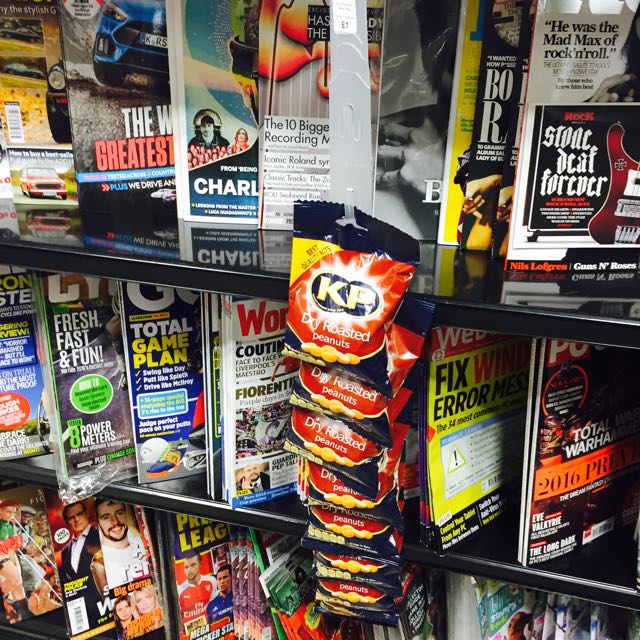
Leverage more margin dollars from magazine destination shoppers with thoughtful placement of snacks – candy, jerky, chips etc – with magazines.
This example is from a UK newsagent – smart clip strip placement to make the pitch. This is easy and newsagents have access to plenty of products today.
The products you choose to place need to target your shoppers. Jerky might one in one location while premium candy might be ideal elsewhere.
Personalise your communication and help people get to know you. In your emails to customers, include your name. When commenting on your business Facebook page, use your name. Let people know who you are as you are a competitive advantage for your business.
I mention this today as I saw an email last week from a newsagent to a customer where the newsagent did not include their name on the email – there was no idea who wrote the email. Impersonal and unprofessional.
I have been helping a newsagent left in the dark by the people they purchased their newsagency from. They were taught the basics of operating the shop and given a one-page given a list of suppliers as a hand over document. This was their first business purchase and did not know what they did not know until it was too late.
When I sold a retail business in 2014, I provided a four page 1,200 word document with all details necessary for the new owners:
Supplier details including web address, contact name, number and email and purchase history for that supplier.
Admin access details for the business Facebook page.
Admin access to other social media for the business.
Account numbers for all service providers.
Contact details, TFN and other details for all employees.
Schedule information covering rubbish collection and other regularly scheduled services and activities.
Details of how to access full sales history for the business.
Notes on suppliers we did not deal with and why.
What was especially useful (I am told) was the information on suppliers. The list given to the newsagent I am helping has no contact details, no history of trading. This is problematic as the new owners wiped the computer system of all data except for basic stock information.
Having the package of information available helped sell the business as it made the business seem easier to run for someone with no experience. It also gave me peace of mind knowing I have provided a good hand over.
Vendors have an ethical responsibility to hand their business over in a thorough and professional way. Those of us in the channel for the long term ought to push harder for this to be resolved.
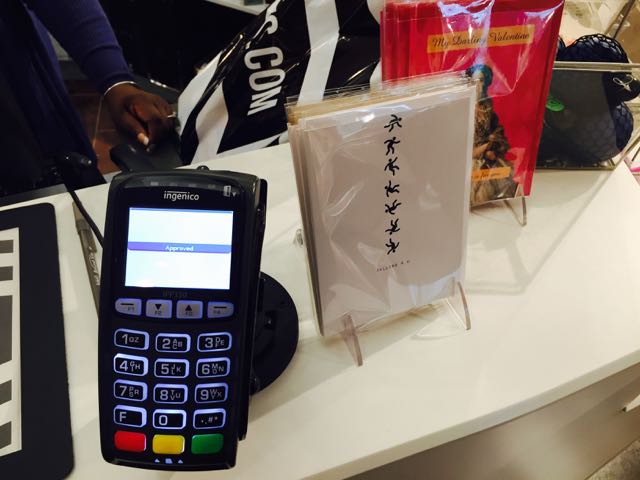
Here is the smartest Valentine’s Day pitch I have seen, an impulse pitch at the sales counter of a very funky gift shop in New York. The card selection is the key – non-traditional. This is the way to get people buying Valentine’s Cards who would not usually do so – with funky product placed ideally for impulse purchase.
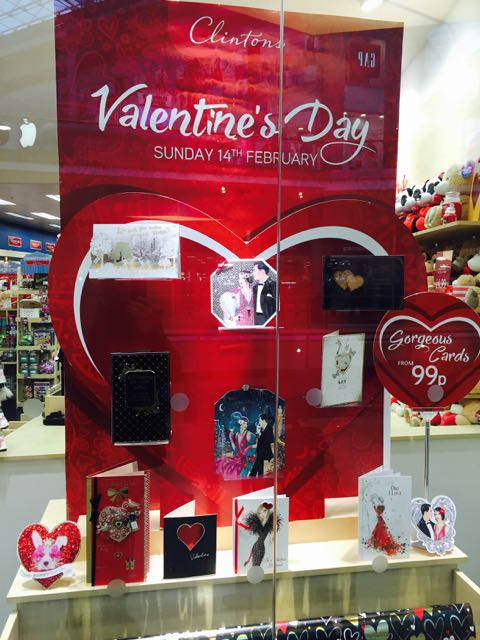
While the Clintons shops appeal to an oder demo, they are bright and season-focussed. Here is the main window Valentine’s Day pitch – making the cards the feature. This store is in the Bullring centre in Birmingham.
UK newspaper The Independent is to close. While I am not in the UK often, The Independent is one of the newspapers I like to read is its reporting is reporting rather than the silliness and sermons from News International titles and the nonsense in some other UK newspapers.
Without sales, a print newspaper cannot sustain its advertising rates. In Australia, I think News and Fairfax are staring at each other, waiting for someone to blink.
GNS has issued a statement to newsagents about challenges around the supply of Collins financial year diaries. I share it here with the permission of the business and because on an ANF forum there has been comment on this issue that does not reflect the facts as they are known. Here is the GNS statement.
GNS have been promoting and supporting the Collins Debden range within the Newsagents channel for over 20 years.
Under new management, Collins Debden presented GNS with price increases for Financial Year Diaries for FY16/17 that were well above and beyond what we considered as justifiable, based on cost comparisons for the same products last year.
GNS held several discussions with Collins Debden in the interests of our shared customers, being Newsagents, to minimise the impact of the proposed increases. This did not eventuate and as a result GNS has decided not to range the Collins Debden Financial Year diaries for FY16/17. The price increase impact was both unsubstantiated and well over market influencers such as the devaluation of the A$.
GNS has sourced alternative product to offer our customers at competitive prices, high quality, healthy retail margins and sales offers to Newsagents that will minimise risk in this product category. GNS will be issuing these offers shortly.
GNS is an easy head to kick for newsagents. Plenty of head kicking is ill-informed in my view. The company is more transparent and accessible than ever. I have found that asking a question elicits a frank answer on any issue. This is better in my view than ignorant bashing as if it is a fun sport.
The reports indicating theft used in the ACA report are from the newsagency software from Tower Systems, the software company I own. When theft was suspected the COO of the company undertook a free theft check at the request of the owner of the newsagency and provided the evidence subsequently used by the police.
The ACA story frustrates me for a new reasons.
Long term employee theft is avoidable. The newsagent and the majority in Australia have access to evidence of possible employee fraud. Detecting it is easy yet most newsagents think it will not happen to them – not matter how many times they are told it could easily happen to them. Had this newsagent followed the advice provided to them by Tower through contistent communication on theft they could have detected it after the week it began.
Did $36,000 stole over two years really kill the business? I struggle to accept this as it is not a large sum of money. Further, for it to be the reason of the loss of the business the loss of the cash should have been discovered sooner. I’d more readily accept that the experience caused the owner to get out as the psychological impact of this type of theft is considerable.
The report says the employee did not receive a pay rise for most of the time they worked in the business. If this is true it is illegal. The ACA report did not adequately address this as in doing so left questions about the quality of the reporting.
In all my work with newsagents: individually helping businesses, through this blog, with Tower Systems and with newsXpress, theft is a common topic. Theft in a newsagency by an employee ought to surprise no newsagent I am in contact with. yet it does … because too many newsagents choose to ignore it. This is why I wonder: Who is to blame for long-term employee theft in a newsagency?
In this case from ACA, I think the newsagent is to blame for the extent of the theft. Their management approach allowed the theft to go on far longer than should have been the case.
We, each of us, need to own our own situation. This is why the newsagent in the story ought to say they are to blame for how long this went on and the cost to the business. Taking such a stand would be more helpful to small business retailers seeing the story.
One of the worst cases of employee theft I saw was in a newsagency where an employee stole more than $250,000 in case over almost three years. The theft went on almost a year longer than it should as the newsagent said my advice they were being stolen from could not be right as it could only be one person and they would never steal from the business. Almost a year later they realised they were stupid to make such an assumption and ignore the evidence they were provided.
Yes, this stuff frustrates me because all the advice, all the training, all the warnings are too often ignored … and then when it happens, the their is the only person responsible.
newsXpress offers its member newsagents training and resources for confronting employee theft. I hope this is something all the newsagency marketing groups do. One of the theft mitigation resources from newsXpress is documented advice accompanying a store Theft Policy document.
As a courtesy to all newsagents, click here to download a copy of the latest version of the newsXpress theft advice that was first published years ago. This advice is part of a set of more than 100 business management advice documents provided to newsXpress members as part of their management assistance and training. I mention this to reflect that the approach to employee theft is part of a whole of business approach.
A few months ago I tried to take a different approach to warn about theft. In the studio at Tower Systems I and the video production team created this video. I share it here in the hope it makes a point: