AFR covers editorial content on page 1
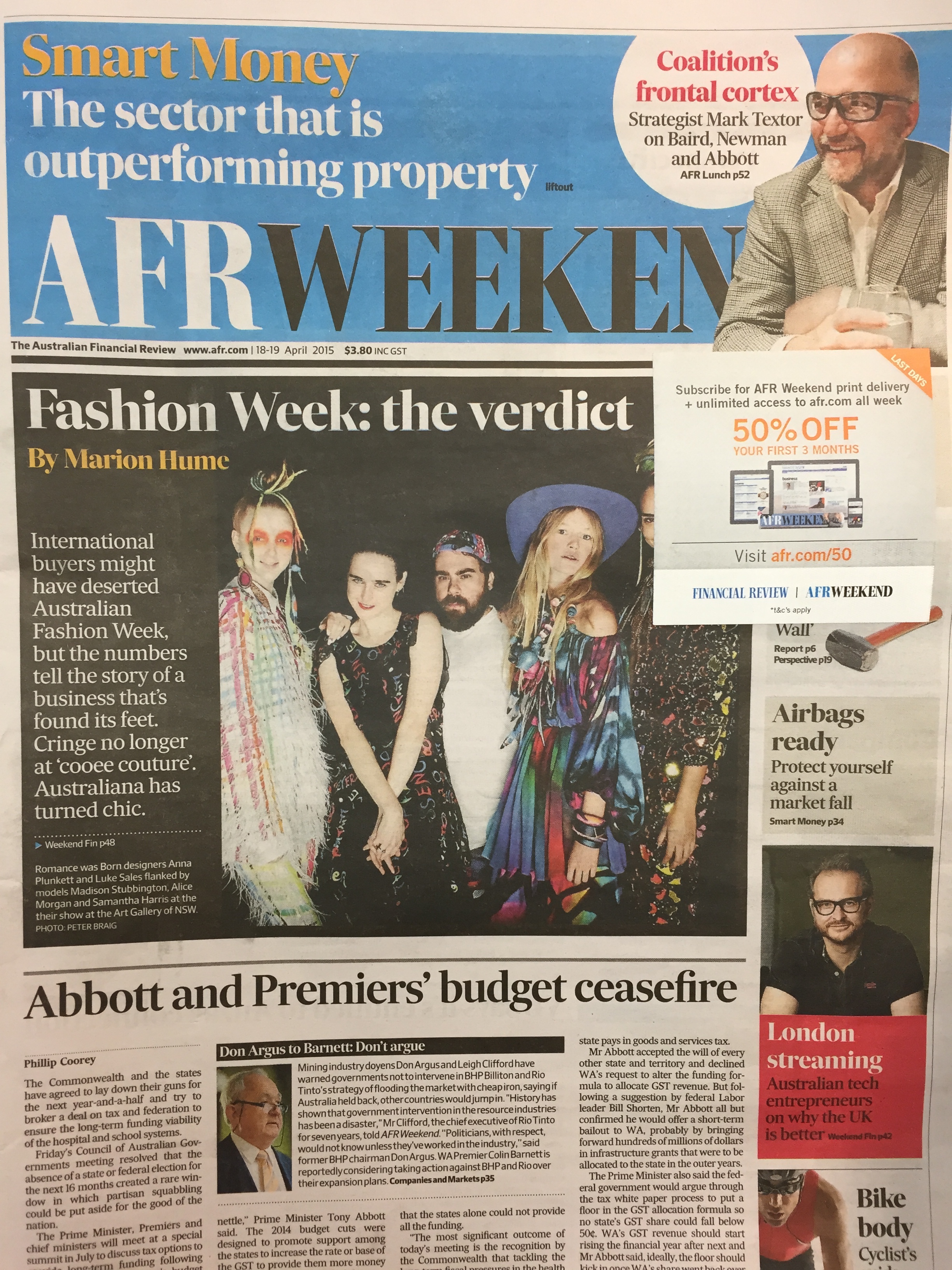 Sad to see Fairfax plans a post-it type note ad over editorial content on the front page of AFR WEEKEND this weekend. Either their stories and promotions of stories inside are good enough to be upon page one or they are not. Including them and then covering them makes no sense.
WH Smith increases profits on flat sales
UK newsagent group WH Smith has reported increased profits off of flat sales reports the Daily Mail. City AM has a similar report. Do your own search and you’ll see most reporters writing the same ‘assessment’. The group does not appear to be as adventurous in its UK newsagency businesses and some newsagents in Australia are in theirs.
WH Smith in Australia is really five businesses in one group and I am told they plan to keep the five businesses under their current names. However, I am also told they expect to significantly expand rooftops to provide outlets for their wholesale product lines.
What will be most interesting to watch in Australia is how card company John sands manages their apparent strong relationship with WH Smith while maintaining their strong relationship with the nextra group.
Beautiful old Linotype press
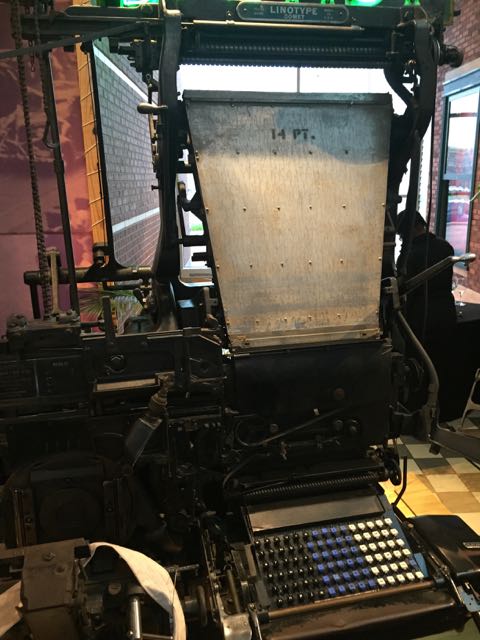 It was a thrill to see a Linotype Comet press on show at a museum in Kansas City last week. The Comet was first introduced in the 1950s according to Metal Type. It is a beautiful piece of engineering and an piece of newspaper history around the world and in Australia. In researching this I found a terrific post connecting this model back to the Sydney Morning Herald.
Now that’s a magazine cover
 Who doesn’t hate the IRS (the ATO in Australia) or have had frustration with them? This cover will have excellent cut through for those of that mind. A guy next to me pointed it out: finally, a magazine cover that makes sense, he said. He bought the magazine for the first time ever.
Digital offer with print issue of People magazine
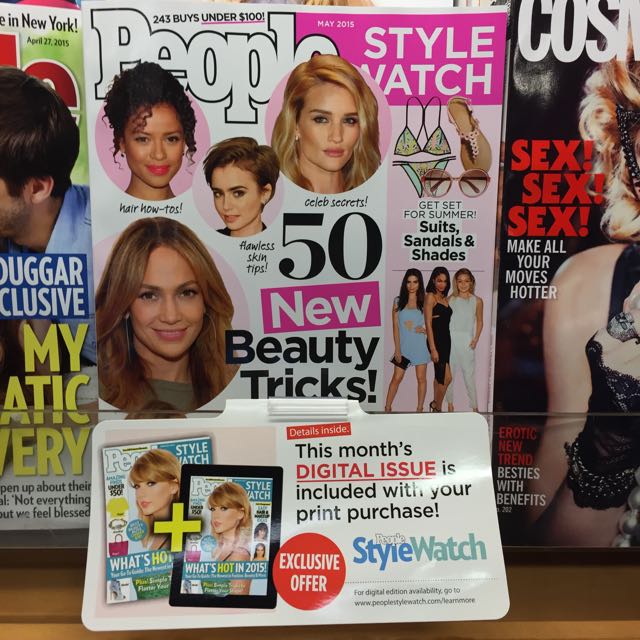 There is a digital offer on the shelf in retail with the latest issue of People Style Watch. You get access to a digital issue if you purchase the print issue. This marketing drives sampling of the digital experience. It is a key component of the education strategy of a number of magazine publishers.
Small format magazine floor display unit
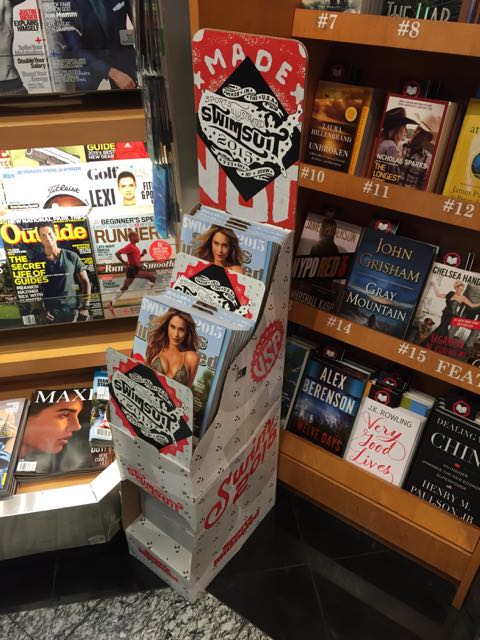 I like the single purpose floor display unit supplied to retailers for holding and promoting the 2015 swimsuit edition of Sports Illustrated magazine. This stand has lower profile than the floor stands we see in Australia. Italy has a terrific shelf at the bottom for holding bulk stock – this stabilises the stand and provides excellent storage space … very clever.
Kansas City Star covers the masthead
 It has been a while since I noticed an Australian newspaper sticking an ad over the top of its own masthead. I saw it Thursday in Kansas City. The folks at respected The Kansas City Star sold a post-it type ad stuck over the masthead of the newspaper. Sad.
I miss a national weekly magazine
 While I understand our market size does not support it, I do miss the weekly news magazine in Australia. While The Saturday Paper plays in this space and is a favourite publication of mine, I likes the broader range of articles in The Bulletin. I have found myself enjoying the selection of weekly titles available in the US.
Loading the card pockets
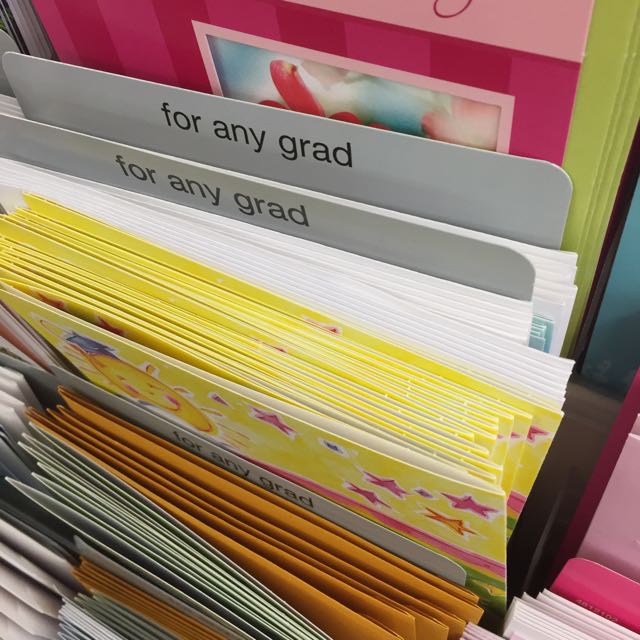 In a discount variety store yesterday I was surprised at the number of cards shoved into a pocket. There were 11 of one design and 8 of another design – in the one pocket. Australian newsagents would be angry if this happened. In this shop most pockets were heavily loaded. It could be part of the supply model to discount variety.
The $20 pack of lead pencils
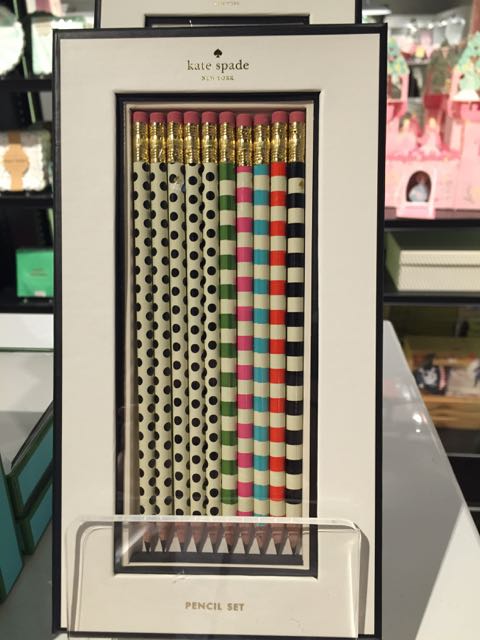 New York based fashion designer Kate Spare has released this pack of pencils which I have seen in several different shops in the US. $2.00 a pencil is a new benchmark by Australian standards.
Priced at $20 it shows how adding fashion to an everyday item can change the shopper and the price you can achieve.
A week of newsagency management benchmarks: #5 basket size/depth
Each day this week I am sharing a newsagency management benchmark which I hope you find useful. The benchmarks are not rigid, use them as a guide. I have developed these and other benchmarks over years of working with a variety of newsagency businesses in many different situations.
Management benchmark #5: basket size/depth
By basket I mean the items purchased in a single transaction. By size I mean total purchase value. By depth I mean the number of items in a basket.
These benchmark measures will vary by type of newsagency. For example, in a shopping mall business basket size will be deeper. In a newsagency selling lotteries and including this in their basket calculations, the depth will be higher. The key is to measure yours, which your newsagency software should do without effort for you and to make it a goal to improve on this regularly.
The two measures I include here are overall averages for the channel as we are collectively performing at the moment. For ease of comparison, the numbers do not include lottery product sales.
- Basket size: $9.94
- Basket depth: 1.63 items
You can increase basket size and depth by offering impulse purchase opportunities at high traffic locations and not just at the counter, through out of store offers to drive traffic, with over the counter offers and through some loyalty programs – to list just some of the options.
The reality is, with the changes impacting retail generally and our channel in particular, our benchmark aspirations for the two measures noted above need to be 20% ahead of these numbers. Achieve this and you are in a better position to weather the changes playing around us.
I hope this series helps newsagents look at their businesses differently and to ask questions about their performance in the context of best practice in our channel. Newsagencies with the brightest future are those where data is respected and benchmarks are set to be achieved and passed.
Now that’s how to quit stock in retail
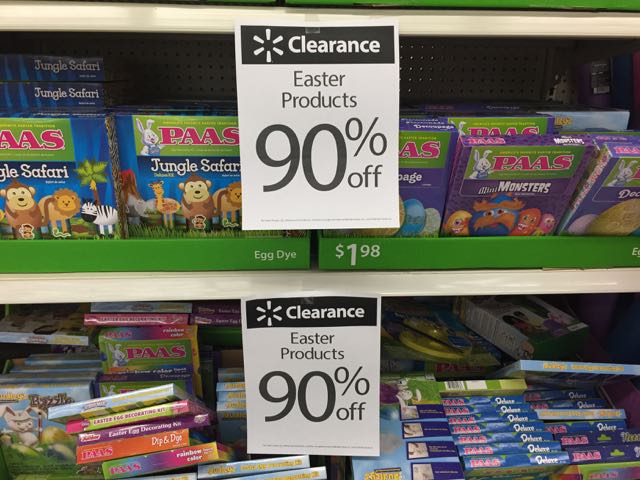 At a Walmart yesterday I saw easter stock at 90% off. Too many newsagents I see discount at 25% to move stock, some at 50%. 90% shows you are serious and want to move stock quickly. Their approach is a lesson to any retailer focused on quitting stock.
Engaging with the Brony movement
 In October 2013 I wrote about the Brony movement and how it was an opportunity in Australia. A report in The Age at the time, as I wrote, was the first I had heard of it. Since them I have kept an eye out and noticed more being written about guys who buy My Little Pony products for themselves as well as with their own kids. Interest has grown overseas as well as in Australia.
A couple of days ago, in a store selling plush here in the US, I noticed a poster promoting the Midwest Brony Fest – a festival for Bronies – male collectors of My Little Pony. That there is a festival speaks to the interest among these niche collectors.
Terrific Scotch tape product
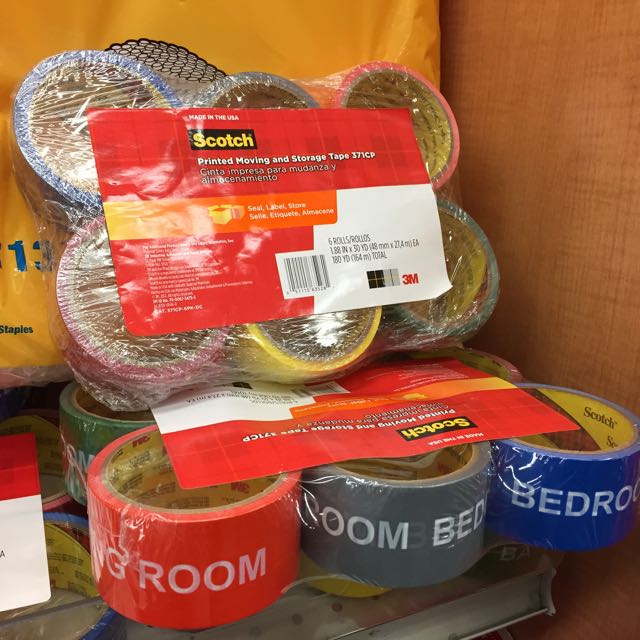 I love this Scotch tape home moving pack available in the US in stationery outlets. In the pack is six rolls of packing tape labelled for different rooms in the home – making identification nice and easy. I can’t recall seeing anything like this in Australia.
Saturday Paper coming to Perth
From May 16, The Saturday Paper is to be available from Perth newsagents.
A week of newsagency management benchmarks: #4 stock turns
Each day this week I am sharing a newsagency management benchmark which I hope you find useful. The benchmarks are not rigid, use them as a guide to determine what is right for your business. I have developed these benchmarks over years of working with a variety of newsagencies in many different situations.
Management benchmark #4: stock turns
Stock turn is a measure of the numbers of times you turn the value of your average stock holding in a product category in a year. For example, if your average holding is $10,000 and your sales are $100,000 with the cost of those good being $50,000, the stock turn would be 5.
The formula is cost of goods sold for the category for the year divided by average stock holding value.
A common mistake is dividing retail sales value by average stock holding value. This would give you an inaccurate figure.
Here are benchmarks by key categories I suggest newsagents aspire to achieve:
- Stationery: 7.0.
- Cards: 3.5.
- Gifts: 7.0.
- Toys: 6.0.
- Plush 7.0.
In your newsagency software you ought to be able to report on stock turn for a set period or on a moving annual total basis. Seek this out and run the report to see your figure for yourselves.
If your turn is low you can correct this by increasing sales without increasing stock or reducing stock without reducing sales. either approach takes planning and commitment.
Key to achieving a healthy stock turn is for your to control your inventory investment.
The Queensland Government has an excellent page on stock turn. I encourage you to check it out.
I hope this series helps newsagents look at their businesses differently and to ask questions about their performance in the context of best practice in our channel. Newsagencies with the brightest future are those where data is respected and benchmarks are set to be achieved and passed.
Cool use of projection bring excitement to retail
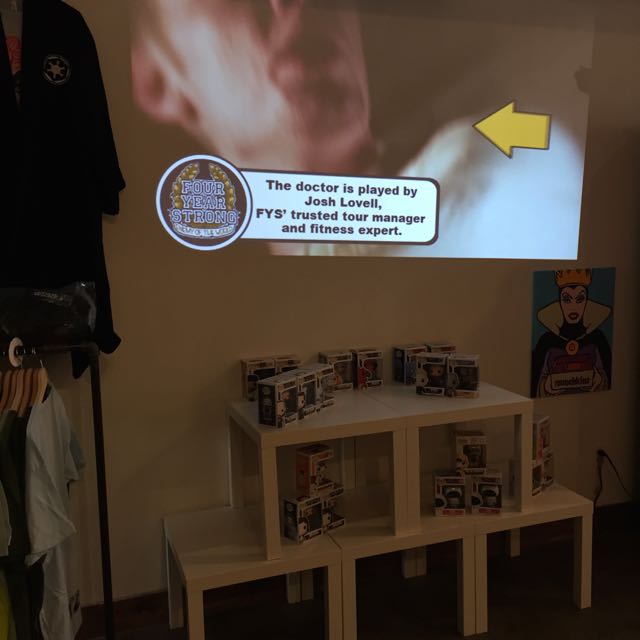 In a retail store a couple of days ago where they projected onto walls to create a funky vibe. With projector prices at an all time low, wall projections an easy way bring a ver different vibe to a shop … and then change it at the push of a button. I could see this working in some of the larger regional stores out there where there is space to play with.
Dealing with oversupply of Modern Wedding magazine
 I wrote to Modern Wedding magazine three days ago about the unjustified oversupply of Modern Wedding Cakes & Styling to a newsagent as I wrote about here. I am yet to receive a response. As with the publisher of Scoop and my similar complaint to them about the same issue, I have not received a response. if the publishers did care about their newsagent retailers they would respond to these issues in a timely manner. Their actions are commercially harming our businesses.
A week of newsagency management benchmarks: #3 revenue per square metre
Each day this week I am sharing a newsagency management benchmark which I hope you find useful. The benchmarks are not rigid, use them as a guide. I have developed them over years of working with a variety of newsagencies in many different situations.
Management benchmark #3: revenue per square metre
This is a tough benchmark to write about as it differs based on your location and your personal rent situation. For each of consideration I have come up with a range of situations and my suggested revenue per square metre per year benchmark.
But first I need to explain the measurement. In calculating revenue per square metre, revenue is all product sales only as this is a pure retail calculation. As for space, I am only interested in your retail space – not your back room and not from the top of your counter back to the wall.
Here are my suggested situational breakdowns:
- City shopping centre: $8,500.00.
- City high street: $5,500.00.
- Regional/rural shopping centre: $6,750.00
- Regional/rural high street: $4,500.00
These figures could be very different in your situation because of rent and other local factors. Use them as a broad guide only. The most important takeaway I’d like you to have from this post is to measure your number from last year, compare it to today – see how you are travelling. If you’re up, good. If you are down – fix it.
I hope this series helps newsagents look at their businesses differently and to ask questions about their performance in the context of best practice in our channel. Newsagencies with the brightest future are those where data is respected and benchmarks are set to be achieved and passed.
Promoting magazines for the season
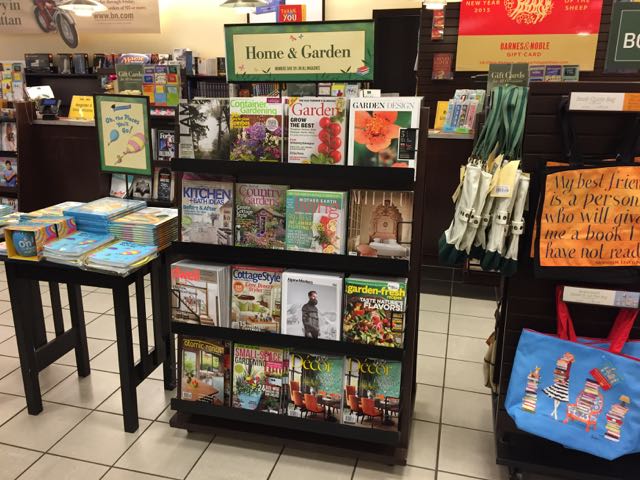 This photo shows how bookseller Barnes & Noble is promoting home and garden magazines – timed with Spring here in the US. I’ve seen it in each Barnes & Noble store I’ve been into. I am sure we could drive magazine sales with multi title promotions like this.
Candy with magazines because it works
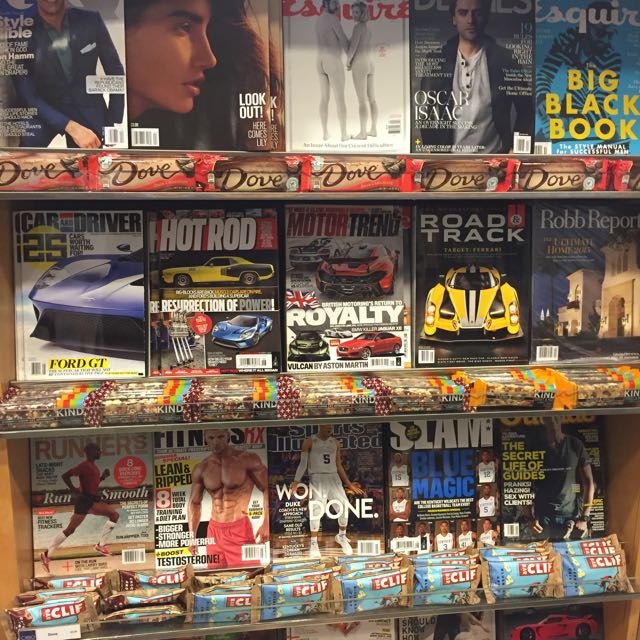 I have written about this several times over the years and write about it again today as it works. Check out the placement of candy with magazines. I see this in plenty of magazine retailers here in the US . It could work in some, not all but some, newsagency situations in Australia. Appropriate product choice is vital to success.
How customers abuse our newsagencies
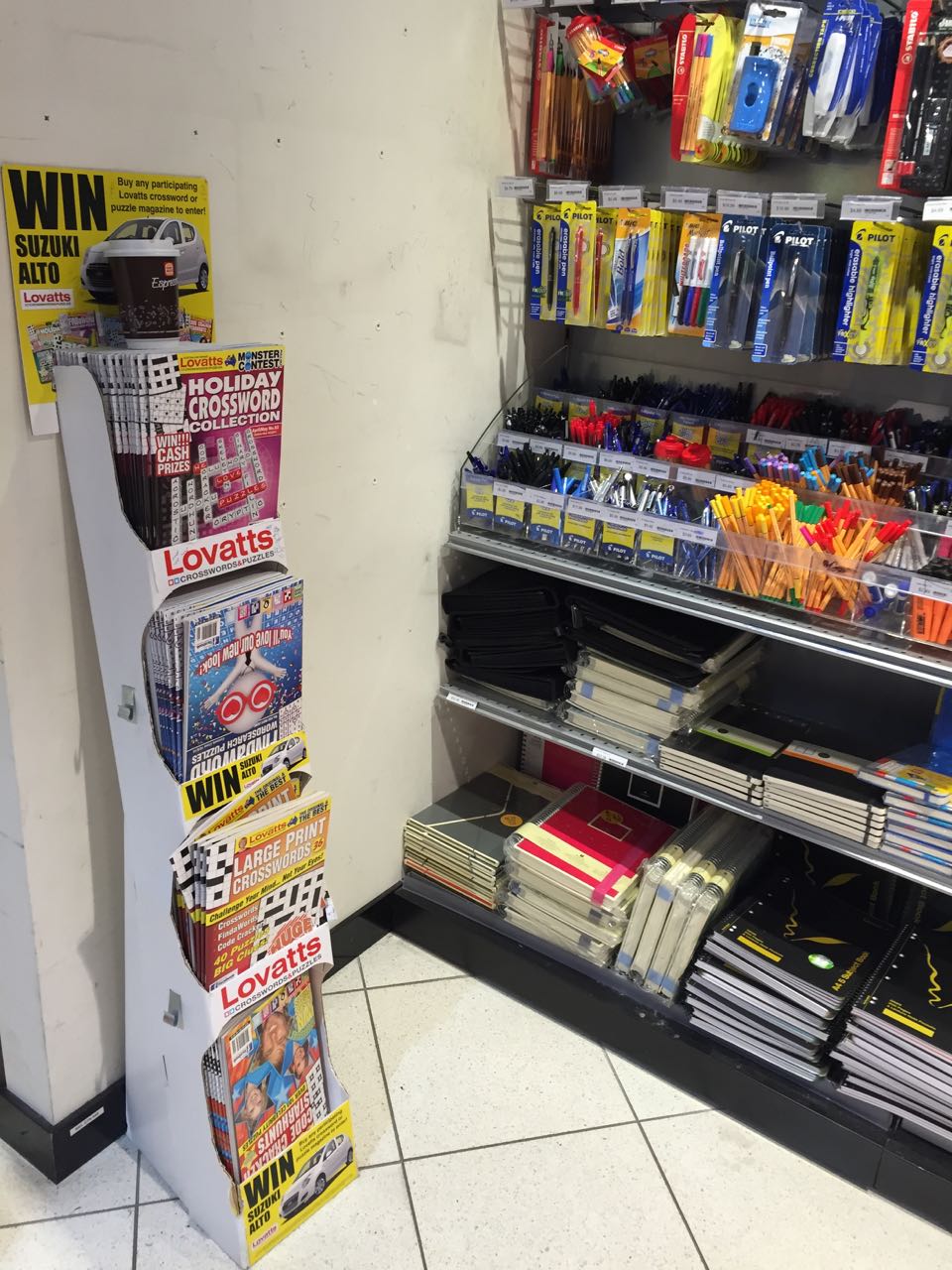 At the airport last week I saw how customers had abused the Lovatts crossword stand at a WH Smith store.
Click on the image and see – they have been using the stand to test pens as well as a place to leave a used coffee cup.
At least they didn’t leave a mucous filled tissue or a filled baby nappy.
It challenges one’s faith in humanity sometimes – the way people treat shops.
Crazy US magazine subscriptions
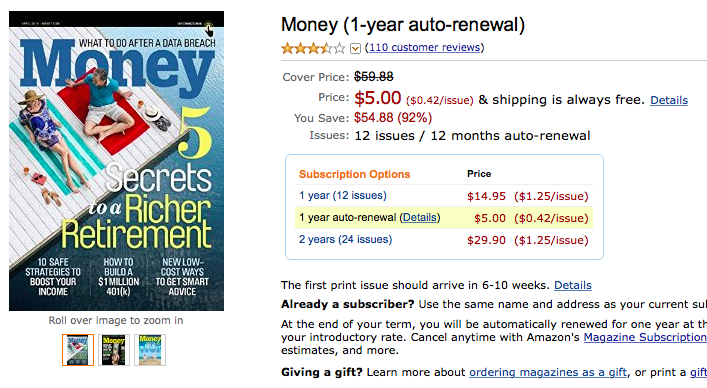 Here in the US you notice the poor availability of magazines at retail. Sure they have the top selling weeklies and a selection of monthlies if you want to search for them but they do not have the depth of range we carry. Instead, there majority of magazine sales are vis subscription and it is no wonder considering the prices.
Look at US title Money. They promote a $5.00 subscription offer for a year but you have to actually sign up for two years for a total cost of $29.90 delivered – but that is still only $1.25 an issue. Postal rates enable them to do this. Australian subscriptions tend to not be as deep as this.
In Australia, a hope for over the counter sales is Australia Post pricing for magazines. If that increases we should benefit.
The Australian promoting a free tablet
 Like many major News Corp. dailies, The Australian is promoting a free tablet computer as a gift with a 12-onth digital subscription. The ad pops up when you go to the website for The Australian – you can’t miss it.