A blog on issues affecting Australia's newsagents, media and small business generally. More ...

Management tip

Retail advice: 10 ways to reduce employee stress in your business

You can tell if people working in a shop feel stressed. It can feel unpleasant. I know I have walked out of a shop without purchasing in such a situation.

No-one likes a stressful workplace, and while we can’t control everything, there are things we can put in place to reduce opportunities for stress.

I’m no psychologist. These suggestions are based on what I have seen work in local retail business settings.

  1. People above business. Put the needs of the people in your business above the needs of the business itself.
  2. Rest and meal breaks. Ensure they are always taken away from the shop floor or the usual workplace.
  3. Keep the workplace ventilated with safe air and ensure people have easy access to water where they work.
  4. Demonstrate trust and appreciation, and give people the opportunity to make decisions within their role.
  5. Suggest a walk. If you see someone having a challenging day, offer an opportunity for a walk outside to clear their head.
  6. Provide coffee, tea, filtered water and a stash of biscuits and some other snacks. Keep it clean and welcoming.
  7. Seek out opinions. Ask employees for their suggestions. Listen to them and actively consider them.
  8. Turn off. Don’t contact employees once they clock off unless it’s a genuine emergency.
  9. Embrace ways to appreciate people. It may be a fresh cake for the kitchen, lunch or movie tickets. The gesture doesn’t need to be big.
  10. Check in. Ask people if they feel stressed and, if they do, ask what they would like done about that.
  11. Do more than minimum. Yes, this is idea 11, a reminder to do more than the minimum required.

These are all common-sense ideas. Over time, however, we can neglect them and follow less employee-friendly practices and therefore increase the stress that employees experience.

The more freedom people working in your business feel they have the more they are likely to contribute and their endeavours can be key to helping the business achieve beyond what you expected for the business.

It all starts with the settings you have in place, your own behaviour, the freedom you set for people to be themselves.

A happy workplace is a productive workplace and, likely, a more profitable workplace.

Now, if you’re not sure where to start, ask those working in your business: how for you feel? is this a stressful workplace? how could we make this a more enjoyable place for you to work? Or, come up with your own questions.


Mark Fletcher founded newsagency software company Tower Systems and is the CEO of newsXpress, a marketing group serving innovative newsagents keen to evolve their businesses for a bright future. You can reach him on mark@newsxpress.com.au or 0418 321 338.
11 likes
Management tip

Halloween is an easy retail opportunity most Aussie newsagents fail to embrace

Halloween is a tiny season for newsagents yet for similar businesses in the US it is worth sometimes more than half the revenue value of Christmas.

Okay, the US has a bigger engagement with Halloween as a season.  That’s no excuse. I know of newsagents in Australia who do thousands on Halloween related sales. This is a retail seasonal opportunity any newsagent can embrace.

In the US $12 billion is spent on decorations, costumes, candy, and greeting cards, according to the National Retail Federation (NRF). It grows annually.

In Australia, the spend is reportedly around $450 million annually. According to The Australian Retailers Association, 20% of Aussies engage with the season.

Among retailers, especially newsagents, there is ignorance as to what engagement can look like. There is candy for sure, for kids out for that. There are costumes – an easy market for us. Then there is home decor for adults hosting Halloween parties. This home decor is a space in which our shops have had terrific success over the years.

You can choose to be at the discount variety any with cheap products, the mid level with a more thoughtful offering or at the high end with $1,000+ pieces. You can land where works best for you.

The thing is, most Aussie newsagents won’t land, most won’t be in the Halloween space, most will miss this opportunity.

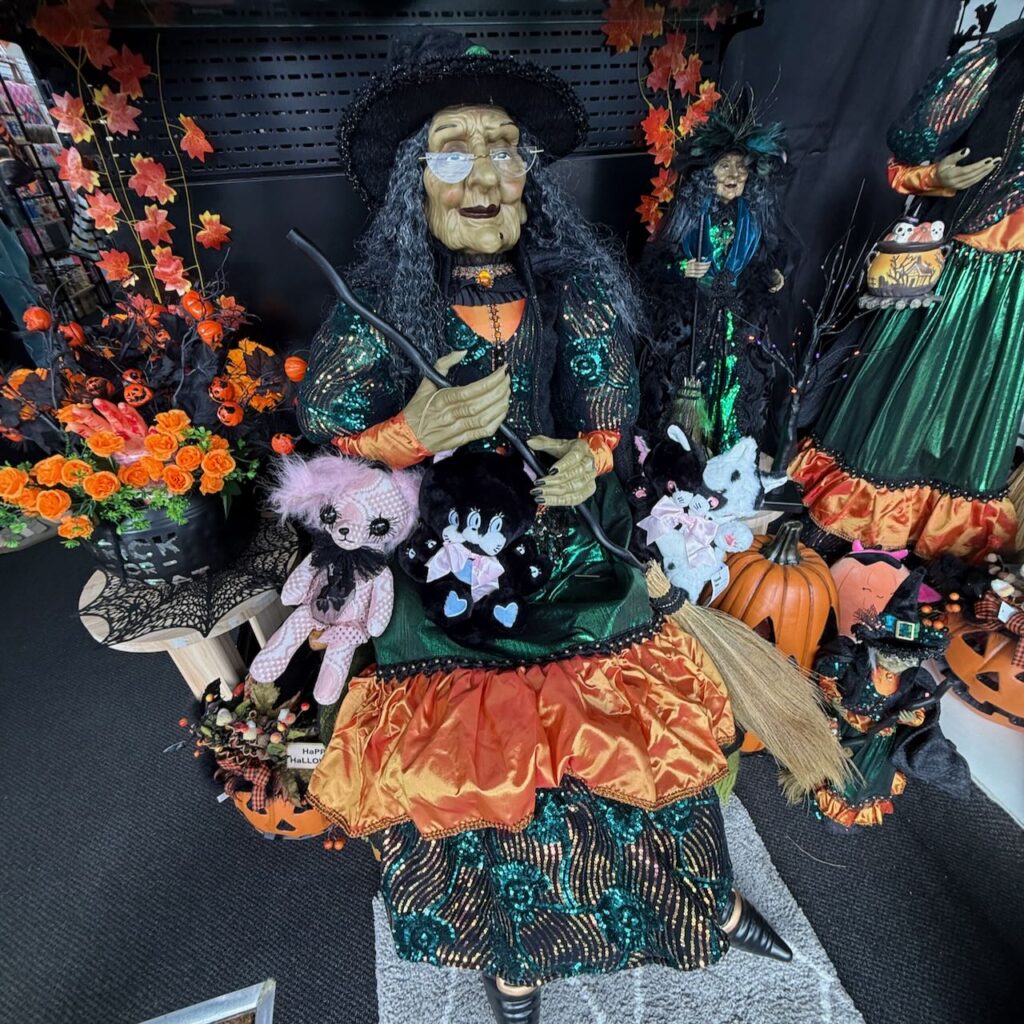
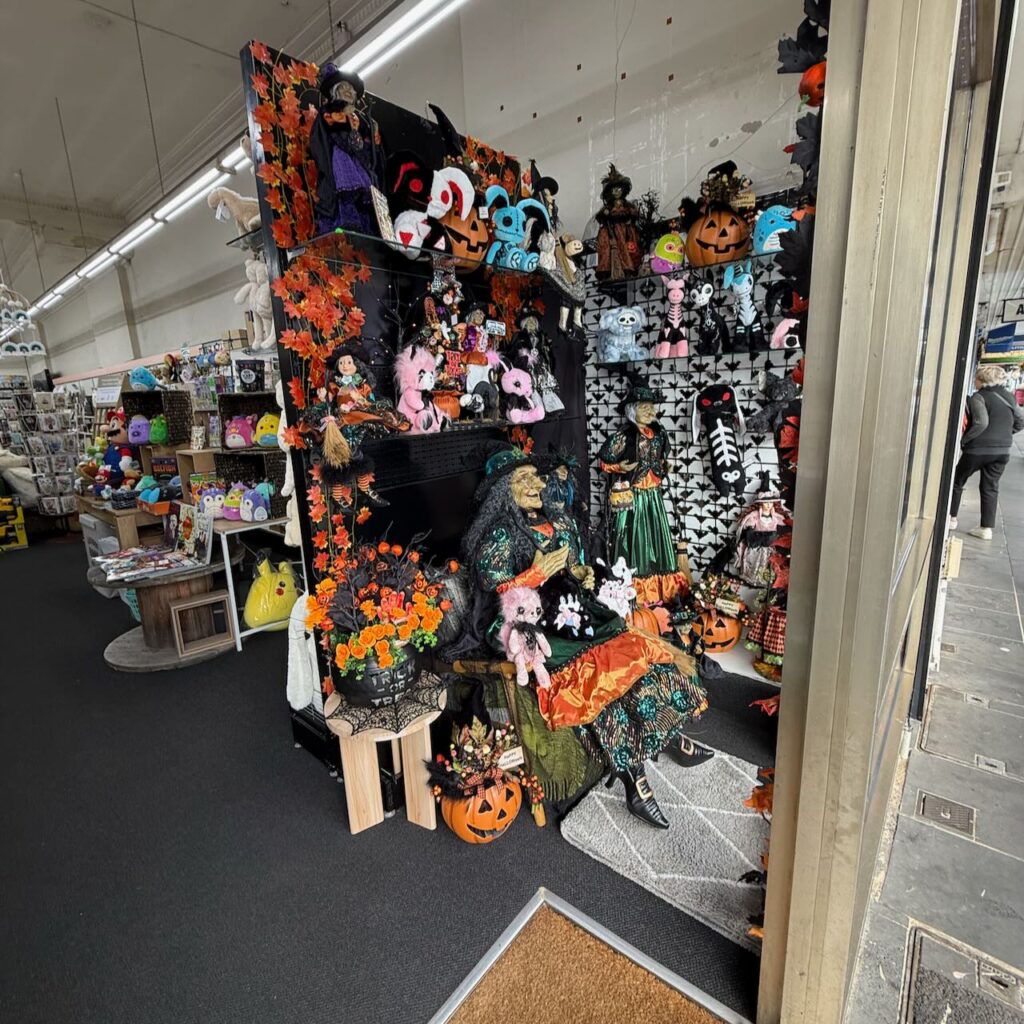
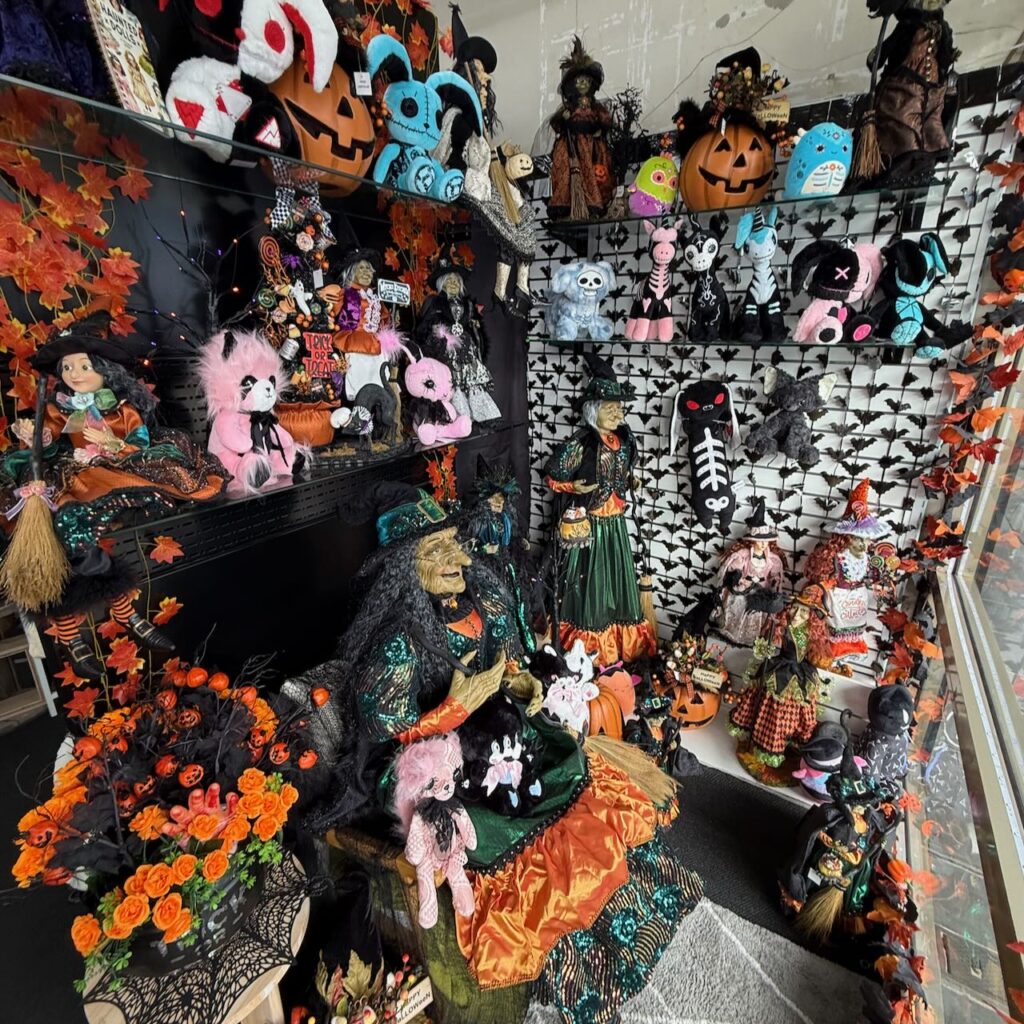
I like Halloween in retail because it’s fun, financially successful and attracting new shoppers. In our Malvern shop on GlenferrieRoad our front window has people stopping. Plenty step in for a photo.


Now, the typical Malvern shopper is 70+, retired, conservative. They are not what you would think fits a typical Halloween shopper. The thing is, they love the display, get a smile from it and plenty bring others to show them.

This window placement of Halloween is getting the shop noticed by more people.

Our embrace of opportunities like this outside of what is traditional for newsagents is one reason we continue to enjoy double-digit growth in this business.

Any newsagent can embrace Halloween in the city or country, in the Main Street or in a shopping centre. Sure what we have done is a bit over the top. You don;t need to do this.

The keys with Halloween are to be bold, have fun and give shoppers an experience they will talk about.

I am certain that you could grow Halloween to be worth at least 50% of Christmas in your business.

Now if you do embrace Halloween, be sure to promote it outside the business.

This type of out of store marketing is vital to finding even more new shoppers.

8 likes
Management tip

Small business retail advice: the battlefield is customer experience, not price

In today’s world of huge online retailers and national retail chains chasing business, the local retail business advantage is in creating memorable, human-centric experiences. This is where retail businesses, like newsagencies, shine.

I was in Japan in business a few weeks ago and visiting retail there reinforced the importance of the in-store experience. Retail staff are grateful you are shopping with them. Their engagement is gentle. They take pride in serving. Their attention to detail is excellent.

The service we provide in our shops is a key and valuable differentiator to online and big business competitors. It is the best place to start if you want to differentiate your business from them.

Double down on in-store service. Train your staff to be genuine experts and consultants. Remember customers’ names and preferences. Offer a level of personalised service and product knowledge that an algorithm cannot replicate. Create a welcoming physical atmosphere that makes people want to visit.

Anyone making the effort to shop in-store versus online needs to feel welcome. We need to remember they could be looking for more than just the product.

  1. Personal is your differentiator: Online (Amazon) can’t compete with the feeling of walking into a welcoming space. No matter how much they try, they can’t offer a friendly, face-to-face conversation, a curated sensory environment, or the immediate satisfaction of discovering something unique. Your physical experience is your moat against online giants.
  2. Personal builds emotional loyalty: A transaction is forgettable. An experience is not. Positive experiences create emotional connections that build genuine loyalty. Loyal customers are less price-sensitive, they recommend you to others, and they choose to support you because they want you to succeed.
  3. Personal supports your price point: A customer who has a wonderful experience in your shop is less likely to go home and search for the same item to save a few dollars online. The personal experience you provide become part of the value they take away. The experience itself makes the purchase feel more worthwhile.
  4. Personal creates a “third place”: Retail experts talk of in0store shoppers looking for a “third place”, somewhere that isn’t home (first place) or work (second place) where they can feel comfortable. Your shop can be that place.

Here are some tips for pursuing these points:

  1. Welcome every visitor.
  2. Help when needed.
  3. Provide a warm experience: fewer bright lights, for example.
  4. Ensure the shop always smells good with scents that appeal.
  5. Ensure the shop sounds good with music people hum along to.
  6. Add value every time you can: like how to use a product or when giving something as a gift is best.
  7. Thank them for stopping by.
  8. Support local in every way you are able.

The path to success against online giants isn’t about competing on their terms of price and scale, but by mastering the one area they can’t touch: the in-store experience. By offering a welcoming atmosphere, fostering genuine human connections, and embedding your shop in the local community, you  build a loyal following and create a memorable destination that customers will choose to support, ensuring your business not only survives but thrives.

In local small business retail we can complain all we like about online and big retailers, or we can provide in ur own a shop an experience that sets us apart and demonstrates in every contact the value of shopping local.


Mark Fletcher founded newsagency software company Tower Systems and is the CEO of newsXpress, a marketing group serving innovative newsagents keen to evolve their businesses for a bright future. You can reach him on mark@newsxpress.com.au or 0418 321 338.
9 likes
Management tip

The future of the Australian newsagency relies on newsagents being retailers and not agents

While the Aussie newsagency channel was created in the 1800s to be agents of media outlets, today, in 2025, newsagents with growing businesses are achieving this by being retailers. There is no growth in agency business. There is a ton of growth in retail.

Given the diversity among the 2,800 newsagency businesses in the channel, it is impossible to guide a course that fits all.

The future of your newsagency business is entirely dependent on you. I appreciate that to some who bought their business because they wanted to be an agent offering easy to manage services or because they did not see themselves as a retailer this may seem daunting. Don’t be put off. I have seen plenty transition their businesses from agency-focussed to retail-focussed on the back of minimal retail skills.

If sales in your newsagency are flat or declining, you need to act for if you don’t act, one day in the future you will see closing as the only option.


The future success of Australian newsagencies hinges on three critical areas: product selection, business narrative, and sales approach.

The traditional model, reliant on newspapers, magazines, lotteries, convenience items, tobacco, and discount variety products, is no longer viable. Similarly, suppliers, particularly print media businesses, offer little support for the channel’s future.

Instead, newsagents must embrace a shift towards premium and unique offerings, prioritizing value over low price points and strategically managing margins. The principle of “find a need and fill it” is crucial for evolving local businesses.

I see there key pillars for success, there are others, these three are the key:

Products

Focus on products uncommon to the newsagency channel. This includes items such as:

  • Clothing
  • High-value gifts (e.g., $300 and above)
  • Non-remainder books
  • Cookware
  • Collectibles that draw customers from a distance
  • Toys – not crap but higher end, good brands.

Your list could vary depending on location and interest. For example: pets, outdoors, haberdashery. There is no limit here.

You are looking for products not currently supplied through traditional newsagency channels. While everyday items like stationery and greeting cards will remain, their success depends on smart curation and pricing to manage inventory burden. For example, selling stationery to passionate enthusiasts offers a greater opportunity than simply catering to basic needs. The scope of what you can sell is limited only by your imagination.

Narrative

Develop a compelling business story that explains the “why” of your business. This narrative, nurtured through product selection, in-store merchandising, social media presence, website content, and your personal engagement, builds trust with customers. An evolving narrative, adapting to you, the times, and your community, is essential. In today’s immersive retail environment, a strong narrative transforms a simple product into a desirable experience.

How You Sell

The ability to sell online is paramount. Without an online presence, businesses lack crucial insights into market dynamics and customer behavior. The future of the Australian newsagency is about individual businesses becoming smart, engaged, and creative. This will lead to a diverse, rather than cohesive, channel where each newsagency strives for local and online success.

For newsagents unwilling to embrace change, the traditional model is unsustainable, leading to a reduction in the number of newsagency locations. However, for those ready to adapt, support is available within the channel to ensure the relevance and success of these vital local retail businesses. While the name of the shop is less important than its perceived identity, a locally relevant name is what I recommended. The future is not a single, clear prediction, but rather a collective effort of individual businesses innovating and adapting.

Change starts with you, with your decision to change your business, cliché as that sounds. Often when working with newsagents who have decided to change I have found a good place to start is by decluttering. Get rid of anything in the shop that you don’t use, don’t need or that does not add value to the business. Take a look at your stock, especially what you have not sold any of for at least six months. Why keep it?

Start by decluttering and while you’re doing this start to think about what you want the business to stand for, to be known for. A good second step to help you get focussed on change is to take every magazine off current fixtures, clean the fixtures, and place magazine back – but with careful consideration as to where to place each title. Create a magazine display that makes sense. Typically, this single action of relaying your magazines will boost sales by up to 10%. A goof third step to take is to take everything off the counter and then rebuild with products you think people will buy on impulse.

These three physical steps of decluttering, a magazine relay and a counter rebuild are good starting points to help focus your attention. In the overall process of redefining and rebuilding your business they are small steps yet vital.

Your current business data will provide insights as to moves you could make. Greeting card sales by caption along with magazine sales by category can wonderful inform of opportunities.

If I can help, please reach out: 0418 321 338 or mark@newsxpress.com.au.

Footnote: There will be some who say the shingle should change, that news is not relevant. While it’s not relevant, what you call the shop does not matter all that much. It’s kind of like a picture versus a thousand words. What a shop shows itself as being matters more than what a shop calls itself. That said, Aussie newsagencies, being quintessentially local businesses are, in my opinions best off being called a name that is locally relevant – rather than some national name that is not locally relevant.

Second footnote: Reading back what I have written I know I have not made a clear and solid prediction. That’s because I can’t. There is no channel, no way to determine what all businesses in the channel will do.


My name is Mark Fletcher. I own newsXpress – a marketing group helping local newsagents thrive. I also founded Tower Systems, makers of the industry standard software for newsagents. I sold Tower in November 2024, and still work with the company today. You can reach me on 0418 321 338 or mark@newsxpress.com.au. 

21 likes
Management tip

Advice on making Saturdays valuable again in local retail

It’s true, the retail landscape has shifted, Saturdays in retail are not what they used to be. Part of that is on us as retailers, we have let the day fade in significance and value. Maybe it is time to invest in Saturdays to make them more valuable.

The advice I share is general. What you do in your business will vary based on your local situation. The key is to make shopping at your newsagency on a Saturday a more engaging and rewarding experience. Here are some ideas to spark your creativity:

Think Fun & Engagement:

  • Be Energised. This starts with the entire Saturday crew being on board. Make it clear that the goal is that Saturdays in the shop are different. Your communication is key on this.
  • Host Monthly Brand Parties: Turn your shop into a mini-celebration! Choose fun-related brands you stock and host a themed “party” each month. Think product demos, special offers, and a lively atmosphere.
  • Nurture Local Clubs: Connect with local groups that align with your product range. Could you host a monthly knitters’ club if you sell craft supplies, or a jigsaw puzzle club if that’s a popular item? This fosters community and brings in regular Saturday visitors.
  • “New Arrivals Saturday”: Position Saturdays as the day for discovering fresh stock. Make a bit of theatre out of unpacking new products, creating excitement and anticipation.
  • Saturday Playtime: Make your shop interactive! Offer product samples to try, set up demonstration areas where customers can “play” with items, and create a lighthearted atmosphere.

Offer Value & Incentives:

  • Saturday Cake Treat: Partner with a local bakery to offer a free slice of cake at a specific time each Saturday. It’s a simple yet effective way to draw people in and create a positive association with your shop.
  • Saturday Bonus Draws: If you run a lottery second-chance draw, make the draw on a Saturday and offer an extra prize for winners who are in-store at the time. This incentivises Saturday visits.
  • Saturday Showcase: Make Saturdays a day for significant visual changes. Implement noticeable new displays to create a sense of novelty and encourage customers to browse.
  • “Saturday Savers” Promotions: Introduce special deals and discounts specifically for Saturdays, branded as “Saturday Savers” or something similar to create a sense of urgency and value.

Figure out from your newsagency software your average Saturday turnover. Put it somewhere your creew can see it. This becomes a target to pass.

13 likes
Management tip

Haigh’s wins sales with free tastings

Everyone shopping at a Haigh’s chocolate shop is offered a free tasting. They have done it for years and continue to offer it I am sure because it works.

I was at the Haigh’s in Hawthorn near the office Friday last week to pick up a gift. They offered me a piece of broken Easter egg chocolate and, sure enough, I bought several Easter eggs. In fact, I bought all my Easter gifts.

I went in intent on purchasing one product, a non-Easter product and walked out with seven products.

For sure at some point I was going to purchase Easter chocolates, not last Friday though. The free shop floor tasting offered me at Haigh’s brought forward the purchase decision and won business for them as I may have purchased elsewhere. A simple shop floor tasting changed my intended behaviour on Friday.

Yes, offering free product tastings is well-known as good shop floor engagement. Experiencing it as I did was a more powerful reminder of the value that being told to do it. Thinking about it further, the Haigh’s approach reinforces the importance of consistency. They are known for offering sample tastings at the counter – though that was not what got me shopping there. I visited Friday because I knew they would have the gift I wanted to buy. Again, the tasting is what turned a simple visit into something far more valuable for them.

Haigh’s are good about it too, generous.  I think that is important. Their generosity nurtures generosity among shoppers.

In person shopping is experiential. If we don’t leverage experience opportunities why should people visit you compared to another shop, or online?

If you sell products people can eat, be sure to offer free samples and tastings.

If you offer products with a scent, be sure to make it easy for people to smell the products.

If you offer products where the feel or touch is important, ensure people can touch the products.

Do these things consistently and with an unquestioning generosity of spirit.

If you have a Haigh’s shop nearby and have not been in for a while, go visit in the lead up to Easter. Experience for yourself the basics they get right that make theirs an excellent business to learn from. It’s inspiring.

16 likes
Management tip

Here are 3 things you can do in your newsagency that will boost card sales

Growth in card sales is more up to you the retailer than it is up to the card company. This is a controversial view I know – retailers prefer to blame the card companies rather than themselves.

The best way to see if I am right is to make these 3 changes and see if they boost your card sales.

Pitch impulse purchase of cards. If all your cards are in your card department, you’re unlikely to be encouraging impulse purchase of cards.

Create a secondary placement of cards outside the card department, in a spinner or on a stand. Use something you make or source yourself so you 100% control what is on there. Place it near your main entrance. Change the cards every couple of weeks. Start with cards you love on there.

Place two or three cards at the counter. These need to be cards people will buy to have for when they might need them. Change these weekly.

Place two or three relevant cards with your gift displays.

Promote cards. Let people know what you have and why you are grateful to offer them.

Talk about cards you love on social media. One card per post. At least once a week you should have a social media post about cards.

In your front window create an attention-grabbing display promoting cards. Stop people as they walk past with a display unlike anything you’ve done before.

Run a card specific loyalty program. Buy 8 and get your 9th card free, or something along those lines. Keep it simple. Set a date. The goal is top get more people buying cards more often.

Now, here are a couple of additional moves you can make that absolutely will help increase card sales.

Ensure everyone in the shop knows how to put out new card stock and get them doing this when new stock arrives.

Place your own orders. Always have 100% control over what you do order and when. This ownership from the outset will have you more invested in card performance and that is at the core of growth in card sales.

Most of what I have listed here is NOT done by major card competitors of newsagents. Do these things and you differentiate your business and that helps you make more money from cards, for sure.

15 likes
Management tip

Maybe a sales counter reset could help your newsagency in 2025

The traditional newsagency counter, once a haven of confectionery and impulse buys, has evolved.  As shopper habits further shift and newsagencies diversify, the opportunities available from a reset counter are considerable.

Managed effectively, the counter can significantly boost your bottom line. This requires dedication – consider it your most valuable real estate.

Suggested rules for counter excellence:

  1. No visible food or drinks unless for sale.
  2. Banish personal items like bags and phones.
  3. Daily cleaning is non-negotiable.
  4. Weekly counter refresh: remove all products, clean, and rebuild.
  5. Minimal signage – every message must serve a purpose.
  6. Employees must purchase from the customer side.
  7. Limit the number of staff behind the counter.
  8. Quarterly counter overhaul – for both staff and customers.
  9. Always assess the counter from the customer’s perspective.

What to Place at the Counter: prioritise profitability:

  1. Set a minimum gross profit margin (e.g., 50%).
  2. Select items that define how you want your business seen, that differentiate your shop.
  3. Select items ideal for with quick, easy sales.
  4. Consider your customer base: lottery players, card buyers, families, etc.
  5. Tell a story with your product selection (e.g., “Fun for Kids”).
  6. Don’t be afraid to experiment!

Counter essentials:

  1. Always feature a rotating selection of cards.
  2. Demonstrate products: play with toys, throw a light-up ball.
  3. Showcase new arrivals and price them visibly.
  4. Highlight engaging magazine articles.
  5. Experiment with pricing – find what works best.

A best practice display is clean and simple: Avoid clutter. It also involves thoughtful / strategic placement: Interrupt transaction sight lines.

Now, for some counter upselling techniques – engage customers: use conversation starters:

  1. “Have you seen this?”
  2. “Kids love this!”
  3. “I love this.”
  4. “We’re running a poll…”
  5. “This is our Facebook deal…”
  6. “Look at this recipe in Better Homes and Gardens…”

Upselling requires practice and confidence. Find what works best for your team.

By implementing these strategies and embracing a customer-centric approach, you can transform your newsagency counter from a cluttered afterthought into a profit powerhouse.

Success lies in understanding your unique customer base and adapting your counter accordingly. Continuously monitor sales, gather feedback, and refine your strategy. By embracing these principles and fostering a culture of innovation, you can unlock the full potential of your newsagency counter and drive significant growth for your business.

If your counter has not significantly chan ged in the last few years, resetting your counter is likely to be an easy win opportunity.

7 likes
Management tip

It’s 2025, what can the local Aussie newsagency expect for this year?

With the school year about to start and many now back at work after a summer break, we have an opportunity to turn our mind to 2025.

Hmm, if you’re starting to think about 2025 in your newsagency now, you are coming late to the party. For many, planning for 2025 was well under way six month ago. Never mind. Even late planning is better than no planning.

Let’s start by looking at what we think might happen in 2025 in the context of our Australian newsagency channel.

Newspaper sales will continue to decline. Newspapers will generate less traffic for your business. The financial contribution they make to your profit will fall. I expect over the counter newspaper sales to fall by between 10% and 12% this year.

Magazine sales will continue to fall. While magazines will generate less traffic, the decline will not be as much as newspapers depending on your approach to magazines. Newsagents with a strong commitment to special interest and niche category titles will have a good year. Those who focus only in the top 100 magazine titles will have a less good year. I expect overall magazine unit sales to decline by between 9% and 11% with the majority of that decline to come from the top 100 titles.

Stationery sales will be good, up, in newsagencies that gave a range tuned to local everyday needs as well as a focus on offering stationery for those who love stationery. This is an important distinction. People who buy stationery because they have to focus on convenience and function whereas those who buy stationery because they love it buy because they have found something not often seen elsewhere. Newsagency can play in both of ese spaces well, and thrive. I think stationery revenue can be up 10% if we put our mind to it.

Greeting card sales. As with stationery, people buy greeting cards for different reasons: obligation, guilt, expressing love, to be remembered in the future and because they like the look of a card. Newsagents who do the bare minimum and leave managing the card department to their card suppliers will have a flat year, maybe a decline – not because of the card company but because of the disinterest by the business owner in this vital category. Newsagents actively engaged with cards, those who pitch cards as an impulse purchase and those who understand and lean into the different reasons for buying cards, they will have a good year – I expect growth of 5% to 10% in card sales.

Gift sales. This is open land for harvesting, good land, fertile, ours for the taking – as long as we approach gifts as if this was the only category on which we could rely in our business. If we stock the kind of gifts a supplier says are perfect for a newsagency, the year won’t be so good. If we stock outside that quaint expectation and play outside what our businesses are known for, it could be a good year. I know newsagents expecting 25% growth in gift revenue this year, and more.

Online. This is the biggest opportunity for it’s us reaching people who will never set foot in our shop. In one of my own shops where our website is barely eight months old, we’ve already done $25,000 in online sales in 2025, with nothing spent on marketing. I know of a newsagent mature in online who has done $40,000 this year online. What we achieve is only constrained by our imagination. No, budget is not a factor, not from what I see.

2025 is a year of opportunity for our Australian newsagency channel. What we achieve is up to us. If we do nothing outside of what has been usual for us, we hold our business to the trajectory of 2024 and prior. If we change our approach, if we have a 90p degree turn, if we open some new does, if we fundamentally reset our shop with little consideration of what some expect of an Aussie newsagency, 2025 can be a year of terrific grow, wonderful profit and a feeling of achievement.

What have you got planned for 2025?

17 likes
Management tip

Finding new customers for your retail business in the changing circumstances of 2025

Meta’s Elimination of human fact-checkers and the changing landscape of attracting new Ccustomers

Meta’s recent decision to eliminate human fact-checkers signals a significant shift in the social media landscape. This, coupled with the ongoing decline in organic social media reach, necessitates a reassessment of your out-of-store marketing and customer engagement strategies.

While social media remains a valuable tool, it’s no longer sufficient to solely rely on it to attract new shoppers. To cut through the noise and build genuine connections, focus on creating original and engaging content that resonates with your target audience. Share your knowledge, showcase your passion for your products, and encourage interaction by creating content that people want to share.

A robust online presence is paramount. Having a website is critical. Ensure your website is user-friendly, with accurate product descriptions that align with relevant search keywords. A well-maintained blog that provides valuable insights into your products and brand story can further enhance your online visibility.

Leveraging local partnerships is vital. Collaborate with community groups and actively involve their members in promoting your business. Offer incentives or exclusive benefits to encourage their support.

Don’t underestimate the power of traditional marketing. An eye-catching storefront display can still stop passersby in their tracks. Consider in-store sampling events to generate buzz and encourage word-of-mouth.

Hosting regular events throughout the year can significantly boost customer engagement and brand awareness. Plan a diverse range of events, from product demonstrations and workshops to customer appreciation nights and seasonal celebrations. These events not only attract new shoppers but also provide opportunities to showcase your unique offerings and build stronger relationships with your existing customer base.

For businesses in regional areas, consider a targeted letterbox campaign. A well-designed flyer distributed to local letterboxes can effectively promote upcoming events or highlight specific products.

In today’s evolving marketing landscape, a multi-faceted approach is essential. By diversifying your efforts and focusing on building genuine connections with your community, you can effectively navigate the challenges of the digital age and ensure the continued success of your business.

Success with Facebook and Instagram has, according to many plateaued. Factor this into your marketing plans for 2025 to ensure you have new customers reaching your business through other channels.

7 likes
Management tip

Advice for newsagents on boosting magazine sales

Forget big and bold displays and promotional posters. While publishers like these, there is little evidence that they drive magazine sales. In my experience., this single most valuable action any newsagent can take to boost magazine sales to to do a magazine relay. It’s easy to do, no cost and delivers an excellent return on investment.

A few hours of dedicated effort results in a revenue boost, fresh social media content, and more value. There’s no downside. Fundamentally, it drives increased sales.

If it’s been more than six months since your last magazine relay, you need to do one now.

The Mechanics of a magazine relay

A typical relay can be completed in two hours or less.

While it’s possible to delegate this task, taking ownership of the process is what I recommend. A hands-on approach reinforces your leadership and allows for a more streamlined operation without the complexities of team management. It’s essential to remember that a magazine relay is an ongoing process, not a one-off event. Regular adjustments to the magazine layout are crucial for maintaining sales momentum.

I like to start with taking all magazines off the shelves. This provides a clean canvas. It also provides an opportunity for cleaning.

Optimising magazine placement

Ideally, magazines should be displayed on a dedicated wall space rather than occupying valuable centre fixture real estate typically reserved for higher-margin products.

The visual impact of magazine covers can be diluted by excessive clutter. To maximise their appeal, avoid using product headers.

Full facing, where 100% of the magazine cover is visible, generally delivers optimal results. This is particularly effective for smaller assortments of under 500 titles. For larger assortments, consider tiered fixtures with one title per pocket. However, in some cases, accommodating two or three low-volume, specialised titles within a single pocket can be beneficial.

Leveraging beacon branding

Highlighting specific magazine categories through beacon branding can effectively attract customer attention. Dedicate the top two or three pockets to a single title to create a visual focal point.

The relay process

When undertaking a magazine relay, focus on creating an engaging and visually appealing display. Work systematically, removing and rebuilding sections of the fixture while maintaining clear spaces to avoid confusion. Continuously assess your progress and consider how each placement contributes to the overall narrative.

The art of adjacency

Experimentation is key to discovering the most effective product adjacencies. While there are general guidelines, the ideal arrangement can vary depending on customer behaviour and preferences. For example, consider whether grouping titles by brand or by interest category drives better sales.

Some potential adjacency combinations include: cricket, golf, and swimming; wrestling, boxing, and fitness; and creative arts (painting, writing, craft). However, it’s essential to avoid mixing unrelated titles such as soccer and rugby.

Customer considerations

When designing the magazine display, prioritise customer ease and comfort. Avoid placing titles aimed at older customers in difficult-to-reach locations.

Post-relay actions

Once the relay is complete, share your vision with the team and encourage feedback. Monitor customer behaviour and sales performance closely. The insights gained from these observations can inform future adjustments to the magazine layout.

By following these guidelines and maintaining a focus on customer needs, you can significantly enhance your magazine sales through effective merchandising.

Dping a magazine relay is a great way to kick off 2025. You’ll make more money from magazines if you do it.

16 likes
magazines

Boxing Day is vital for newsagents in major shopping centres

The Boxing Day sales are a crucial event for small business retailers in shopping centres in Australia, especially on the east coast. This annual shopping event  presents a unique opportunity for these businesses to boost sales.

The Boxing Day sales draw significant crowds to shopping centres. This surge in foot traffic provides small retailers with excellent exposure to potential customers who may not have visited their store otherwise.

Smart retailers have bought for the sale and they use the Boxing Day sales to offload excess stock. This helps them free up valuable shelf space for new merchandise and generate much-needed cash flow.

By participating in the Boxing Day sales, small businesses can ride on the marketing coattails of the big retailers who spend up on advertising.

Successful Boxing Day sales can enhance a small business’s reputation and create a positive brand association with value and affordability.

In you are in a shopping centre, the Boxing Day sale can be a valuable engagement opportunity.

In my own situation, in high street stores, it’s not as much of a thing. Online, however, it’s HUGE.

9 likes
Management tip

Advice on how to get your business website to rank higher in search engine results

Here are 6 things to do to rank higher with Google and other search engines:

  1. Include brand in product names as that’s what people tend to search for.
  2. Arrange products by brand, with the brand name in the collection URL.
  3. Use blog posts to promote brands and branded products. Write these yourself. Try and not use AI generated content – search engines preference human created content.
  4. Use keywords relevant to your business in the content on your website, keywords people are searching for.
  5. Ask your suppliers to link to your website.
  6. Optimise meta title and meta descriptions to accurately describe content.

Here’s how you can optimise meta titles and descriptions in Shopify:

  1. Go to the product you want to edit in your Shopify admin.
  2. Click “Edit” to open the product editor.
  3. Scroll down to the “SEO” section.
  4. Replace the default title with a concise and informative title that includes your target keyword.
  5. Write a compelling description that accurately summarises your product.
  6. Click the “Save” button to apply your updates.

Additional tips:

  1. Incorporate target keywords naturally into your meta title and description.
  2. Aim for a meta title around 50-60 characters and a meta description of 150-160 characters.
  3. Use strong action verbs and a clear call to action.

Each week add new blog posts. Each post should be about a single product or a single brand. Talk about what you love about it. Be personal. Use a friendly and engaging tone. Write more than 350 words, ideally above 500 words. Refer back to your physical shop in the post. Use the product name or keyword or phrase you are targeting at least five times in the post – use it naturally though.

If you are not sure what keywords to target, ask someone. I provide this advice, based on data evidence, free to Tower and newsXpress customers. The data I source is through a platform I pay US$300 a month to access. It’s up to date for Australian keyword searches.

Keyword targeting in your content is key to the content driving your website higher in search engine results.

Yes, this is all hard work. Do it if you want to rank higher. A website is a forever hungry beast.

8 likes
Management tip

Newsagency marketing tip: reinvigorating Saturdays in your local retail newsagency

Years ago, Saturdays were big in the local newsagency. Shops were full and humming. Back when lottery draws were fewer, Sunday trading was a rarity, and late-night shopping wasn’t a thing – Saturdays were it! Those days might be gone, but that doesn’t mean Saturdays can’t be big again for any local retail newsagency.

The key reinvigorating Saturdays is a thoughtful, planned approach that makes Saturdays special in your store. Here are some ideas to get you started:

Make your shop a Community Hub:

  • Fundraisers: Invite local groups to fundraise inside or outside your shop. Let them feature their local work for locals..
  • Local Clubs: Start a club that connects with your products with local. A knitting circle, jigsaw club, a mindfulness group, local cooks sharing local recipes.
  • Show and tell. Bring in a local with specialist knowledge relating to items you sell. Ask them to do a talk, to share knowledge.

Make it Fun!:

  • New Product Showcase: Saturdays can be your “New Arrivals Day.” Unpack the latest stock with fanfare and make it a reason for customers to visit.
  • Interactive Saturdays: Let customers play with new products, sample games, or get creative with craft supplies.
  • Host a competition: paper plane making and flying for example, or the best yoyo tricks.
  • Teach: How to make paper mache, how to play marbles, how to play hopscotch.

Sweeten the Deal:

  • Free Treats: Partner with a local bakery to offer a free slice of cake at a set time each Saturday, or a butcher to feature their awesome sausages.
  • Lucky Draws: Hold in-store draws for lottery or other prizes. Being present boosts a customer’s chance of winning!

Visually Appealing:

  • Shop Refresh: Make Saturdays a day for a big display overhaul. Fresh layouts and eye-catching presentations will draw customers in.

Promotional Power:

  • Saturday Savers: Develop a “Saturday Savers” campaign with special deals and discounts exclusive to Saturdays.
  • Weekend deal. From, say, noon, offer deals for items you want to be rid of by the end of the week. get known for these deals.

Reinvigorating Saturdays in your shop

These are just a springboard for ideas. Tailor your strategy to your shop and its products. Focus on what drives sales for you, not necessarily what other local businesses might be doing.

Here is a choice you can make: do nothing and Saturdays will continue to be what they have been. Or, do something considerably different, chase change. If what you do works, celebrate. if it does to work, learn, adjust and go again.

My point is that Saturdays are not what they used to be and we need to change that.

10 likes
Management tip

5 common mistakes I see newsagents make with social media posts

  • Giving some other business control. Outsourcing your social media posts to another business, a consultant or a marketing group results in generic and often bland posts that are likely to deliver little commercial value to the business.
  • Not entertaining. People use social media for entertainment. If you’re not entertaining the engagement you see is likely to be minimal. Bland posts about a new lottery jackpot or showing a magazine cover that many others show is a nothing post.
  • Ignoring local. Living local through your posts is likely to be loved by locals. Support local community groups. Celebrate local heroes. Be out and about locally using what you sell, and share it.
  • Yelling. Telling people to use cash or to shop local are posts likely to be ignored. Posts like this may make you feel good but they achieve nothing.
  • Missing in action. You are a key differentiator in your business. You need to be seen through the posts. help people to get to know you and have a laugh with you.

With any social media post you have a couple of seconds to grab their attention. I spent a couple of hours last night looking through newsagent Facebook pages and I tagged 75% of posts falling into one of the above 5 areas. That does not allow for the 33% of newsagent pages I saw that infrequently posted, like the one business that last posted in January this year.

The best face to put on your business is you. On social media, be yourself, have fun, bring customers along for the ride with you.

I appreciate some will say they know nothing about social media, that they don’t know what to say. Social media engagement is a basic business task. Anyone can do it. You start by starting. Getting someone else to do it for you is a dreadful mistake, it will likely achieve little for your business.

Remember, have fun. This is key. People go to social media to be entertained. Entertain them. Let them see that you have a sense of humour.

One other point: avoid using an AI tool to write posts for you. AI content is, well, AI content. Oh, and don’t use AI generated images as doing so will say more about your business, which you ay not like.

15 likes
Management tip

13 Ways Newsagents Can Boost Sales And Profits In Challenging Economic Times

If you or a retailer you know are finding economic conditions tough for your business you can complain, do nothing or make changes. Only one of these has any hope of improving the situation. My advice is to pursue change every time.

Here are 13 free and easy to implement action items any local small business retailer could consider to improve their situation.

  • Engage everyone in the shop. Let all team members know how the business is going, what it needs and why. Agree on achievable goals and steps to take in pursuing them. Track results openly. Keep communicating.
  • Declutter. If business is down and it’s getting to you, spend a day or two decluttering. Typically, the act of decluttering helps you see positive moves you can make in the business. Do this yourself. Make those moves.
  • Quit dead stock. What is dead will depend on your type of shop. For some, it will be stock that has not sold in 6 months while for others it will be stock that has not sold for 2 years. Dead stock wastes space, time and ties up cash. Anything you get for it is better than the daily cost of your dead stock today. And, in quitting, do it in 2 weeks. If it’s not gone, give it away.
  • Reward an additional purchase. Include a coupon on receipts that offers a reward if the customer makes another purchase in a short period of time – we suggest 7 days. While loyalty points programs focus on the longer-term relationship, the voucher proposed here is all about encouraging purchases sooner. In our software, this is discount vouchers.
  • Know what you are missing out on. In a typical shop, the top 5% selling items are out of stock 21% of the time. That is guaranteed revenue missed. Fix it and revenue will increase. Your POS software can easily show what you’re missing. In our software tis is on the Insights Dashboard.
  • Support a local community group in return for their members supporting you. Connect with a group that has plenty of members, the community loves and that does good work. Offer their members a discount off purchases and a contribution donation from each purchase value to the group. The goal is to get their members who don’t buy from you buying from you = new customers.
  • Have fun on social media. People go to social media to be entertained. Entertain them. Don’t overthink it. Have fun, show your business as a place of fun, share knowledge that differentiates your business.
  • Leverage free. Make sure your Google Business and Bing (yes, it’s a thing!) presences are up to date and fun.
  • Lower payments costs. Card payments can cost small business retailers between .075% and close to 2%. While you can surcharge customers, switching payments company could save plenty. If you switch, still surcharge tho.
  • Email your customers. If you have customer email addresses and know what they have bought, run some targeted email campaigns using this data.
  • Review pricing. Most retailers either follow the supplier suggested retail price or a mark-up percentage set many years ago. To determine the price you could sell an item for, ask that question. It could be that the convenience of your location and lack of easy to access competitors means you can sell items for more than is usual. If this is the case, do it. Most POS software makes it easy to make these price adjustments.
  • Talk to your suppliers. If you are finding it tough it is likely your suppliers are too. Ask if they have deal prices to move inventory. If they do and it is inventory you can easily sell, grab it for bonus margin.
  • Set your shop right. Make sure that your shop is guiding shoppers to spend, and spend more:
    • Inside the front door: Have a new display weekly. Bright. Optimistic. Fun. Unexpected.
    • At the counter: Pitch items people will easily purchase on impulse. Items that achieve the best performance and items they did not expect to see at your counter.
    • Have a scent: Incense, a candle – introduce a scent people like.
    • Have a sound: Play happy music people will know and sing along to.
    • If it is cold outside, make your shop warm.
    • If it is warm outside, make your shop cooler.
    • Move: Move at least one product category each week. This gives the shop a feeling of change.

My POS software company, Tower Systems, makes and supports POS software for local specialty retailers in Australia and New Zealand. I also own the newsXpress newsagency marketing group and own and runs shops.

I share practical advice like covered here because I love helping local independent retailers thrive.

Mark Fletcher
Managing Director
Tower Systems International (Aust) Pty Ltd
ABN 61 007 009 752
M | 0418 321 338 E | mark@towersystems.com.au
Sales: 1300 662 957 sales@towersystems.com.au

First published: June 27, 2024.

8 likes
Management tip

Visual merchandising advice for newsagents who think they know northing about visual merchandising, and for blokes who always try and get out of creating a display

Everyone can do VM!

Visual merchandising is about display products in a way that attracts people to them, top look, touch and feel. Ultimately, it is about displaying products so you sell more.

Anyone can do visual merchandising.

Here is our advice.

  1. Start with a clean space, a flat surface, in a good location.
  2. The best display looks like a pyramid.
  3. Your hero product is at the top of the pyramid.
  4. If the display is for a season or some other sign-post event, the poster should be placed with the display so shoppers can see it without having to look for it.
  5. Flowing from the hero product down to the base of the display are other products. But not so many that you can’t see what you want people to see.
  6. The display is balanced, even.
  7. A display of gifts always includes cards.
  8. If the display is promoting homewares the pyramid approach is not needed. Instead, go for something that looks more natural, like in the home.
  9. Use coloured paper to highlight certain products. But don’t go for a rainbow.
  10. From a colour perspective, a good display has no more than two core colours as the focus.
  11. A display can look untidy and that is okay in some circumstances. For example, a box of Beanie Boos exploding from a box .
  12. Mistakes are okay.
  13. Oh, and don’t treat this as an engineering challenge. Keep it simple and fun! :

Take your time, have fun.

Remember, the alternative is no display at all.

A note to others who may be around when someone is doing their first display – we all did our first display once … be gentle.

Now, here are some more notes about displays:

In my opinion, the best displays have a narrative relevant to the business, a story or purpose. This is code for saying I am not a fan of single product or single supplier displays. suppliers love these, of course, as they are a billboard for them. What suits them will likely not suit you.

A good display is a collection of items from multiple suppliers, categories and segments that make sense together, from which a shopper could choose several for a gift, or for themselves. Choosing the items for the display us you curating the display, making editorial choices to tell the story you want to sell.

Don’t leave the display up for long. My advice is one week, two at the absolute maximum. Having a length of time for which a display will be live helps you allocate appropriate time for the creation of the display. if you are not sure how long to spend on it, set yourself and hour tops. Get it done within that time.

Once you’ve done a display, if you are new to this, ask for opinions. Learn. Each display will be an improvement on the last.

Whole the opinions of others can be nice, what matters from any display is the sales it achieves for you. be sure to track this as that data will inform your next choices.

11 likes
Management tip

Best practical advice on allocating space in your shop: analyse gross profit contribution by floorspace

The advice I share is something anyone can do. You don’t need a retail specialist. You don’t need advice from a supplier. You don’t have to rely on a mentor. You don’t need to use one of the overpriced business advisors governments often pitch to small business retailers.

Spend an hour on this and I am sure you will discover things you will wan t to change in your business. It’s advice I have been pitching to newsagents for 15+ years. It works.

ANALYSE GROSS PROFIT CONTRIBUTION BY FLOORSPACE ALLOCATION.

This advice outlines one of the first assessments I ask to be done when asked to review the performance of any retail business, including a retail newsagency as it provides an understanding of the return being achieved from floor space allocation.

With space usually costing between 11% and 15% of (non agency) revenue in a typical Australian newsagency, it is usually the next highest cost outside of the cost of stock itself. How you use space matters to the financial health of the business.

Spend an hour on what I suggest here and the result should be a different view of the performance of your floor space allocation. This is not advice you will get from your accountant or from reviewing your P&L or computer reports. It is designed to be practically helpful in managing your business, practically useful to those in the business.

here are the simple steps I recommend you follow:

  1. Take a blank sheet of paper, ideally A3, and roughly sketch out the layout of your shop, marking in display units, wall shelving, the counter – everywhere you have product. There is no need to be 100% accurate.
  2. The floor plan layout should also include your back room if you have stock there.
  3. Colour-shade the layout by department and major category. For example, shade all areas with magazines in yellow, all floor space for gifts in blue, stationery green but pens in a different colour etc.
  4. List the departments and categories shaded on the side of the floor plan.
  5. Calculate the percentage of total space taken by each department or category. This does not need to be accurate to two decimal places. List this next to each department you have listed.
  6. Use your computer system to report on gross profit earned by each department and category over the twelve months.
  7. Calculate the percentage of total gross profit contribution earned by each department and category and list this next to the floor space allocated to each department.
  8. Circle in green those performing the best and in red those performing the worst. A best performing department will typically be responsible for a significantly higher percentage of gross profit than percentage of space allocated whereas a worst performing department will be contributing a percentage of overall gross profit considerably lower than the percentage of floor space allocated.
  9. Right away note down action items while the data is fresh in your head.
  10. Have the shortest gap possible between writing down your action plan and taking action.

Once you have the marked-up floor plan with the space percentage and percentage of total gross profit, think about your current floor space allocation.

Are the results what you expected?

What would you change?

What do others in the business think?

The steps suggested do not take into account product size and the average gross profit percentage from each dollar of revenue for a department. For example, ink is a lower margin product than stationery, gifts are a higher margin magazines. Typically, the analysis will highlight challenges with lower margin product.

The objective of the analysis is to provide you with fresh insights you could use when considering floor space change.

You can take the analysis a step further by looking only at one department and analysing performance by all categories in that department.

For example, in one business I saw pens taking 7% of stationery space while they contributed more than 40% of gross profit earned from all stationery. This raised the question of what might happen if more space was allocated to pens?

Every business I have worded with that has done this analysis has made changes as a result. Everyone involved has discovered things they had not expected. That’s the goal, to introduce fresh insights.

My advice here is not overly sophisticated. This is deliberate, so that anyone can do it.

Our channel has many suppliers full of opinions as to what we should do in our businesses. Most of those offering the advice don’t own and run retail businesses themselves. The best advice you can rely on for your business is that which you discover for yourself from performance data for your own business. 

If you do the data analysis I have suggested here and have questions, please reach out to me. I’d be happy to look at your results and discuss these with you. You can reach me at mark@towersystems.com.au.

I’d add that the advice here works for any type of retail business, not only newsagencies.

Now for an important footnote: it’s common for local small business retailers to put off work like this. I have seen it happen many times. In some cases I think it is because they think they know best while in other cases there is a fear of what they may discover and then there are some who say they don’t have time. None of these excuses are valid in my book.

Spend an hour and either have your current floorspace allocation validated or come out with a list of changes that pursue better business results. Either is a win.

The advice I have shared here is pare of the newsXpress knowledge base of advice to while all newsXpress members have access.

8 likes
Management tip

Pushing a cash is king message is a fool’s errand in my view and here’s why

I see small business retailers pitching cash is king on social media and shake my head. It’s a waste of time. People will pay how they want to pay, if you let them.

Berating people, telling them that cash is better for you and the economy is an argument not backed by facts.

The cost of handling cash is not dissimilar to the cost of taking cashless payments. especially today with fewer bank branches available for cash deposits and making change.

We are retailers. Our businesses are service businesses. If someone wants to pay us money, we need to be flexible in the forms in which we receive this. And, if one form of payment is more expensive than another, consider a surcharge for that and explain to your customers why.

Posting on social media about the cost of card payments and bemoaning money banks make from this is not cutting through. You only have to look at the continued growth in card and other non-cash payments to see that. So why waste time and energy complaining about something that has no chance in going your way. Instead, spend time celebrating what you love about your business.

Of course, what you put on social media from and about your business is 100% up to you. The challenge for our channel is that anything one newsagent does can speak for more than that one business.

What we want in our business, our prime goal, is more shoppers. Anything that gets in the way of achieving this needs to be considered, and probably dropped. I think the social media posts bemoaning the cost of card payments and calling for people to pay cash are an example of a turn-off social media post. Such posts risk turning people off your business and off colleague businesses in the newsagency channel.

Yes, the payments arrangements in Australia are unnecessarily complex and they do have a cost to our businesses. But, shoppers are flocking to non-cash methods of payment and it is good for our businesses if we accept these with ease and grace.

Instead of waging an unwindable campaign about your preference for cash over card for payment, consider diverting that energy into business improving opportunities such as addressing common expensive management misses that I too often see in local small business retail. here are some ideas:

  • Dead stock. A problem not seen is not a problem to too many. In the average indie retail business, dead stock is equal to at least 3% of turnover.
  • Running out of stock. In one business I looked at recently, being out of stock cost the business $15,000 in sales in six months. ordering based on what their software advised would have solved that.
  • Failing the price opportunity. Shoppers are less price conscious than we think they are. Have faith in your business. Price based on the value you offer and not based on fear of competitors.
  • Bloated roster. I often see a bloat cost equal to around 10% of business labour cost.
  • Wrong trading hours. Some stay open too long while others are not open long enough. Either way has a cost to the business.
  • Being blind to theft. Theft in local indie retail retail costs on average between 3% and 5% of turnover. Not watching for it, tracking it and mitigating against it has a cost to the business.
  • Ignorance. No, it’s not bliss. There are insights in software that can guide better decisions, faster decisions, more financially rewarding decisions. Yet, too many in retail don’t want to know.

This is a list of seven action items from which any small business retailer could benefit. Pick any or all of these ahead of spending time going on social media calling for people to pay by cash instead of a card and you will gain more benefit for bottom line.

13 likes
Management tip

More newsagents with websites

My newsagency software company, Tower Systems, has delivered more websites for newsagents. Here are some of the recent new websites:

In my own shops we have a number of websites doing terrific business:

All of these are connected to our newsagency software for syncing of inventory and sales between the physical and online shops.

It’s easy to  say no to a website if you don’t have one because you don’t know what you don’t know. It’s also easy if you had one in the past and it didn’t work.

Most websites don’t work. Smart people use a failure to do better next time.

At the core of success of a website is filling needs and wants. While needs and wants are quite different, they compel good online business.

Here are the top reasons why I think every retail business needs a website:

  • Capture sales when you are closed. Typically, more than 50% of online purchases are then the brick and mortar business is closed.
  • Engage browsers when you are closed. You can have chat turned on and answer questions from your phone, or you could really geek-out and have an AI chatbot do this for you.
  • Reach people not currently shopping with you. Typically, 75% of sales are from people located nowhere near your shop.
  • Have a second outlet for quitting stock.
  • Have a place where you can experiment.
  • Playing with a plan B in case your shop finds itself in choppy waters.
  • To learn. A website, especially your first website, teaches you so much, and this is especially. What does it teach you you ask? What people want. What they could pay. Haw awful some people are. How to earn income when you are asleep.
  • To get you out of a rut. If you;ve been in your shop for ages and are mailing it in each day, a website could put a spring in your step.
  • To make your shop more valuable. Having a website, even if it is not fully realised or successful, could make your shop more appealing when you decide to sell.
  • To leverage a secondary brand. This could be the first step in a shop rebrand.
  • To drive traffic to the shop. People will find products on your website and visit as a result, for sure.
  • To give you another source of revenue that is completely unrelated to anything you do in your shop.
  • To harvest email addresses you can market to. Email marketing from Shopify is a breeze.

Now, in case you think I am writing this to get you to use Tower to make your website, I am not. I don’t care who makes your website.

You should go with the web designer you want. Beware tho, web development has some shonky people offering services.

Having a website gives people a landing page from your Facebook, Instagram and TikTok posts. This is important.

A website is a hungry beast, demanding your time daily, weekly, long after launch. It’s not easy. But, if you get it right, it can be tremendously valuable.

The work after launch includes regular blog posts, social media posts and more.

6 likes
Management tip

FREE advice for local retailers: Nine one-percenters that could add thousands to the value of your retail business.

One-percenters are small things, easy things you can do for a win.

They are often things others forget.

Today I share nine of what I think are the best one-percenters for any local indie retail business.

I’ve experienced the value of on-percenters like these.

This is free advice. You don’t have to buy anything to access it. I love seeing local indie retailers thrive.

  • Place 2 or 3 products at the counter for impulse purchase. Change weekly, unless they are selling well.
  • If you have a front window, change it weekly. The goal is to stop passers-by and have them notice you.
  • Never be out of stock of popular products. Use your software to predict sales and order so you don’t sell out.
  • Price new stock on the shop floor, located to disrupt shopper traffic, so they notice. People don’t buy from the back room.
  • Use social media to share knowledge and have fun rather than promoting products. Entertain.
  • Have a staff product of the week in a good position with a handwritten note from the staff member explaining the why.
  • Write the value of dead stock somewhere where all staff see it. Update it weekly for a whole of business focus on reducing this.
  • Offer genuine loyalty rewards that don’t cost you the farm and are easy for shoppers to understand and access.
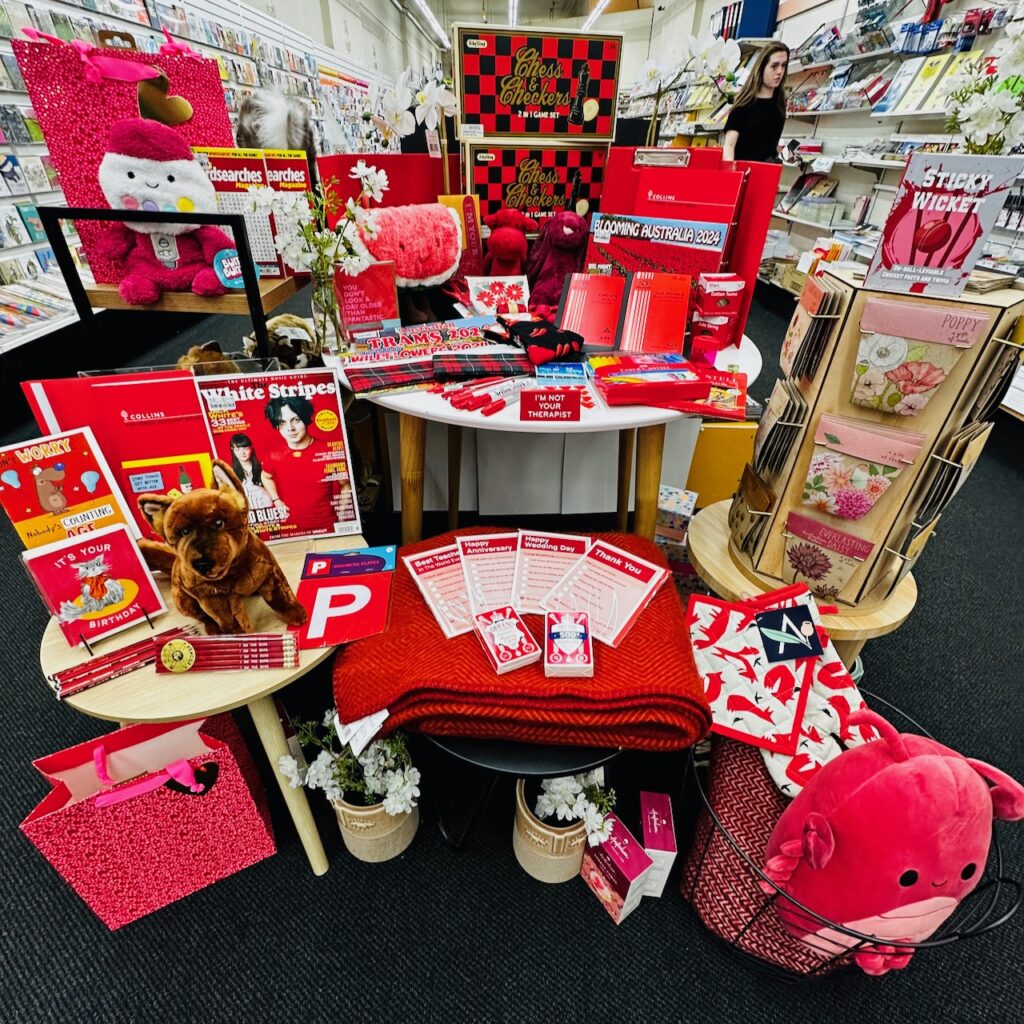
  • Colour block in a prime position. This gives products rarely in prime position to be seen. It shows off your range diversity.

What you do with this is 100% top to you. The thing is, I know these tips work. Combine them and you compound the value you achieve. It’s simple – a small time investment for a terrific return.

I like engaging with small steps. They are manageable, safe, certain. It means you’re not relying on one or two big moves, often costly moves, for your success. By spreading the risk, the load, you strengthen the foundations of the business and position it for more certain results.

Here’s the colour block tip in action. It took half an hour to do, and shoppers noticed while it was being created, they added suggestions too. The result speaks not only to red, but also diversity and to fun we have in the shop by being different.

What you do about the 9 tips is up to you of course, but let me ask you this: are you happy with the performance of your business? If you say yes, great! If you say no, you know you have to make some changes because doing the same things will give you the same results.

The advice in this post originated from newsXpress advice to its newsagency marketing group members years ago. The one-percenters list has evolved considerably, as it should.

8 likes
Management tip

Helping newsagents find local shoppers using the free Google Business Profile

The advice in this post was written for and shared with newsXpress members last year. I gave it to ALNA recently, to share it with their members. I share it here today to try and reach more newsagents.

This is free advice that costs nothing to implement and is likely to attract shoppers to your business.

Google Business Profile. Steps you can take to be more easily found.

Having an up to date Google profile is more important than ever. Google uses profile content to deliver search results.

Google‘s own data indicate that 46% of all searches have local intent. Use of Google Maps is common by people looking for something right now. Maintaining your Google My Business profile is the most important step to indexing well in local search and map results.

Google preferences Google My Business content in providing search results since it is verified content.

Sharing posts via Google My Business is possibly more important than what you share on social media.

Okay, so where do you start, what do you have to do? Here’s a simple to follow list. I have done this over the last few days for 2 of my businesses to ensure the advice is current.

  • Do a Google search for Google Business Profile. It should bring you to: https://www.google.com/business/.
  • If you don’t have a Google Business account, create one. If you do have an account, log in.
  • Once in your profile, if your business is not listed, click Add business (top right), search for your business and request it be added. If someone else ‘owns’ the business listing it could take a few days to be released to you. If your business is not found in the search, add it manually.
  • Do not rush this. Make sure you review everything.
  • Click on the pencil icon to edit your profile.
  • Choose your business category. Too often retailers select one. Select as many as apply to your business.
  • Description. Make sure you describe your business. Use at least 500 of the 750 words allowed as Google uses this in search results.
  • Hours. Make sure they are accurate.
  • Location. Make sure your business location is correct. The service area is the area you serve. Choose wisely. You can put in multiple locations. So, put in your town first, then, put in the bigger city you are near if appropriate.
  • More. Click on every option available under more as they matter in Google results. For example, noting the business as woman owned, if true, will help with results.
  • Add a profile photo if you do not have one already.
  • Click on the create post icon – it’s the third icon, next to the camera. Create a post.
  • This should be about a product.
  • Include at least one photo.
  • Start with a headline.
  • Write text. Aim for less than 200 words. Think about what people will search for. Have a good headline. Use paragraphs.
  • If you sell the product on your business website, use the add a button option to add a link to the product on your business website.
  • Google will check and approve the post.

Once you have done this, you should see the profile and post online in less than a day. Once that happens, the Google door is open for you.

Our advice is that you add a post at least weekly. Each post should be about a single product or single brand, something people are likely searching for. Keep the focus narrow. Write as you. Be relaxed. What is it you love about the product? Who is it for? Be grateful about having it available.

If you are just starting, consider a post a day for the first two weeks to get your content up and running, to encourage Google to notice you.

On the posts themselves, they should be more informative than, say, an Instagram post. remember, you are writing for people on their phones searching.

Google will preference profiles that offer fresh content. This is why I say posting weekly is important.

Your Google business profile works best for you when you have a website as that facilitates shopper browsing.

The other benefit of creating and maintaining a Google business profile that reflects your businesstoday is that suppliers will see it. This could help suppliers who pigeonhole you as a newsagency realise that you are not.

We appreciate some of you may have read this and thought it’s the last thing I need – more work to do. The thing is, more shoppers today search online than not.

Footnote: if you are thinking of paying someone to do this for you, I advise against that. This is your business. You know what you want people to find, and buy. A marketer or a friend will do more of what they want, and that may not match what you and your business need.

Now, we asked ourselves some questions for you:

  • Can I use content I put on my business blog? For sure. Google may see it as duplicate so maybe trim it for your Google profile.
  • How long should a new post be? Given that this content is most often accessed on the phone, 200 words is considered the max.
  • How long do posts last? Currently, 6 months. It used to be 7 days. Google will continue to play with this.
  • Should I always include a photo with a post? Yes.
  • How many photos should I add? At least one. My suggestion is 4.
  • How detailed should the photos be? Each photo should be one product, clearly visible.
  • Should I use hashtags? Hashtags serve no purpose on these posts.
  • Can I schedule posts? Yes, by using an external platform like Loomly, Sendible, OneUp or similar.
  • What else do I need to do with the profile? Engage. Respond to reviews. Answer questions. Show the business as engaging.

Of course, it’s up to you if you create a profile for your business. It costs nothing and is likely to help people find you, and visit.

9 likes
Management tip

What does your newsagency stand for? What’s unique about it?

In his 1960 book, Reality in Advertising, Rosser Reeves, a respected US advertising executive, introduced the world to the concept of the Unique Selling Proposition, USP for short.

Reeves defined USP in an advertising context:

  • Each advertisement must make a proposition to the consumer: buy this product and you will get this benefit.
  • The proposition must be one that the competition either cannot or does not
  • The proposition must be so strong that it changes consumer behaviour.

In the 1960s and 1970s, the concept of a unique selling proposition evolved from being essential to advertising to being essential in business. Finding your business USP was considered mission critical to businesses, retailers especially. Businesses drifted however and forgot about the importance of a USP.

Today, it is common to see ads with we will not be beaten on price or if you find it cheaper elsewhere we will sell for 5% (or more) less. These pitches are from lazy marketers who think price is the most important USP and while it is a factor to some shoppers, value is often about much more than price.

Jack Trout told us a few years ago that USP was relevant today. In 2000, he said that a Unique Selling Proposition was mission critical in business in his aptly titled book Differentiate or Die: Survival in Our Era of Killer Competition.

Differentiate of Die. There is no doubt about the call to action in the title, no doubt about the consequences of inaction.

Yet many retailers, for the most part, have remained still in the face of an onslaught of competition. Some newsagents have remained still.

Retail is complex, challenging and changing rapidly today. The differences between competitors fewer. Retailers are surrounded by competition and it grows by the day. Yet many have remained still and done nothing.

Our channel continues to be confronted by the migration to digital, more local retail competitors and online shops selling what we sell. Those who have stood still feel the impact more than others.

Smart retailers are re-acquainting themselves with the writings of Reeves and Trout and leaning about the mission critical imperative of having a Unique Selling Proposition.

Differentiation could be service, products or location or a combination of these. Differentiation will most likely not be price as anyone can match this easily. Price is, after all, the last line of defense in any business battle. That said, there are some major price-focused success stories – WalMart for example. It is rare in an independent retail situation.

To develop your USP, engage with your employees and other stakeholders. or, do it yourself with your own deep dive into what you want your business to stand for. This is leadership. Take your time. Determine what you and your business stand for. Following open and honest discussion and debate, the USP around which everyone in the business can willingly congregate will emerge.

A good USP will not require an advertising campaign to communicate. It will become obvious through actions and decisions. By living the USP in every facet of the business you soon become seen as unique by shoppers and this can drive excellent word of mouth and success for the business.

While differentiation in retail is more important today than ever thanks to today’s economic conditions, the approach to the challenge is the same as in the 1960s.

If you are not sure where to start when considering your USP, look at your POS software and the data it curates about your business for in that data will be insights into your points of differences things you can cultivate to have a stronger USP.

Your POS software is a good place to start as your shoppers show you through their behaviour what they like and don’t like about your business.

No one can tell you what your USP should be. It has to come from you, from inside your business. It has to reflect what you believe, how you want your business to be seen and known.

Here are some things that are not a USP.

  • Convenience is not a USP.
  • Opening hours are not the USP they once were.
  • Agency products like lotteries are not a USP.
  • Magazine range could be a USP as many have moved on from deep range cover.
  • Price is not a USP.

And while we are considering lists, here are some less than ideal things in business that could be a USP – note the strikethrough the S as they are not selling propositions but, rather, customer turnoffs that a retail business could become known for (in a bad way):

  • Poor customer service.
  • High prices.
  • An EFTPOS surcharge.
  • Poor range.
  • Bad opening hours.
  • Poor counter processes.

Here’s another list of some easy USPs:

  • Local community connection.
  • Community group support.
  • Product range.
  • Product knowledge.
  • Fun in-store.
  • Quality products.
  • Value.
  • Appreciation of shoppers (loyalty).

It can be tough coming up with something genuinely unique. But, once you have it, it can be worth the work.

Take your time. Do it yourself. Be the leader your business will love.

8 likes
Management tip

Advice for retailers on smarter and more customer-friendly ways to deal with EFTPOS fees than charging a surcharge

It’s an easy complaint for a retailer to make – my EFTPOS merchant fees are too high, it’s not fair, time for me to consider another supplier or to consider charging customers a surcharge.

Customers hate surcharges, especially if there is another retailer selling what you sell who does not charge a surcharge.

Every method of payment has a cost, including cash. In my experience working with retailers, the cost of cash is higher because of theft. However, it is not easily seen, especially in retail businesses that do not research or teach theft.

To address the cost of EFTPOS merchant fees on a retail business, you need to be an engaged retailer. Here are some ideas:

  • Promote cash payment – if you want the costs associated with cash of course.
  • Be clear as to the cost of using a card. You could apply a surcharge, which I think is a ridiculous idea though.
  • Price knowing that cards will be used by customers. Build the cost into your pricing model. Keep the bump under 1.5% and it is less likely to be noticed.
  • Lower a cost elsewhere to cover the cost. Look at your labour cost, for example. Shaving a hour of employee rostered time can save you around $30.00, that’s equal to purchases of $3750.00 on a card – depending on the type of card used.
  • Increase sales. While you should be single-mindedly focussed on this anyway, increasing sales helps you address the EFTPOS cost and more in the business.

It’s easy to complain  over EFTPOS fees. But … before you do that, look at your own behaviour. Here are common points in retail businesses that retailers overlook when they complain about a supplier or service related cost. These are things I regularly see ignored in favour of complaining about someone else:

  • Dead stock. A problem not seen is not a problem to too many. In the average indie retail business, dead stock is equal to around 3% of turnover.
  • Bloated roster. Some prefer to spend money on people so they have time to themselves for relaxing, golf or to sit in the back office, where no customer purchases from. I often see a bloat cost equal to around 10% of the roster.
  • Wrong trading hours. Some stay open too long while others are not open long enough. Either way has a cost to the business.
  • Being blind to theft. Theft in local indie retail retail costs on average between 3% and 5% of turnover. Not watching for it, tracking it and mitigating against it has a cost to the business.
  • The wrong product mix. GP% is a key measure of retail business performance. Increasing yours beyond what is traditional for your channel provides you with a buffer. For example, transaction count / sales can decline and you can be okay. Measure GP%. Set a goal. Chase it. The air is cleaner in above average.
  • Ignorance. No, it’s not bliss. There are insights in your software that can guide better decisions, faster decisions, more financially rewarding decisions. Yet, too many in retail don’t want to know. That failure costs them plenty.
  • Stop running out of stock. Manual process for stock reordering, by retailers and suppliers, regularly result in sell-outs, and, therefore, missed sales. Every time that happens it is a cost to the business. In a retail business I looked at recently, the cost of sell-outs was more than $3,000 in a year, or $1,500 in gross profit, all because of poor re-ordering management.

The items on the above list are all on the retailer to address. The benefit is that addressing these results ins a stronger, leaver and more valuable retail business.

Adding a surcharge is an easy step, but the wrong step in my view as doing that could shield you from more important and valuable business moves you can make.

16 likes
Management tip