What an inspiration: newsXpress Lobethall
An hour from Adelaide, in the hills. Population 2,000. What Gaby has created is an inspiration to all newsagents, especially those in small towns.
An hour from Adelaide, in the hills. Population 2,000. What Gaby has created is an inspiration to all newsagents, especially those in small towns.
Following my last post (Monday this week), Does your marketing group contract auto-renew? Does it include a lock-out period?, I outline below options you may consider if you find yourself in a marketing group contract you want to leave.
I am not a lawyer. This is not legal advice. In my opinion, a marketing group contract should be so simple straightforward and fair that it does hot need a lawyer to interpret or understand.
If your marketing group contract or agreement is complex and not easy to understand that’s a warning sign right there.
CONTRACT AUTO-RENEWAL.
If you have found your contract has auto-renewed, think about whether it was clear it would and whether the newsagency marketing group contracted you prior to the auto-renewal trigger advising you that auto-renewal was imminent. The ACCC is on record as saying that auto-renewal should be clear and that you should be contacted prior to auto-renewal with enough time for you to say no thanks.
Three newsagents in the last week have told me their newsagency marketing group contracts were auto-renewed without advance warning from the marketing group that it was going to happen. I think any independent party with authority considering this would say renewal action was unfair and that the newsagent could opt to leave the group now.
RESTRAINT OF TRADE – POST CONTRACT LOCK OUT PERIOD.
Some newsagency marketing agreements seek to deny the newsagent the right to join another marketing group for a period of time after the end of the agreement. I have heard marketing groups with such a restraining clause claim that it is to protect their intellectual property shared with the business while they were in the group. The question I have is what intellectual property?
In situations where I have seen newsagents threatened by the group they are leaving, or the lawyers for the group, I have not been able to discover any intellectual property worth protecting.
In a recent report, the ACCC highlighted that restraints which go beyond what is reasonably necessary to protect a franchisor’s legitimate interests are likely to be unfair. For the purposes of this discussion, a franchisor would be the newsagency marketing group.
NEW REGULATIONS.
In November 2023, reforms passed by parliament make unfair contract terms illegal, attracting substantial penalties under the Competition and Consumer Act 2010 and the ASIC Act 2001, with each unfair term forming a separate contravention.
I think it is possible that a newsagent with an agreement that auto-renews and / or with an end of contract lock-out restraint period barring them from joining any other group could challenge the validity of the contract.
While I am not a lawyer and this is not legal advice, if I found myself in this situation I would do several things, all at once:
My point here is that there are options for you, actions you can take that do not require a lawyer, actions that could free you from a contract you no longer want for your business.
I have seen newsagents consider taking steps to get out of a contract only to give up, saying it is too hard. I have also seen newsagents take a couple of steps and be permitted to exit a group as long as they don’t tell anyone.
If you are in a marketing group for your newsagency and want to leave but have been told you cannot or been told that you have a lock-out restraint period, it is possible one or more of the steps listed above could help you out. Doing nothing achieves nothing for your business.
The difference between being in a group doing little for your business and a group doing plenty could be tens of thousands of dollars in net profit in a year.
A good newsagency marketing group is profitable for the newsagency. Belonging just to belong to something is not commercially astute.
I am not going to list marketing group contracts here that I consider to be unfair in part because I have seen some groups with different contracts for different people, which in itself is odd and somewhat concerning. One group has recently become more threatening against newsagents who want to leave, causing considerable distress for the newsagents impacted.
One final point: everything I have written here could relate to some card company contracts I have seen.
Before you sign any agreement, read it, be sure you understand it and ask someone you trust for their opinion.
If you are in a newsagency marketing group, get out the contract you signed and read what it says about termination.
Be sure you understand the term of the contract, whether you have to give notice and if so what length of notice is required and whether there is a period after the end of the contract in which you are not permitted to join another group.
If you are not sure about these things, seek professional advice. Indeed, you should have sought advice prior to signing the contract. It is never too late to seek advice.
TERM.
Newsagency marketing group contracts vary from one year to six years from what I have seen. Personally, I think anything more than one year is too long. Aren’t you better off staying with a group because of the value gain from it rather than because they have legally bound you in a contract? Shouldn’t groups want you to stay because you want to stay.
If they really trust what they offer and the benefits they deliver for you, why lock you in?
Oh, and I do understand the need for an initial term when you first join, to learn from each other, to unlock value for each other.
NOTICE PERIOD.
Some contracts require you to give notice months ahead of the contract renewal period and your failure to do this locks you in for, sometimes, another long period. In my opinion, a notice period of two months is reasonable and anything more is unfair for the small business retailer.
AUTO RENEWAL.
I think auto renewals in a contract are a gotcha, especially if the auto renewal period is long, like a year or more as is the case for some newsagency marketing group contracts I have seen.
I suspect businesses put auto renewal and a long (like a year or more) lock in period in contracts because they know people will not realise they need to give notice to not renew. They are businesses. It’s all about their revenue.
LOCK OUT PERIOD.
Another thing I have seen in newsagency marketing group contracts is a post contract termination lock out period. I have seen them make this case to protect their intellectual property, which I think is a joke. What intellectual property? Okay in the first year maybe, but what after that time? None of the newsagency marketing groups has a system with training, regulation, branding requirements and more like you see in a McDonalds.
If you are happy with your newsagency marketing group contract, this post is not for you.
If you are unhappy, please dig out your contract and look at your options.
If you have been given a newsagency marketing group contract to sign, please read it carefully. Some have worse provisions than the few I have mentioned here, provisions that are very expensive – like demanding you access some products / services only from the supplier they dictate. I saw one newsagent recently pay thousands of dollars more for something than they would have paid had they not been in that group.
Buyer beware is the point here. Do your homework. be sure you fully understand the contract. Be sure you are happy with all terms prior to signing.
Not all newsagency marketing groups are the same.
I know of at least twenty newsagents currently in groups they want to leave but cannot. Some have received legal letters threatening against leaving and others have received less formal yet equally distressing communication. In most cases, that communication was the first time i a year their business received direct communication about their business from the group to which they belong. These newsagents would leave in a heartbeat if they did not feel trapped. None of them want a legal fight, and I suspect some in the marketing groups know this, and use it to their advantage, and the disadvantage of their members.
If you are in a newsagency marketing group, get out the contract you signed and read what it says about termination.
I am grateful to ALNA and Lotterywest for the opportunity to attend the industry breakfast in Perth yesterday.
It was terrific hearing from the Minister for Small business as well as the new CEO of Lotterywest about the value they place on lottery retailers, who are predominantly newsagents in Western Australia. They spoke to the value of their local small business retail network and the connection with local communities through the grants made by Lotterywest.
The meeting was another reminder of the value of Lotterywest being a state owned enterprise. I bet premiers on the east coast wished they still owned lottery businesses given the financial value invested back into the WA community each year. It was also a reminder of excellent work done by ALNA for newsagents here.
The other aspect of government ownership is the relationship with retailers, it is very good. retailers feel listened to and valued, as opposed to the type of relationship lottery retailers experience outside of the state. Compensation is considerably higher too.
The other value of yesterday’s meeting was the opportunity to catch up with industry folks before and after the breakfast. Invaluable.
In case you are not familiar with the Lotterywest Community Grants Program, it provides significant funding to community organisations across the state. These grants support projects that benefit the community in a variety of ways, including:
Local retailers often feature in grant presentations.
Following the federal government’s announcement about debit card fees, the reserve bank today announced details of its consultation on card fees. The issues paper provides good background on the move:
The Reserve Bank of Australia (RBA) is conducting a review of merchants’ card payment costs and surcharging. Australians use cards extensively to pay for goods and services and benefit from the convenience and security provided by card payments. However, in an environment of heightened concern around the cost of living and ongoing changes in payment preferences, merchants and consumers are increasingly focused on card payment costs and surcharging. These two issues are linked as merchants would be less likely to surcharge consumers if card payment costs were lower. Accordingly, it is timely to review whether the RBA could do more to put downward pressure on merchant card payment costs by promoting competition and efficiency and whether the RBA’s surcharging framework remains fit for purpose. This review also recognises that some years have now passed since the surcharging framework was introduced.
Retailers have an opportunity here to have their say in relation to payments. Take your time to read the issues paper and understand the extent of this first phase of a bigger project.
The RBA is seeking views from interested stakeholders on the issues raised in this paper. Written submissions on the issues discussed in Section 2 should be provided by 3 December 2024 to: pysubmissions@rba.gov.au
This is a hot topic for retailers and consumers. Having your say puts you into the conversation.
While associations, groups and other collectives will lodge submissions, my experience with government enquiries is that they appreciate hearing from individuals, or in this case, individual businesses.
The supplier of the 2025 Australian Firefighters Calendars has made this demand of retailers, via a major wholesaler, GNS:
To move forward, I will need written guarantees by the directors of your company that all GNS customers will not sell my calendars online. I will not supply GNS unless I have directors’ guarantees that GNS customers will not sell my calendars below my listed price until January 1st, 2025. I have attached a supplier form for you to sign.
To their credit, GNS responded well:
At GNS, we believe in upholding the law and ensuring our customers’ freedom to conduct business as they see fit. As such, we are not willing to impose any restrictions on how you go to market with your products. Unfortunately, this means we will not be receiving any stock of the Firemen calendars.
What makes the move about the 2025 Australian Firefighters Calendars interesting is that these calendars are widely available online. A quick search shows them as available online in Australia via Amazon, Calendar Club, eBay, Just Calendars, Mega Office Supplies and more. It is even listed on the catch.com.au website.
I can’t figure out why the supplier would demand the directors of GNS to agree that retailers they supply will not sell the calendars online.
Of course, the directors of GNS can’t impose such a restriction on their retailers. Their response is good.
The move makes the 2025 Australian Firefighters Calendars less appealing in my view. No matter, there are plenty more Australian designed and made calendars supporting worthy causes available for newsagents and calendar retailers to stock. That’s what we are doing: focussing on calendars we can sell in-store and online, calendars where the supplier does not place restrictive requirements on how we run our business.
The 2025 Silo Art Calendar is a good example of a calendar well worth stocking. It raises money for a good cause, shines a light on Australian towns and, best of all, features Australian art. This is a calendar we sell plenty of in-store as well as online. People love posting it as a gift to friends overseas. We have offered this calendar for years. It’s been a huge hit.
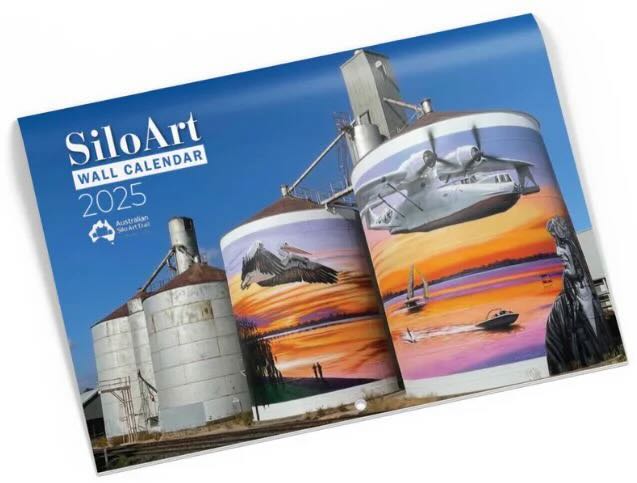
If you are looking for calendars to stock for 2025, look at Bartel, Browntrout. Waterlyn and other local companies that have terrific calendars available.
It would be good to know if sales of the 2025 Australian Firefighters Calendars are impacted by the restrictive conditions.
If you want/need to make a case to your landlord for rent relief – short or long term – here is a list of what I suggest you assemble to enable you to make a case. This is what I’d ask from you if you seek our help. Your evidence is key. Too often retailers ask for rent relief without making a business case and then wonder why their request was rejected.
Take your time. Be thorough. The more complete and professional your documents the more notice will be given to your request for assistance.
Once you have all of this information together look for a narrative, a story, which supports the proposal you want to make to the landlord.
By narrative, I mean a case, a story, the reason – to justify your request. The data you have gathered will/should support this.
If you do not have a specific proposal, what you actually want – work it out.
It is not enough to say you want a better deal, a discount on rent or some other relief. Landlords get that all the time. Your request needs to come with something for them. Be specific and ensure you have the data necessary to justify your claim.
If your P&L shows your profit is stable or improving, your case will be hard to make.
If profit is falling your case is easier, not too easier, but easier nevertheless. You should not manufacture figures to suit your case though. Look at the accurate data and listen to what it tells you.
If your P&L shows profit declining or you making a loss, consider what you actually want as a result of this.
Too often retailers go to a landlord with a problem and not a solution. Work on your solution and use the information you have gathered to justify the solution to your landlord.
The best people to pitch a landlord for assistance are the business owners. There are some horror stories in the newsagency channel about so-called leasing experts who have left newsagents worse off than ever.
Prepare your proposal, based on verifiable evidence and present it without emotion.
The proposal should be in writing, not too long, with the documents you have assembled as attachments to support your case.
Usually, a landlord will want a meeting. Ensure there is an agenda. Go with prepared notes and your evidence. Do not get sidetracked. Do not engage in emotive arguments.
Your sole focus ought to be on the outcome you want and the evidence you have which supports this outcome.
FOOTNOTE: be true to yourself. If what you want is not supported by your own business data then don’t ask for it. Landlords get requests every day from tenants asking for a better deal. Those who achieve it are those who have made the case.
MY EXPERIENCE: I have followed this advice in major shopping centre settings as well as in a couple of high street settings, and achieved a good outcome each time.
This advice is part of the extensive business support advice provided by newsXpress. newsXpress is a marketing group serving 200 newsagents.
Every week I hear another story of problems with newspaper delivery to retailers: late deliveries, missed deliveries and more.
The most recent issue relates to a regional Victorian town where the local retail newsagent no longer receives newspapers in time for when they open at 7am. The delivery contractor delivers papers to another retailer two minutes away from the newsagent, then does home deliveries and, finally, to the local newsagent.
Often, deliveries to the newsagent are short, sometimes less than half what they can sell.
Contact from the retail newsagent to News Corp and Nine Media has achieved no resolution. It appears they have either no interest in resolution or no ability to direct the delivery contractor to deliver the papers when they deliver to the cafe two minutes away.
The situation is ridiculous, petty.
Most newspaper delivery contractors I know of do a terrific job and provide excellent service to retail newsagents. Not this one though. Some decisions seem targeted.
I wonder if the disinterest of the publishers has anything to do with the retail newsagent handing their run back a year or so ago. If that is the case, it’s petty. It that is not the case, the newspaper publishers have a broken system that they appear unwilling or unable to fix. Either way, they appear uninterested in the issue and its resolution.
In the meantime, local newspaper readers miss out. Maybe that is what the publishers want. Who knows?
This specific situation does seem to have an easy resolution, if the newspaper publishers want the resolution. The delivery contractor could be directed to deliver to the two sub agents – a cafe and the retail newsagent – at the same time, as they are two minutes from each other.
Years ago, newspaper publishers were demanding of newsagents in terms of delivery times and accuracy. Threats were made. newsagents complied rather than risk losing their business. Today, it’s different. The newspaper contractor in this story has demonstrated no interest in resolving the delivery time, quantity and contact issues – it’s not possible to contact them during the day to resolve issues.
Again, newspaper customers are those that miss out. Newsagency staff are impacted too as they are the front line dealing with customer complaints.
If only News Cop and Nine Media cared about the mental health of newsagency staff and cared about their newspaper reader customers.
Continuing the trend some newspaper publishers ignore, retail sales in Australia were up in August according to the latest data from the Australian Bureau of Statistics.
Overall, the retail sector in Australia demonstrated strong resilience and growth in August 2024. The combination of warmer weather and ongoing consumer confidence contributed to the positive performance.
This is good news for retailers. The even better news could be in the bus
While newsagents sell falls into a range of segments tracked by the ABS, there is this indication around books and newspapers in their August data:
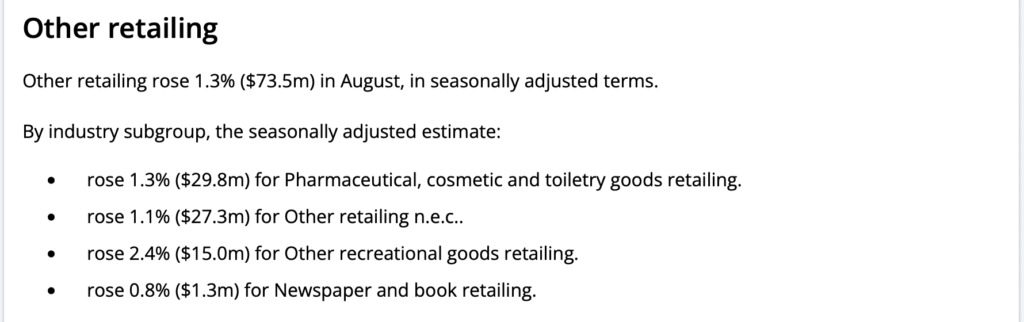
Of the various segments newsagents cover, clothing is the strongest.
It’s valuable looking at the ABS data against your own data comparing a month to the same month a year earlier. I say a year earlier as at a store level tha type of comparison is more useful.
The strongest growth product categories that I see in newsagencies right now are:
Price point wise, I am seeing stronger growth for higher price point items compared to lower cost, like under $50.00.
Another data point in the ABS data that’s interesting is that Victoria is the equal strongest state / territory in terms of growth. Reading the Herald Sun you’d not think this is the case.
The ABS data is useful as to can help to inform consumer sentiment and that helps us.
I am hosting a free workshop on Zoom for anyone considering a website for their business. We’ll explore keyword data and what it means for website traffic generation. We’ll also look at different websites newsagents have for their business. Anyone is welcome. It’s not a sales pitch, nor is it newsagency software specific. Information shared will be useful for you to action right away. I will also cover some of my 0wn website failures and what they taught me.
Here’s the link to join in: https://us06web.zoom.us/j/84836347652?pwd=ZYjW3LdaBg1MjLC9bL5YcWUfPGEabX.1 Meeting ID: 848 3634 7652 Passcode: 633738
Join me in a chat with Ravi as he shares us his journey from engineer in India to flourishing retailer in Launceston Tasmania.
Ravi’s newsagency at Prospect Marketplace near Launceston Tasmania looks nothing like a newsagency. This is a wonderful and inspiring business transformation that has locals loving shopping there.
It is a true treasure hunt retail experience, offering shoppers of all ages fun and inspiring engagement opportunities.
What Ravi has achieved in what was a traditional retail newsagency is an inspiration to other newsagents. He’s done it on a tight budget, using items bought at markets and elsewhere to bring character and warmth to his shop.
I love seeing retail transformations like this and are grateful for the opportunity to share.
I was in Ravi’s shop yesterday, September 30. It’s close to four months since I was last there. As Ravi and I discuss in the video he has made the changes on a tight budget.
The customers are loving what he has created, as I got to see for myself when in the shop.
This is an inspiring business.
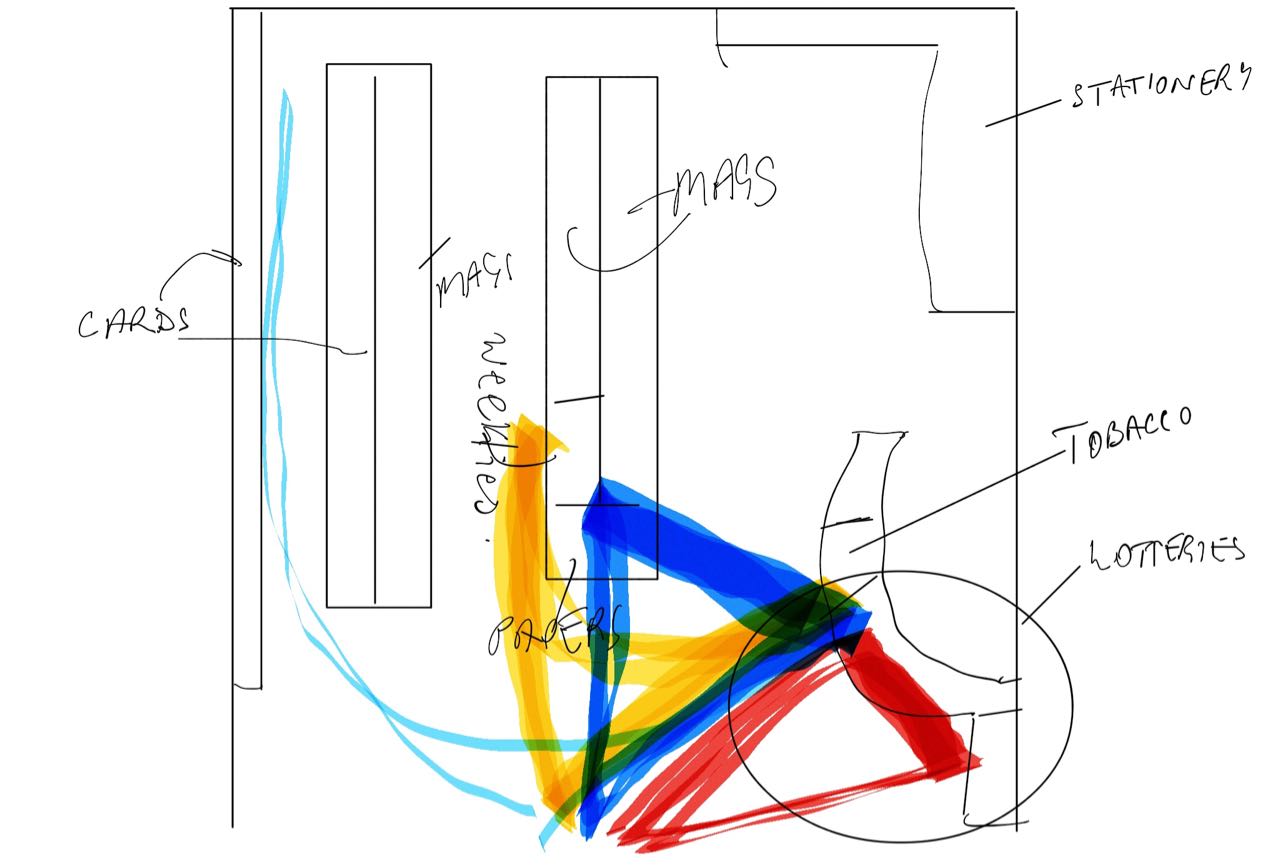
This very rough sketch from me depicts a typical local small business newsagency layout, a design often encouraged by The Lottery Corporation, newspaper publishers, and magazine, card, and stationery companies. The focus always was on providing ample space for each supplier, with little consideration for the needs of the business paying for the shopfit.
The result was a zoned business that was inflexible and primarily served the suppliers’ interests. Too many newsagents today continue to operate with similar layouts, despite their inherent inefficiencies.
The bold colours represent high-traffic product categories, such as lottery, magazines, and newspapers. However, analysis shows that customers in these categories rarely purchase other products. For example, around 80% of newspaper purchases do not include any other product based on the mst recent newsagency sales basket analysis.
The current traditional local small business newsagency shop layout actually discourages efficiency, particularly for lottery products, which often demand a prominent front-of-store location. This can hinder the sale of other products.
The red, blue, and yellow lines represent the typical customer journey through a traditional newsagency. These lines illustrate the inefficiencies and lost opportunities in such a layout.
The failure to adapt to changing times is a significant reason for the closure of many local small business newsagencies in Australia. It’s time for the industry to embrace change and move away from outdated business models.
In 2009, I proposed a flexible newsagency design that could be easily adapted to evolving needs. Unfortunately, many businesses have continued to cling to traditional layouts, leading to financial losses.
It’s crucial for newsagents to push back against suppliers who demand excessive space or prime locations. These demands should be based on sound commercial reasons, not simply the supplier’s desires.
By analysing foot traffic patterns and customer behaviour, newsagents can identify opportunities to improve their layouts and increase sales. It’s time to modernise and adapt to the changing needs of customers.
Here are five steps I recommend for creating a more commercially viable use of your space:
These 5 recommended steps are to get you started. The list for transforming your newsagency from traditional to relevant is long, much longer than 5 steps. Most of the steps will be unique to your business: the place from which you start, your desired destination, your location and your resources. Changes are needed daily.
Transforming a traditional newsagency can be done. There are plenty in the channel who will help. My details are: mark@newsxpress.com.au and 0418 321 338.
It doesn’t matter how traditional your local small business newsagency is, how big or small your shop is, whether you’re in the city or country or how little you have in resources. There are always steps to a brighter future you can take.
This blog post has enough advice anyone can act on without having to pay for anything. That’s a reason I started the blog and continue to write here – to provide a free resource for local small business newsagents in Australia they can consider and act on if they consider it appropriate for their business.
The advice I have provided is advice I have followed myself in businesses I have purchased that were traditional at the time of purchase. The 5 steps are basic, and they work.
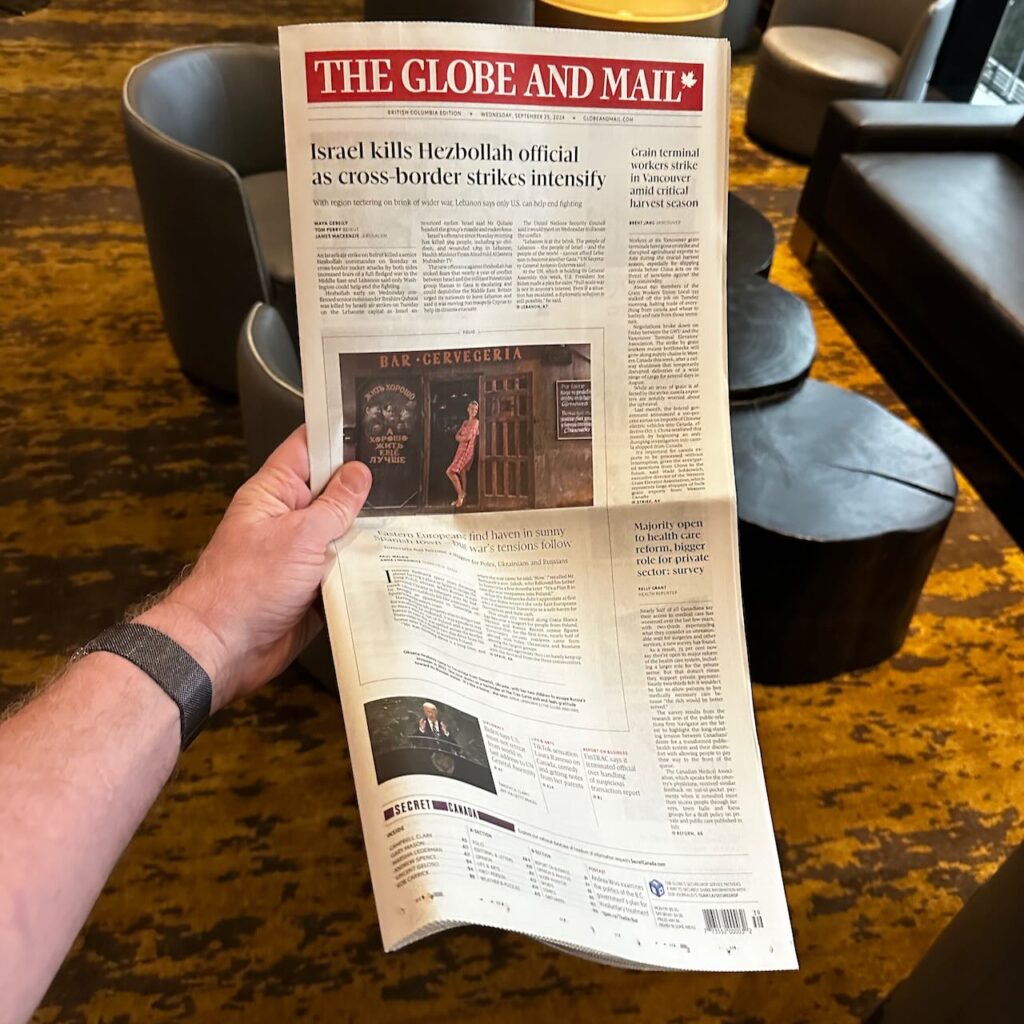
I am in Vancouver and enjoying reading The Globe and Mail. This is a newspaper how I remember it – compared to what we now see in Australia.
The Globe and Mail features actual news on the front cover and inside. There is little or no clickbait. No ads cluttering the front page either. It’s a narrow paper physically, 30.48cm wide. I like this format, Berliner I think it is called.
From WAN-IFRA I can see that The Globe and Mail has 300,000 subscribers, of which 210,000 are digital-only and 95,000 are print subscribers. Elsewhere I found out that print circulation is reportedly 65,000 copies a day.

It’s readily available in shops and hotels.
Here in Canada newspapers appear less engaged in politics. They report it for sure. What’s missing is the lobbying and agitation we see often in Australian newspapers.
At least newsagents are mentioned in their social media promotion of the title. It would be good if they pitched us ahead of the supermarket giants.
On sale tomorrow at the AFL Footy Festival at Yarra Park and from Thursday at @Coles, @woolworths and newsagents around Australia. Your complete guide to the biggest and best day of the year.
244 pages, $15@1116sen @AFLNation pic.twitter.com/mtS5mg867B— AFL Record (@AFLrecord) September 24, 2024
Then, there is this ignorant tweet abut “all good newsagents”.
Awesome to be part of the @AFLrecord grand final edition.
“Keepers of the flame” highlights those legends who provide mountains upon mountains of footy history gold in a time when recency bias has a stranglehold.
$15 at all good newsagents and of course the MCG on #AFLGF day pic.twitter.com/bTc2yb4H4L
— Dylan Leach (@NedsDylan3Votes) September 25, 2024
We have many suppliers to newsagents and other small business retailers who are living in the dark in terms of how they transact with retailers.
Here are 7 things I think suppliers need to do to drive purchases by retailers:
There will be some suppliers who will say this is too complex. The thing is, investing in these steps will, I am sure, boost sales and improve retailer / supplier stickiness.
How we all do business has changed. It is a waste of time having to fill in a paper order form, scan this and email it to a supplier. It is a waste of time having to meet a rep to discuss something face to face that I could scan in minutes at a time of my choosing. It gets all the data in the right place at the right time if I can transact online.
I get the interest from suppliers in personal contact. This is where good sales reps make good money for the companies for which they work. The reps are not working for retailers.
Through Faire and several other online platforms plenty of us are having terrific sales experiences with new suppliers. Old-school suppliers are being left behind.
How we all do business has changed fundamentally. Keep up. Do better even.
Even though it is plenty of months away, products have already started flowing for the celebration of the Year of the Snake.
We have offered Chinese zodiac related products for years. This year, the Year of the Dragon, it has been worth thousands of dollars in revenue.
Several state governments are in on the opportunity, offering birth certificates tailored to the various zodiac characters. I mention this to show that interest is broad from the practical through to high end gifting, like coins valued at $5,000 and more.
Current search engine searches for Year of the Snake in Australia are at 12,000, making it an easy keyword to leverage. That will spike as the year draws closer. The Year of the Dragon searches, for example, peaked at 350,000 a month. Each search is an opportunity for retailers.
I’ve talked about this opportunity with several newsagents who said they did not have customers who would be interested. What I know for sure from online sales is that we don’t know what we don’t know. Chinese zodiac shoppers come in many forms across a broad age range and many social settings. And, people buy for different reasons: for their home, for friends and as an investment – this is certainly the case with high end coins.
I think local newsagencies offer and excellent opportunity for leveraging Chinese zodiac related products and gifts and while the Year of the Snake will not reach the peak interest we have seen in the Year of the Dragon, it is valuable. I think of the opportunity as a season. In my own case, that season passes easter and Father’s Day in commercial value to the business.

There are plenty of fringe seasonal opportunities like this with which we can engage to attract new shoppers to our businesses. It’s vital as new traffic is truly the lifeblood of our future in retail. If you are not attracting new shoppers you are not nurturing the value of your business given declines in core product categories.
If you are not sure about Chinese zodiac products, do some research. There is plenty of evidence of excellent product availability and ways you can promote these in the context of your newsagency business today.
Here’s a short video from me exploring this quote from Helen Dowling, CEO of Newspower, in an article published at www.realcommercial.com.au.
Newsagents are the hub of a community. And that’s a great word to keep in mind – community. For a lot of small towns, the newsagency is a one stop shop, so it’s all about what they can offer their community that’s not there already.
I disagree with Helen, as I explain here:
The purpose of every newsagency business is different. The notion of us all being the same and having the same focus is old-school. Years ago, when newsagents were primarily agents, being a hub in the community made sense. Following deregulation and the dilution of the value of being an agent, the commercial value of being a community hub, too, diluted.
What is the future of the local Aussie newsagency? It’s bright for those who look beyond tradition and embrace change.
Thinking of yourself as a community hub feels to me too limiting, out of date and not commercially focussed.
I am glad this quote from me made it into the article:
There are newsagents in regional Australia making up to $500,000 a year selling gifts and homewares. They still do the legacy stuff, but their real interest as retailers is in non-newsagency items. That’s where the future lies.
As I cover in the video I shot this morning, our channel is different to the past. People need to realise that, including plenty who serve within the newsagency channel. Look ahead people.
…
I own and run newsXpress, a marketing group that competes with Newspower. Like everything I post here, this post reflects my opinion.
I am grateful to Henry Johnstone of Real Commercial for their questions about the state of the Aussie newsagency reflected in a broad article published recently: ‘Move with the times’: How the humble newsagengy became a retail destination.
Newsagency evolution
It’s no secret that the newsagency of 2024 looks nothing like it did 20 years ago.
With over-the-counter newspaper sales declining at a rate of 11% year on year, many traditional newsagents have evolved into convenience-based businesses, which has afforded owners the opportunity to embrace a wider choice of revenue streams.
A 2024 IBISWorld report revealed that of the industry’s $2.2 billion in annual revenue, 21.5% of sales can be attributed to books, 20.5% to newspapers and magazines, 16.9% to stationery, cards and gifts, and 12.9% to lotteries.
According to the intelligence organisation’s data, the remaining 28.2% of sales are listed as ‘other goods and services.’
Mark Fletcher, CEO of Tower Systems – a company that supplies software to specialty local retailers – said newsagents have the potential to thrive in the digital age by not seeing themselves solely as newsagents.
“I know of businesses that have opened cafes, while others have gone into garden centre products. I know of a newsagency in Victoria that created a baby shop within their business and are now going gangbusters in that space.”
“By all means sell papers and magazines, sell lottery tickets, but don’t let those things define you,” Mr Fletcher explained.
“There are newsagents in regional Australia making up to $500,000 a year selling gifts and homewares. They still do the legacy stuff, but their real interest as retailers is in non-newsagency items. That’s where the future lies.”
…
Last month, ABC News published a story on the Mansfield Newsagency in regional Victoria and its failed attempts to find a buyer.
“Unfortunately, it’s an industry nobody wants to take on anymore,” owner Frank Livingstone told the ABC, blaming the decline of his business on the demand for online news outstripping print media.
It’s something Mark Fletcher vehemently disagrees with.
“You can’t blame the decline in print for newsagencies closing,” Fletcher posted on his blog after the article was published. “A business closing because of this is a business rooted in the past. Smart newsagents started transforming their businesses 20 years ago.”
While the official number of newsagency retailers is difficult to pin down, IBISWorld currently quotes a figure of 1,784, while software supplier Tower Systems believes the number is somewhere closer to 2,800.
It’s good to see a better balanced view on this than copvered recently by the ABC and some others.
Here’s what the Newspower CEO said:
“Newsagents are the hub of a community. And that’s a great word to keep in mind – community. For a lot of small towns, the newsagency is a one stop shop, so it’s all about what they can offer their community that’s not there already.”
I think Helen is wrong. Every newsagency in Australia is a commercial business and ought be run as one. Profitability has to be the priority ahead of any community service as it is only profitability that will give the business a future and the owners what they need / want from their business.
I think Helen’s quote shows where Newspaper is at today. It reminds me of the Jethro Tull song, Living In The Past.
Here are 6 things to do to rank higher with Google and other search engines:
Here’s how you can optimise meta titles and descriptions in Shopify:
Additional tips:
Each week add new blog posts. Each post should be about a single product or a single brand. Talk about what you love about it. Be personal. Use a friendly and engaging tone. Write more than 350 words, ideally above 500 words. Refer back to your physical shop in the post. Use the product name or keyword or phrase you are targeting at least five times in the post – use it naturally though.
If you are not sure what keywords to target, ask someone. I provide this advice, based on data evidence, free to Tower and newsXpress customers. The data I source is through a platform I pay US$300 a month to access. It’s up to date for Australian keyword searches.
Keyword targeting in your content is key to the content driving your website higher in search engine results.
Yes, this is all hard work. Do it if you want to rank higher. A website is a forever hungry beast.
Over the last three days in Melbourne newsXpress members met in Melbourne to discuss the future, explore opportunities and connect face to face.
There were insightful and inspiring supplier presentations, taking us behind the scenes with invaluable data insights, and there were plenty of attendee driven discussions about business, and especially new customer traffic opportunities.
With hotel accommodation, meals and drinks covered by newsXpress thanks to wonderful supplier support, the cost of participation was minimal for newsagents from Western Australia, Queensland, New South Wales, the ACT, Tasmania, South Australia and Victoria.
We discussed the economy, our channel, current retail sales data nationally and for the channel, what’s working, what’s not, opportunities for the rest of 2024 and into 2025 as well as entirely new product category opportunities.
Tuesday rounded out the conference with round table discussion on: getting online (how to, cost, tips, opportunities); your exit strategy – how to plan for a good exit for you, your family and your business; and, chasing margin dollars – how to avoid too many newsagents make in chasing the wrong thing when negotiating.
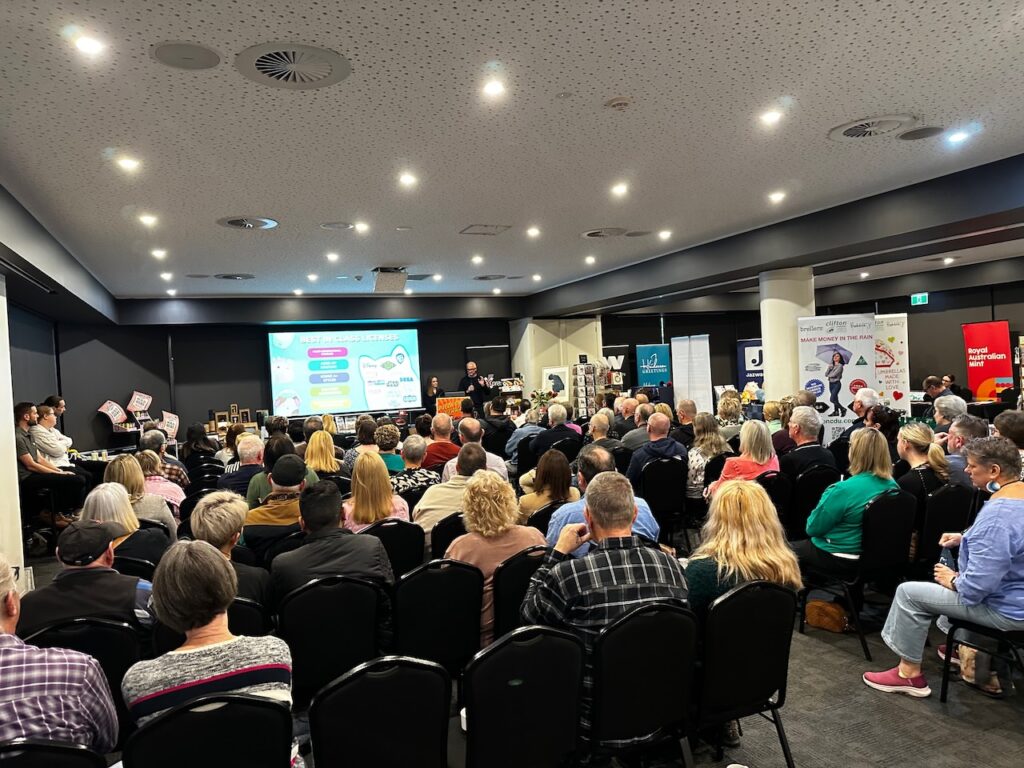
Over the course of the two days, plenty of meals, drinks events, morning and afternoon team breaks and the conference sessions themselves, everyone was engaged and involved, working on their businesses, taking the opportunity of being outside of the business to do this and plan for what’s next.
It was a relaxed conference, not too formal, with plenty of laughs along the way.
Alongside the conference was a terrific trade show with products from twenty different suppliers. Suppliers were thrilled with the results, which new accounts and business written. This business happened naturally, without pressure.
But let’s get back to exit strategy. Each speaker spoke to this topic, with their own stories and newsXpress added context for lcoal retailers in terms of the day to day decisions that can provide useful opportunities when one does decide it is time to exit the business.
There aren’t many national conferences for newsagents any more. For 30 or 40 at this newsXpress conference it was their first with the group. The feedback was terrific, people found attending invaluable personally and they look forward yto implementing initiatives to make it valuable for the business.
If your business is in a group, go to their national conference, engage, ask questions, network. Those few days out of the business thinking about the business and working on it can be invaluable as this week has proven for plenty at the newsXpress conference.
The future looks good.
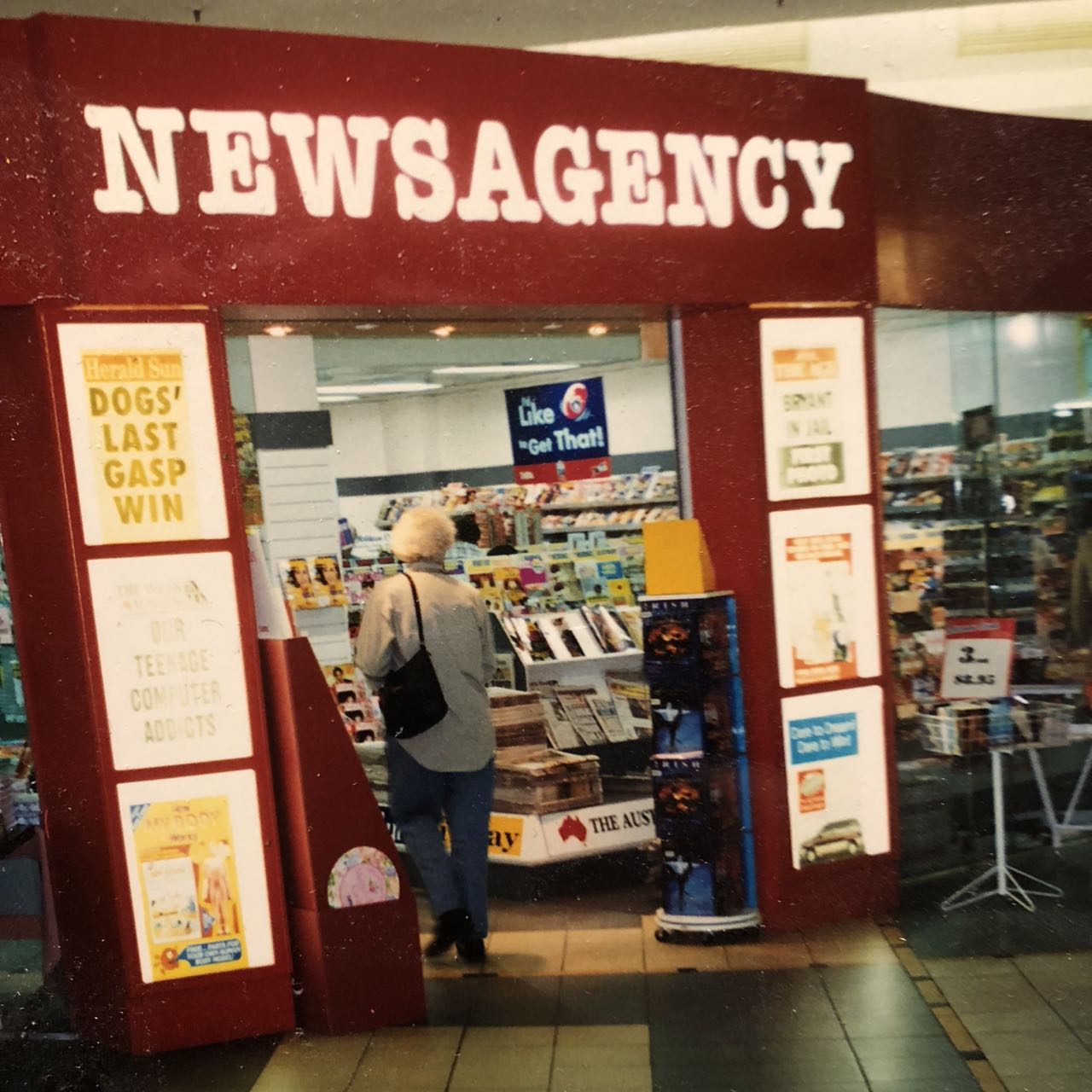
This photograph captures the second location of my first newsagency in Forest Hill, Victoria. I acquired the business in February 1996 after the previous owner went broke. We moved because the landlord required us to relocate a few months after buying the business. This new location reflects the focus at the time on the newsagency shingle and using newspapers to attract shoppers.
The shop’s retail floor space was traditionally divided into thirds: one for papers and magazines, one for stationery, and one for cards.
We operated from this location for three years before being relocated to a new site in 1999, where we added Tatts lottery to the business.
In 2006, we sold the home delivery run—for the same price I had originally paid for the entire business—and six years later, we sold the entire business.
In the twenty-eight years since I bought my first newsagency things have changed considerably. I think, right now, the pace of change is faster that ever. I also think any are not noticing the changes.
I don’t recognise the business in the photo. It is so out of date in terms of what I consider a newsagency to be today.
None of my shops today have lotteries. Cards are allocated 20% of the floor space, magazines under 10% with the rest being taken by gifts, homewares, collectibles, books and other good margin products.
It’s valuable to look back and reflect on the journey from this perspective.
Two significant coin releases yesterday from the Royal Australian Mint provided a terrific traffic boost for newsagents with stock. Both the silver proof and decorative Festive Florals coins sold quickly, and well.
What’s beneficial about coin shoppers is that they typically purchase other items during the visit – around 70% of the time they do from our data. This makes coins an efficient product for us to stock.

This second coin, the silver proof, is another example of price not being a barrier. It sold out first with little concern opver the 4135.00 price tag.

Key to leveraging the customer visit is related products that will appeal to this shopper, that the shopper can include a coin collector, a Christmas seasonal buyer, a general collector or anyone buying for any of these. Irt takes a it to understand the various shopper personas. Once you do understand, you can make good coin. (Sorry about that!).
Five years ago newsagents (except for Post Offices) would not have had access to mint coins. Now, four mints supply products to the channel, delivering millions of dollars in revenue and more than this in terms of value of new shopper traffic.
Coins are a valuable opportunity and that value will grow into 2025 and beyond.
The release of the Bluey coin products through Australia Post has provided an excellent opportunity to pitch all things Bluey in the newsagency from the magazine to the toys to the plush to the latest release of Bluey licenced cards from Henderson Greetings.

We have had the Bluey cards since they were first released a few years ago. They have been a hit commercially and creatively. It’s good to see the licence renewed for Henderson as they have served it well with their Aussie made products.
While the magazine, toys and plush are cool, it’s the cards that have the broader appeal given those shopping for cards. We have found counter placement to be terrific for boosting impulse purchases. It’s an easy win.
Bluey is an easy win. Currently, there are 1.4 million Bluey related searches in Australia. If you have an online shop with Bluey products available, leveraging searches for the keyword ought be a priority. You can do this through thoughtful product names and descriptions as well as supporting blog posts. This type of marketing costs in time only. It is easy to engage with.
I’d note that leveraging the Bluey keyword is challenging because so many others are trying this too. You have to be smart and you have to have a range of content. One blog post, for example, is not enough. Publish several on different Bluey topics. Have as much product as possible too. This raises your profile with the search engines.
If you are not an Australia Post LPO and have not had access to the coins, there are other Bluey products you can access to make the most of this mega-licence. My advice to newsagents is to embrace the Bluey opportunity, even if you think you do not currently serve that customer. This is a licence that surprises with its broad appeal.
If you do have the Bluey cards, toys, plush and magazine, my advice today is to place it all together, in the window or somewhere else people will see it. Ride the coattails of the coin release for an easy sales boost.
Engaged retailers have their plans in motion for port Father’s Day activity on the shop floor. For some it will be a move into Halloween, for others it will be a Spring launch of new products, for some it may be a move into graduation and / or wedding season, while for others it will be clearance ahead of Christmas.
It’s important that there is a shop floor reset from today, a major reset, the kind of reset shoppers notice and comment on, something that gets people talking to others about.
Today is not too late to consider and act on a post Father’s Day reset.
Taking down Father’s Day and not making a change into something fresh is a mistake in my opinion. Certainly, newsagents years ago would do that, do nothing after Father’s Day for a while. Our in-store actions back then were guided by suppliers. The needs of suppliers don’t match the in store calendar needs of newsagents, or any retailers.
Focussing on a Spring launch would need you to have bought stock months ago to be ready for this. The same is true with Halloween. Graduation and Wedding are easier to lean into as there is plenty of product available and you could have it in-store within a few days.
If you have not planned for post-Father’s Day and want some tips for what you could pull together easily, here are my suggestions relying on products you are likely to have in0store right now:
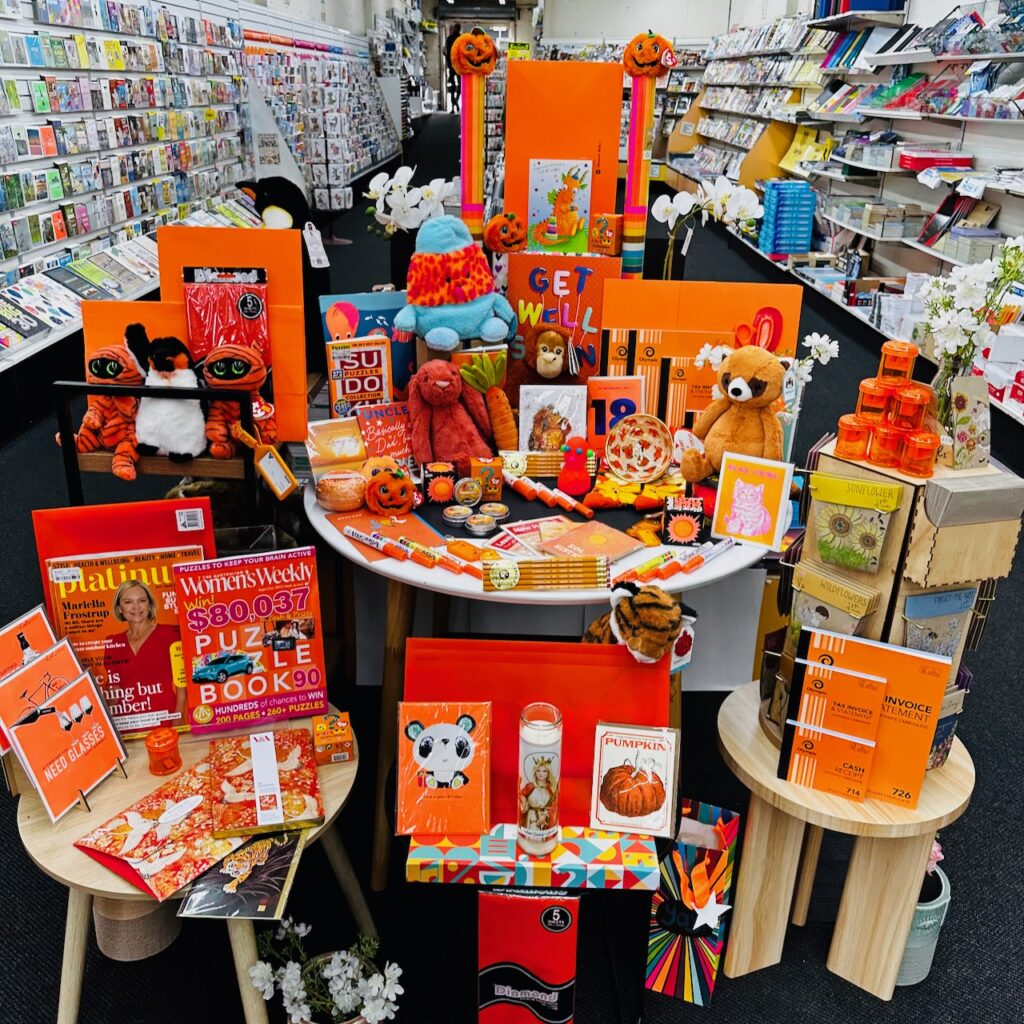
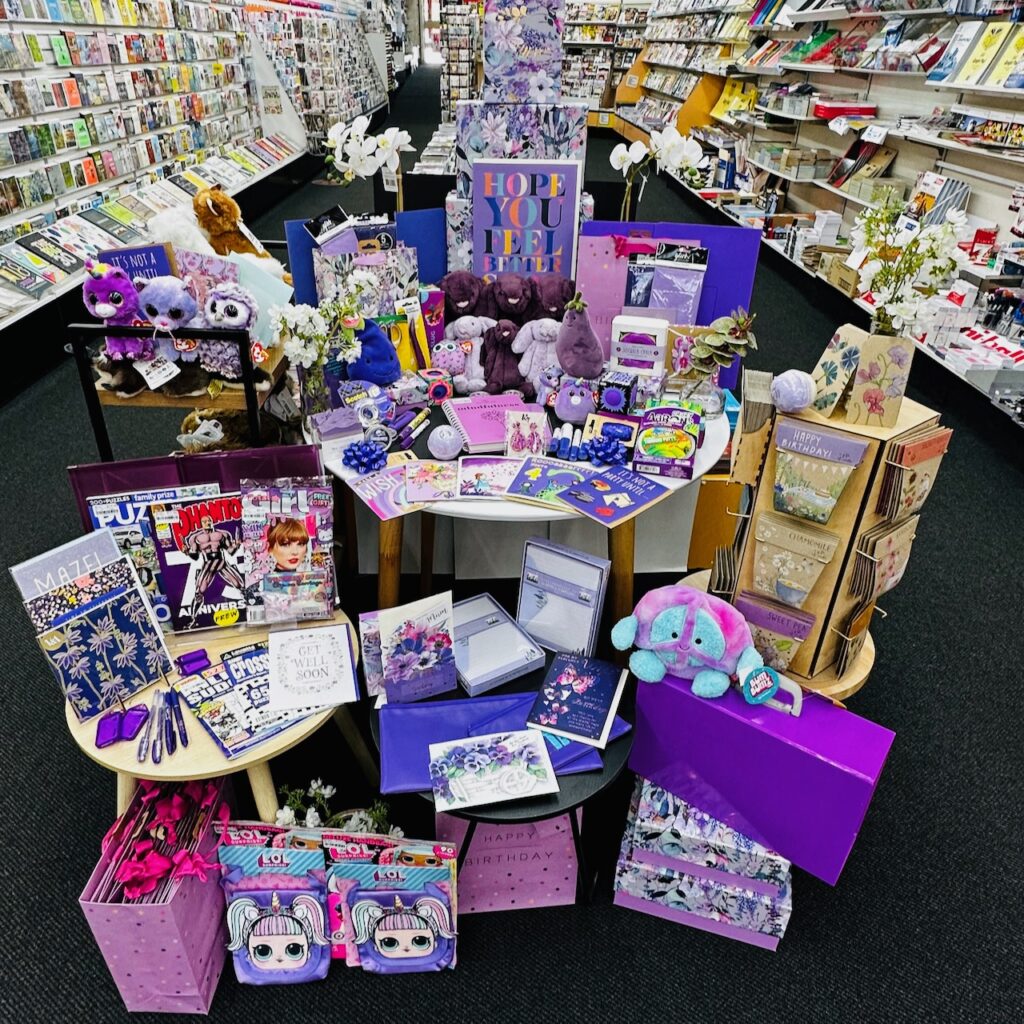
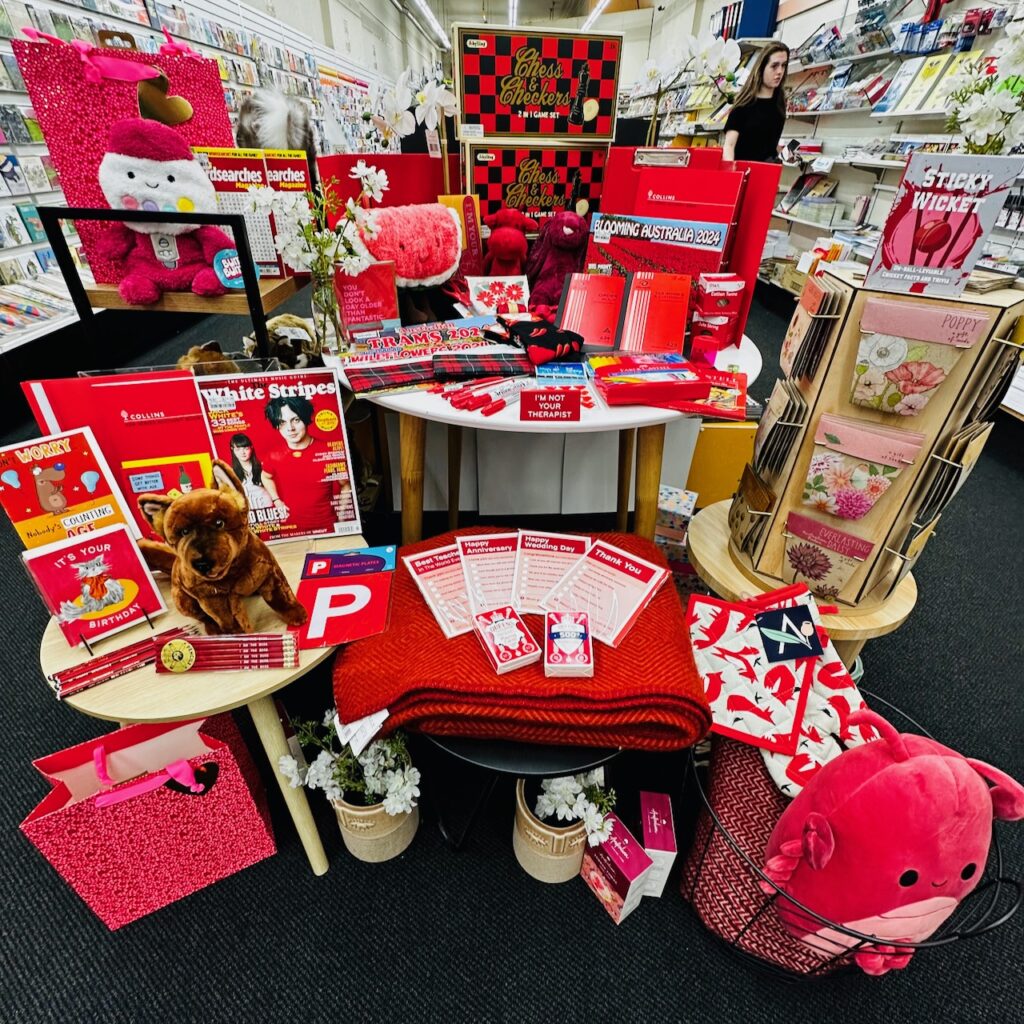
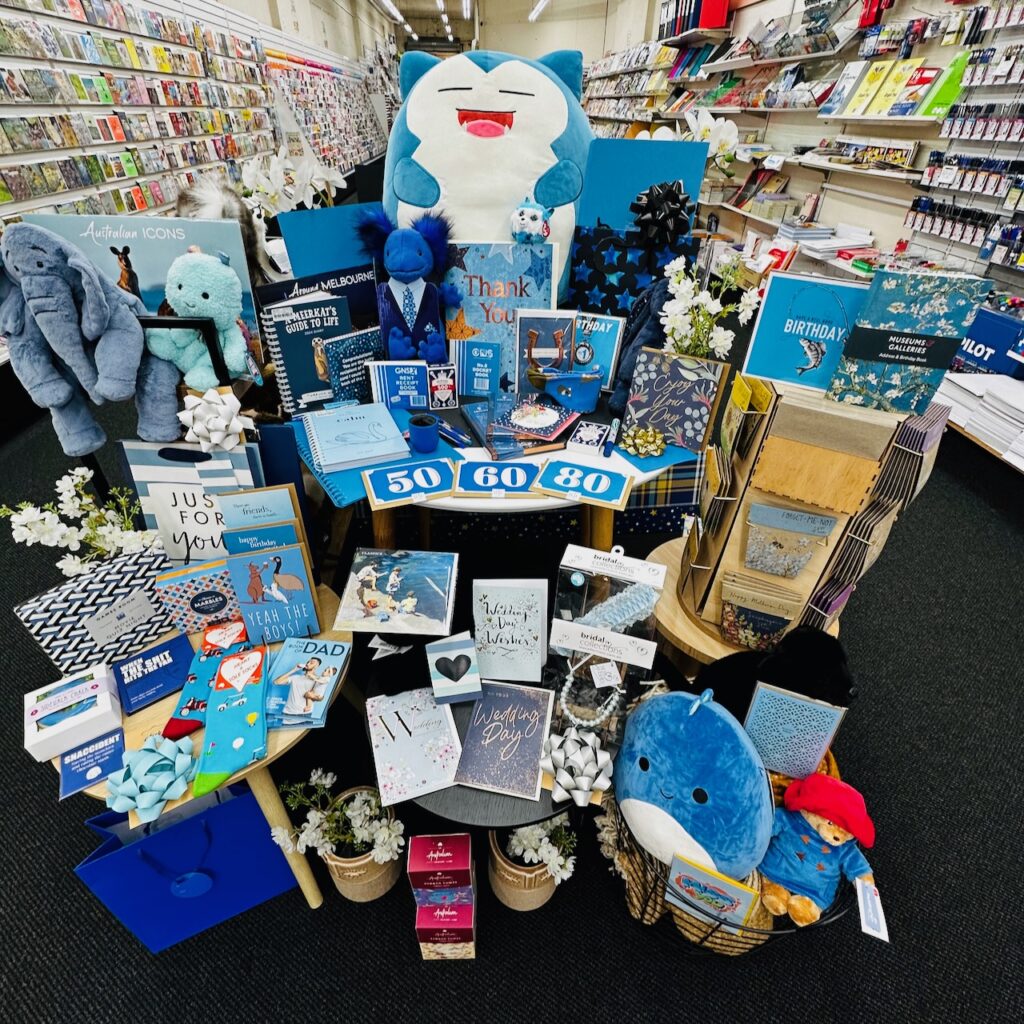
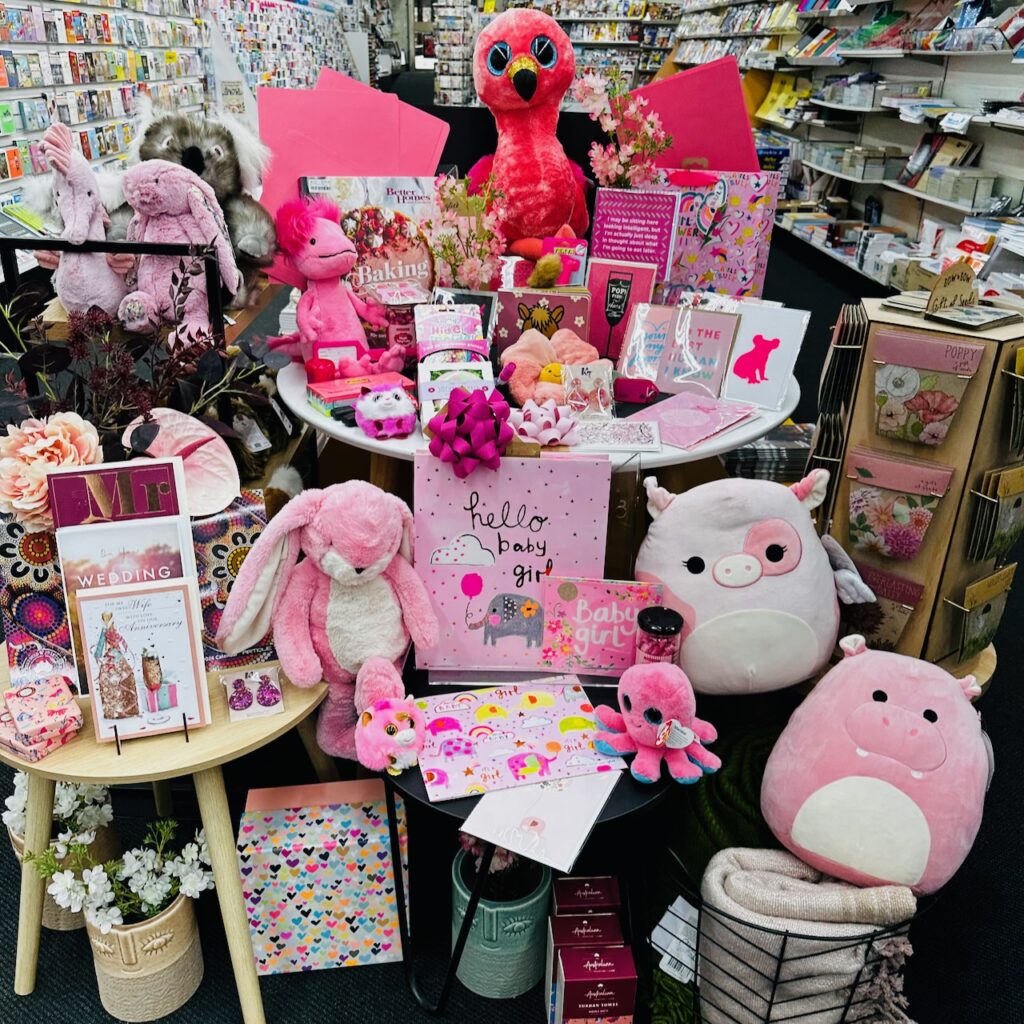
Colour blocking displays like these can be put together in an hour. They use existing stock. Customers always comment positively, and they find things they never knew you stocked. This is why a colour block display is my go-to if I am not sure what to do next. They are also differentiating since most retailers will not do a cross product category display like this. here in suburban Melbourne, these colour block displays work for us.
Back to post Father’s Day though – do something. Make a statement,. Get shoppers in-store noticing.