Are newsagents ready for a world of permanently discounted magazines?
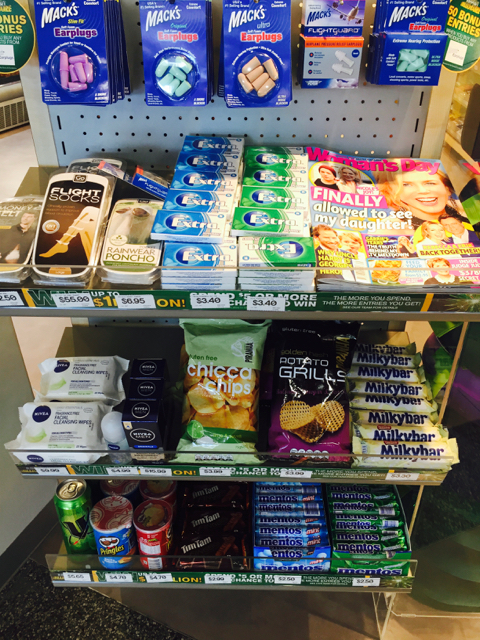
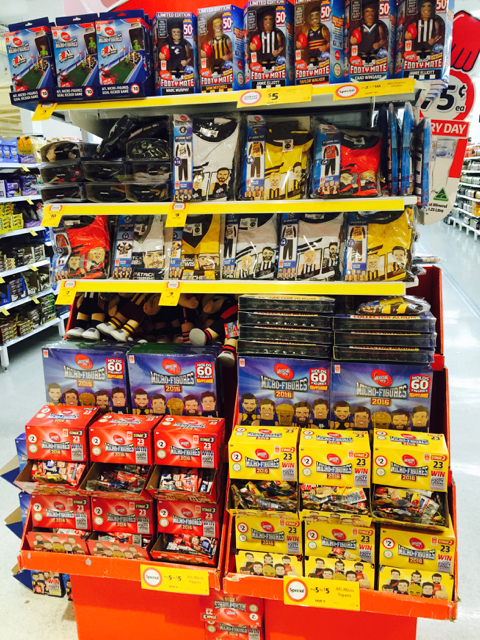
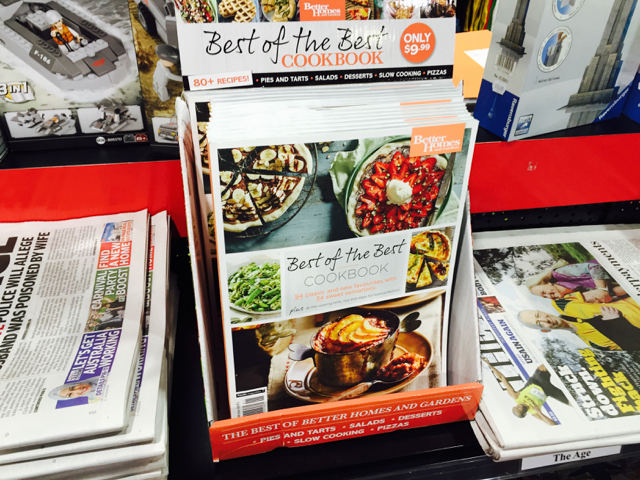
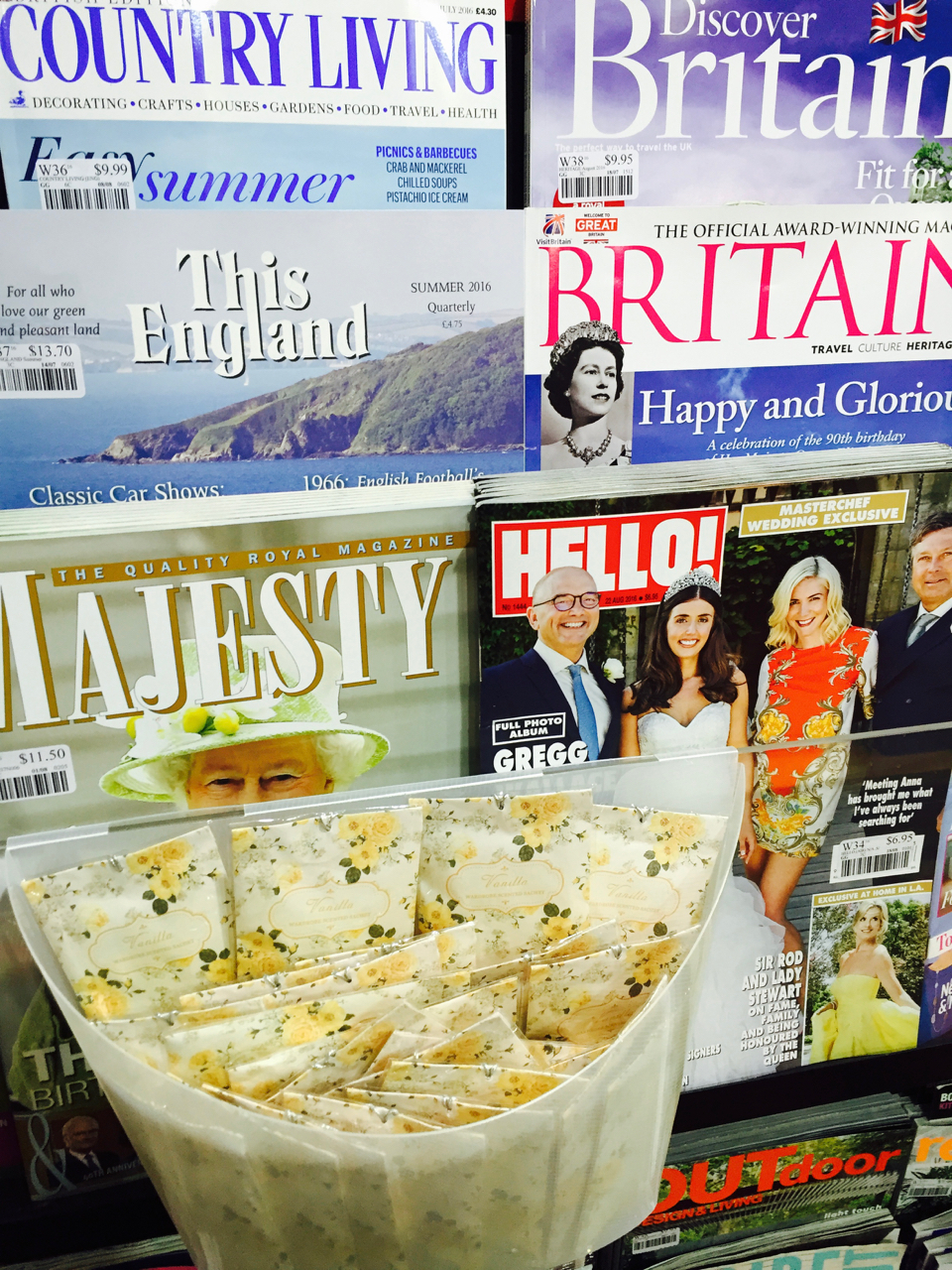
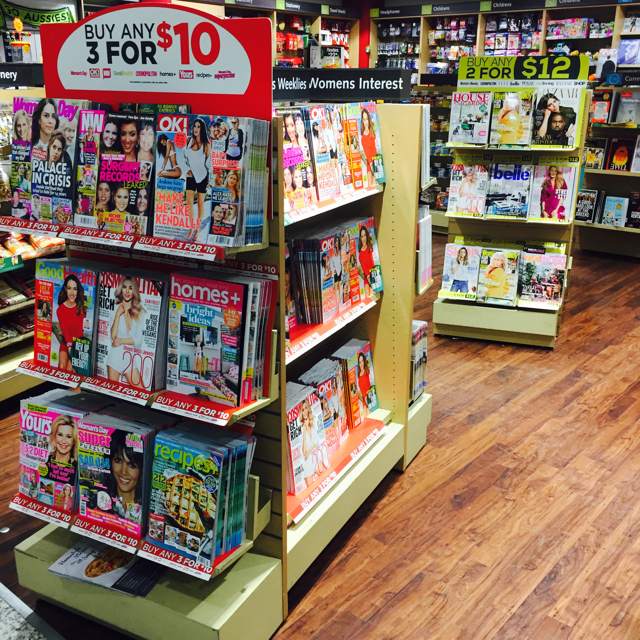
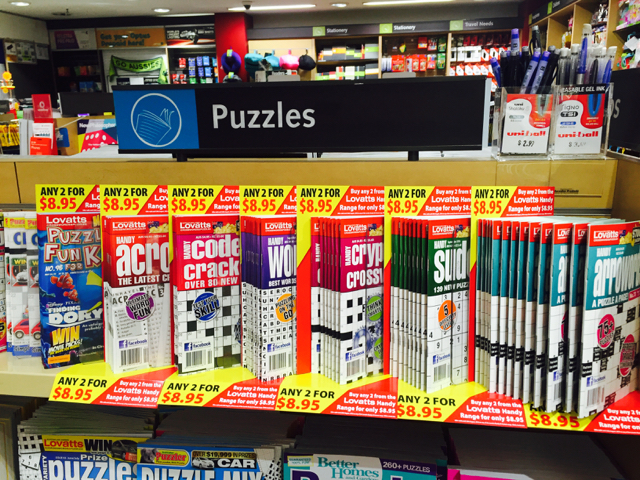
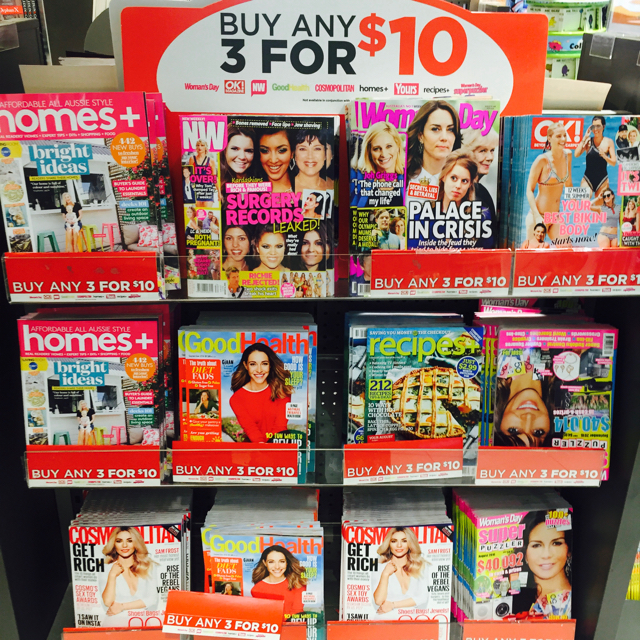
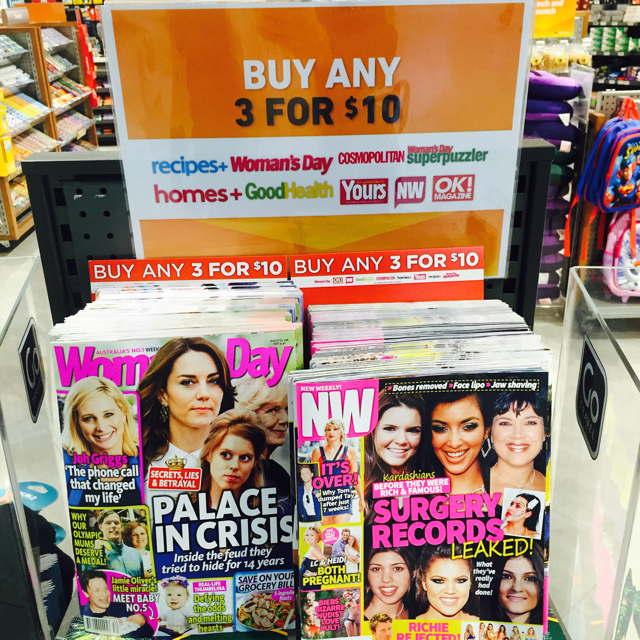
In a newsagency at Adelaide airport earlier this week I was surprised by the extent of discounting of key magazine titles. While this has been happening for years, the extent on show in Adelaide was greater, leaving me to wonder when we will see this in all retail outlets.
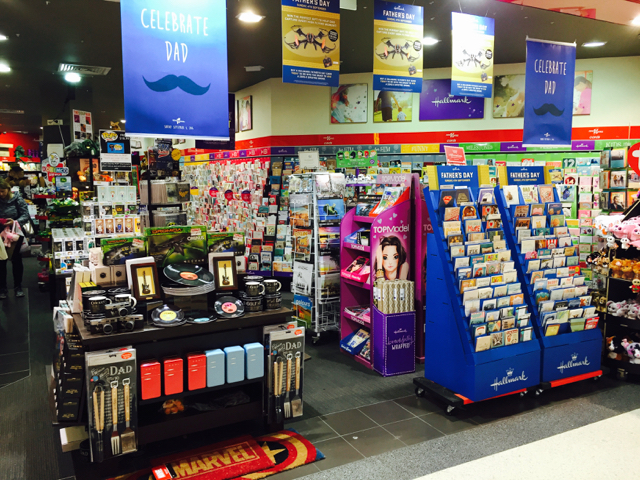
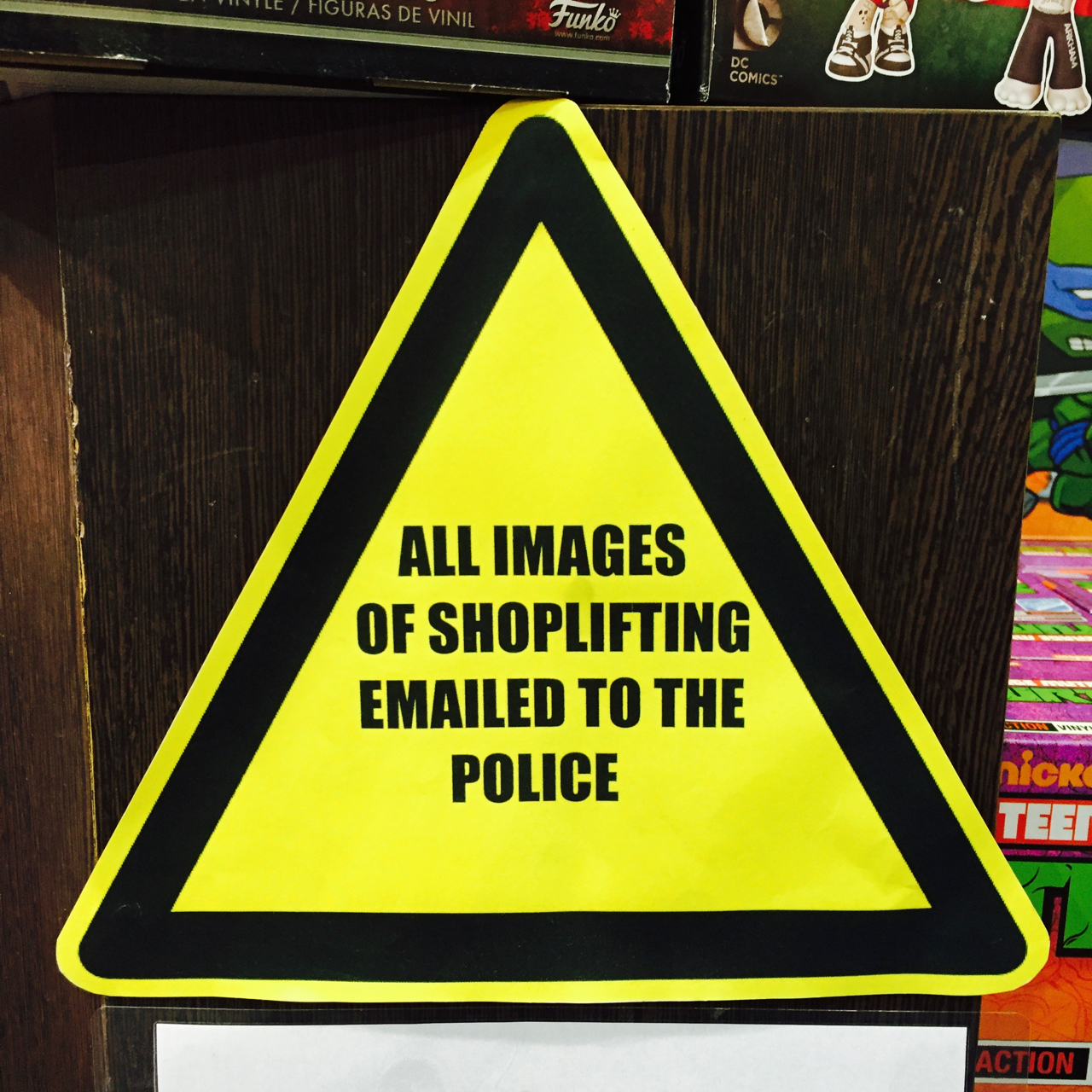
Bauer and Lovatts are the two publishers engaged in this Adelaide location. While only two publishers does not sound much, their level of engagement is considerable. Take a look at these four photos from the one business. I could have included more photos of more facings beyond these:
Anyone shopping here could reasonably wonder whether they should pay full price for any magazine. Indeed, the scale of the promotion in the business is so strong I expect it would damage shopper perception of the value of the titles – but, hey, I am not an expert in this area.
This promotion does not make sense to me as the retailer as it appears designed to lock a shopper into a publisher. I want to promote the whole magazine department, not just one publisher, certainly not one publisher where the margin dollars I make are cut as a result of a promotion like this.
But I suspect this retailer is not losing margin dollars as I suspect the publishers are compensating them to the value of the margin from a full cover price. When publishers have offered this type of promotion to newsagents they have not compensated to the value of the full cover price from what I recall. Even then, if they did, it would not be ideal in that you are not promoting the broad offer you have in-store.
I have made no secret over the years that I do not like campaigns like these discount bundle offers. I think they are bad on many levels. yet some publishers appear addicted to them.
While publishers have told me that transit is ideal for these bundled promotions, I have seen them too often in supermarkets, convenience outlets and petrol outlets. This does not augur well for newsagents who see magazines as a point of difference, something to value, something through which they attract key traffic. Educate that traffic to hunt for a bargain and you see your value as a specialist retailer devalued.
My question for newsagents is: Are you ready for discounted bundles of magazines to become the new normal?
The New York Times on the future of print at Fairfax
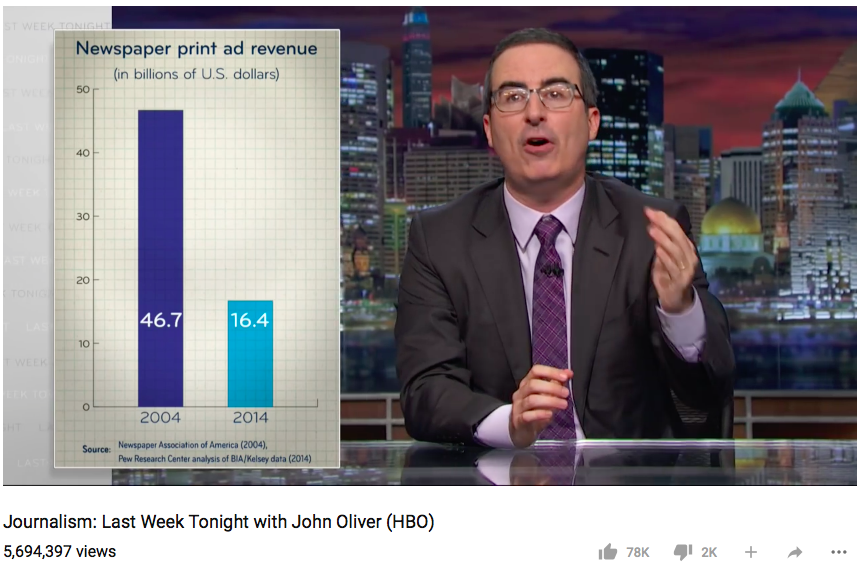
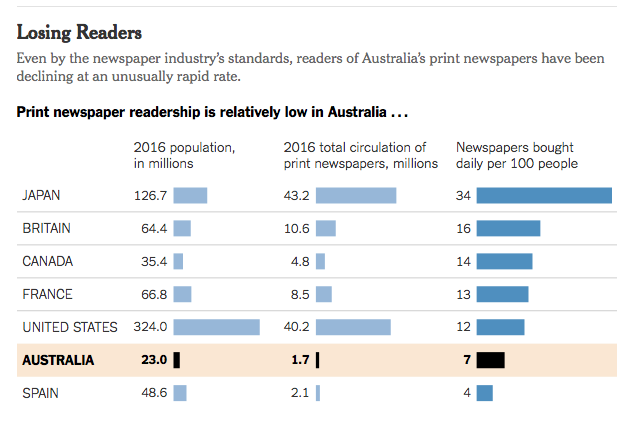
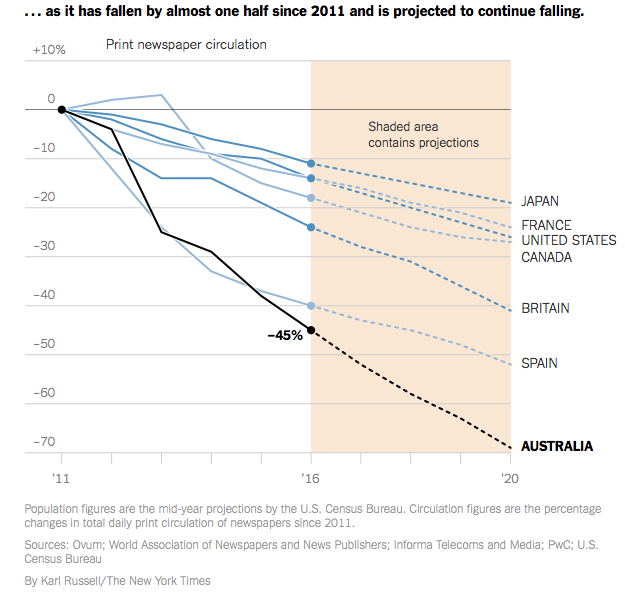
The New York Times has published an in-depth piece on the future of print from Fairfax. The article includes two excellent charts that challenge how newsagents deal with newspapers today and the reliance they have on newspapers for traffic into the future:
I urge newsagents to read the whole article. Too regulars here, the projections should be nothing new.
Poor reporting from Australian Gift Guide on retail
The headline on The Australian Gift Guide article is disappointing: Seven major retailers facing collapse.
Why is this news? It reads as speculation. Why is this business magazine reporting it? Do they want to talk down retail?
The article offers no evidence for the core claim:
It’s all doom and gloom for some Australian retailers as they are facing extreme risk of financial ruin over the next 12 months according to a report by SV Partners.
The well-known retailers have an annual turnover of more than $100 million and include a large clothing retailer, two computer retail giants, one big supermarket/grocery store and a large newspaper/book retailer.
While the article goes on to quote numbers, it does not tie this back to the headline claim.
It is articles like this that cause bankers, landlords and others on whom small business retailer rely to look at us with suspicion. Thanks a lot Australian Gift Guide. Bad job.
Too many newsagents don’t know what they can sell in their businesses
A colleague newsagent had a customer waiting for them when they opened the shop at 6am Monday this week. The customer has driven almost half an hour to be at the store at opening time to purchase an item priced at $349.00. They wanted to ensure they got the item.
So, by around 6:05am, the business had completed the $349.00 sale and racked up $175.00 in gross profit. That is more than the business will make from newspapers in the day and close to what they will make from magazines in the day. From one purchase.
What a terrific story on several fronts: that the customer was there at the opening of the shop, that they had driven half an hour and that they would tell others about their experience.
This is the newsagency of the future is, a retail business allowing specialist sought-after products to define the business more so than the shingle, a business being unafraid to stock items way outside what is usual for a ‘newsagency’.
Way too often newsagents tell me they cannot sell expensive items in their businesses. Most times I hear this the newsagent making the comment has not tried more expensive items, they have not created the story in-store to ensure success with ore expensive items.
My message today is that what we can sell in our businesses is way outside what we think we can sell.
I know of newsagency businesses that have closed because the owners have not experimented beyond the barriers they established themselves for their businesses.
I appreciate it is tough to make such a move as it means ditching being an agent, becoming a retailer and trying products about which you probably have little knowledge. All it would take is someone you have never seen in your shop visiting and spending hundreds of dollars on an item once for you to tear down your barriers and seek out more on these opportunities.
The newsagent who achieved the $349.00 sale on Monday did so on the back of a special event they ran on the weekend that attracted plenty of new shoppers, some people travelling two hours to be there.
Gone are the days of you thinking about your newsagency as serving a territory.
This is a new borderless world. Attracting shoppers starts with buying beyond what is traditional for the business.
There is growth out there for the taking.
The broken magazine supply model: Gross oversupply of Just Bikes magazine
We usually sell one or two copies of Just Bikes magazine. We are being supplied 40 copies of the latest issue. 40!
Representatives of distributor Gordon & Gotch will say it is a mistake. The thing is – too many mistakes like this are being made. To make matters worse, the process of resolving such mistakes is time consuming and fault prone, costing newsagents plenty.
I suspect magazine publishers don’t know how bad the situation is.
UPDATE: 18/8 – Turns out I am not alone. Something is seriously broken here.
ACCC seeks feedback on proposed acquisition of APN News & Media Limited Australian Regional Media division by News Corp
On August 2, the ACCC wrote to interested parties seeking views on the proposed acquisition of APN News & Media Limited Australian Regional Media division by News Corp. You can see the ACCC letter here. The closing date fore submissions was August 15. The ALNA (formerly ANF) emailed QLD newsagents on August 16 at 4:26pm seeking feedback for their submission.
Note the ACCC’s areas of interest:
The ACCC’s investigation is focused on the impact on competition. In particular, we are seeking your views on:
- how closely News’ publications (including websites, where relevant) compete with ARM’s publications for the supply of content to consumers and the supply of advertising space to advertisers
- the impact of the proposed acquisition on competition, and whether it will:
-
lower the quality of content, especially local news content
-
reduce the choices available to readers for local news content
-
increase newspaper prices
-
increase the price of advertising, especially in newspapers in Queensland and northern New South Wales
-
whether, following the proposed acquisition, there would be sufficient competitive constraints on News to ensure the relevant content and advertising markets remain competitive.
Attachment B of the ACCC letter outlines further topics for which they are seeking feedback. These could be of particular interest to newsagents:
4. If the proposed acquisition went ahead, would competition from other media suppliers in Queensland and/or northern NSW provide a sufficient competitive constraint on News to ensure it offers content/advertising on competitive terms? Specifically, which media suppliers might provide a competitive constraint?
5. Do you consider News, ARM or any other market participant, to be a particularly vigorous competitor in the supply of local or regional news and information in Queensland and/or northern NSW on aspects such as quality, range or diversity of content (e.g. local news/information), price, promotional activity or any other factor?
6. What impact do you consider the proposed acquisition will have on competition in the supply of local or regional news and information in Queensland and northern NSW generally or in particular regional areas? Please specify any particular geographic regions you are concerned about.
WA and the UK show how to motivate lottery customers
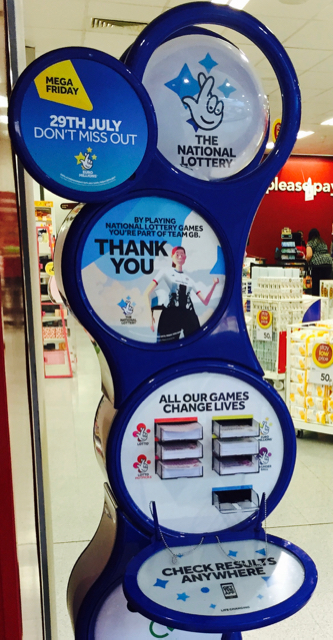
The UK Lottery is promoted through the messages of good it does for the community through lottery ticket purchases. This message is pitched in all the collateral used in retail, including the front of store promotional unit I saw recently when in Manchester.
The headline of THANK YOU stands out, reinforcing the message of good purchasing lottery tickets does.
I think this plays a role in driving sales. It also connects the business selling the tickets with the good words done as a result of the lottery ticket purchases.
Western Australia is the only state or territory in Australia where this level of community connection remains, through Lotterywest. In WA, they, too, promote the community connection in-store and elsewhere.
I think this is an important differentiator, especially with the rapidly rising profile of Lottoland and the takeover of lotteries everywhere in Australia except WA by the publicly traded Tatts Group.
We know from card sales at Christmas time that plenty of Australian shoppers appreciate supporting the community work charities through deliberate of purchases based on charities supported.
If I was an influencer at Tatts I’d be urging the company to deeply engage with a beloved charity in Australia, I’d want the company to link good community works to the purchase of Tatts lottery products.
While the company does engage today, it does not do so in a way that translates to a message at retail and I think this is where it misses out.
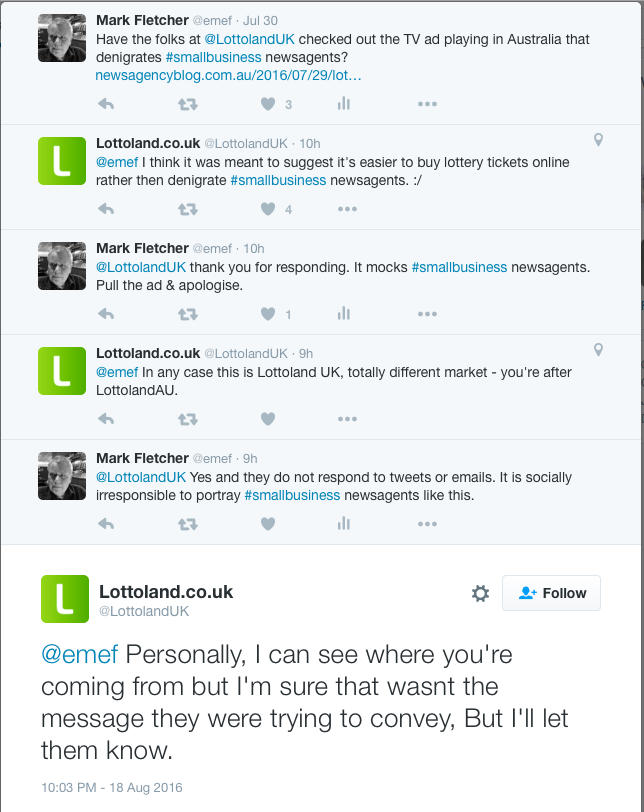
The Tatts / Lottoland comparison shows the difference is primarily in how products are sold – at least that is the perception pushed by the high-rotation Lottoland ads.
I think Tatts needs to change the conversation and following the British and WA lead could be worth considering.
At the same time I’d urge Tatts to pull back on the highly regulated approach to its independent retailers. I’d suggest they have one metric – sales. This would improve the love retailers have for Tatts and that, in turn, ought to improve sales.
Lottoland is running an aggressive race and Tatts currently appears to be way back in the field. It needs to significantly change its approach if it is to catch up.
Where ransomware starts
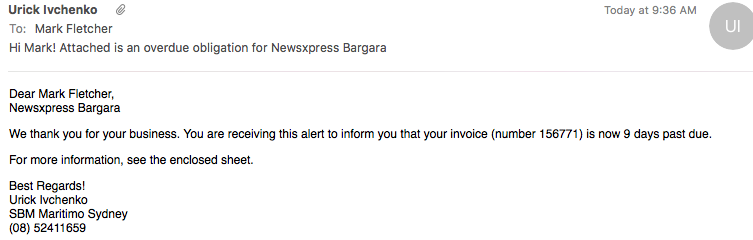
Here is another example of the start of a ransomware attempt. This email comes in and the immediate reaction is this isn’t for me. Being a suspicious type I don;t click on it. Plenty of newsagents are and this is why they are being locked out of their computers.
If an email looks suspicious, don’t open it just to check it out – you will be locked out as happened to two newsagents I know of today.
It is time for newsagents to be able to purchase stationery from suppliers direct
For decades newsagents have had to purchase stationery through one or the other of the newsagency stationery wholesalers.
Even when the supplier rep has been in-store, written up the order and, on occasion, supplied stock, the ‘order’ has been turned back through the wholesaler – for a premium … kind of like a tax to support the warehouse.
This order turn back has been a tax on newsagents, making their purchasing cost higher, all in the name of supporting the newsagency stationery suppliers.
What has the order turn back approach achieved? Are the stationery warehouses stronger as a result? Have newsagents themselves benefited by paying a higher price for stationery, have they received some other benefit as a result? No, I think the approach has had its day, I think it has not achieved anything and, today, it only acts as a tax.
For newsagents to be competitive in stationery, especially, with branded stationery, I think we need to be able to purchase directly without any additional cost being imposed to support a warehouse that often does not add value to the transaction.
By dealing direct in some cases we will have access to a broader range of product. This will facilitate specialisation, helping to drive sales.
Suppliers don’t need to increase their costs by increasing in-store contact with retailers. Rather, they should ensure they have a best practice website through which newsagents can order and see new products.
In my own newsagencies my focus 100% is on national brands of stationery. I want to go deep for some brands, to ensure a strong visual story in-store and online. I am better able to do this if I can go direct.
So, yes, I think it is time for stationery suppliers to offer direct accounts to newsagents, to enable those who want to specialise and go deep with a brand to do so.
Sure, there will be some newsagents who still want to go through the warehouse, and they can.
The world has changed and how we buy stationery needs to change. As I wrote recently about GNS, the model needs a shake-up for it to have a future.
Mocking of innovating newsagents is mean spirited
It disappoints me when I hear of a newsagent, a supplier or someone else connected with the newsagency channel mocking others who are innovating with a brand, product category or in some other way.
Those innovating in our channel ought be cheered, not mocked.
In my experience, those mocking tend to be people who are not innovating in their businesses. I suspect their mocking is a reflection of how they see themselves and their business. But rather than address the failure in their business they mock others so as to deflect from their own failing.
I recall an instance a couple foyers ago when someone mocked several newsagents for a move they were making. It turned out the move was the right one, delivering to them excellent results. The person mocking made no such move and missed out as a result. While that sounds like justice, it is not for there are some who listened and missed out too.
People mocking innovation need to understand the power their mocking can have. They should ar the very least pitch an alternative. Otherwise, the mocking can only be seen as mean spirited.
Eight Wild Cards and Gifts stores for sale in NSW
Eight Wild Cards and Gifts businesses in NSW are listed as being for sale. In each ad is details of the franchise structure:
With a low franchise fee of 4% + GST, no marketing fees and a low franchise fee of $42,000 + GST we offer our franchisees our competitors simply cannot. The level of support we offer our franchisees is second to none, from training and store operations to stock selection, marketing and promotions, all of which is covered by the low 4% franchise fee.
Further on in the ad is this:
No other Card and Gift group offers the potential for profit equal to Wild franchisees
Wild is owned by the UK WH Smith group.
Researching online I found two businesses – a Wild and a Supanews – for sale in Queensland. Supanews is another franchise business owned by WH Smith. Another business had 18 Wild businesses listed.
I have no insight on what is happening here. All I know is the businesses are for listed sale.
This interests me because the parent company, WH Smith, is massive in the newsagency space in the UK. In Australia they are in newsagencies in a small way as well as transit and gift. I suspect they need/want more retail outlets here to justify their investment in the country.
This is a space to watch.
Sunday newsagency management tip: how to avoid ransomware
Ransomware is affecting more and more newsagency businesses. Here is advice to help reduce the opportunity of attack and the impact if you are attacked:
- Ensure you use professional, up to date, virus protection.
- Ensure you have a good firewall with strong settings.
- Do not click on emails or attachments unless you are sure of the sender.
- Be particularly wary of ZIP files in emails.
- The ATO will not email you.
- Your bank will not email you.
- Australia Post will not email you, not like the example I have posted.
- Ensure all passwords you use are strong.
- Consider using an email filtering facility.
- Do not allow remote access to your computer unless you are certain of the person accessing.
- Ensure you have strong passwords. A strong password should include: some CAPS, some numbers and at least one special character. Check your password at: https://howsecureismypassword.net
- Change your password regularly.
- Run an up to date operating system.
- Have rules on computer use: no games, no online gambling, no porn, no personal emails.
- Have an overarching rule: do not open any email or go to any website unless you are certain.
- Use a cloud backup service like the Tower backup service. This provides the fastest recovery.
- Have multiple backup devices for additional protection.
- Do not use automatic file replication programs / facilities such as Dropbox or Google Drive. If a file is encrypted with malware / ransomware it will upload to the account and infect other files.
Sunday newsagency marketing tip: pitch to what people love
People love their dogs. Pet shop owners will tell you of dog lovers who spend more of their dogs than they do on themselves. Some retailers miss the opportunity of pitching to dog lovers in their gift departments, they miss the opportunity of shopper engagement. Dog lovers engage when they see gifts representing breeds they love.
In buying products for your store, think about your customers, buy for them, buy what they love.
Sunday newsagency challenge: change weekly
Sketch out the layout of your shop on a sheet of paper. Draw a line across the front two metres. Commit to complete change of the pitch in this front two metres every week. Do this for a month. In most newsagencies, complete change in this frontline space weekly will increase sales. The challenge is the time involved and the need for fresh products to be pitched in the space.
Are you playing Pokemon GO?
I’d love to find out from readers here if you are playing Pokemon GO and if so the level you are at.
Triple pack of discounted magazines from Bauer Media is a challenge
This triple-pack of discounted magazines from Bauer Media Thursday this week had newsagents scrambling for extra space in the magazine department as it is a new title, an expansion in the busy weekly title section.
The thickness of the bag containing the three magazines meant plenty of newsagents could not place all the stock they received into a single pocket. This increases the costs of carrying the additional SKU.
Also, the pack says new issues when the issue of Yours came out last week and the issue of recipes+ came out last month.
Bagged discount magazine packs like this are out every week in the UK. Not in large volume but there are out and in most stores I visited two weeks ago.
I hope we do not see them weekly in Australia. If we did I think the result would be to take purchases from other publisher titles rather than grow overall magazine sales. In this scenario newsagents would lose out.
Tatts shows the Lottoland ad to be accurate
The Tatts ad currently running vindicates the depiction of newsagents by Lottoland in their TVC. The Tatts ad reinforces what Lottoland mocks.
I am shocked they are running the ad. It is appalling in my opinion – indirectly telling key demos to stay away.
If I had lotteries enemy business I’d want nothing to do with this ad and collateral associated with it.
My magazine early return advice for newsagents
The early return of magazines is vital to the management of space, cash-flow and labour in the newsagency. My advice is that you not wait for a magazine to reach its recall date for it to be returned. Returning a magazine before the recall data is an early return or a supplementary return.
While not liked by magazine publishers, early returns are the only reasonable mechanism newsagents currently have for managing magazines in the newsagency over which they have control.
My advice is newsagents need a process to ensure early returns are done with consistency.
For early returns to work for you and for you to not deny your business magazine sales you could otherwise achieve, here is our best-practice early returns advice:
- Early return from your shelves.
- Early return at a time in the month designated for the process and not as titles come in.
- The early returns process needs to be completely separate to magazine arrivals into the business.
- Check for early return opportunities at least monthly, toward the end of the third week of the month.
- Do your early returns as a separate process to regular returns or putting new magazine titles out.
- Do not early return magazines the day they arrive. The only exception would be if you have been sent a magazine very late in the month and you are absolutely certain it will not sell.
- In my opinion, magazines should not be on your shelves for more than four weeks, unless they are continuing to sell well.
- Look out for the Magbook titles as they are expensive and usually sell in low volumes. We suggest early returning within the month of supply if they are not selling.
- Look out for the Beginners Guide titles as they are expensive and usually sell in low volumes. We suggest early returning within the month of supply if they are not selling.
- Look out for the Express titles as they are expensive and usually sell in low volumes. We suggest early returning within the month of supply if they are not selling.
- Look out for the AWW cookbooks as they have long on-sale periods and unless you are selling reasonable quantities each month you will not be covering the space cost.
- Check each title before you early return. For example, if you received 10 of a monthly and three weeks in you have sold two, you could early return four copies.
- Do not early return before week three of the month unless you have severe space issues. Giving titles time to sell could help you achieve more revenue.
- Ignore delayed billing in your early returns assessments.
- Treat early returning as a management issue. Whoever does it needs to be thoughtful in their approach and engaged so as to not deny certain magazine sales.
- If you find yourself regularly early returning a title, ask for fewer copies.
If you do early return leaving less stock that you would usually sell and then sell out – I think the distributor ought deny any request for extra stock.
Marie Claire helps launch Megan Hess card range
The latest issue of Marie Claire ought to be featured by newsagents selling Hallmark cards as it features the card designs of Megan Hess, a respected Australian designer, who has designed a range of premium cards for Hallmark. The Megan Hess range is a fresh product though which we can reach card shoppers beyond what we often reach with the everyday card range.
The Megan Hess range with the latest Marie Claire is a terrific cross-category opportunity for us.
Fairfax CEO discussion the future of newspapers
RN Breakfast this morning had Greg Hywood, Fairfax CEO on air discussing the future of newspapers. It’s worth listening to.
Although Hywood says closure of the Monday-to-Friday print editions of the The Sydney Morning Herald and The Age is ‘inevitable’, that day is still some way off.
SMH editor supports newsagents
It is terrific that Ben Cubby, Editor of The Sydney Morning Herald, proposed newsagents in a tweet this week:
Ben has 22,800 followers on Twitter. We need more editors and publishers tweeting about our channel as the place to access their publications.
Newspower announces another rebranding
Newspower has rebranded for the fourth or fifth time with an announcement earlier this week. It has also announced a new level, Newspower Go. This is like Newspower level from some years ago – more discipline, better deals.
While I think Newspower does need to change, parts of the announcement are problematic in my opinion:
Newspower has undertaken significant research across not only the Newsagency industry, but the broader retail sector and as a result Newspower has developed key strategies to deliver Newspower a stronger future.
Newspower ought discslose to its members the detail of the research and the detail of the resulting strategies as the organisations track record is not great – to give confidence that they have a good plan and that the plan is based on sound research.
NewspowerGo stores will be in targeted locations, designed to attract and engage with younger shoppers; Generation X and Millennials – those that will become your customers into the future.
Gen X and Millenials are newsagent customers today. Strategies to attract them were needed years ago. There are newsagents enjoying terrific success with these generations.
Stay tuned – the first NewspowerGo stores are scheduled to be opened later in the year.
This makes the an announcement that there will be a further announcement. Newspower is coming at this transformation very late. They should have stores running now so the announcement earlier this week was here – come see it live.
We are entering a new era of growth and development and as part of the launch of NewspowerGo we have also refreshed the branding for Newspower. Newspower was established over 20 years ago and is the Largest Newsagency Marketing Group in Australia and our brand is strong.
Newspower has, from what I understand, user 600 stores. This is down from something like 1,200 stores a few years ago. considerable decline in numbers does not represent strength. If I was leading Newspower I’d pull back from talking about size and focus on stabilising member numbers and then achieve growth before talking about growth.
I am a director of newsXpress, a competitor of Newspower. The weakness of Newspower in recent years has hurt more than Newspower and member businesses, it has hurt the channel. This is why Newspower has to get it right, why they have to fix their situation to drive the viability of member businesses. The rest of the channel is depending on it.
Newspower should start by developing its own ideas. I had to ask a Newspower staffer leave a confidential invitation-only session I was speaking at recently. I only realised they were there soaking up commercially sensitive ideas when someone else pointed it out. I wrote to Helen Dowling about this on June 17 and am yet to receive a response.
Our channel will benefit from strong competition between all of the marketing groups. The key word is competition. Competition has its roots in being difference, not copying. It benefits from being first with initiatives, not years late.
Historically, Newspower’s biggest challenges have been a weak uninspiring board, GNS controlling key marketing seasons and control at the state level on what is done under its name. For the future to be bright these three things need to be addressed.
If your Gotch account has been delayed
Gotch has experienced some tech issues that delayed sending accounts. They will start going out tomorrow and should all be out by Friday.
Growing revenue in the newsagency
One reason I bought my first newsagency in 1996 was to put into practice for myself what I was telling newsagents. It was an invaluable experience and continues to be today. Here is a video I have just shot where I talk about another of my newsagencies today and what can be achieved in a competitive situation .
I am sharing this not to gloat but to reinforce that newsagents can grow their businesses and attract new shoppers. It takes planning, based on business data and with a focus outside the usual walls of a newsagency business.
The outcome I hope for from the video is more newsagents pursue change … for growth.
Note: the newsXpress logo is on the first shot as the business I am talking about is a newsxpress business.