Spaces magazine #2 looks very cool
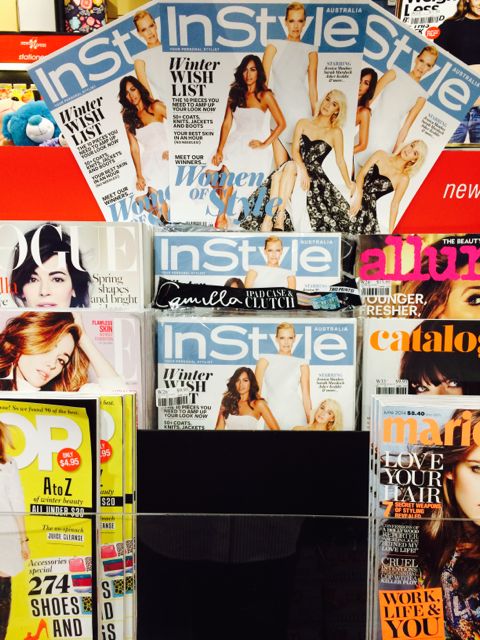
Newsagents should take a look at the opportunity of Spaces magazine issue #2 . Spaces is from the people behind frankie magazine. It’s a title you will need to order from Gotch if you’re not down for any. The on-sale is June 2, 2014. The note from the publisher explains: This unique collection of homes and creative space celebrates the importance of home to a creative bunch of Australians. Whilst not fancy, these homes and ‘Spaces’ encapsulate what is precious to Australians and our home environs!
Great Tasmanian business story
Check out this terrific business success story from 7.30 on ABC TV of a Tasmanian lavender farm and their success with cuddly purple lavender bears.
Is $20 million the prize entry point for lottery customers?
Talking to a capital city CBD based newsagent yesterday and they commented that shoppers are not interested in lottery tickets in their shop unless the prize is $20 million or above. For them, a $20 million prize is there entry point. What’s yours?
Coles magazine display unit funded by suppliers?
In an inner-suburban Coles last night I noticed this display unit placed in the entrance, just after where shoppers pick up baskets – near the self checkout area. Behind the magazines on two sides were stickers indicating title placement.
Given how supermarkets manage floorspace I suspect Coles is being paid for the floorspace taken by this unit – unless this is a trial in which case I expect they would be paid if it moves to wider roll out.
The challenge with this unit will be in keeping it stocked and products in the right location. I checked each pocket and outside of the newspapers only five pockets had the right title in the right location.
This unit is the third location for magazines in this supermarket.
I am not complaining about the unit as I don’t want something this size. However, I do think it is smart to have major magazine titles and newspapers together in a cohesive and easy to maintain front of store offer like this.
Don’t you love customers relaying products in your shop?
In a Coles supermarket last at first I wondered if they were promoting Cosmopolitan with Pearl Barley. I soon realised they were a victim of a customer dumping a product far away from where it should be.
This poor behaviour by customers costs all retailers and probably some sales. But there is no stopping it. In fact, it probably helps in that we get on the shop floor putting things back where they should be and soon realise other opportunities.
Occasionally, where a customer dumps something they don’t want shows a placement opportunity previously overlooked. It’s very cool when this happens.
Let us know what you think about customers dumping products out of place like this.
A golden age of news access
We are in a golden age of news sources in Australia., In addition to the brands we know from Fairfax and News and the long term online and email offering from Crikey, we now have The Guardian, The Conversation, The News Daily, Mail Online as well as the ABC and its various offerings as well as Yahoo7 and other established online offerings.
It is terrific having all these voices so accessible.
The competition from the new players must be frustrating News and Fairfax as they play in a crowded signal market when their history has been in a relatively uncrowded print market.
This is on my mind tonight because I’ve enjoyed some time reading post-budget analysis and realised that now in 2014 I have access to a broader range of views than previously. I like that.
Whereas in the past there was a Fairfax view and a News view, now we more voices in the room. This makes us a better informed people and better informed people make better decisions.
Cheers for the Internet and the media diversity it encourages.
Newsagency marketing: a card leads to a soft toy leads to a gift
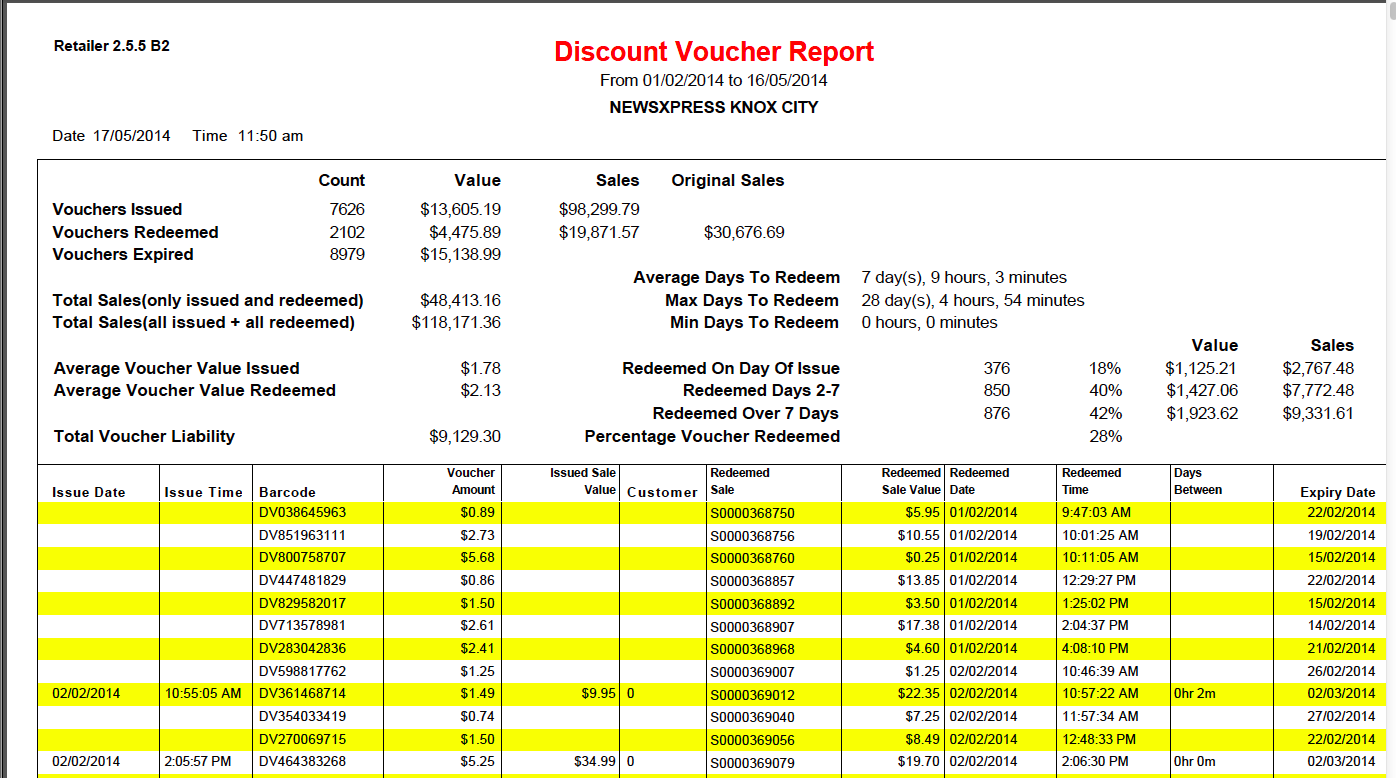
A ada purchasing a Mother’s Day card on Saturday was thrilled with the $1.50 discount voucher he received. His daughter grabbed it and said now can I get it – she ran and brought one of the $12.95 Beanie Boos from our stand out the front of the newsagency. Ok said the dad. They received another discount voucher, this time for under a dollar. They left happy only to return a couple of minutes later with a mug for Mum for Mother’s Day.
The gift they had planned for mum was a dinner in the Dandenongs but they decided to add the mug because of the $1.25 discount voucher. A total of $33.85 in purchases over three transactions and a total discount of $2.75. Our investment of $2.75 lifted their spend with us from $7.95 to $33.85. I am thrilled with that.
These are not regular customers – they were at the shopping centre because they were attending a sports event nearby.
This is an excellent example of where a traditional points-based, card-based, loyalty program would not have led to the same commercially valuable result for us.
When you develop a loyalty program for your newsagency, make sure that you offer a program that customers love, is easy to engage with and actually drives sales.
I think the discount vouchers program I am running in this newsagency is a key factor in our 11% Jan-Mar 2014 vs. 2013 magazine unit sales lift.
Is Supanews using its franchisees to compete with them?
Supanews head office supplies its franchisees with bags for shoppers. The only promotion on the bags is for the website: www.supanews.com and note that this website is owned and operated by a Hong Kong business an that items at the site cannot be purchased through any Supanews retail store.
Besides the confusing message of what a shopper can access in a bricks and mortar store versus the website trading under the same brand (read the note at the bottom of the bag) is the question some Supanews franchisees are asking – is this our franchisor competing with us?
I am told that Supanews representatives have said they do not own the Hong Kong business that owns the website. In following the company registration trail to an accountants office in Hong Kong. While I can’t answer the question about ownership, if I were a Supanews franchisee I’d be taking steps to get clarity as to who owns the business behind www.supanews.com.au. I would also demand that the franchisor stop using my franchised business to promote a business off of which I gain no revenue.
Click on the bag to read the detail.
Good use of a QR code to engage newspaper readers
The New Zealand Herald uses a QR code to make it easier for readers to submit a letter to the editor for consideration. This is a smart use of a QR code. I mention it here because newsagents are yet to embrace QR codes in-store to drive shopper engagement -whereas big businesses in Australia and worldwide regularly use them to facilitate engagement.
A while back I launched a completely free QR code generation and content hosting platform – QRki – for any small independent retail (and other) business to use in the world. I funded the development of QRki and cover hosting costs as part of my commitment to support small and independent retailers.
Small business newsagents and the budget
We are being bombarded with words about the Federal Budget last night so I figured I join the fray – not on the whole thing as that will just anger but more on some points that relate to small business newsagents.
Those of us making a profit will gain from the cut in company tax is it passes in parliament. We will benefit if the commitment to finally address unfair contracts with small businesses comes to fruition.
Changes to training programs could increase labour costs.
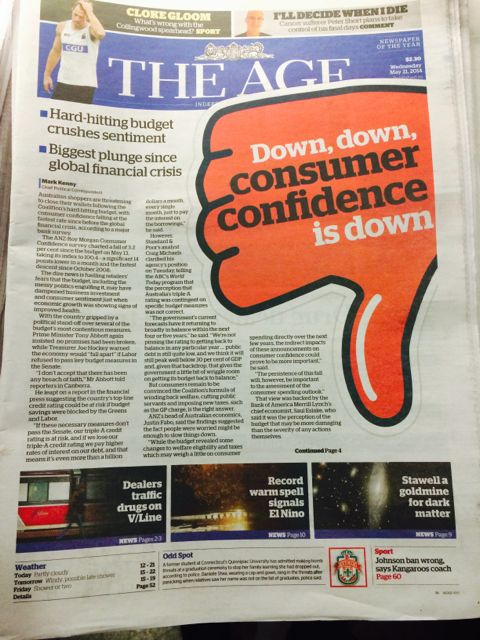
The big question is how consumers will react, especially in the hardest middle and low income areas where benefits have been cut and new taxes imposed such as the $7 GP co-payment … it’s a tax, right? Newsagencies serving such hit families in number could feel an impact at the register.
The biggest impact on newsagency businesses from this budget will be felt in consumer behaviour. If people have less money in their pocket they will spend less. If they feel at a greater financial risk they will spend less. Given the imbalance of those hit by this budget, we ought to expect impacts.
Now is the time to adjust our businesses for such impacts.
While I appreciate the cut in company tax and the commitment on contracts, these are less tangible to me than families serve having less disposable income.
Why I don’t feel sorry for Australia Post
I am surprised at the easy run journalists and news outlets have given Australia Post over the last few days, reporting on the decline in the use of letter mail, that AP will open Saturdays and that the organisation faces challenges that if not met could require financial support from government.
The decline in mail is not unexpected – I’ve been reading about it for more than ten years. Australia Post leadership should have been factoring this into their plans for at least that long as should their shareholders.
As for the comment that they could be in a position of needing government support, Australia Post has, as I understand it, provided the government of the day with excellent dividends. Why did the organisation and or politicians plan for structural change and retain some of these funds to help it navigate changing circumstances.
Australia Post government owned retail outlets in shopping centres have had a dream run for decades, trading under the protection of government ownership while they targeted family run newsagencies. I know from personal experience they were not forced to open in low trading periods when penalty rates applied. My newsagency was price checked by government employees as they sought to take sales from us.
Special treatment by the landlord is one of several benefits they had as an ‘essential service retailer’.
No, I don’t feel sorry for Australia Post.
Officeworks is not cheap for ink or stationery
I posted an update on Linked In connecting to my blog post yesterday about Officeworks price comparing ink. Almost straight away an ad on my Linked In page appeared for Officeworks. Creepy. Then I read the ad – 20 years of helping businesses grow. Yeah. 20 years of trying to take business from small business newsagents using clever advertising that makes Officeworks look like it has good prices when it waits for others to pitch on price and all Officeworks does is says ME TOO!
I think Officeworks is lazy when it comes to advertising. They know people are price sensitive and will buy from where they think they will get the best price. They also know there is a difference between someone thinking they will get a good price and them actually checking to ensure that they really do get a good price.
Good old Collingwood!
Shoppers pressing an AFL team button caused that team’s club song to be played. last Saturday I had them all set and for some reason in my outer suburban newsagency nine times out of ten it’s the Collingwood song shoppers selected. Those crazy Collingwood fans! If only they bought more of the buttons.
Newsagency blog comments glitch resolved
A glitch which has blocked comments here for the last couple of days has been resolved. Comments are open again!
Officeworks calls the newsagency to check ink prices
Someone from the local Officeworks called my newsagency Saturday morning to price check a couple of ink cartridges. They said they had a customer there who buys ink from us and Officeworks wanted to price check because of their cheapest prices guarantee.
I was shocked when I heard the story from a team member who mentioned in passing. I was more shocked, however, when the team member told me they gave Officeworks our prices! They won’t do that again now they realise what happened. I have ensured we have a policy that all team members are aware of regarding price checking now.
But back to Officeworks. talk about lazy marketing. They don’t advertise the lowest prices, just that they will undercut anyone else. Our small business newsagency goes out there with genuinely competitive ink prices, generating good interest and Officeworks stands on the sidelines saying they will beat our low prices – if customers ask.
I bet most Officeworks customers do not ask to compare prices.
It is cheaper for Officeworks to spend big on general advertising of beating prices than advertising genuinely low prices. I think they do this because they think shoppers are suckers when it comes to pricing and that they will think because Officeworks advertises the price comparison they must have good prices to start with.
Officeworks is expensive for ink! I think their calling businesses like newsagencies to price compare is unethical.
This experience makes me want to work smarter and harder competing with Officeworks.
This card is not pornographic
When a customer placed another card from front of this one in the photo on Saturday I thought it was in error so I put the other card into its pocket. The same customer a couple of minutes later randomly picked a card and put it in front of this one. I asked why and they said because it’s pornography. I explained that many customers thought the card was funny the customer said I don’t care and walked out.
Another customer who saw what happened laughed and briefly clutched my arm – in comfort I think.
I’ve thought about both interactions a bit since it happened. Beyond the reminders that we serve a broad cross section of people in our shops and that our shops are public places, I have found myself questioning the ethics of what we sell.
I have no issue with this card. Indeed, I think it’s hilarious, and certainly not pornographic. But if someone does think it is pornographic then what do they think of other things we sell and what do they think of the business as a result?
While I don’t want to pander to fringe or extreme views, it is worth thinking through – to know where you stand.
I also wonder if this customer from Saturday is the person who slips Picture on the side so it can’t be seen? Are they the same person who covers DNA magazine? because someone does these things.
Newsagency sales benchmark study results for January through March 2014 vs. 2013
Here are the results of my analysis of sales data from more than 140 newsagencies for January through March 2014 and the same period in 2013. While there is mixed news, the news is good for newsagents who work their businesses as engaged retailers.
Customer traffic. 61% of newsagents recorded an average decline of 2.3% in transactions. 17% reported no change and the rest an average growth of 3.2%.
Overall newsagency sales decline. 52% reported an average revenue decline of 4%. Of those reporting growth, the average was 5.8%.
Basket depth. 55% reported a decrease in basket size (items in the basket) with an average decrease was 2.3%. 4% showed no change. The rest achieved 1.7% growth.
Basket dollar value. 38% of newsagents an average increase in basket value of 2.2%.
Discounting. 11% of respondents engaged in discount based loyalty marketing.
The gap between growing and contracting newsagencies must be of concern to those dealing with newsagents nationally as it is more obvious than ever. Newsagencies are not once size fits all. There are some doing very well and others doing poorly.
It would be wrong to talk about newsagents and make a common statement about how they (we) are doing as there is no common situation.
Benchmark results by key departments:
1. Magazines. 67% of newsagents reported an average decline (in units) of magazine sales of 6.9%. 5% reported no change and 28% reported year on year magazine sales growth. The average growth was 4%. This is the headline: NEWSAGENTS CAN GROW MAGAZINE SALES.
Looking at the 28% reporting magazine sales growth, most growth was outside the weeklies with less than half of those growing this all-important category.
Partworks played a big role in the growth achieved by those achieving growth. In some cases, partworks accounted for close to 20% of all magazine sales.
2. Newspapers. 86% of newsagents reported an average decline of 5.8% in over the counter newspaper sales. HOWEVER: for most, revenue from newspapers was up! This is a reflection of significant cover price rises.
3. Greeting cards. 63% of newsagents reported average growth of 2.6%. Of those reporting a decline, the average was 4.7%. Everyday counter cards dominate card sales with this category accounting for between 50% and 60% of all cards sold in most newsagencies.
4. Stationery. 65% of newsagents reported an average decline of 3.1%. Of those reporting growth, the average was 5.8%. Notice the gap there?
5. Ink. 41% of stores report ink separately. Of these, 58% reported growth of 3%.
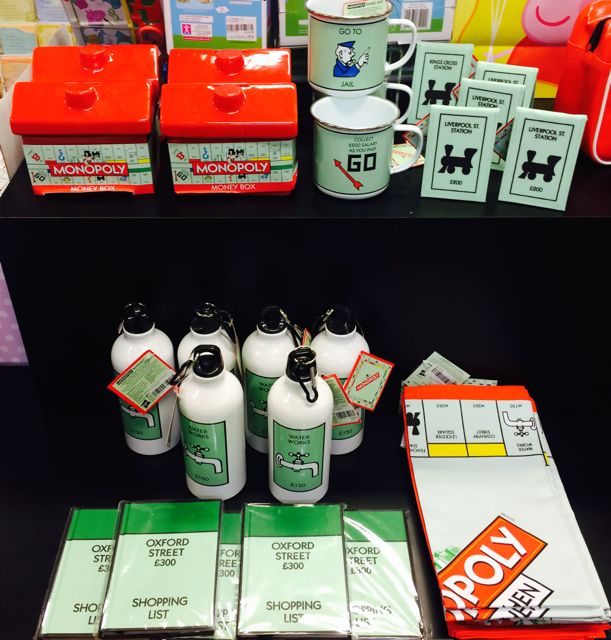
6. Gifts. 74% of the newsagents have a separate gift department. Of these, 78% reported average growth of 8%. In eight newsagencies, gift revenue exceeded card revenue.
7. Plush. 8% of newsagencies report on plush sales separately. I recommend this. A reasonable sales benchmark for plush is revenue equal to 25% of card revenue. In stores reporting on plush, sales are up on average 30%.
8. Tobacco. 82% of stores with tobacco reported an average decline of 13%.
9. Confectionery. 53% of stores reported an average decline of 7%.
10. Toys. 53% of stores with the department reporting growth of 6%.
The strong are getting stronger and the weak are getting weaker.
There is no geographic or demographic barrier to growth from what I can see. One newsagency in a town with tough economic challenges and competing with several newsagencies achieved excellent year on year growth – by owning their situation and being proactive.
Product mix shift. Embedded in the data I receive is information about unit sale and revenues contribution between all product categories. I can see a shift from the traditional print, lottery, card and stationery mix to a broader appeal by some. It is fascinating seeing the results of deliberate actions on the shop floor to attract more shoppers to a business.
In one business, looking back over some years, gifts have grown from accounting for 1% of revenue to accounting for 11% of revenue in three years. This achievement on the back of overall revenue growth reflects a significant shift in focus in this business.
Looking at my own newsagency for this quarter: calendars are up 61% off a good base, gifts are up 93% off a good base, card sales are up 11% with everyday counter cards up 17% – off an good base, magazine sales are up 11 off a good base, weekly magazines are up 4% and they account for 24.8% of total magazine sales, plush is up 44% off an extraordinary base – we did over $21,000 in plush in the quarter.
I mention that the numbers are off a good base to provide context. The growth I claim off a low base would not be as good as these results off a good base.
Number of sales, number of items per sale and average sale value all increased. Individually that is good. Compounded, as happens, it is excellent. The benefit to the bottom line of such compounding small steps is wonderful.
I include my own data here for comparison and to illustrate that I walk the walk with newsagents. When I encourage newsagents to try things it is because I do in my own business. I put my money where my mouth is.
This newsagency is in an outer suburban Westfield centre in Melbourne with around 300 stores including majors, another newsagents twelve gifts shops – plenty of nearby and price competitors for cards, gifts, magazines and plush.
I am happy to show my data to anyone who asks. I’m also happy to explain why my numbers are so strong. My phone number is 0418 321 338 and my email is mark@towersystems.com.au.
Newsagencies are good businesses to own. This study supports this belief. That many newsagents are reporting growth is magazines sales is a testament to the active engagement of those newsagents and their employees in this traffic-critical category.
The best type of newsagency to own is the one where you have the most control over what you sell and where you generate traffic for several product categories where average gross profit is 50% or higher.
The most important advice I have for newsagents has not changed: Run your business today as if today is your pay day. Too many newsagents continue to run their businesses as if their pay day is when they sell. This will not happen.
Newsagents: look at your business, your sources of traffic, your average GP. Your success will come from many small steps.
Suppliers: Get smart in your engagement with newsagents. Trust them. Treat them with respect. Share their mission to grow traffic and GP and basket value. Give newsagents complete control over what they sell of your products.
This year on year same store newsagency sales benchmark study is an analysis of sales basket data from 147 newsagencies – city and country, shopping centre and high street, banner groups (various) and independent. To be included, the businesses must have been using the same software for both analysis periods and to be compliant with industry software standards. I have done these benchmark studies for many years, drawing on my experience with the Tower Systems newsagent community. As the owner of Tower I have easier access to the data – not automatically and not without permission from newsagents. Around 63% of newsagents with a computer system use Tower. I have eliminated data from businesses where I knew that unique local factors impacted on the sales data.
Grab yourself some extra sales of MOJO magazine
The latest issue of MOJO magazine is an excellent opportunity to gain incremental sales for the title. The Prince cover story and free CD make this an excellent purchase for Gen X and some baby boomers who love their music. This issue of MOJO is an excellent example of investing a small amount of time i a title and getting extra sales as a result.
Happy Mother’s Day
To all the mums reading this, Happy Mother’s Day! If you’re working in your newsagency today may it be especially happy.
Sunday newsagency marketing tip: find out who has the best handwriting
Between now and Father’s Day in September we have no major retail season. While some will have mid year and stock take sales, they are not as strong as Mother’s Day, Valentine’s Day and the like. So, here is an idea for creating more traffic just for your business.
Run a competition looking for the person in your town, village, shopping centre or area with the best handwriting. Create an entry form on to which an entrant writes something abut themselves and what they like about handwriting.
Run the competition for a month. Put the entries on show somewhere in the shop (but hide entrant names) and get your customers to vote.
Where you place the entries on show promote writing pads, envelopes, pens and markers. Don’t be afraid to create a commercial connection with the competition. Make sure your logo and address are prominent on entry forms.
To extend the reach of the competition, circulate entry forms to local schools, retirement villages and community groups.
You could consider a variation by having entrants write something about your local area. Another option could be that you have prizes for different age brackets. Play with it appropriately for your situation.
I am suggesting a month to give the competition time to take hold and for you to get entries up so that interest builds.
The goal here is for you to do something different that those competing with you i the stationery space would not do.