Supermarkets do Valentine’s Day poorly compared to newsagents
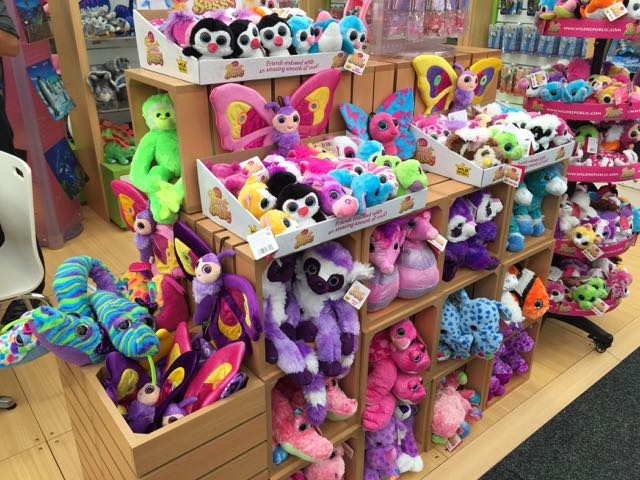
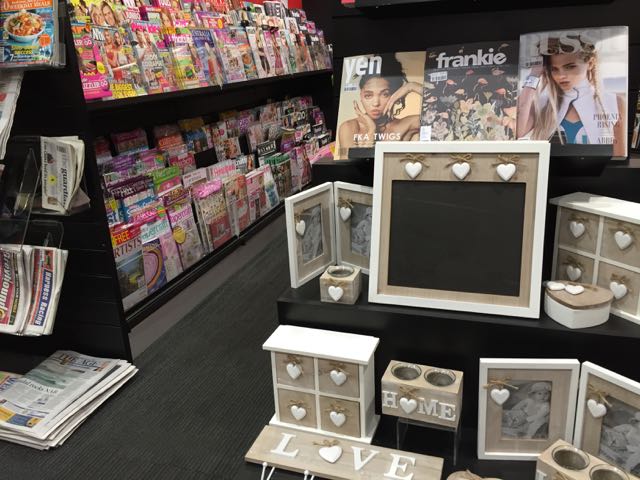
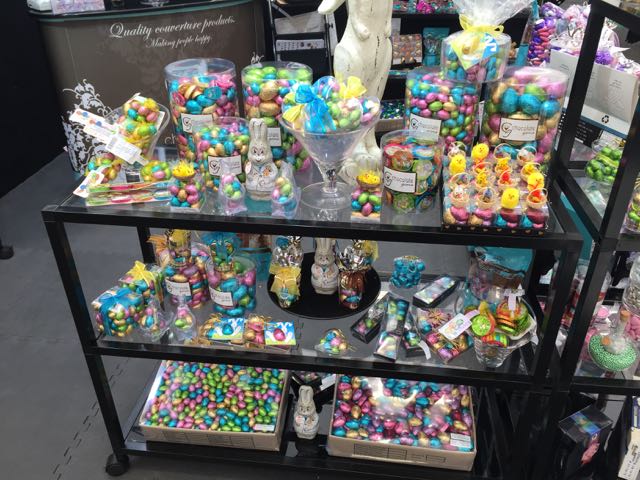
I have seen Valentine’s Day displays in ten supermarkets this week when comparing parts of their businesses to ours. each supermarket has done Valentine’s Day poorly. The photo is one of the better ones. yet they will achieve reasonable sales simply because they have the stock. They are used by people who purchase on impulse because of convenience.
Newsagents can and often do do better than this. By better I mean offering a broader range of product people would be proud to give, better quality product in the gift area, displayed with pride and supported with customer service helping shoppers with choices.
It is seasons like Valentine’s Day where we have opportunities to compete with the supermarkets. Key to this is being on the lease line so those walking past can see our point of difference.
Adding to the magazines we carry
We have recently added Manuscript to the list of magazines we sell – proving that newsagents do seek out additional titles to expand their range. I mention this to show magazine publishers who stop by here that some of us actually use a pull model. The challenge is that so much of what we get is pushed and pushed inefficiently that we rarely feel inclined to seek out new titles. The other reason newsagents don;t often order a new title is out of fear for being overloaded.
We regularly look for new titles to carry. And by we I mean everyone involved in the business. This is another factor in our growth in magazine revenue.
Newsagents trashing APN newspaper promotion of Staples
Here’s a photo from one newsagent showing what they have done with the collateral from newspaper publisher APN sent to support the classroom makeover promotion being run with Staples.
The APN collateral is in the trash bin.
As I noted here, newsagents are angry that APN is promoting US stationery giant Staples and not the local newsagent businesses on which they rely to promote and sell the newspaper.
Newspaper circulation drops across the board in latest results
There is no good news in the capital city daily newspaper circulation numbers just released.
The decline is such that there must be a live discussion as when one or more of the titles ceases to be printed daily. Circulation of The Age declined 18.3% down to 106,838 copies. This is around 30,000 copies lower than the circulation of The Seattle Post-Intelligencer a respected broadsheet from Seattle WA, USA when it ceased being printed.
What’s worse for The Age is that there is no dramatic uptake in digital editions – the decline in print is not due to migration.
News Corp has plenty of bad news too with the Herald Sun down 7.9% Monday to Friday.
Shame on newspaper publishers for continuing to ignore opportunities for working with retail newsagents to grow over the counter single copy sales. Worse still, shame on newspaper publishers for not even having a current database of retail newsagents with home they could work on such a project.
There is no good news in the latest newspaper circulation results. The numbers remind newsagents of the need to proactively engage with other traffic generators to build the viability of their businesses.
Do I think we can grow newspaper sales? Yes!
Discount magazine bundles don’t help Bauer stop deep declines in weeklies
Weekly magazine circulation has declined again based on the latest audit results published at mUmBRELLA.. From the declines speak to the failure of their discount bagged magazine strategy. here are the Bauer declines: Zoo (now terminal) 36%, NW 15%, Woman’s Day 5.7%, TV Week 4.4%, OK! 3.7% and Take 5 3.4%. Pacific weeklies declined too: Famous 14.5%, Who 12%, That’s Life 6.3% New Idea 3.5%.
Consumer habits have changed and some titles are yet to catch up with that in terms of content they offer. The publishers also need to engage differently with retailers. They focus too much on billboard displays and not enough on engagement that fits with retail today, specifically retail in newsagencies.
The publishers have not helped themselves by spreading into retail outlets where magazines are not treated well. Their arrogance has distanced some publishers from the newsagency channel.
In short, publishers need to reset their contact, change how they engage at retail and embrace newsagents as their specialist retailers. We’re all in this together and can support each other. However, supermarkets, convenience and petrol will not see themselves that way.
These declines are not new. The lack of a smart response from publishers is also not new. In some respects it is like watching a train wreck in slow motion.
Magazine circulation figures sobering
Circulation of Bauer Media’s Dolly dropped 42% year on year in the latest audited circulation report – as reported by mUmBRELLA. other Bauer titles dropped: Cleo 25%, AWW 4.2%, Cosmopolitan 9.2%, PC & Tech 19%, Top gear 19.8%. Pacific titles dropped too but not at the same level as Bauer: Girlfriend 22%, Total Girl 29%, Men’s Health 19%, Women’s Health 12%, Marie Claire 9%, Better Homes and Gardens 6%.
Frankie, which usually achieves growth, dropped 3.5%.
Only a small number of titles reported growth this quarter.
Magazine publishers could grow sales by changing how they engage with newsagents. I am certain that newsagents could help publishers in return for a more commercial relationship. We could more actively promote magazines and engage in campaigns that increase multi-purchase as well as attracting shoppers back for their next purchase.
Newsagents have an opportunity to engage with the category differently to supermarkets, and P&C outlets where the focus is only on the SKU. For a better margin we can nurture and support magazines. It all depends if Australian magazine publishers want this.
Strong January sales in the newsagency
January numbers for my newsagency show revenue up 19% year on year. There has also been a significant increase in gross profit percentage. The small team at the newsagency has worked hard to make this happen.
Here are key measurements for the business:
- Traffic – up 2%
- Average sale value – up 17%
- Average items per sale – up 2%
- Cards – up 28%. (24% of total sales)
- Everyday counter cards (birth to death) – up 26%.
- Diaries – up 24%. (5% of sales)
- Gifts – up 135%. (8% of sales)
- Magazines – up 5%. (21% of sales)
- Women’s weeklies magazines – up 9%.
- Newspapers – no change. (6% of sales)
- Plush – up 5% (10.39% of sales)
- Stationery – up 14%. (5% of sales)
- Toys – up 210%. (4% of sales)
Two thirds of what we sell has a gross profit of 55% or more. Toys for example is at more than 60% as is plush and most gifts. Magazines remain an important part of the business for revenue and for what we achieve with the traffic.
I appreciate these numbers may seem unreal to some. Like all the data I publish here, I will provide an opportunity to see the reports for themselves, to be certain that the numbers are true.
What we are doing in this business is living by the principles I have been writing about here for years – living by the principle that every day is our pay day.
The key factors to the growth are our whole of business discount voucher program, acting as retailers and not agents, chasing change in what we sell and how it is presented, using data to understand our customers and making the shop a destination for non-traditional products.
The discount vouchers continue to deliver the best result I have seen from a loyalty program. I launched the channel’s first loyalty program more than ten years ago and have used a clip card approach as well as a comprehensive points based approach. Discount vouchers are different again and customers love them.
Newsagents can grow their businesses by standing for something and relentlessly pursuing this point of difference.
Keys to success are multiple traffic generators for the business, above average margin, leveraging existing traffic as much as possible and being ruthless when things don’t work.
This 135 sq m shop is in a Westfield centre with another newsagency, two Coles supermarkets, Target, K-Mart, Australia Post and plenty go gift shops selling cards and gifts. It’s a highly competitive situation. We do not have lottery products or tobacco products as traffic drivers.
Comparing the challenges of bakers to magazine publishers
I am grateful a newsagent drew my attention to an article on page of The Australian Financial Review yesterday. Baking giant’s profit crumble on page 27 is a timely read as what Goodman Fielder has experienced with Coles and Woolworths, Australian magazine publishers could also experience as bread and magazines share some common aspects.
Here is what the newsagent wrote to me about this:
The comments in the AFR today regarding Goodman Fielders result (page 27) and the steps this company is taking to recover from a huge drop in profit due to oversupply and massive returns of bread sound just like magazines. I wonder how much push came from the supermarkets or is the effect on Goodmans bottom line the driver. Maybe we can learn something.
We see supermarkets driving some activity with magazines around discounts and bundled deals – all pitching the titles at below their cover price.
I wonder if there is pressure for this to increase – offering discounts, bundles and other promotions. Supermarkets are more active in the magazine space than at any recent time.
The only way we newsagents can address this is to be a unified channel of value to magazine publishers. I suspect, however, that the behaviour of magazine distributors toward newsagents is s barrier to that happening.
Terrific looking Cosmos magazine cover
I love the look of the latest issue of Cosmos magazine. It stands out among the sea of colour of the magazine department. we have the whole front cover on display – to leverage the terrific cover.
If you put this in the old-style magazine pockets some newsagency shopfitters still make you will lose the benefit of the impact.
Print readership continues to decline
The Australian reports newspaper print readership contracted in December:
PRINT readership of Fairfax Media news mastheads continued to contract apace, with an analysis of December figures showing Fairfax’s major national, metropolitan and regional Sunday titles lost one in 10 readers collectively.
News Corp’s major Sunday titles slipped 3.2 per cent in the Enhanced Media Metrics Australia figures, while its weekday titles were down 1.2 per cent (7.8 per cent for Fairfax).
Newsagents need to factor these results into their business planning. The decline is not inconsistent with the newsagency sales benchmark study results I have published here.
Pushing Something Sweet partworks launch issue
My issues with the use of the N logo aside, we are promoting the launch issue of the Something Sweet part series on the lease line as a traffic driver for us.
The floor display unit is terrific – nice and strong and well branded. We expect to sell 120 copies of the launch issue and achieve additional sales to people attracted to the shop as a result of the new traffic.
DeAgostini TV ad misbrands newsagents
While I am thrilled to see Something Sweet Collection advertised on TV, I don’t understand their use of the N logo. They use one of at least three quite different N logos in use. I’d guess than less than a third of all newsagents use an N logo and that less than 10% of retail newsagents use the N logo in the DeAgostini ad – making its use redundant.
The N is not representative of this channel. It stands for nothing and is backed by no discipline. It’s value is represented by poor and undisciplined uptake by the channel.
I’d like to know who advised DeAgostini to use the N logo – whoever it is got it wrong.
My other frustration is that the N logo is placed to be recognised but the word newsagents is on a pale background and lost.
Despite sales failure Bauer continues to send discount magazine bags
Bauer Media continues to supply newsagents their bagged discount magazine bundles. What was originally pitched as a four times a year promotion is now promoted regularly.
I’d prefer magazines to be purchased for their content and not because of a discount to the cover price. Regular discounting is a slippery slope. People who purchase on price are, in my view, likely to only purchase again when there is a price offer.
I don’t understand Bauer sending discount magazine packs out when I see sales data. The image below is sell through data I received from one newsagent earlier this week. It covers some the packs they have received. Click on the image to see the detail.
On the basis of this data, the newsagent should not be sent more discount packs by Bauer Media as the packs clearly do not work in this shop, they are not profitable.
The thing is, I suspect the Bauer allocations people do not look at this data when allocating stock to this or other newsagencies. If they do look at the data and still send stock which will certainly not sell shame on them. What a waste of newsagent time, space and money.
Is News Corp. treating supermarkets differently to newsagents with the Disney promotion?
I was sent this photo yesterday of terrific floor display unit promoting the Disney Bring Home Some Magic promotion being run by News Corp. supporting The Daily Telegraph.
This is an excellent display unit. I wonder why Coles gets this and not newsagents.
Most newsagents I have spoken with were given posters, floor decals and blow-up figures – nothing for placing the product on the shop floor.
I expect Coles would have required a unit like this as they would not want to follow the approach newsagents have had to follow for years – carefully managing stock, checking coupons from behind the counter, imposing the rules.
This floor display unit is more space efficient and more effective than the bits and pieces newsagents have been given. It also makes it easier for people to purchase the Disney item without a newspaper – as many newsagents have found already from customers.
It is frustrating to see another example of double standards by a newsagency channel supplier. Such behaviour confuses shoppers and can only leave newsagents wondering why News Corp. is favouring Coles over newsagents.
Next time there is a promotion with a newspaper, I’ll be asking for a floor display unit like this.
As for this promotion, I will be looking at sales tomorrow, for justification of the considerable promotional space allocation.
APN disrespects newsagents with Daily Mercury promotion
The marketing and promotions department from the APN owned The Daily Mercury newspaper in Mackay has launched a promotion offering a $5,000 classroom makeover as the prize. Readers collect tokens for their school over the duration of the promotion (Feb. 14 – Mar. 16) and the school with the most tokens at the end wins.
A $500 prize is up for grabs for the newsagent with the best display / sales uplift combination.
What is dumb about this promotion is the connection with Staples as the provider of the prize. I am shocked that no one at APN realised that Staples is a giant US corporation which competes with local newsagents.
APN ought to pull the campaign and offer a prize which supports newsagents.
In Mackay of all places the folks at The Daily Mercury ought to understand the importance of small businesses like newsagencies to the economy, the role they play in supporting local schools and that what newsagents make stays in the area. What Staples makes from sales to the Mackay region leaves the region.
This campaign is socially irresponsible.
Why is this small outpost of APN supporting a giant of a business with no local connection like Staples? It does not make sense to me. Even if there is a good deal, it does not make sense for a so-called local paper to partner with a giant US business like Staples hell-bent on hurting local businesses.
APN expects newsagents to actively promote a fierce competitor, a business that is out to take everyday stationery sales from newsagents and, in the future, back to school stationery sales from newsagents.
If I was in Mackay I would not support this promotion whatsoever.
I see regional newspapers run marketing campaigns that support local businesses all the time. It’s not hard. Many newsagents I know support their regional newspapers for mutual benefit. The disconnect with this APN promotion does not make sense.
I’d be interested to know if other APN regional newspapers are running a similar promotion.
Is this why magazine distributors are pushing to stop newsagents labelling magazines?
There is discontent in magazine distribution and publishing businesses about the push by the distributor-controlled XchangeIT to promote the elimination of labels on magazines in newsagencies.
I am told that promoters of the plan in a distribution business see it as a means for reducing newsagent early returns. It would appear push has nothing to do with the benefits claimed by XchangeIT in their promotion to newsagents.
Given the continued oversupply of magazines to newsagents and a greater disconnect between supply arrangements for us versus our competitors, newsagents need the data on the labels so they can early return – as it is supply outside weeklies and top selling monthlies where we suffer the most.
This project by XchangeIT is a distraction. It shames those who are supporting it in distribution companies an in XchangeIT.
The only project that ought to matter is the efficient supply of magazines – based on the prospects of sale as indicated by newsagent sales data provided to the magazine distributors.
Efficiency is achieved when we are supplied close to what sells. A sell through of 50% is a failure. Sadly, many titles have a sell through of less than this.
Instead of addressing magazine supply inefficiency which makes newsagents less competitive than supermarkets, people in companies like Network Services want to make it harder for us to manage our own situation. Their actions show them serving only their own needs, needs which are not aligned to ours.
Fixing the broken magazine supply model is the issue which matters most to newsagents yet it is the issue those representing the channel have failed to deliver on for years. We have seen newsagent associations pitch the XchangeIT label project to newsagents without critical assessment.
As newsagents recently indicated at this blog in response to Newsagents: have your say about a possible fresh approach to magazine distribution they want more control over supply. The cost of the failure of XchangeIT and its controlling shareholders to deliver this disadvantages our channel and makes us uncompetitive against supermarkets, convenience stores and petrol outlets.
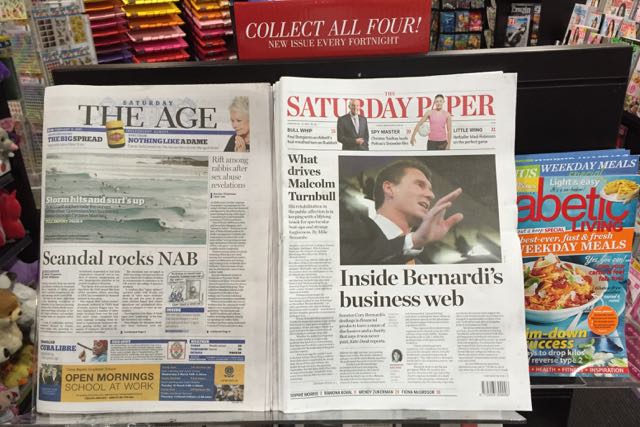
Understanding The Saturday Paper shoppers
The press release I received yesterday about the first year of The Saturday Paper is interesting not only because of the success of the title but also because of the insight it provides to the reader. Insights like these from suppliers can help us make more from products people come to our shops to seek out.
Read paragraph five of the release and think about what else you can pitch to shoppers who come in to seek out The Saturday Paper and thereby make carrying the title more valuable.
THE SATURDAY PAPER
February 9, 2015
Press Release: for immediate release
The Saturday Paper launched in March 2014, with publisher Morry Schwartz and editor Erik Jensen at its forefront. The Saturday Paper was founded on a belief that newspapers are not dead, they just stopped doing their job well. The Saturday Paper was a brave voice then and now.
In 2015, The Saturday Paper is pleased with the growth and progress reflected in the release of Roy Morgan research data. Within its first year of publishing, The Saturday Paper has established a readership of 99,000 in New South Wales, Victoria and Australian Capital Territory alone, not including their presence in Queensland and South Australia. (Roy Morgan, December 2014)
In its surveyed regions, The Saturday Paper has a readership 24% bigger than the Weekend Australian Financial Review.
Within its first year, The Saturday Paper has established a loyal readership, holding a 60% subscription renewal rate. Sales are currently averaging 60,000 copies per week nationally. In 2015, The Saturday Paper will be expanding its reach and planning a highly-anticipated launch in Tasmania.
The Saturday Paper’s AB demographic is 46% (Roy Morgan, December 2014). Research conducted by MediaCom revealed that 55% of The Saturday Paper’s audience holds a postgraduate degree. The Saturday Paper’s audience is highly engaged, with 54% of the readers spending more than one hour every week reading the print edition. (MediaCom Survey October 2014)
“It’s been extraordinary to watch The Saturday Paper grow,” said editor Erik Jensen. “We have found the audience we knew was there, an audience of readers longing for seriousness and sophistication.”
The Saturday Paper has provided quality and industry-recognised content. In 2014, The Saturday Paper was nominated for two Walkley Awards: Erik Jensen for ‘all media headline journalism’ and Luke Williams for ‘feature writing short’.
Australian Family Tree Connections shows how to support newsagents
The publisher of Australian Family Tree Connections is a regular commenter here, especially on the challenges of our broken magazine distribution system and the unfair treatment of newsagents and small independent publishers. Click on the image to see their active support of newsagents – tweeting that the latest issue is out now. Great stuff.