A blog on issues affecting Australia's newsagents, media and small business generally. More ...

Sunday newsagency management tip: product placement in retail

Before you can promote a product you need to place it in the right location in your shop. Put it in the wrong place and a good product will fail. Put a mediocre product in the best location and it may well succeed.

Placement is everything in a retail business jet as the location of the shop itself is everything.

The cliche of location location location is true inside the business.

The traditional newsagency was compartmentalised and rarely did products get placed outside the department. Stationery was always in stationery, cards were always in cards and so on. This is old school. It is not relevant to what a newsagency should be today – unless you want to achieve the old gross profit percentages of between 28% and 32%. Those numbers are not sustainable for a newsagency so I hope you don’t want to run your business a way that maintains your performance in that sub-par band.

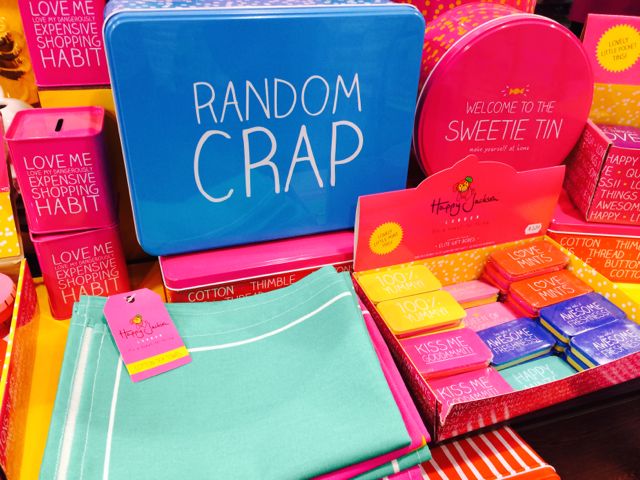
The most successful gift shops I have seen provide a treasure hunt type experience where browsers are lured further into the store. The key to success for this approach is product placement.

When I talk about product placement I am talking about where you place products in-store, what they are next to … for so that displays as that’s visual merchandising. It is important to think carefully about product placement and change what you have done as you observe shopper interaction.

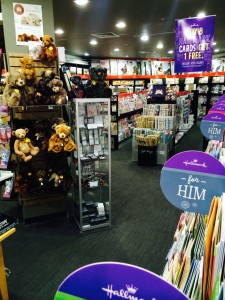
Think about who is likely to purchase the products you are placing and why. Be sure to place these products next to or with products that speak to the same shopper and near to other categories of products these shoppers will purchase. The most obvious is placing wedding related products near wedding greeting cards. Another is placing toys and kids gifts near cards for young kids and magazines for young kids.

My tip for thinking about who will purchase a product is to look at it, touch it, feel it, sniff it (if appropriate) and read up about it. The more you know about a product the more you will know who the customer could be.

There is money to be made getting this right. Think of the time you invest as improving the return on your inventory investment. This task of product placement is not something to delegate to someone who is untrained and does not understand the importance to the business of getting it right.

Every product we place on the shop floor or display on shelves needs to be placed in its location deliberately and with careful thought – not placed in a department as that is old-school retail. Look at your space by who is shopping and why and keep moving products until you have a clearly articulated story that will appeal to your customers as they move through your shop.

While we do have some departments that need anchor space: magazines, core stationery, lotteries … there is much today;s newsagency can play with in terms of placement. That’s my suggestion today – look at product placement in your newsagency through fresh eyes. Challenge convention. Place products together that speak to the same shopper.

10 likes
Management tip

Sunday newsagency marketing tip: embrace winter

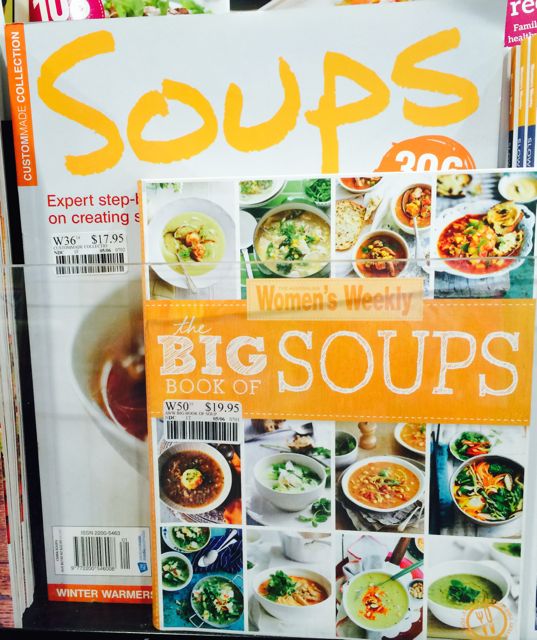
Winter is often the slowest of the four seasons in retail … make it one of the best by making your shop warm. Dress your window in warm colours, feature warming products – warming physically and or for the soul – play your mix of warm music, offer warm soup or at least coffee and tea as a treat and, if you have the right facilities, why not fresh warm food like cookies or cake?

While some of these ideas will take time and could only be done on certain days, others such as the window and product placement could be season long with changes to keep it fresh.

Push back on winter being cold and dreary – make your shop appealing and comforting through the season. Customers will remember you for proving this.

8 likes
marketing

Quick survey on newsagent and shopper confidence

I’ve put together a quick four-question survey on newsagent and shopper confidence. With the shopper confidence survey results earlier this week I got to wondering where newsagents and their customers rate. I think it’s a useful health check for us to think about own own confidence levels re business and those of our customers.  Click here to take the survey: https://www.surveymonkey.com/s/HN7RKLS

I’ll publish the full results here in a few days.

4 likes
Newsagency management

Loving foreign language newspapers

foreignnewspapersForeign language newspapers are good for newsagents. Their customers are loyal and their unit sales are holding up better than their English language counterparts in most places in Australia. They are space efficient and often have a less demanding shelf life than the traditional daily.

Foreign language newspaper customers are usually happier in my experience. That’s my perception at least. I put it down to them being happy that they are about to get their fix of news and stories in their native tongue and that makes them feel good.

While some customers buy only the newspaper, plenty buy other products at different time. The key is they are regular customers and we can bank on them. They are not getting their newspaper one day from us and the next from a petrol outlet and the next from a supermarket. Newsagents own foreign language newspaper customers and they love us for it!

I love seeing a terrific range of foreign language titles in a newsagency. One I saw earlier this week had fifteen titles. It warms my heart because it is a selection of product so unique to us. We offer a service customers love, something our competitors don’t touch.

In fact, I wish it was easier to get even more foreign language newspapers.

Foreign language newspapers are a reminder to newsagents of what we stand for and that there are opportunities for commercially valuable specialisation for us.

9 likes
Newsagency opportunities

National Geographic opportunity

foodnatgeoThe latest issue of National Geographic is one promoting outside the usual location. The cover story on food has a wide appeal. It could sell from next to women;s weekly magazines, at the counter or with newspapers. I suggest you check where your copy is and maybe give it a second location for the next week.

1 likes
magazines

Complaints about Network Services invoices

Newsagency software company POS Solutions has published concerns at their company blog about Network Services invoices and a recent meeting involving Network and the ANF:  over the problem with network invoices. The post goes on to explain the concerns they have:

I am not sure what happened maybe the ANF team were ambushed so they were not briefed in advance on the issue. Anyway as a result the ANF have announced they have a solution, but it does not work.

That is why so many people are complaining.

The main problem is that network’s NEW system is a major set backwards for newsagents processing magazines and despite many complaints by almost everyone in the industry, little has been done to fix it.

Note when I say NEW we are talking over fours years, this is how long the problem been going on.

My own experience does not match that being complained about by POS. The changes by Network to item sequence and moving from multiple invoices to one invoice were first implemented in Victoria years ago. I and many newsagents I know adjusted in-store processes and soon adapted to the changes.

While there is a change to digest, it is not a big deal in my view. Printing magazine labels on A4 sheets makes it easier to find labels for titles. I suspect that labels on a roll might be more challenging.

Using the Network supplied early file, printing alphabetically makes it simple to match labels and title. Using the later file from Network it is sequenced as close as possible to the bundled sequence – so no issue there.

Having one invoice makes account reconciliation much easier.

Network went into this change years ago through a process of full consultation. All stakeholders had an opportunity to be heard. The first releases in NSW and VIC led to adjustments following feedback from newsagents and software companies.

It is frustrating to see time being spent on such a non issue. I can’t see any reason for the ANF and Network to have met to discuss this – given the prior consultation and the years of happy use.

The only real issue I am aware of is where in some remote areas newsagents are invoiced for stock to be received at a later date. This is the one thing that I see network needing to resolve.

11 likes
magazines

Newsagents and Tasmanian forestry

I was trawling Twitter last night and found a recording of a recent speech by respected economist Richard Dennis speaking at a forum on Tasmanian forestry. I was surprised when he said that there are more people working in Tasmanian newsagencies than in forestry. He then notes that he likes newsagents and that they are a strong poddy in Tasmania.

It’s a fascinating short speech that provides useful background on the debate on forestry in Tasmania and a couple of n=good asides about newsagents.

4 likes
Newsagency

Good news: newsagency discount voucher redemption hits 28%

voucherkxThe first page of the latest Discount Voucher Report I have run for my newsagency shows that 28% of vouchers issued between February 1 and May 16 this year were redeemed. Of these, 18% were redeemed the day of issue, 40% redeemed between days two and seven and 42% redeemed more than seven days.

We have been running this program for fifteen months. It took between three and six months to really settle into the business fro the over the counter promotion through to measurable shopper awareness. Now, it is a considerable traffic driver and shopper engager.

A check of reports by other businesses and business consultants online and at business media sites indicates that the 28% redemption is at the high end. We know from our sales data, especially for magazines, cards and plush we are seeing discount voucher driven specific engagement.

I look at this data monthly as it has become a key measure of shopper engagement. It guides business decisions I make such as tweaking the loyalty program settings as well as encouraging team members by showing the positive impact of what they are doing.

Click on the image to see the detail. This is the first page of a report detailing all engagement. I use other reports for more detailed shopper trail analysis.

While I appreciate suppliers promoting brand-based loyalty offers in our businesses, I prefer the program I offer as it promotes my business and this is what matters most to me.

What we are doing in this business is easy for anyone to do. Any computer software should be able to offer you something like this including the reports. It’s much easier than getting cards made and having customers sign up for a program that may not be relevant to them given how often they can shop your business.

7 likes
Newsagency management

Leveraging the Monopoly brand for gift sales

monopolyWe are testing interest in the Monopoly brand with a selection of Monopoly themed gifts as one of several new brand stories for Winter. With Monopoly being a winter rainy day game for many we figured this is a good time of the year to promote this brand.

We have the range displayed adjacent to cards – promoting it as a gift with card opportunity.

2 likes
Gifts

Everyone loves fire trucks!

partwfireI love this new partwork from Network: The Complete Fire Engine Collection. It’s a good title for males and younger shoppers. We have it at the front of the newsagency on the lease line. Our goal is to sell out fast.

0 likes
partworks

Coming out

Last week, a person working for me was asked by a newsagent whether I was gay. My colleague responded saying that the newsagent should ask me.

On hearing of the conversation I called the newsagent and asked if he wanted to ask me the question. He said he doesn’t care and has no interest in knowing if someone is homosexual. He was shocked that I asked him the question.

I first encountered homophobia in the newsagency channel in the early 1990s when I heard of several people working for a newsagency supplier telling newsagents that I was gay. It was being said to turn people away from me and my business.

I am sure others have stories of ignorance and vilification. There are far more important challenges we should be talking about than someone’s sexuality.

I am gay. If that is news to you – knowing it does not alter who I am, who I have been or who I will be. Knowing it does not alter my commitment to the newsagency channel, to newsagents, to their businesses and those who work in them.

For many years I chose to not be out. I was concerned for my young family and for my young business in the mid 1980s. From 1998 people working for me knew. It was not until ten years ago that I resolved to answer the question with yes if ever asked. No one asked so I didn’t tell. I didn’t see a reason to tell, I didn’t want to make it a thing.

Around eight years ago I was invited by a supplier to a major sporting event. The invitation was for two. The supplier rep was bringing their spouse. Taking a deep breath I told them I was gay. They were happy for me to bring my partner. We had a terrific dinner and enjoyed the wonderful sporting event. My sexuality and relationship status was treated as normal. It was an affirming experience and continues to be so in my mind.

I am writing about this today because there is at least one person using my sexuality in an effort to damage my personal reputation. As they engage in this they could harm the reputations of colleagues, employees, friends – all because they want to hurt me.

It shocks me that in 2014 in Australia there are still people who would think it is relevant or interesting to say someone is gay – or homosexual as it was put to one newsagent recently – to damage their reputation. I’d hope that the person saying this is more damaged than the person they are speaking about.

The newsagency channel has many gay people – owning newsagencies, working in newsagencies and supplying newsagencies. Their sexuality has nothing to do with the value and contribution they make.

We are all in this life together.

The rate of suicide by young Australians is an unreported tragic epidemic. The type of ignorant behavior I have written about here could be a factor in another taking their own life.

217 likes
Ethics

Voter spending sentiment in steep decline

agedownThe Age and The Sydney Morning Herald today has a comment piece by Chief political correspondent Mark Kenny about the steep decline in spending sentiment among voters as measured in a Fairfax-Neilsen poll.

Shopper sentiment is, in part, driven by media coverage and today’s front page of The Age reports on and feeds into the survey results.

As retailers large and small have noted ow for several years, retail is tough. Australians have voted in a government that is pursuing policies that appear set to make things even tougher.

The best way for us to counter this decline in sentiment is for us to create retail environments that are cheerful and enjoyable, where people forget their worries and want to buy the optimism in our businesses.

We should not agree when people complain or say things are tough. No, we need to offer a response that pivots the conversation.

4 likes
Optimism

Gift range drives return business for the newsagency

gorjusIn March I wrote about the Gorjus range from Artique and how this range appeals to the Frankie magazine customer. Now, two months on, we have good data of Gorjus shoppers returning for more purchases. carrying this range has helped drive shopper traffic. What’s even more important is that the particular shopper attracted is more valuable than an average newsagency shopper: higher average spend, longer in the shop and they often buy magazines.

Our experience is evidence of gifts driving magazine and other sales as well as gift sales.

3 likes
Gifts

Confronting the Thursday shift in high street newsagencies

It is almost a year since magazine distribution changed from Monday, Wednesday and Friday to Monday and Thursday. Newsagency sales data I have seen indicates that high street newsagents have been confronted with the most significant impact. In one case Thursday sales are down 33% and the change can be tracked to the change in magazine distribution.

If your newsagency is in a high street situation I urge you to look at your Thursday data, compare the last four weeks to the same four weeks ago. If you see a considerable decline ask yourself what you are doing to fix the decline in traffic. Action is essential to rebuilding the lost traffic.

If I was in a high street newsagency situation I’d be focused on making my newsagency the destination for everyday magazine traffic. I’d work hard to lock in the habit based visit – so much so that shoppers go out of their way to get their magazines from me and not the supermarket with their weekly shop – as the change in distribution facilitates.

Check your data. Understand the impact of the changes on your business. The knowledge in your data can guide your business decisions.

4 likes
magazine distribution

Going cashless in retail

nocashCannings Free Range Butchers in Hawthorn Victoria have gone cashless. The sign on their window says they made the move to improve hygiene, save shoppers time, keep their costs down and eliminate errors.

Other benefits of cashless trading for retailers include less employee theft, less health risk and better management options. While cards can contain germs like cash, some research indicates the indigence is less than with cash.

Challenges for newsagents making a similar move include transaction size and volume as well as customer patience at the checkout. However, as customer traffic and shopper visit purpose changes the opportunities for us going cashless will also change.

This move to cashless trading is interesting, one for us to watch and consider.

6 likes
Newsagency management

Newspaper revenue up yet unit sales are down

A phenomenon in the latest newsagency sales benchmark study is the increase in newspaper revenue for many newsagency businesses where unit sales of newspapers declined. This speaks to the considerable increase in cover prices over what was being charged a year ago. If only newspaper publishers had acted on newspaper prices sooner – we’d have all been better off.

11 likes
Media disruption

Gift inspiration for newsagents

Click here to see a digital edition of the latest Giftwrap magazine – it’s packed with plenty of inspiration for those serious about gift retailing. Giftwrap is published by the AGHA – the Australian Gift and Homewares Association.

4 likes
Gifts

Local council works can kill a high-street retail business

A newsagency in a regional town has endured more than six months of major works in the road and footpath on which their business is situated. Business is down more than a third. The works took more than twice as long as they should and the council has offered no help. Their only explanation was that they hit a few snags.

This newsagency and a bunch of other retail shops have had to continue to pay rent, staff and other business costs. Some have spent more on marketing to counter the impact of the road works mess in front of their shop.

Local shoppers had an alternative, a shopping centre on the edge of town. Some shoppers who tried it because of the road works will not be back.

While I understand the need for councils to improve roads and footpaths, they have an obligation to move quickly, to pay a premium to get the work done with urgency so that business disruption is kept to a minimum.

As for the works – the end result is not worth the lost revenue to the newsagency and other businesses.

8 likes
Newsagency management

Save money and time on pricing products in your newsagency

I was in a newsagency last week and noticed that they used computer generated price labels on everything they sold except weekly magazines and small confectionery lines.

In my businesses we only generate labels for non high-volume monthly magazines and what I’d call premium gift lines. Non-premium gift items are priced with a price gun – as long as they have a product barcode.

A premium gift line is something selling at $20.00 or more.

By using a price gun to price items we save time and money. We also make it easier to change price.

The computer system still tracks everything because of the product barcode.

3 likes
Management tip

Digital versus print challenges of The New York Times speak to local challenges

Digiday has published a fascinating report into the digital challenges being confronted by The New York Times. The graphs in the report show excellent growth in digital access while at the same time showing the high cost of serving the declining and unprofitable print consumer. It’s the biggest single challenge facing newspaper companies, the reason for so many changes at Fairfax and more to come.

The biggest single challenge publishers face is how to monetise traffic to their sites and individual stories. The reason this is a challenge is because they have looked at with experience in and from the perspective of selling display ads and classified ads in the print world. Monetisation of digital content needs a completely different .NET approach. A publisher who gets this and acts should do well. A traditional pay wall is not the answer.

If I was running a publishing business I’d be pursuing multiple models at once – including following the model that is working so well for in-game purchasing as people are happy to pay a small fee to get to the next step.  Let me buy a story for a few cents. Let me follow a story for a bit more.  However, with so much content available freely it is hard for a publisher to have a genuine exclusive like game makers have. I’d also be investing in a Twitter like platform for trusted news – people will want that with Twitter being filled more with junk content and advertising.

Look at the MH370 story. While I would not sign up to a masthead based on the story I’d have paid for 7, 14, or 30 days of trusted coverage on this story alone.

Publishers need to come up with new entry points to paying for content – beyond the masthead.

5 likes
Media disruption

Pointless drug related crime

On Saturday night the back door and the outer steel security door of a high street retail business I own were smashed and thousands of dollars in cash (two days takings) was taken along with more than five thousand dollars worth of stock.

The theft was committed at 4:30am. We have photos and video of those involved. On the evidence, the police confident that it is a drug related crime.

What shocked me was a comment by the police that the money will be spent by those involved within 48 hours, that they will be high for a couple of days, down for a couple of days after than and then on the look out for their next payday.

Stock and doors can be replaced and insurance can cover some of the cash. The business disruption is frustrating as is the process of claiming on insurance. All because someone wants to get high.

The police expect no jail time, some community service and no attention to what caused them to steal i the first place.

I have no idea what the answer is and no, I am not suggesting that jail time resolves drug related crime. Naively, I wish there was a solution for the addiction that is at the root of this crime.

What I do know is that this business feels a bit less safe than a few days and and that means a bit less enjoyment for those who work there and maybe some who shop there.

10 likes
theft