A blog on issues affecting Australia's newsagents, media and small business generally. More ...

Year: 2024

Online is the biggest growth opportunity for newsagents in 2024

The revenue opportunities of online present the biggest opportunities for newsagents in 2024 I think, regardless of whether you already have a website or not.

The latest benchmark for Aussie retail reports online as 10% of total business revenue.

In the Aussie newsagency channel, the average figure for those with a website is just under 5%. If you don’t have a website, what would a 5% bump in revenue feel like?

There are newsagents doing plenty more online.

The thing about online is that the opportunities are limitless. You are not constrained by your location or what you sell. You can mine success by leveraging your time and pursuing what people are searching for.

Through my Tower Systems software company and the newsXpress newsagency marketing group and through my own shops I have many years experience in online B2C sales.

If you can’t increase local physical shopper traffic, online is a smart move to improve business reach and profitability.

One newsXpress member launched a website with us last year and added $50,000 in good margin revenue in six months.

Another newsXpress member used their website to pitch an entirely new product category and found a profitable second business as a result, using existing labour and facilities in the shop.

Here are the top reasons why I think every retail business needs a website:

  1. Capture sales when you are closed. Typically, more than 50% of online purchases are then the brick and mortar business is closed.
  2. Engage when you are closed. Use chat to answer questions from anywhere, or you geek-out and have an AI chatbot do this.
  3. Reach people not currently shopping with you. Typically, 75% of sales are from people located nowhere near your shop.
  4. Have a second outlet for quitting stock.
  5. Have a place where you can experiment.
  6. Playing with a plan Bin case your shop finds itself in choppy waters.
  7. To learn. A website, especially your first website, teaches you so much: What people want. What they could pay. Haw awful some people are.
  8. To get you out of a rut. If you’ve been in your shop for ages and are mailing it in each day, a website could put a spring in your step.
  9. To make your shop more valuable. Having a website can make your shop more appealing when you decide to sell.
  10. To find a secondary brand. Could be the first step in a shop rebrand.
  11. To drive traffic to the shop. People will find products on your website and visit as a result, for sure.
  12. To give you another source of revenue that is completely unrelated to anything you do in your shop.
  13. To harvest email addresses. Email marketing from Shopify is a breeze.

Getting online can feel daunting. It can be expensive if you choose a web developer who does not understand your business and your needs. Too many of them push what they want on a business, often resulting in a failure of a website.

It’s important you know what you want and that you understand that a website is a hungry beast, which will soak up time and cash in pursuit of finding new shoppers. Get it right, and the payoff can be wonderful.

If you don’t have a website for your newsagency business, make it your goal for 2024. There are many opportunities out there for the taking, plenty you can pursue on a tight budget.

10 likes
Newsagency management

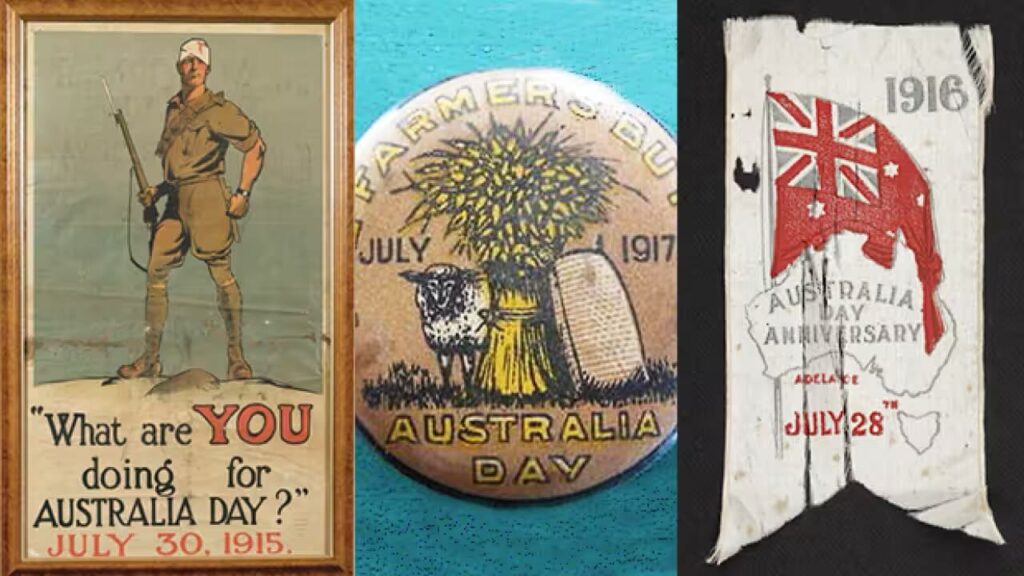
Hey Peter Dutton, here are the real reasons few Australian retailers sell Australia Day merchandise

In response to Opposition Leader Peter Dutton’s call yesterday for a boycott of Woolworths over its decision to stop stocking Australia Day merchandise, here is why we no longer stock Australia Day merchandise in my own shops.

As a retailer, I need to offer merchandise that is profitable and fits the narrative of my local business. Australia Day merchandise does not sell like it used to. Given what deep discount stores have done in this space, the margin we can achieve is small, insufficient to cover retail space and labour costs.

The last time we sold it a few years ago our gross profit from all Australia Day products sold was under $100 with the space alone costing double that and the labour involved costing $100 meaning we lost over $200 on the ‘season’.

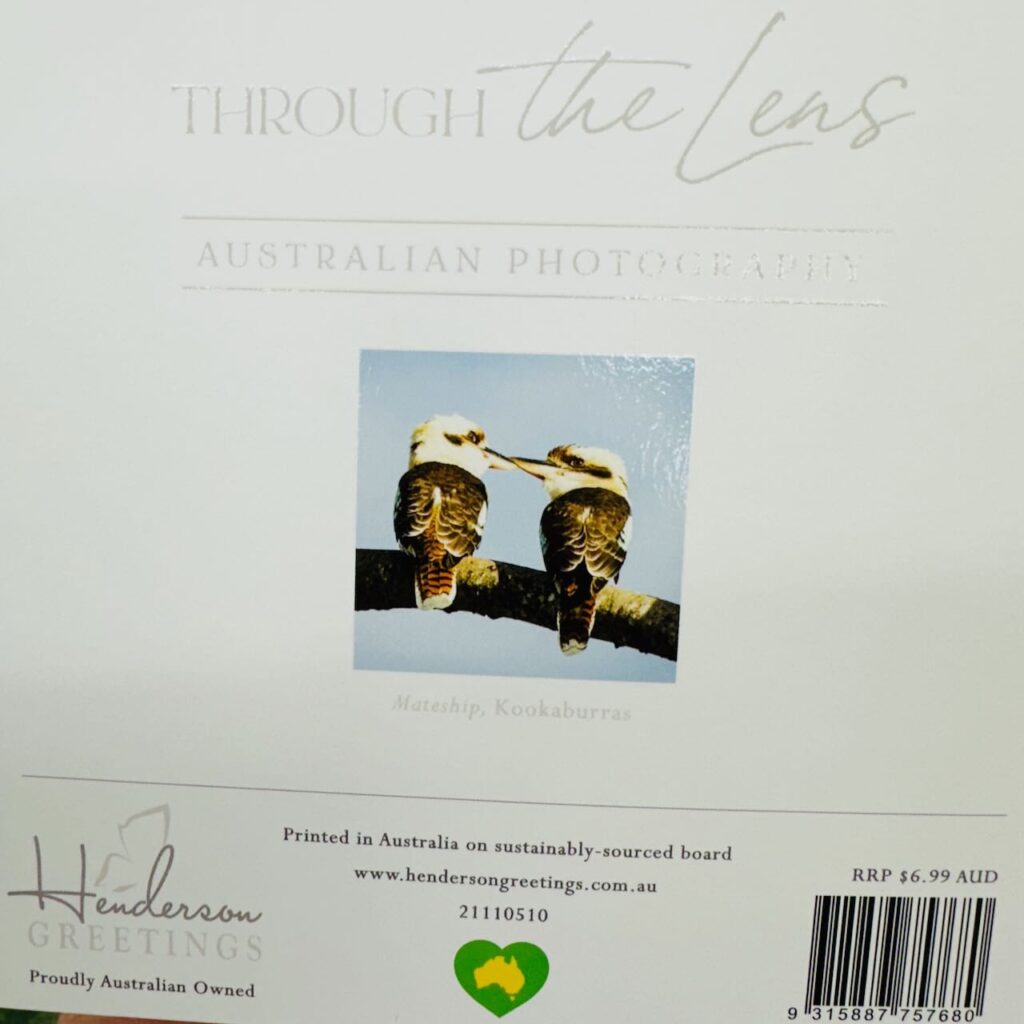
For any of our customers wanting to celebrate the day by sending a card, we have an a big and awesome range of cards designed and printed in Australia that are perfect for this, including:

Most Australia Day merchandise is made overseas, usually China, which contradicts our shop local narrative – we preference Australian made wherever we can.

Imagine how Peter Dutton may feel when he discovered that we are not opening on Australia Day. We haven’t done for years. Sales revenue is typically low on the day and labour rates are up as it’s a public holiday. Years ago we decided to close and are grateful for the day off.

If Peter Dutton wants Aussies to boycott Woolworths because it no longer stocks low margin overseas made Australia Day merchandise that does not pay its way, he should call for a boycott of plenty of other Aussie retailers like me who made the same decision as Woolworths management.

Maybe Peter Dutton should have done his research on Australia Day merchandise prior to shooting his most off.

I know I am not alone in no longer stocking Australia Day merchandise in my newsagencies.

  • Sales of Australia Day merchandise have been in decline for 10+ years.
  • It is challenging to find Australian made Australia Day merchandise that can compete with the cheap China stock deep discount stores carry.
  • The interest in Australia Day merchandise among shoppers has waned. It’s not a profitable ‘season’.
  • The current day itself, January 26, is problematic.

Now before people jump on that, consider that it was not long ago that the day itself was on a different date, as SBS (and many other outlets) reports:

January 26 is problematic because it celebrates the date of the landing of the first fleet. As the Australian Museum notes, Captain Cook was told to gain the consent of the ‘Natives’ when making his claim of possession. He failed to do this, he failed to obtain permission from any Aboriginal people as required by the instructions he was given. While plenty of Australians dispute this, the evidence readily available tells us otherwise. Read the evidence at the Australian Museum website.

I think Peter Dutton is chasing this issue because his mates at some media outlets will amplify his shouting and pouting when we would all be better off celebrating all things Australian while being respectful of the messy road that got us to where we are today.

30 likes
Social responsibility

Pushing a cash is king message is a fool’s errand in my view and here’s why

I see small business retailers pitching cash is king on social media and shake my head. It’s a waste of time. People will pay how they want to pay, if you let them.

Berating people, telling them that cash is better for you and the economy is an argument not backed by facts.

The cost of handling cash is not dissimilar to the cost of taking cashless payments. especially today with fewer bank branches available for cash deposits and making change.

We are retailers. Our businesses are service businesses. If someone wants to pay us money, we need to be flexible in the forms in which we receive this. And, if one form of payment is more expensive than another, consider a surcharge for that and explain to your customers why.

Posting on social media about the cost of card payments and bemoaning money banks make from this is not cutting through. You only have to look at the continued growth in card and other non-cash payments to see that. So why waste time and energy complaining about something that has no chance in going your way. Instead, spend time celebrating what you love about your business.

Of course, what you put on social media from and about your business is 100% up to you. The challenge for our channel is that anything one newsagent does can speak for more than that one business.

What we want in our business, our prime goal, is more shoppers. Anything that gets in the way of achieving this needs to be considered, and probably dropped. I think the social media posts bemoaning the cost of card payments and calling for people to pay cash are an example of a turn-off social media post. Such posts risk turning people off your business and off colleague businesses in the newsagency channel.

Yes, the payments arrangements in Australia are unnecessarily complex and they do have a cost to our businesses. But, shoppers are flocking to non-cash methods of payment and it is good for our businesses if we accept these with ease and grace.

Instead of waging an unwindable campaign about your preference for cash over card for payment, consider diverting that energy into business improving opportunities such as addressing common expensive management misses that I too often see in local small business retail. here are some ideas:

  • Dead stock. A problem not seen is not a problem to too many. In the average indie retail business, dead stock is equal to at least 3% of turnover.
  • Running out of stock. In one business I looked at recently, being out of stock cost the business $15,000 in sales in six months. ordering based on what their software advised would have solved that.
  • Failing the price opportunity. Shoppers are less price conscious than we think they are. Have faith in your business. Price based on the value you offer and not based on fear of competitors.
  • Bloated roster. I often see a bloat cost equal to around 10% of business labour cost.
  • Wrong trading hours. Some stay open too long while others are not open long enough. Either way has a cost to the business.
  • Being blind to theft. Theft in local indie retail retail costs on average between 3% and 5% of turnover. Not watching for it, tracking it and mitigating against it has a cost to the business.
  • Ignorance. No, it’s not bliss. There are insights in software that can guide better decisions, faster decisions, more financially rewarding decisions. Yet, too many in retail don’t want to know.

This is a list of seven action items from which any small business retailer could benefit. Pick any or all of these ahead of spending time going on social media calling for people to pay by cash instead of a card and you will gain more benefit for bottom line.

13 likes
Management tip

Retail management advice: the easy 5-minute way you can discover dead stock

Last week I shared the following advice with retailers using POS software from Tower Systems, the software company I own. With 60% of newsagents with POS software in their businesses using Tower, I thought I’d share the advice here. In a few minutes you can discover terrific opportunity in your business. Now, the software is called Retailer. Here’s the advice:

Open Retailer. Go to Reports. Select the last option, Insights Dashboard. Click on What’s Not Selling. This tab will list products not performing. You can adjust settings to suit your specific business.

Stock that is not selling is dead stock, capital tied up, space tied up.

Once you know what is not selling you have the opportunity to act in a targeted way to quit the dead stock and not order it again.

Many retailers ignore looking at dead stock. Some don’t want to know while others are scared to discover it and others don’t think it is important.

In our experience, a retailer looking at dead stock for the fist time will discover that around 20% of their total stock on hand is dead. In a business with $120,000 in stock, that’s $24,000 in capital at risk. Can you afford to have $24,000 doing nothing for your business?

Listing dead stock is one way you can make more money from your business by using your Retailer software.

The Insights dashboard provides easy access to actionable insights into your business. It helps you make more money.

Do it now: Open Retailer. Go to Reports. Select the last option, Insights Dashboard. Click on What’s Not Selling.

If you’d like help doing this or understanding, please reach out. Also, our knowledge base offers an awesome video about the Insights Dashboard. I have opened this video for anyone to watch – no need to log in.

To me, in a newsagency, any stock item more than six months old could be considered dead. Certainly to anyone buying a newsagency it would be reasonable to consider such stock dead and therefore not worth paying full wholesale price at settlement.

Now if you think it best to not know about dead stock I’d say you are wrong because at some point in time the cost of dead stock will be an issue for you and you will want it resolved quickly. This is why checking now is good use of your time.

13 likes
Newsagency management

Relaying magazines in your newsagency is the easiest way to increase sales

Before I get into my revised advice on how to do a magazine relay in your newsagency I remind magazine publishers and our only magazine distributor that newsagents are treated poorly by you – poor margin, out of date management practices and no ability for us to reasonably control the titles we have. We are time-poor because of your out of date practices.

I first shared advice on how to relay magazines to drive growth in sales back in 2006. Over the years I have shared updated advice here. The advice below is considerably modified.

How to do a magazine relay in your newsagency

A magazine relay is the process of recasting, improving, the layout of magazines in your business, with the main goal of increasing sales and a secondary goal of improving retail space efficiency.

Take all the titles off and put them on the floor. Clean the fixtures.

Start at the end closest to the front of the shop and rebuild, making careful choices as to what titles go with what as you go along. Try and not place as they were placed before. Change is important. Don’t overthink it because no layout is permanent. Don’t consult your data. Rio with your gut.

At the top of a column have the title people will recognise the most. Consider allocating two pockets to this same title. This is what they call beacon branding.

Adjacency placement is where you can make editorial decisions, business decisions to guide your shoppers. What works best with what. You don’t know, not for sure at least, how can you. Ok, there is basket data you could read … but that only tells you what is happening. What about what could happen? Who knows. Experiment!

For example, should you put model plane magazines next to flying magazines? Or, should model plane magazines be in a distinct section of all model titles? Do puzzle shoppers shop by brand or puzzle type. Publishers want you to layout based on their brand whereas your shoppers are, in our opinion, more likely to shop by interest. For example, all sudoku titles could work better together, or all large print titles could work better together.

Here are some adjacency suggestions.

  • Cricket, golf and swimming go well together. Wrestling, boxing and buff-type fitness go well together.
  • Soccer is not rugby or AFL. Don’t mix them together.
  • Classic car titles need to be distinctly separated from regular car titles.
  • Classic car titles work well with classic trucks.
  • Car lovers do shop by brand. Place branded magazine titles together.
  • People interested in home renovation could be interested in any renovation title.
  • Creative arts go well together: painting, writing, craft.

Once you have completed the relay, walk staff through it so they know what’s what.

Next, watch shoppers and listen for feedback and, after a couple of weeks, look at the sales results. The results could guide adjustments, or not.

8 likes
magazines

Is a newsagency a good business to buy in Australia?

It’s January 2024 and a good time to consider this question: Is a newsagency a good business to buy in Australia?

The answer on whether a specific newsagency is good for you to buy will depend on the newsagency, it’s past performance, it’s specific situation, the prospects for the region, your resources and your own retail skills.

But considering the question Is a newsagency a good business to buy in Australia? broadly, I think the answer is yes.

While what newsagents have traditionally been known for has changed, there is plenty of upside for engaged retailers prepared to play outside those now blurred lines of tradition. There are also excellent opportunities within plenty of product categories, including:

Stopping looking like a newsagency. Aussie shoppers have an expectation that a shop that looks remotely like a newsagency will sell what they think a newsagency should sell and will therefor not visit or visit depending on their assumptions. I’ve seen newsagents grow their businesses by not looking like a newsagency.

Gifts. This is easy and the opportunities are considerable. Whereas in the past gifts in newsagencies tended to be lower priced and bland, newsagents I see having success play in higher value niche spaces, and they do well from this. It takes investment, passion and commitment.

Stationery. Plenty of newsagents are reporting growth in stationery sales both in traditional stationery and with impulse purchase must-have stationery such as fashion forward journals and cool pens. It is in this second area of stationery that there is opportunity for even more growth if you engage with trends and stop thinking about stationery as purely functional.

Cards. With millennials and gen z shoppers we are seeing good card sales. But to win them you need to engage with the category in ways that some of the older card companies in Australia struggle with. I see plenty of newsagents growing card sales by being innovating in terms off where they pitch product and the ranges they offer.

If your question is whether a traditional newsagent is a good business to by where traditional to yo0u means lotteries, newspapers, magazines traditional functional stationery and cards then, I’m likely to say no as that type of business with an overall gross profit percentage of between 28% and 32% is flat or declining. But, that type of business can offer good bones for innovation away from the tradition. Again, the key is to pay a fair price based on the actual profit and loss numbers for the business – beware add backs that don’t make sense.

Newsagencies are changing hands, the businesses are selling. There are sellers and plenty of willing buyers. I think 2024 is a good year to buy a newsagency.

Footnote: I’ve not mentioned newspapers and magazines because these poor margin categories are of less interest to me. Newsagents have little or no control over the range of products they stock, no control over the sale price and are burdened with product management requirements that are rooted in practices that were out of date thirty years ago. These poor practices dictated by suppliers add to the cost of business and suppliers are yet to demonstrate an appetite to modernise despite years of promises and the often repeated claim that newsagents are important to them.

19 likes
Newsagency management

2023 vs 2022 newsagency sales benchmark study under way

I have started collecting data for a 2023 vs. 2022 newsagency sales benchmark study. While I am doing a whole of year comparison this time around for the whole of channel study, I’ll do a last quarter only study for a smaller group for anyone interested.

My goal for the main study is to get data from at least 120 businesses as this will provide sufficient a dataset to consider the total channel results.

2 likes
Newsagency benchmark