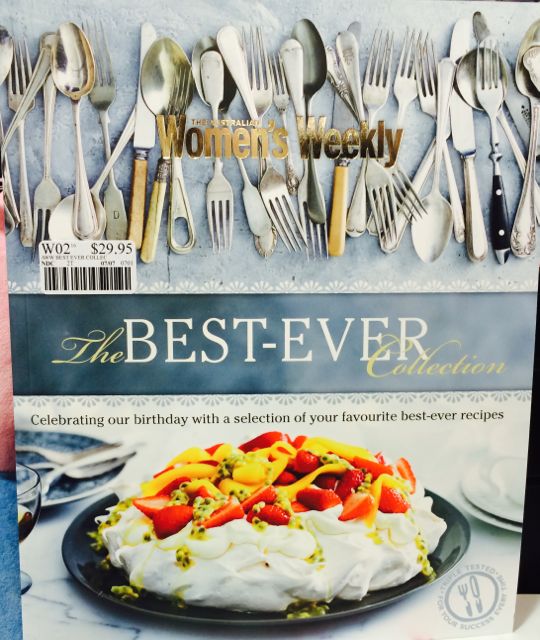
AWW Diabetes cookbook popular
The AWW Diabetes cookbook launched Thursday is popular with sting sales already. We are driving this with placement with diabetes titles more so that placement with cookbooks. It is disappointing that Bauer now releases this to supermarkets at the same time as newsagents. We used to get 6 to 8 weeks head start.
Is the Officeworks reflex paper pricing predatory pricing?
Wesfarmers owners Officeworks has an amazing deal right now on Reflex paper. In fact, the deal is so good that it is well below what newsagents can buy this paper for at wholesale. I’ve checked around and I doubt even hundreds of newsagents buying in bulk together could buy better than the Officeworks retail price.
This price of $3.20 a ream looks to me like it is below cost. It looks to me like predatory pricing.
Here is what the ACCC says about predatory pricing:
Predatory pricing occurs when a company with substantial market power or share of a market sets is prices at a sufficiently low level with the purpose of damaging or forcing a competitor to withdraw from the market.
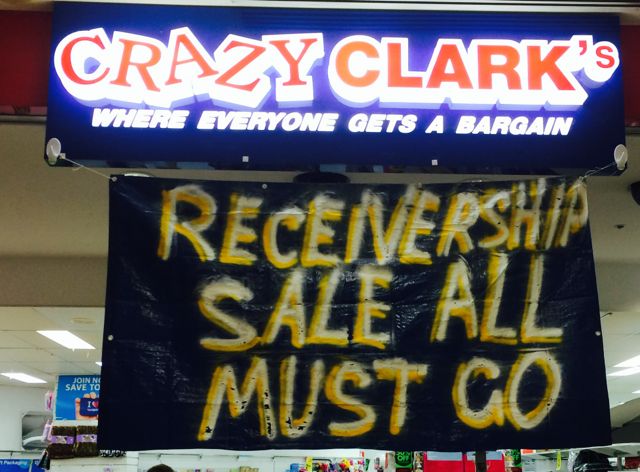
This Reflex pricing is another attack on small business by a giant company that is half of the supermarket duopoly in Australia. We’d be letting ourselves down if we do nothing about this.
What should we do about this?
We should complain to the ACCC. Use the small business complaint form and tick the anti competitive behaviour box as this covers predatory pricing. Completing the complain form will take a couple of minutes. Making the complaint puts pressure on Wesfarmers and it puts pressure on their Reflex supplier Australian Office.
We should also complain to our local member of parliament and use this reflex pricing to pressure them to support reining in the power of Coles and Woolworths.
I plan to stop selling and using Reflex. I don’t want to carry a product that can be subject to price comparison in such an unfair way. Newsagents owned GNS has paper I can stock that is not treated this way and that’s what I’ll carry.
New Blackhawk gift cards gives us an opportunity to leverage online sales
Gift cards launched this week by Blackhawk – sold to newsagents through Touch – offer newsagents an opportunity to better connect with online and other sales. Cards for purchases from Facebook, Ticketmaster, XBOX and reloadable Visa cards are good products for us to have in-store.
Gift cards are easy gifts to include with a greeting card. Indeed, I place my Blackhawk gift card stand near greeting cards.
With no stock holding cost and minimal floorspace required the downside for newsagents is minimal.
Tapping into Mars interest
Mars has been in the news a bit over the last two weeks with talk of a manned mission and some Aussies in the running for that. This is enough of a reason to get this issue of Science Illustrated into the spotlight. Even a small opportunity like this selling one or two magazines is worth it in my view.
Is this latest magazine distributor idea all about reducing early returns?
A magazine distributor has asked XchangeIT to research implementing virtual magazine labels. Their thought is that newsagents not label magazines and instead use a hand held device to manage titles.
In a practical sense, they want you to stand in front of a title, remove it from the shelf, scan the barcode, see on the screen the ‘label’ with supply and return data and then act. With the fastest App and or hand lend device the time cost of checking a title would be four to five times longer than right now plus you’d be relying on an extra bit of hardware .
Unless I am missing something, from a newsagent perspective this thought should have been killed off quickly after it was suggested.
To me, it seems the magazine distributor could be interested in making shop floor decisions harder to make. But they will deny this.
Magazine labels today contain excellent information that enable smart newsagents to make shop floor stock management decisions.
In my software company we considered this mobile approach to returns and shop-floor title management around ten years ago when mobile data devices became more affordable. Back then we decided against it for reasons that are valid today. It would be cumbersome, difficult, slow and forcing double handling. We looked at ti again a couple of years ago and decided nothing had changed.
Here is what I wrote to XchangeIT last week about this virtual label idea:
Gavin and Jonathan have just mentioned to me about the possibility of virtual magazine labels being pursued by XchangeIT. I see no benefit for this for newsagents. They’d need technology to check magazines on the shop floor. This and the time delay in checking would frustrate them and cost considerably.
The only benefit of this would be reduced early returns and that would be bad for the cash flow of newsagencies.
Newsagents today usually only print labels for non high-volume monthlies and one shots. They do not do them for weeklies and high volume monthlies. So, the cost of labels is not high. Also, the time taken to actually label is quite low.
The label guides in-store placement. It acts as an invaluable tool in making shop floor decisions.
Australia leads the world in this area. The idea of a virtual label would deny newsagency who use it from access to a tool that is vital to active shop floor magazine management. I think it would be a waste of money for newsagents and those who serve them.
I have made similar representations on behalf of newsagents to the distributor.
If the idea of a virtual magazine label does become a reality and make its way into the IT stands for the newsagency channel, I’ll support it as I do all standards. I won’t agree with it but out of respect for newsagents I will support it. By support, I mean I will end up spending my own money on it to help newsagents.
For those who think software companies will not like this because it will reduce label purchases – I’d say you’re mistaken. Label revenue is small. From my experience the products are offered as a service. The labels can be sourced from many places.
It frustrates me that people who do not run or own or understand retail newsagencies make decisions about IT standards retail newsagents need to adhere to. These people in control of the standards are out of touch. They are not serving newsagents well. They complain that newsagents do not adhere to standards. My response is that this will continue to be the case as long as newsagents do not see any commercial benefit to them in terms of equitable magazine supply.
I wish this magazine distributor would spend more time in getting supply right. Currently, around 65% of what they supply is loss making – the stock is not even paying for the space and labour used to carry the stock. They should be investing in their end to fix this and not pursue this project of folly that has no upside for newsagents.
I wish XchangeIT would more actively represent newsagents ahead of distributors since newsagents provide the bulk of their revenue. Their ownership structure makes such a wish impossible to grant.
Locally produced soap enhances your local products pitch
b.gentle is a family run soap making business from Mt Buninyong in Victoria. I’ve sold their products in my shops for many years. Customers love their products. Them being local is a bonus. While they do sell direct, they also sell their products through many retailers including newsagents.
The b-gentle range works particularly well with older shoppers. Their products give you a good Australian success story to share in the sales pitch.
This week I am drawing attention to several local suppliers newsagents could consider. Stocking products from these and similarly local suppliers adds credibility to our shop local pitch. To me, local products are products made and / or designed in Australia. If my newsagency was in a country area my focus would be more on products sourced even closer to home.
Excellent growth in craft and hobby magazine sales
Earlier this year we nervously moved craft magazines to a lower shelf location, below weeklies. The downside is that shoppers have to reach down to select a title. The upside is that more shoppers are at this part of the magazine department than any other.
In January through June 2014 we racked up a 45% increase in craft titles sold. Once we take out popular one-shots and partworks we are still achieving 20% year on year growth. Craft and hobby titles account for 7.27% of our otal magazines sold.
The move was a success.
We can grow magazine sales by actively managing the layout of the department: by engaging in where and how we place titles.
Over the six month period our magazine sales are up 8%. This is a good result on the back of a $100,000 sales base for the same period in 2013. In the all-important weeklies, our unit sales are up 8% year on year.
Our magazine sales growth is due to active engagement with the department and the consistent promotion of our Discount Vouchers. The Discount Vouchers are driving shopper loyalty and for the weekly magazine purchase that is vitally important to us. The shoppers we lure back with the program purchase other items to then fund their magazine purchase.
New newsagency blog video
Just now a new video introducing the Newsagency Blog and its purpose has been loaded in the top right corner of the home page. This video was shot in the office yesterday.
Why I offered no goodwill and 75 cents in the dollar for stock to purchase a newsagency
I was approached recently to consider purchasing a newsagency which had been on the market for a long time. The owners were in dispute and wanted out urgently.
The figures provided were what I’d call creative. While I could see the business was losing money, a first time business buyer might have seen otherwise given how then information was presented.
The shop itself looked good, the shop fit quite new. But it was old school. It would have looked relevant in 1980 but not today in 2014.
The business had lost one magazine distributor direct account. The stationery department looked okay but tired. the card department looked the best.
With plenty of the stock old and given the business was losing money I said I was not interested. When pressed I said if I was to make an offer it wold be based on no goodwill and a payment of around 75 cents in the dollar of the wholesale cost of the stock. I said this knowing the business $50,000 in new stock and around $50,000 in replacing fittings – just to get started. So there was no point to me in rewarding the vendor for their poor management and poor decisions.
It turns out the vendor was told what I would pay – even though it was not an offer and was only mentioned in a highly conditional way.
The business has now been sold for a higher price than I would have contemplated. That tells me the purchaser has paid too much. The question on my mind is – has anyone told them they paid too much for the business? If not, they will experience sticker shock within three months of settlement.
Those of us in the newsagency channel for the long-term owe those coming into the channel honest advice.
Using local products to strengthen your local voice
These Tiny Tracks CDs are produced by a local musician and they feature his arrangements and instrumentations of international music hits – in the form of lullabies to help kids relax and sleep. They are uniquely Australian product showing off Australian entrepreneurship.
Having Tiny Tracks at the counter or in the gift department enables us to promote the local connection and thereby give the business greater credibility in its local pitch.
Mother Hen, the company behind Tiny Tracks, is a preferred supplier to nextra and newsXpress. They will supply any newsagent.
This week I am drawing attention to several local suppliers newsagents could consider. Stocking products from these and similarly local suppliers adds credibility to our shop local pitch. To me, local products are products made and / or designed in Australia. If my newsagency was in a country area my focus would be more on products sourced even closer to home.
Magazines at the new Emporium centre in Melbourne
I checked out the new Magnation location in Melbourne’s just opened Emporium centre. They are presenting their range of special interest titles in a different way. magazines have less floorspace in a Magnation store today than when the group first started out years ago. I suspect this is a reflection of occupancy cost pressure.
Health checks from Woolworths?
The announcement today that Woolworths intends to offer free heath checks is another example of why we need legislation to stop the growth of the supermarket duopoly in Australia. Indeed, politicians need to legislate to force a reduction of their market share.
Bob Katter was on TV tonight listing the businesses closed brown by the supermarkets. He included newsagents in his list. While I Tweeted Bob (@RealBobKatter) to say we’re not dead yet, newsagents and every other small business owner in Australia needs to lobby their local politicians to call for legislation reining in Coles and Woolworths.
Enough is enough. We have to fight for our businesses, our families, our employees and ur communities.
Sell locally produced products for a better local pitch
Chocolate gems is a Brisbane based chocolate making business. Their products ware delicious. Better still, they are locally made. Newsagents wanting to pitch local chocolate should consider styocking Chocolate Gems products. They can sell in bulk or in boxes – let them know your needs. You’ll find them easy to deal with. Selling Chocolage gems gives you an opportunity to promote that you;re supporting local Australian businesses.
Chocolate gems is a preferred supplier to nextra and newsXpress. They will supply any newsagent.
This week I am drawing attention to several local suppliers newsagents could consider. Stocking products from these and similarly local suppliers adds credibility to our shop local pitch. To me, local products are products made and / or designed in Australia. If my newsagency was in a country area my focus would be more on products sourced even closer to home.
STOP THE PRESSES! a must read book for newsagents
Filled with sad and frustrating stories and chronicling extraordinary mismanagement of a once-great company, STOP THE PRESSES! How greed, incompetence (and the internet) wrecked Fairfax by Ben Hill is an excellent book. It takes us through the history of the company, the impact of the internet and extraordinary mismanagement from the top down.
STOP THE PRESSES! also looks at what’s next. The Billionaires’ Playthings chapter is a must-read fort anyone interested in democracy in Australia and in the future of good journalism in Australia.
This is an excellent book. I highly recommend it.
Reading STOP THE PRESSES! I found myself recalling my own experiences dealing with Fairfax. Through my software company I have been involved with people at Fairfax for over thirty years. In the first ten years Fairfax people were arrogant yet clear in decision making and action. In the next decade they appeared scared. In the last ten years then have looked incompetent.
I sold my distribution business six years ago. In the years since, as a retail only newsagent, Fairfax has done nothing to increase single copy sales. This is frustrating as it has ignored a unique retail network run by people who did want Fairfax to succeed.
I have been particularly interested in their approach on cover price. As the relevance and quality of the print product has declined they have increased the price they charge for it. Nuts!
On specific Fairfax products themselves. In my own home town, The Age is a small shadow of itself. Each day it is running old news, news I’ve read online or on my phone already. The people putting the newspaper together have not come to grips with the need to publish in print different content to what we can access online, they are not embracing the print medium in a compelling way.
Fairfax was the first publisher in Australia to sell space in page one of its newspapers with the stuck on ads that I often complain about. Their preparedness to see an ad that covers their own brand or headlines for page one stories was evidence, years ago, of them giving up on their brand and giving up on news.
Note: I was sent a review copy by the publisher.
Good Chef Bad Chef 3 looks good
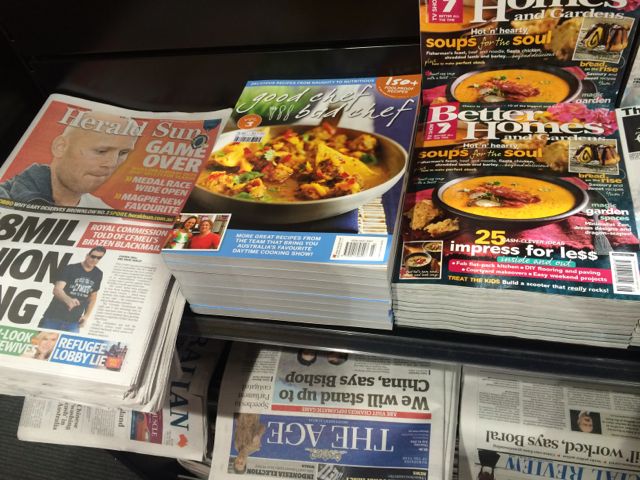
The preview copy of Good Chef bad Chef 3 that I received last week is very popular in the office. Sales of issues 1 and 2 suggest that issue 3 will be very popular on the newsagency shop floor. On sale next Monday, I’d urge newsagents to promote the title heavily and reorder early as this title will sell all through the on-sale. I know of some who early returned there last issue only to order more to keep up with customer demand. Don’t early return this title as the accompanying TV show will drive excellent interest.
Inside Good Chef bad Chef 3 you will find some delicious recipes. I love the look of the Beef and Guinness Casserole and the Wile Mushroom Gratin and the Kentish Cherry Butter Pudding.
Respectful F1 magazine cover
The Jack Brabham photo on the cover of F1 Racing respects a hero to Australian Formula 1 racing fans. We are respecting the cover with placement such that the full cover can be seen. This is an issue more will buy – beyond the regular purchasers of this title. Take a look at your placement of the title.
Management and marketing resources for newsagents
On the side of this blog is a list of categories under which I file posts. Marketing and management advice remain the most often searched content. Click here for access to free newsagency marketing tips. Click here for access to free newsagency management tips.
Sell locally-sourced products and prove your pitch to the local community
If we are to promote a shop local pitch to our local communities we need to source locally made and locally connected products. This week I will draw attention to several local suppliers newsagents could consider. Stocking products from these and similarly local suppliers adds credibility to our shop local pitch. To me, local products are products made and / or designed in Australia. If my newsagency was in a country area my focus would be more on products sourced even closer to home.
Just Kiddin is a Melbourne based company run by a talented designer who sells her own designs in the form of tents and other products for kids. Their tents are terrific: easy to display (hang them from the ceiling), well packaged and of high quality. While major retailers have cheaper products, the Just Kiddin tents are seen by shoppers as far superior. In one of my newsagencies we have sold more than 60 tents in the last year – that’s close to $6,000 worth. They are a good fit with newsagents who sell toys, cards for kids and kids magazines – yep, just about anyone.
I first found the products at the Home and Giving Fair in Melbourne. The business owner and product designer was on the stand offering excellent insights into the products.
Just Kiddin has been a newsXpress preferred supplier for quite some time. They will sell to others.
Promotion drives sales of address books
Our address book sales are up from $61.95 for the first three weeks of June 2013 to $340.22 in the first three weeks of June 2014. This 449% increase in address book revenue has been driven by a small in-store promotion of our address book range – proving the value of promoting smaller profit offerings from the stationery department.
The promoting cost us little in the way of time and space yet the return was excellent. Our main focus was to let shoppers know we had a range. There was no big aisle-end display. There was also no special price offer.
Newsagents can increase stationery sales by focussing on pitching sought-after products in a way that encourages convenience shopping.
Best practice display of kids magazines
Small format kids magazines like K-Zone, D-Mag and Total Girl need to be displays with the fill magazine on show. This is especially true at school holidays time when we have more kids in our newsagencies. The gifts bagged with the magazines are more easily seen if the titles are on full cover display and not placed in the usual magazine fixtures in many newsagencies.
I urge newsagents to check today how they have these kids titles displayed.