Unfair magazine distribution model makes newsagents less competitive
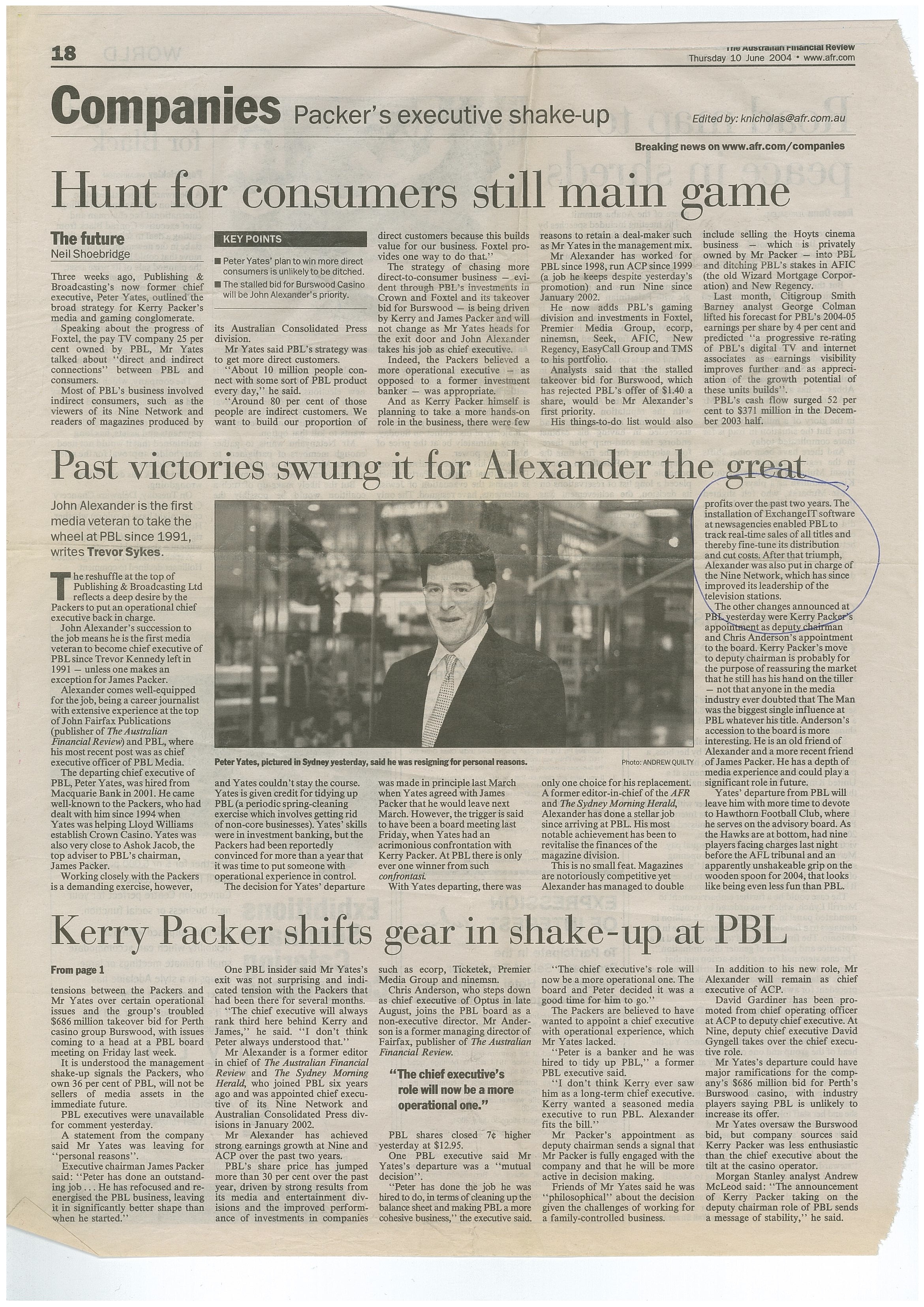
The installation of ExchangeIT software at newsagencies enabled PBL to track real-time sales of all titles and thereby fine-tune its distribution and cut costs. After that triumph, Alexander as also put in charge of the Nine Network, which has since improved its leadership of the television stations. SIC.
This is from a story by Trevor Sykes published in The Australian Financial Review on June 10, 2004.
It is July 2014. While the magazine distributors may have fine-tuned their distribution and cut costs, newsagents have not. Indeed, the magazine distribution model does not offer levels with which we can control this side of our business. The processes imposed by the magazine distributors hobble our businesses.
Too often today, ten years on, we receive magazines supplied at volumes that do not reflect sales data. Indeed, the experience today and in the last ten years makes a mockery of the story by Sykes.
A good journalist would have done their research rather than taking the PBL spin about XchangeIT. Sykes clearly did not. I wrote to Sykes at the AFR at the time and no correction was printed.
For the record, the problem is not XchangeIT, it is a model that sees distributors ship all stock they are provided. For the most part, that is how they are paid – as a freight company. If their compensation model was based solely on sales newsagents would start to see fairness.
Today newsagents are not treated the same as our competitors – the two big supermarket groups. Coles and Woolworths are supplied on a more equitable basis, giving them an unfair competitive advantage.
With more than 60% of all magazine titles supplied to newsagents loss-making, something has to give. I think we are reaching a tipping point where newsagents will exit the category. Several have done so already – they have stopped selling magazine altogether. I am not advocating this, just reporting that it has happened.
Magazine distributors have the capacity to supply on the basis of sales data and to a model with a goal of selling out close to the end of the on-sale period. It is time they started using their data to achieve this.