Building a wall of winners to promote the value of shopping in our newsagency
We take a photo every time a customer wins a prize in our newsagency. This latest winner collected a latest model tablet computer as part of our supplier-funded brand-name ink promotion. The winners are usually happy to pose with their prize.
The photo is important to us as it adds to the pitch we can make about the value of shopping with us.
Competitions like this where one of our customers wins something of value provide us with another way to promote our value proposition over competitors. The photo lets us leverage the value of the prize long after it has been collected.
The more we promote prizes like this and deals for ink and similar everyday product the more we fight back against the perception that newsagencies are expensive.
Removing Puzzler marketing collateral
I took down the unrequested marketing collateral promoting Puzzler titles for several reasons: they grossly over-supply titles and copies of titles, they did not ask permission, the competition pulls focus from a far more important campaign, I’ve early returned most of their products.
The people behind Puzzler need to sort out their distribution strategy and work more closely with newsagents if they want better treatment. Running a competition with a car as a prize is not how you go about getting newsagents to support your products. No, this starts with ranging a reasonable number of titles and supplying reasonable quantities of each title – something Puzzler has not done in the last year, aded and abetted by Network Services.
Supanews website claims 47,000 transactions
The Supanews website I wrote about in December claims to have completed more than 47,000 transaction since its launch.
The website itself is effectively a front for other sites – passing transactions to other providers for magazine subscriptions, lottery products and stationery. The site does not, as the promoters claim, replicate a traditional newsagency.
Supanews has claimed to its franchisees that it does not own or operate the site. I investigated this and am not sure. I traced control of the site to an accounting practice in Hong Kong that offers a service registering and running shelf companies for others.
Comparing Saturday newspapers
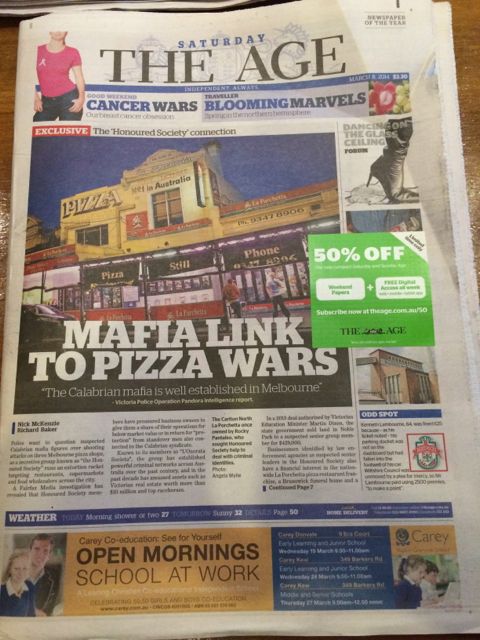
Having read all four Saturday newspapers in Melbourne – The Weekend Australian, The Saturday Age, The Saturday Herald Sun and The Saturday Paper – the value of competition is obvious. The three existing Saturday newspapers responded to the arrival of The Saturday Paper by rejigging their offers. The move of The Age to tabloid format is the most significant response – though they will say it was happening regardless.
This weekend, Melbourne is better served by its newspapers as a result of competition. I hope it keeps up.
Now, to the products themselves. I’m not going to comment on The Weekend Australian as it is more a propaganda sheet than newspaper – the media section on Monday is excellent and the weekend magazine insert is excellent … the rest is of little interest to me. Nor will I comment on The Saturday Herald Sun as more fluff than news … yes, it is the best selling newspaper in town.
The Saturday Age looks and feels different in part because of the format change and in part because they are feeling the pressure of the new kid on the block for than others. The Age is thicker, heavier, feeling like it has more substance. Much of its bulk, however, comes from ads – you certainly notice these when you scan it next to The Saturday Paper which has less advertising, what feels like more meatier stories and is printed on better stock. In fact, this page by page comparison reveals a disruption by smaller format display advertising that reflects a real difference between the two products.
While it is considerably smaller, The Saturday Paper looks and feels more substantial to those who buy a newspaper for stories. This is an important point since this is why we buy newspapers today. The days of purchasing a newspaper on Saturday for car, job and real-estate advertising are over. If you are buying a paper on a Saturday for the classified advertising you’re getting to market too late. So, comparing stories how we must compare these products. The first edition of The Saturday Paper is a terrific start. I appreciate the space given to fully explore stories. I would like to read more voices on a broader selection of issues – as the newspaper develops.
I expect that we will see Fairfax tune its Saturday products in response to The Saturday Paper – just as the new newspaper will tune and adjust as it finds its feet. They will respond to consumer interest in a newspaper because of its stories by focussing more on stories. While they say they do this today, I expect they will find ways to feature stories more through design changes.
A newspaper purchase is not the habit it once was. Now, more than ever, the stories in a newspaper will drive sales. The new competition encourages this.
Yes, print newspapers are alive and competing. Good times.
Sunday newsagency marketing tip: look at your business as a whole
Today’s newsagency business is more likely to be broad in its focus, serving a wide age group and carrying products that range from convenience through to destination gifts. Today’s newsagency is a mini department store.
When was the last time you looked at your business as a whole, the last time you marketed your business as a whole?
Often, our suppliers want us to work our business through their category. They want our time spent on their products and products from suppliers in their category. They want us to support promotions that drive interest in their category or their specific products. Some encourage and guide our focus and behaviour by giving us easy promotions to run, promotions that serve them and probably not the whole of our business.
Look in your average newsagency today and there are probably eight or ten supplier driven competitions. They all want attention, display space and over the counter promotion. Where is the voice of our newsagency in this? Our business gets lost, we cannot keep up with the marketing spend of our suppliers. In the end, their brands win while our brand fades.
I don’t blame suppliers who do this: who encourage, guide, pressure and bribe us to focus on their products more than the whole of our business. But I wish more would work with us on a whole of business marketing and management commitment. Some do but not enough.
I applaud those suppliers who do help us promote and manage the whole of our business – but not enough of them do this. The Pacific Magazines Nexus program is a good example of this – they have given us a professional email and txt marketing platform we can use for anything.
Newsagents need to do better at marketing the whole of our business. We need people shopping with us for us and not because a supplier promotes their products. We need to look at how we market the whole of our business and develop a plan to address this – for ourselves ahead of what some suppliers may want.
The newsagencies struggling today are more likely to be the ones leaving it up to their suppliers to attract shoppers through their doors. This is not a business plan, this is not good marketing for a newsagency business.
Sunday newsagency management tip: how to assess and reduce your magazine range
What report can I use to get magazine distributors to reduce my supply? This question (or versions of it) is a common question I am asked by newsagents – usually by someone downsizing their shop or struggling with magazine oversupply and / or other business challenges.
In some respects, given the push model used by the two major magazine distributors, Gordon & Gotch and Network Services, no report will help newsagents get more equitable magazine supply or a supply trimmed to suit a smaller size shop. This is best achieved by writing to each distributor, making your case and then taking action through mediation or legally if they ignore you. While this route – letter followed by legal – is one ignored by most newsagents, it is the approach most likely to work.
If you do want to understand your situation, the Magazine Sell through Rates Report or the MPA Magazine Performance Report or the Title Performance Report will give you clarity on your sell through and the trend in your business. While you can use your software to immediately early return under-performing titles, the best action really is to get the distributor engaged.
If you really want to go hardcore on yourself you can run the Magazine Cash Flow report. Have medication at the ready as this report will show you what you make or lose on any given title after taking into account retail real-estate and labour. But this report is not for the feint-hearted as it will usually show that 65% or more of the titles you carry are loss-making. Like I said, not for the feint-hearted.
If you want to reduce your magazine supply here is my management advice recommendation: write to the distributor in question, make your business case (reduced floorspace allocation for magazines / oversupply), given them seven days to respond. If there is no response or if, over time, there is no change in behaviour, take action – start with your local Small Business Commissioner and ask for mediation. It’s not expensive and shows them you are serious about addressing the issue.
Placement of The Saturday Paper
We placed our main supply of The Saturday Paper yesterday between our two top selling daily newspapers and this is where we will keen stock until at least the middle of the week. Our counter promotion will come down Monday morning. I mention this newspaper positioning as I was in a newsagency late yesterday where they had The Saturday Paper with their news magazines. This is the wrong placement for the title.
Unnecessary barcode and poor placement
Check out how one newsagent barcoded The Saturday Paper. There is no reason to barcode this title since it already has a barcode. Even more important – it was a mistake to place the barcode over part of the masthead – this makes noticing the title more difficult. This is poor management by the newsagent – they should have processes in place to set when barcoding is necessary and to ensure stickers are placed to not hinder sales.
Launching The Saturday Paper
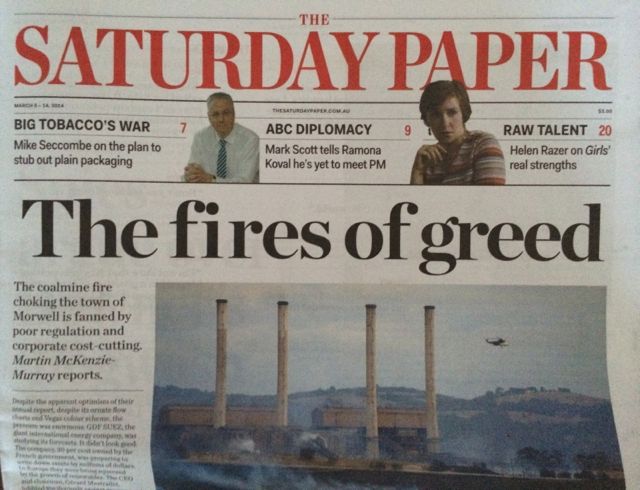
Newsagents on the eastern seaboard are privileged to be launching a new newspaper today, The Saturday Paper. While the day is barely half over, sales have been strong with more than half our sales to people coming in asking for the title.
Within half an hour we had sold more copies of The Saturday Paper than we usually sell all weekend of The Weekend Australian. While we could dismiss this noting that it is the launch issue, several customers commented about their purchase: one said they were looking forward to good journalism; another said they wanted something decent to read on the weekend; and, I’ve been waiting for this.
Most sales so far have been with other newspapers – more often with the AFR or Age than anything else. Price is not an issue nor is size compared to the other newspapers.
The buzz around the launch is excellent, very encouraging, something we are happy to engage with and encourage ourselves. Beyond the product itself, the launch is an encouragement for print as a medium for providing access to quality long-form journalism. It helps remind people about the role good print product can play.
We are supporting the title with the placement shown in the photo at the counter and placement between The Saturday Age and The Saturday Herald Sun.
Consignment products for newsagencies?
I’ve been a flyer promoting Newsagents Products on Consignment – a business offering newsagents counter items for 25% GP – on consignment.
They offer products for up-front purchase for 50% GP.
I’m not a fan of consignment stock as it is easy to ignore and not work to maximum return. Also, GP less than 50% is not interesting unless it is high traffic generating product like magazines.
We need to tell stories in our businesses – ranging is more important than single products. At the counter, single items can work as long as they sell through quickly. My ideal counter lines generate $100.00 a week from a small footprint unit.
I don’t know anything about the consignment business. The model feels like something from the newsagency channel of old, not relevant to our needs as retailers today.
Room for men to browse magazines
For years now we have allocated guys space at the back of the newsagency for more comfortable magazine browsing. This is the ‘cheapest’ space in the shop – at the back of the store, unusually shaped space we cannot easily configure for other use.
While we call it our guy browsing area, guys, girls, kids and families use the space given the titles we have nearby. It provides a space away from the busy parts of the shop where people can be more engaged with magazines.
It would be a challenge to create this space in some retail situations so we’re lucky. It has served us well.
This is likely to change as we reconfigure our floorspace later this year. With rent increasing 5% a year and labour increasing close to this we have to increase sales and get more efficiency from our space to meet the increases.
Star Trek opportunity for newsagents
On March 17, Star Trek The Official Starships Collection launches through Gotch. Given the interest in Star Trek and similar products I’d expect this to sell well. However, indications from Gotch are that they have not been allocated a huge amount of stock.
Gotch will be using sales for Batmobilia to guide allocations.
I’ve been sent part one of Star Trek The Official Starships Collection. It’s impressive. Trekkie colleagues like it and wanted to know launch details.
The launch in an opportunity to range other products that will sell to Trekkies – this wis when we can bank margin dollars off the national TV campaign supporting the launch.
ABC’s Gerard Whateley promotes newsagents
Gerard Whateley from the ABC Grandstand program promoted newsagents to his 61,000 Twitter followers a couple of days ago when promoting the ABC Footy magazine that’s out in time for the start of the AFL season. Mark Scott, ABC CEO, retweeted this to his 52,000 Twitter followers.
This is the ABC actively supporting our channel.
Every step of marketing and promotion helps.
Support from people like Whateley is terrific as his tweet mentions newsagents (in bold) and ABC Shops – no other retail channel. This is a bonus reason for us to actively support the title.
News Corp. newspaper stoops to a new low in the UK
I’d refuse to sell this edition of The Sun newspaper if I was a newsagent in the UK. The headline suggests that the chiefs of the British Labour Party say it’s okay to have sex with 10 year olds.
One now ex labour minister was named in a 1976 press release about an age of consent discussion.
News is alone in its depiction of this story. Check out the report at The Huffington Post.
This is It’s typical of some stories published by News Corp. in Australia – distorting and or time-shifting facts to serve their own commercial agenda. It’s disgusting. One can only hope that one day people spending money on titles that publish misinformation stop doing this. We deserve better.
The Guardian on The Saturday Paper
The Guardian has published an excellent piece on The Saturday Paper – it’s good to read more about this exciting launch and the people behind it and why they are bucking the trend and launching a print newspaper.
Stalking by text message
I was in Guangzhou China Monday and walking past a shopping mall on Tianhe Road I received this text message. Apparently, the retailer involved pays China Mobile a fee to send advertising via text to people nearby.
I thought this was pretty cool – marketing to possible shoppers near your store. TheI thought it could be annoying for locals if they pass by this or others using a similar service. Your phone could soon become clogged.
While our privacy laws here stop this type of marketing, I am sure that iBeacon and similar close range services will see retailers reaching into the mobile phones of those nearby to try and attract interest.
Understanding the new competitor: WH Smith
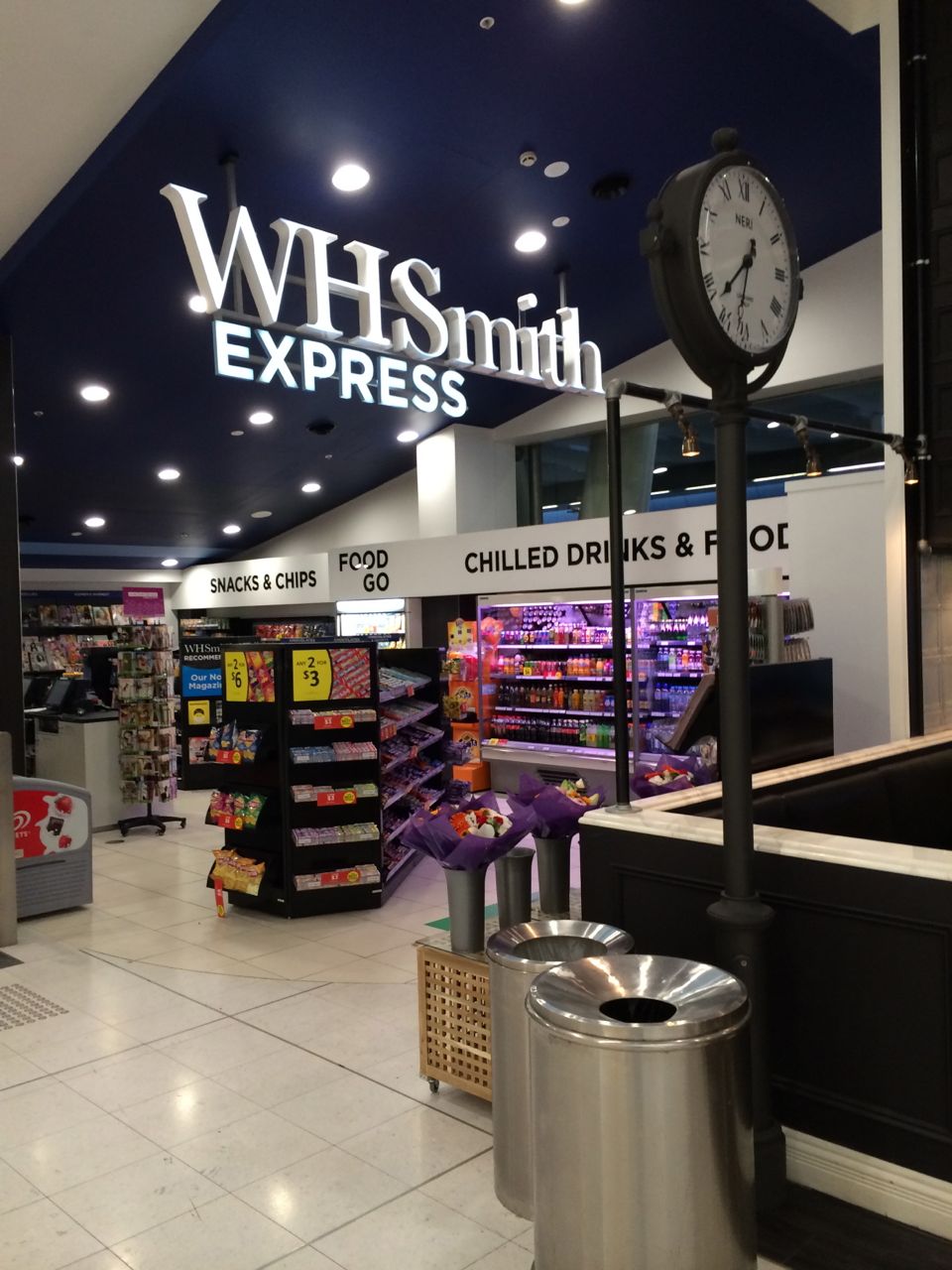
This photo shows the impulse item pitch at a WH Smith store in Melbourne. It’s compelling, driving customers to purchase multiple items, a blending of what we see in convenience stores here already but in a more traditional newsagency model.
As WH Smith rolls out more into Australia it will challenge the traditional Aussie newsagency model since they can bring to market benefits of their strength in numbers.
The danger in returning bagged discount magazine packs
This bagged pack of current (when released) issues of Elle and Cosmopolitan is tagged by the publisher as a topped return. If we did that we’d top the covers and return both separately. This could open us to a fraud allegation by the publisher owned distribution business. Instead, we return the whole bagged pack – to avoid any allegation of impropriety.
Maybe I missed something, maybe we could return the empty bag. I’d love to know how others handle returning these particular discounted bagged products – not the Express and Universal bagged packs with back issues, but these bags containing current issues of different titles.
Promoting People’s Friend Special
We are featuring the latest People’s Friend Special at the entrance to our main magazine aisle. People’s Friend is in our top three weekly magazines so it makes sense we promote this special. The promotion will drive incremental purchases and traffic. Tactical placement of a title like this in the simple stand as shown continues to be more successful for us that a billboard type display.
Making the most from magazine traffic
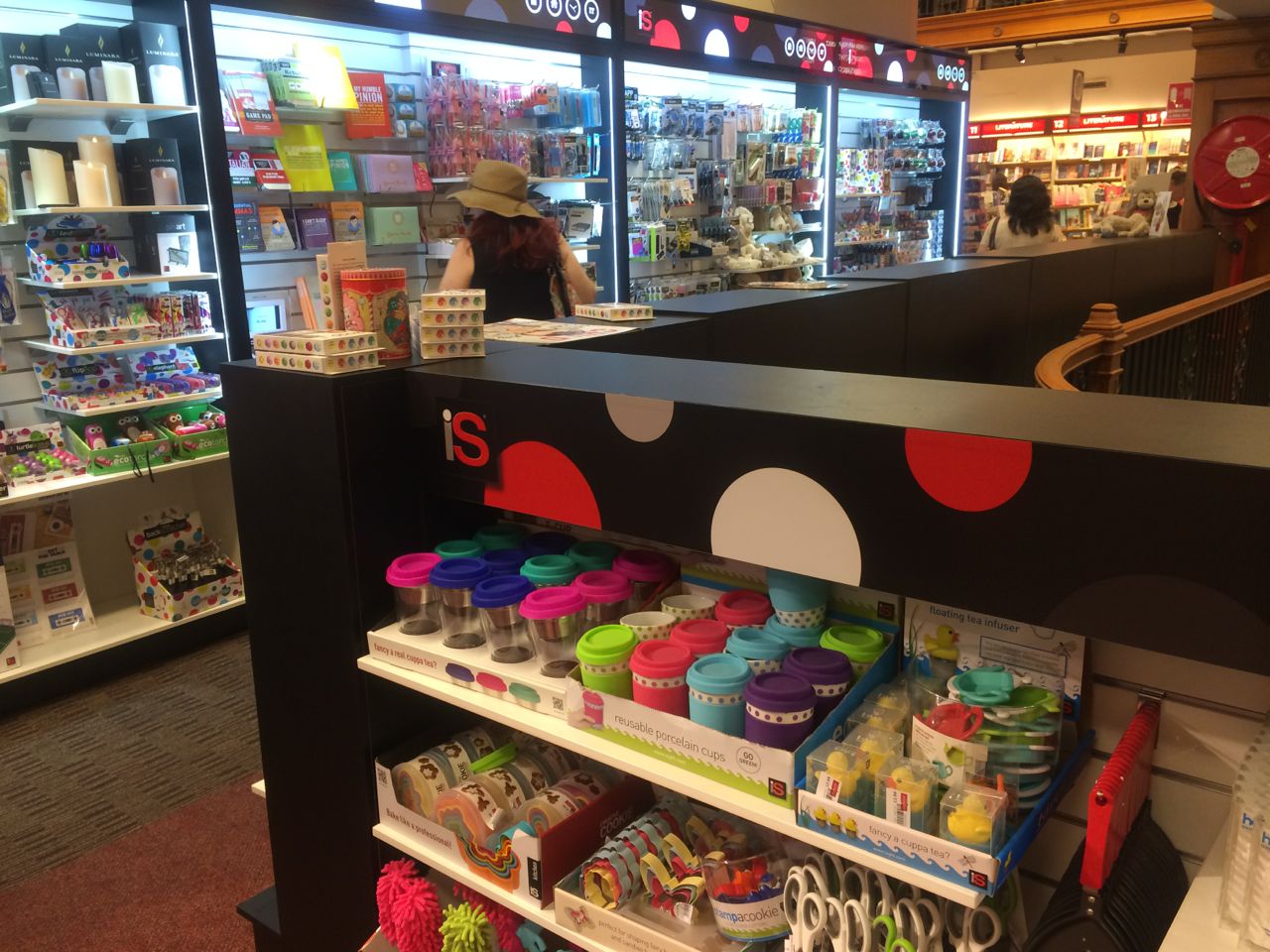
I never see magazines as a single item or single category purchase. The location of the category, promotion of other products in the category and traffic interruptors going in and coming out help leverage greater efficiency from the magazine shopper. This photo shows one example of a small step we have taken to drive sales of items to people browsing Australian Cupcakes & Inspirations. Even a simple small placement like the felt cupcake kit can help make magazines more efficient for us. It’s better we obsess about opportunities than drive magazines down because of all the problems with the distribution model.
You think the newsagency channel is changing?
If you think your newsagency world is challenged by disruptive and challenging changes, consider what optometrists are dealing with. Opernative is a startup business in the US offering online and app based eye tests – bringing to your desktop and tablet computer a service you hitherto had to go to a medical professional for. They are targeting a cost of $20 for an exam.
In newsagencies today we sell off the shelf reading glasses for usually between $9.95 and $29.95. Opernative fills the market between these cheap glasses and full prescription model except that they cover the majority of what an optometrist will offer today.
This move is relevant to newsagents as it illustrates the extent of change being wrought on traditional businesses by technology. It reinforces the importance of flexibility in your business plan. It reminds us that no business is insulated from disruption.
Newsagent frustration at Network Services invoice changes
Following off-topic comments here about recent EDI changed by magazine distributor Network Services, as promised I am opening a post here so newsagents can comment and through this provide feedback to Network.
This week, Network released EDI changes including the following (I have pulled this info from correspondence from Network – the image is the explanation sheet the provided):
No more multiple invoice numbers (Except for reorders sometimes)
No more pains for customers reconciling statements
Cleaner delivery documents
Changes in SA, WA, TAS and NT from 24th February delivery
- The number of Statement Reference Numbers in the delivery will be substantially reduced. However, it’s possible that a bundle may contain products charged on multiple Statement Reference Numbers.
- Stores will receive an Outlet Summary with their delivery, which is the key document to enable reconciliation to the monthly statement, as it groups titles by Statement Reference Numbers, and also identifies the bundle each title was packed in.
- DD2 file will remain sequenced in Statement Reference Number order, rather than physical packing order (as per above).
Network, through Netonline, can give newsagents something closer to the EDI experience they are used to. This is called the EDI late File option. Here is information from network again:
File creation begins at 6pm (Sydney time) the night before delivery, the file will then be available to you between 6.30pm and 9.00pm (Sydney Time)Quantities will match the quantities packed at the warehouse
The order of the titles in the delivery file WILL CLOSELY MATCH the order of your deliveries’ physical packing.
This is a new option that aims to streamline the process of physically receiving a delivery through closely matching the order of your POS labels to the order your stock is packed in.
While Network is big enough to defend itself, I’d note that back office magazine distribution software is a large and complex beast. Bending it to serve even the simplest change is expensive and challenging. Adjusting the software to serve newsagents is complicated by many voices seeking different changes.