A blog on issues affecting Australia's newsagents, media and small business generally. More ...

retail support

The first-ever AI ChatBot made for newsagents

In a first for newsagents in Australia, newsXpress quietly launched its AI ChatBot made for newsagents a few months ago.  Last week, to released a major update.

This newsagent ChatBot uses closed-loop AI technology. What that means is that it only answers what it knows, what it has been trained in. It answers questions you ask in a regular way – as if you are asking a person. Here are some of the topics it has been trained in:

  • Wage rates based on the current Retail Industry Award.
  • Retail employee classification advice based on the work they do.
  • How to deal with a difficult employee.
  • Steps to take if you think theft is an issue.
  • What insurance policy to consider.
  • Checking your EFTPOS rate.
  • How to dismiss someone within the law.
  • How to negotiate with your landlord.
  • How to deal with cashflow challenges.
  • How to go about selling your newsagency.
  • Ways to improve your business.
  • How the business is performing compared to others.
  • New products to consider.
  • Which supplier stocks this or that.
  • Where to seek mental health support.

The ChatBot covers many more topics that this. It can also read any report you provide it and give you insights as it sees them.

This is a groundbreaking resource for local small business newsagents and other retailers newsXpress serves. It’s not happened overnight. the work started years ago with the careful development of a searchable knowledge base for newsXpress members. That was the foundational basis. In 2025, the knowledge base was expanded and every existing article reviewed, and updated.

In 2026, each knowledge base article was reviewed again, categorised and new articles developed.

Next, access to FairWork, the Retail Industry Award and other publicly available resources were added, to ensure that advice provided was based on appropriate source material.

During the testing phase many questions were asked, and the answers checked for usefulness and accuracy.

This meticulous process resulted in a knowledgeable newsagents can trust, and use 24/7 to get answers to questions they would otherwise ask on the phone.

This is smart AI backed technology helping newsagents save time and learn tools that will help elsewhere in their business.

AI ChatBots like this one from newsXpress are the future. They help businesses operate efficiently and, through this efficiency, deliver quality services at a lower cost.

If you call someone for advice, you will get an answer with a natural human bias. The newsXpress ChatBot focuses on the answer, without the human bias. This can be important for the types of questions that I see newsagents asking.

Footnote: I am a director of newsXpress Pty Ltd.

7 likes
AI

Why a franchise model may not suit Australian newsagencies in 2026

The newsagency channel is in the middle of change that will not reverse. It has been for years, but in 2026 the pace of change has increased. Print is declining. Lottery purchases are shifting online. Foot traffic patterns have changed. How, when and where people shop has changed. The business model that worked in 2010 does not work now.

In my opinion, this is the wrong time to lock a business into a franchise agreement.

Let’s consider the regulatory framework of franchises first.

Franchising in Australia is regulated under the Franchising Code of Conduct, but the Code governs disclosure and dispute processes, not the day to day restrictions written into the agreement itself. Those restrictions are extensive. A franchise agreement typically binds you to approved suppliers, set trading hours, mandated fit-outs, brand standards and system-wide promotions whether or not they suit your shop.

You also inherit the behaviour of every other franchisee in the network. One store cutting corners, one public dispute, one head office misstep, and the brand you pay to trade under takes the hit in your suburb too. You carry obligations to a system you cannot control, run by people you did not choose, alongside operators you have never met. Independence has risks, but at least they are your own.

Innovation happens in stores, not head office

Franchise head offices move slower than the market. A new product category or a local marketing idea has to pass through approvals and brand reviews before anything happens in-store. Sometimes it needs a contract amendment.

An independent retailer can trial a new line this week. They can negotiate a local supply deal or move fixtures tomorrow morning. I have watched stores add a category in a fortnight that a franchise network would still be scoping six months later.

No two shops are the same

A regional newsagency and a shopping centre store need different product mixes. Franchise models tend to enforce supplier mandates and centralised ranges.

When your local market shifts, you need to move into whatever works there. Niche gifts. Collectibles. Product from a maker two suburbs away. Waiting on franchisor approval means missing the window.

You carry the risk, they keep the control

In most franchise arrangements the franchisee carries the lease, the working capital and the staffing liabilities while giving up strategic control. If you are taking all the financial risk, you should have full authority over direction, brand and where your capital goes. Especially now.

Franchise fees are inflexible when margins are not

Royalties and marketing levies are predictable overheads in stable conditions. When core categories are shrinking, they are cash drains you cannot switch off. Every dollar of mandatory fees is a dollar less buffer for volatile trading.

Independence does not mean isolation

A good marketing group gives you buying power and shared marketing without telling you what to stock. Good POS software gives you the data to make your own decisions.

Right now, autonomy is the most valuable asset a newsagent has. Signing it away to someone else’s model is a strange way to prepare for the next five years.

6 likes
Newsagency management

Stop! Is that mountain with riches at the top waiting for you worth it?

I keep seeing the same ads. People selling scale. Courses, seminars, mentorships at a few hundred dollars a month. That is what this video is about, because I have had enough of the pitch.

You know the look. The bright new car. The house they bought for mum and dad. Dinner at some restaurant in Europe. It is all there to sell you the idea that the same life is waiting, if you just pay for the secret.

Here is what bothers me. Those ads are built to make you feel bad about a business that is already working. There is no guarantee attached. The money only moves one way, and it is not towards you.

My argument is simple. A profitable, well run local independent shop can give you more than a scaled one ever will. Scale has costs the marketing never mentions. The money, sure. But also the worry, the hours, and the control you hand over to other people. I have watched retailers chase scale and lose plenty. I have watched others stay local and do very nicely.

So what actually works? Be careful with every dollar you put into the shop. Decide on facts, not on a hunch. Make mistakes and get on with it. Fail early, fail often, learn each time.

One more thing. We are economic champions in this country and almost nobody says it out loud. The media certainly does not. So say it to yourself at the end of the day. You traded today. You will open again tomorrow. You like the work and you met some good people doing it. Sit with that for a minute. It counts.

If you are banking money and you are happy, you do not need someone charging you to tell you to want more.

Try and ignore the noise from the scale promoters because, in reality, they are only promoting themselves as they want to scale. Too many of them genuinely care less about you, no matter how slick their pitch.

As always, buyer beware.

3 likes
Ethics

What we can learn from The Lottery Corporation Investor Day in Sydney

The Lottery Corporation held an Investor Day in Sydney last week and I am grateful for insights someone who attended shared with me. Here are takeaways that could interest newsagents who sell lotteries.

1. DIRECT TARGET: CONVERTING RETAIL CUSTOMERS TO DIGITAL

The absolute biggest priority for The Lottery Corporation (TLC) is converting unregistered retail shoppers into registered digital users. They said this in Sydney and they have said publicly elsewhere. The hiring decisions announced last week also speak to this.

The Gap: TLC currently has approximately 8,600,000 active players, but only 4,300,000 are registered. That’s what they are chasing. Some retailers see these folks as their customers. TLC sees them as their customers.

The Strategy: TLC intends to identify these in-store customers, transition them into app users, and market directly to them to increase playing frequency and retention.

Retail Impact: This represents a deliberate strategy to shift the customer relationship away from the physical counter and directly onto TLC’s own digital platforms.

2. RETAIL NETWORK FRICTION & STRUCTURAL CHANGES

The balance of power is shifting, which is expected to cause what some call a “tricky period” of tension between TLC and independent retailers.

QR Codes: The introduction of new QR codes on physical tickets is seen by  newsagents as a direct mechanism for TLC to poach their foot traffic and data.

Cap on Outlets: TLC is freezing the expansion of its physical retail network. That is a huge message on where TKLKC sees retail. Growth will no longer come from opening new outlets; instead, the focus is entirely on extraction, productivity, and quality over quantity from the existing footprint.

The Margin Shift: For TLC shareholders, this migration is highly lucrative: every 1% of turnover that moves from physical retail to digital adds roughly $6,000,000 to TLC’s EBITDA.

3. GAME REFRESHES AND PRICE INCREASES

TLC is taking a more active approach to game management, price increases, and margin optimisation than previous management.

Set for Life (S4L): A major refresh is launching in September 2026. Ticket prices will increase from 60 cents to 70 cents, introducing additional cash payouts while keeping the top prize at $20,000 a month for 20 years.

Oz Lotto: This is officially under review and is expected to be the next major game overhaul.

4. THE YOUNGER COHORT PUSH

TLC is repositioning itself from a traditional lottery operator into a “digitally led entertainment business.” A key focus of this transformation is capturing younger adults. TLC plans to introduce more social features, syndicates, subscription models, and AI-driven personalised recommendations to attract younger sports-betting demographics who are hunting for “lottery-style” high odds.

To me, the big note here are the tight focus on migrating shoppers to digital – evidenced by the QR code move, new hires, freezing new outlets and absolute clarity in the business about the commercial value of the transition.

COMPLAINING IS A WASTE OF TIME.

TLC is a public company with one requirement – to drive shareholder value.

In my opinion, complaining about what they are doing will not improve the situation of any retailer, investing money in lobbying them will not deliver a lasting benefit for any retailer.

If I was representing lottery retailers or if I was a lottery retailer, my focus would be on lobbying TLC for permission to place other products in the lottery area – to support retail and provide a smoother path to the transition TLC is seeking.

The best thing a TLC lottery retailer can do is to urgently recalibrate the business to bring shoppers in for products outside of lottery products, do the bare minimum to satisfy the franchise agreement and create a business that is strong without any lottery revenue.

If you have lottery products are feel you will lose your business as they migrate lottery customers to digital, you have to act today to improve your business. Nothing else matters.

If you’re in Newspower, Nextra or The Lucky Charm, ask what they are doing about this. I say this as what I have been sharing here on this is part of what I share with newsXpress members.

10 likes
Lotteries

Queensland’s Crackdown on Illegal Tobacco Is Working

For years, illegal tobacco operators undercut licensed retailers without much consequence. Newsagents watched competitors sell illicit cigarettes, loose tobacco, and unregulated vapes at prices no compliant business could match. Enforcement was patchy. The damage to legitimate retailers was real.

Queensland changed tack. The results are worth knowing about.

What Changed

From late 2024, Queensland Health gained new powers to act directly against illegal operators — and act quickly. The previous reliance on lengthy court processes gave way to on-the-spot closure orders. Legislation introduced in late 2025 went further, allowing Queensland Health to shut a store for 90 days without needing a court order at all. The state also hired 43 new enforcement officers to back the expanded operation.

The Numbers

Between November 2024 and August 2025, Queensland Health seized more than 52.4 million illicit cigarettes, 420,000 illegal vapes, and 7,500 kilograms of loose tobacco. More than 140 interim closure orders were issued and over 3,000 fines imposed.

In December 2025, a single 10-day operation, Operation Major it was called, shut down 148 stores and seized over $15.7 million worth of illegal products, including 11.8 million cigarettes, 1.7 tonnes of loose tobacco, and 87,000 vapes. One business was fined $45,000 earlier in the year for selling illicit tobacco and vapes.

Why Newsagents Should Care

Licensed newsagents carry costs that black-market operators never did, licences, display compliance, tax obligations. The Queensland enforcement model shows what happens when authorities are properly resourced and the legislation has real teeth. Less illegal product in the market means a fairer environment for retailers doing the right thing.

One Concern Worth Noting

Some retailers have raised concerns that competitors are using the complaints process as a tactic, reporting legitimate businesses to cause disruption. This appears hard to do in practice. Complaints are not anonymous. Anyone lodging a report must provide their own details. That keeps the process honest and makes bad-faith reporting a genuine risk for the person making it.

What Comes Next

Hopefully, other states are watching Queensland closely. There is growing pressure to match the approach, and calls for the Commonwealth to do more at the border to stop illegal stock entering the country.

Queensland has shown the model works. The question now is whether other states move quickly enough to follow it.

7 likes
Tobacco sales

How do we prepare for the October 1 card surcharge ban?

October 1 is not that far away. Retailers should already be implementing a plan to deal with the situation.

Know what you’ll lose. Look at what you pay in card processing fees annually. Request a clear, itemised breakdown from your bank or payment processor detailing your current cost of acceptance for debit versus credit. That’s the figure you want to cover in other ways.

There are two obvious options to deal with the RBA imposed surcharge from October 1:

  • Cut costs. Typically, this will mean labour as that’s usually the second biggest operating cost in the business. While you can cut the dollars, you risk cutting revenue too.
  • Increase prices. A small adjustment (1.0% to 1.5%) broadly based offers a good option. The thing is, if you can gently increase prices without negatively impacting sales volume, why haven’t you done this already.?

There are other options to throw into the mix:

Least Cost Routing. Ensure Least-Cost Routing  is explicitly turned on by your provider.

Look at processing alternatives. We are already seeing companies offer new deals to lock retailers in ahead of October 1. Do your research. Under the new rules, payment providers processing over $10 billion annually must publish transparent quarterly fee structures. Use this data to benchmark your current provider and negotiate a lower rate.

Work on your business.

  • Make sure it as efficient as possible.
  • Make sure all your stock is performing well – i.e. no dead stock.
  • Make sure you have and engage with a theft mitigation strategy.
  • Make sure you have what people want when they want it.

In a typical retail business, landing well on these four points can account for more than half of the net profit. What I am saying here is that by relentlessly pursuing these four things you can have a business performing such that the merchant fee situation is nowhere near as noticeable to you. Unfortunately, though, too many small business retailers will ignore these four things.

Now, it’s important to note that the surcharge ban does not currently cover American Express or Buy Now Pay Later services.

The bottom line is that October 1 is coming – are you ready for it?

7 likes
Newsagency management

Looking at the Newspower marketing email sent out yesterday.

Yesterday, Newspower sent a marketing email to newsagents. Plenty of newsagents have shown me the email. It is neat, upbeat and confident. It promises buying power, social media done for you, seasonal campaigns, digital solutions and support.

On the surface, it reads well. Look a little closer, and what I think are gaps start to show. What I share here is my opinion about what the email reveals, and what it does not. Do your own research though, draw your own conclusions.

Big claims, light proof

The email leads with “largest”, “most trusted” and “35+ years helping stores grow sales and improve performance”. Those are big claims.

There are no numbers. No current store count. No retention percentage. No satisfaction or trust metric. No average growth figure. No example showing how performance actually improved.

What does most trusted mean, what evidence supports this?

“Proven” is used as a label, but there is nothing in the text that proves anything. For a major decision like joining a group, that is a problem.

“Retail growth made easy” – really?

The theme of the email is “Retail Growth Made Easy”. Growth is presented as simple: time-saving tools, seamless online and digital solutions, “nothing for you to do but display and sell product.”

Anyone who has run a newsagency knows that is not how it works. Real growth usually comes from hard, sometimes uncomfortable, decisions about ranging, space, stock, staff and local engagement.

When a marketing pitch underplays the work required, it is selling comfort more than change.

Buying power without context

“Save up to 25% on key product lines” is a headline promise.

Up to. On key lines. Compared to what? Standard wholesale? Going direct? Another group? There is no category example, no base price, no sense of how common this saving actually is.

“Exclusive discounts and offers” sounds attractive. But exclusive could mean “different”, not “better for the retailer overall.”

If buying power is a core part of the pitch, it deserves more than a single “up to” sentence.

Digital offer reads like a commodity

The digital list is complete: social media management, Google Business Profile setup, targeted online ads, affordable website and ecommerce.

The problem is it could be any agency website for any small business in any category. There is nothing newsagent-specific. No examples. No numbers.

The Facebook posting service promises up to six posts a week across standard categories. Posts are described as designed to drive customers, but there is nothing about engagement quality, local distinctiveness, or measured sales impact.

Volume is not the same as value.

Ink and toner promise is too broad

One of the flagship programs is about ink and toner. The pitch is to “become the go-to ink and toner retailer.”

Anyone trading in this space knows it is not that simple. Big-box retailers, specialist chains and online players set tough benchmarks on price and range. The economics vary sharply by location. In many metro and inner suburban areas, chasing destination status in this category is a real risk.

The email does not mention stock risk, SKU count, location filters or exit plans. It presents a broad opportunity without the cautionary detail this category deserves. That is a significant gap.

Support sounds busy, not defined

Support is a major theme: dedicated business managers, a members-only network, educational videos, weekly virtual meetings, events, trade fairs, bulletins.

It is a long list. But it reads like a brochure. There is no sense of how often a retailer will actually hear from their business manager, what support looks like when a store is struggling, or any example of a store that was turned around and how it happened.

Activity is not the same as outcome. The email does not make that distinction.

For everyone, not quite right for anyone

The email speaks to “independent newsagents” as one group. That is the only segmentation.

No nuance for regional versus metro, high gift versus low gift, lotto-heavy versus lotto-light, centre versus high street, or operator appetite for change. No sense of who the group is not a good fit for.

Retailers are not one thing. A pitch that treats them as one thing will struggle to be genuinely useful to any of them.

Why this matters

A polished email from a marketing group is not a decision-making tool. It is an invitation to ask harder questions.

When you read something like this, look for big claims with nothing behind them, category promises that ignore obvious risks, support that is listed but not described, and comfort language that papers over the work a genuine business change actually takes.

If a group wants you to trust them with a slice of your future, the least they can do is give you enough detail to judge them on more than slogans.

The email in question is slick. The weaknesses are in what it chooses not to say.

I own newsXpress and can be reached on 0418 321 338 or at help@newsxpress.com.au.

14 likes
Newsagency management

2026 newsagency performance benchmarks / goals

Benchmarks are data points that let you compare your business against similar ones. What I share here today is a significant update to the last benchmark data points I shared, in 2023.

Gross Profit

For product sales only — exclude agency business revenue and costs.

  • Traditional newsagency average: 28%–32%
  • Transformed newsagency goal: 40%+

The traditional newsagency has no future.

The gap between traditional and transformed businesses keeps widening. Smart newsagents that have moved into clothing, artisan gifts, and other categories. They have products hitting gross profit margins of 50% to 65% on those lines. Businesses still leaning on legacy categories are finding that model harder to sustain each year. The 409% overall goal is a good low-point and attainable target for a business that is actively managing its mix.

Minimum Stock Turn

Stock turn is how many times you sell through your inventory in a year — current stock holding divided into total annual revenue. These are minimums. Below them, a department is not earning its keep.

  • Cards: 3 (the channel average is 1.55 — too low)
  • Gifts: 6 (tight range, fast movement)
  • Toys: 5
  • Plush: 5

Gift Revenue to Card Revenue Ratio

Minimum: 100%. Goal: 200% or more.

If cards bring in $50,000 a year, the target is $100,000 in gifts. Gift revenue is growing in businesses that have committed to it. It deserves floor space and buying attention.

Revenue Per Employee

Minimum: $250 per hour.

Labour costs have kept rising. This target matters more now than it did three years ago. Count the owner at fair market rates — a business that does not is not measuring itself honestly.

Revenue Per Square Metre

$4,500–$8,500. Where you land depends on location (country versus city), tenancy type (high street versus shopping centre), and product mix. Higher gross profit means you need less revenue per square metre to stay viable.

Revenue Mix Targets

  • Cards 25%
  • Gifts / Toys / Plush. 35%
  • Stationery 10%
  • Magazines / Newspapers 5%–8%
  • Other / Emerging. 22%–25%

Print is in terminal, structural decline. Magazine unit sales are down around 10% year on year. Newspaper unit sales in capital city stores are down as much as 13%. That floor space and buying budget needs to go somewhere more productive.

Clothing, coffee, homewares, and more are generating real money in transformed stores — some close to $100,000 annually from a single category. Build your own target here based on what is actually working.

Category Notes

  • Stationery The best stationery is that which people love, more so than the stationery they need. This type of stationery can attract a higher price, and higher margin. .
  • Magazines Niche and special interest titles are holding up far better than mainstream ones. Curate, if they let you.
  • Greeting Cards Lifestyle cards should be more than 40% of total card sales, with at least 12% year-on-year growth in this segment.
  • Counter Impulse Sensory and impulse lines should be more than 10% of toy and related sales. Engaged stores are growing this category. The product works; the question is whether you are backing it.
  • Online Revenue Online not an optional.

Floorspace Allocation

  • Cards 20%
  • Gifts / Toys / Plush 35%
  • Stationery 8%
  • Magazines / Newspapers 5%
  • New and emerging traffic lines 10%
  • Other products 12%
  • Counter / office / back room 10%

Newspapers should be is low cost space, away from the front door and counter. Keep the back room small — it does not generate revenue.

Mark-Up Goals

  • Stationery: 125%
  • Gifts: 110%
  • Plush: 110%
  • Jewellery: 300%
  • Clothing: 120%–150%

Occupancy Cost

Target: 9%–11% of total revenue (product sales plus agency commissions).

A shopping centre site will sit higher in that range than a high street one — that is expected. You control both margin and revenue. Both sides of that equation are your responsibility.

Labour Cost

Target: 9%–11% of total revenue (product sales plus agency commissions).

Use tools that handle repetitive work so your team can be on the floor. Count the owner at fair market rates. If you are not doing that, your numbers are not telling you the truth.

A Final Note

These are targets, not rules. Set your own based on your own situation. But think about it.

The stores doing well right now are run by people making decisions based on data and broader retail trends. Not on habit. Not on what suppliers suggest. On what is actually working.

8 likes
Newsagency management

Will the Boxing Day $90M OzLotto jackpot impact sales?

Several lottery retailers have contacted me to discuss this. The thing is, we won’t know until the day.

Boxing Day sales are bigger in some states than others.

In locations where it is a big sales event, lottery customers may impact store traffic and this could dampen sales results.

In locations there Boxing Day sales are not a thing, the jackpot presents an opportunity.

If I had lotteries and was running a Boxing Day sale I’d prepare the shop layout and register placement such that any lottery traffic bounce did not hurt hoped-for Boxing Day sales.

I’d also try and leverage each opportunity for the other.

Lottery jackpots are a terrific boost sales, but unwelcome when they hinder better margin business.

A Boxing Day sale has more opportunity for return business that a lottery jackpot I think.

4 likes
Lotteries

Pitching Christmas to younger card buyers

It’s terrific seeing Gen Z and Millennials buying Christmas cards. Their preference from what I’ve seen is humour and relevance to what interests them.

Outside of the regular card department we have around 60 Christmas cards and ornaments selected to appeal to them. We have them situated so they can be easily seen from outside the shop, on the street – we do this to attract them inside.

While not for everyone’s taste, it’s important we play outside tradition if we want to reach more shoppers and, after all, we are not our own customers.

Here are some of the cards from this range.

We started playing in this space two years ago and it’s grown since, without any negative imp[act on traditional card sales. We play in this space all year round now and it’s delivered more than $15,000 in additional card revenue this year.

8 likes
Greeting Cards

The Lottery Office advertising push

I saw The Lottery Office being promoted on a huge billboard at Essendon Fields in Melbourne a few days ago, promoting huge jackpots. Going to their website they are pitching prices bigger than current Australian lottery jackpots.

I recall politicians saying they would ask on overseas lotteries being promoted in Australia yet here is The Lottery Office as big as ever, representing their global ownership.

The Lottery Office is Australia’s ticket to the world’s largest official lotteries.

The Lottery Office, established in 2018, is fully Australian owned and operated, licensed and regulated by the Northern Territory Government of Australia. With its Head Office in the Northern Territory and a Service Office in Gold Coast Queensland, The Lottery Office is a market leader in the global lottery industry making it the smartest way to play online with real tickets, no bets.

The Lottery Office operates under the parent company Global Players Network Pty Ltd, licensed and operating in Australia since 2003. The lottery draws and business systems are continuously audited by the Northern Territory regulator with regular processes and financial reviews.

While Lottoland may have retreated from this ‘betting’ space, The Lottery Office has not. Theirs is not a betting pitch like Lottoland.

When a player purchases a lotto ticket online in one of The Lottery Office’s official Government licensed lotteries, The Lottery Office purchases a matching ticket with the same numbers in an overseas draw. In the event of a win, The Lottery Office collects the prize amount*, and then pays the winner the exact same amount collected, guaranteed!

If I was a lottery retailer with The Lott, and gee I am glad I am not, I’d be angry at what The Lottery Office is doing since it is expensive to be a franchisee for The Lott.

4 likes
Lotteries

$1,000,000 in sales in last week benefited newsXpress retailers

80 newsXpress retailers participated in the launch of the $2 coin Anniversary set release with the Royal Australian Mint. The $235.00 collection sold out in under a day.

Total sales = $1,010,500.

80 stores participated in the opportunity. While some took way more than others, the smallest did $10,000 in sales and achieved close to $3,500 in GP. There were newsXpress stores with shoppers queued out the front from 4am. The phones rang hot and emails poured in. While the traffic spike was challenging, the easy revenue was wonderful.

All of this for no risk, and the invoice for stock will not be due until February 2024.

The actual value of the release is greater given what else shoppers buying the coin set purchased and how many of those will return to the now discovered newsXpress businesses.

This is a terrific good news story, and example of a new revenue stream for newsagents brought to the channel by newsXpress.

This latest coin drop is one of many in 2023 from which participating newsXpress members have benefited in terms of revenue, new in-store shopper traffic generation and online sales for those with websites.

newsXpress is sourcing for its members not only coins from the Royal Australian Mint but also Perth Mint, NZ Mint and the UK Mint. Coin collectors, especially those in regional and rural Australia, are loving easier access to mint coin releases.

Coin collectors are wonderful customers to attract. They are loyal, and they purchase other items.

newsXpress is a marketing group that helps newsagents transform their businesses to be more relevant in-store and online serving shoppers today, to attract new shoppers and to run lean.

Nothing newsXpress pitches is mandatory. As you can see from the success with this latest coin release, it is easy for newsXpress members to profit well from opportunities newsXpress brings to the table. This is what a good newsagency marketing group offers.

While newsXpress works with traditional newsagency suppliers, the majority of its supplier relationships are outside what has been traditional for the channel and outside what other newsagency groups offer.

The 2024 calendar is already filling with con releases and other shopper-attracting opportunities for newsXpress members. The goal is simple: to help local newsXpress members run more enjoyable and valuable businesses.

Disclosure: I am a director of newsXpress.

12 likes
newsagency of the future

Newspaper publishers are one reason newsagents are time-poor

The Australian Financial Review did not arrive at the newsagency a couple of days ago.

We let the distributor know, and gave them the number of the shop for contact.

An hour later, someone from the distributor called a different number, a mobile for someone not at the shop and not listed as a contact, to advise they didn’t;lt know what happened, there were no spare copies and that we would have to lodge a credit request with the publisher and not them.

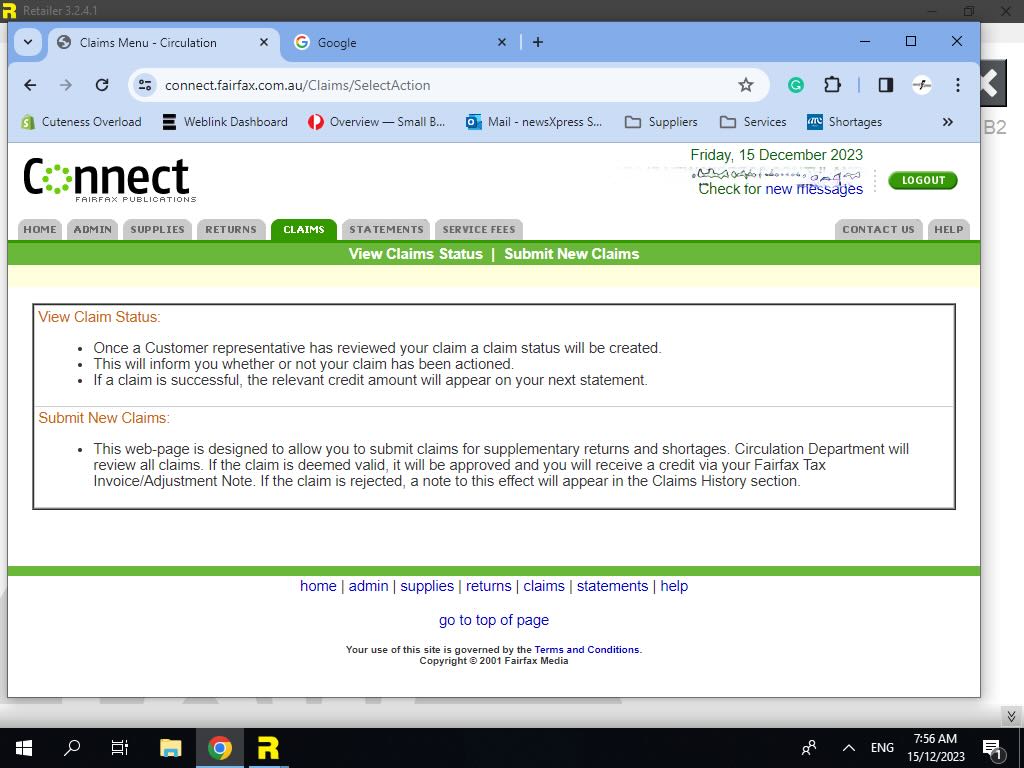
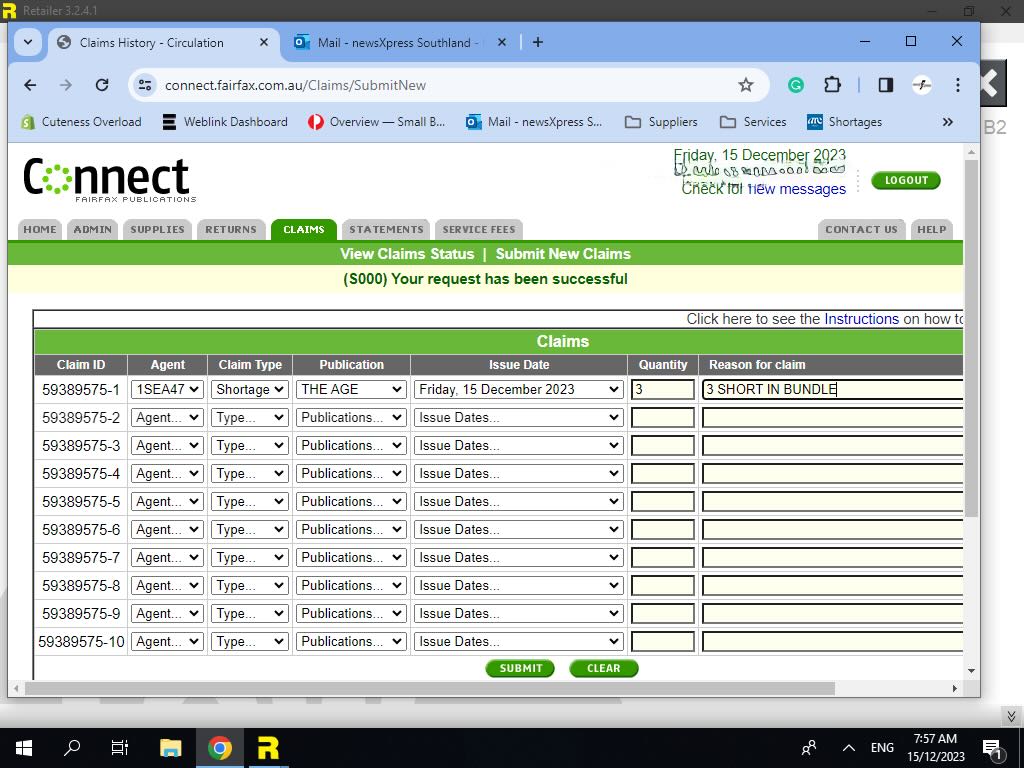
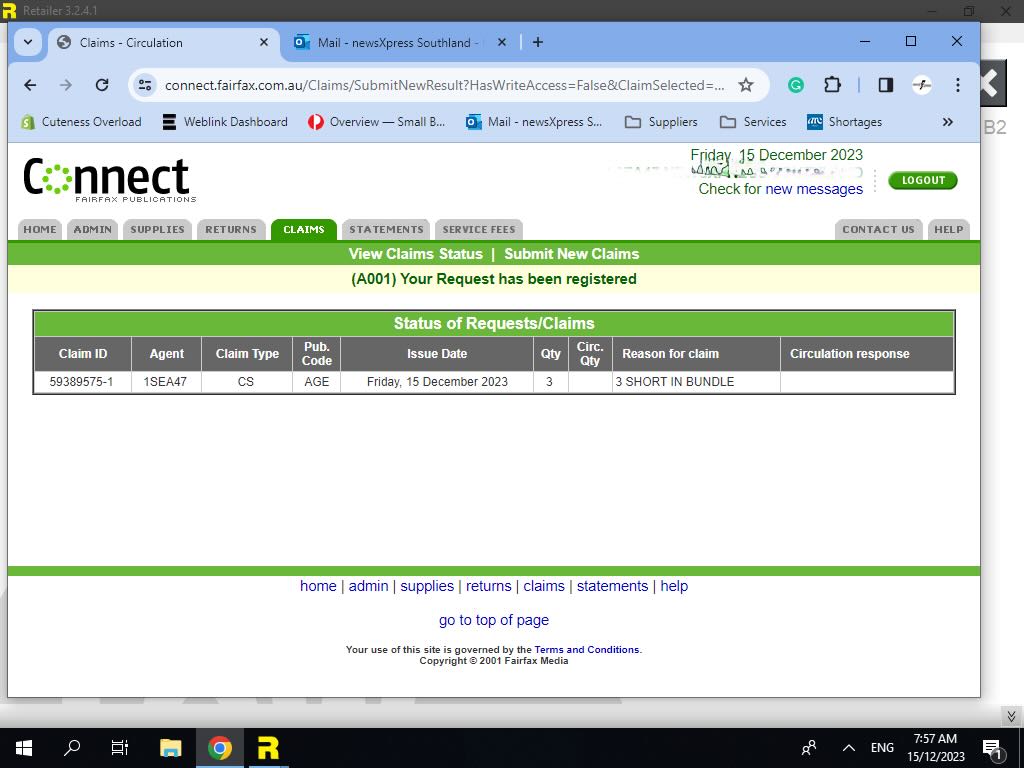
To put in the credit request we have to log in to the publisher portal and put in a claim.

What a broken process and waste of time. It should have all been dealt with in one call or, better still, notification via a distributor website rather than what happened.

So out of date.

So, yeah, this is another example of newspaper publishers using poor business practices to steal time from newsagents.

A modest investment in technology could improve this situation considerably. It would save time in newsagencies and help them improve customer service. I expect it would save time in newspaper distribution businesses too.

9 likes
Newspaper distribution

Christmas in the newsagency

People are loving how Christmas flows deep into this shop in suburban Melbourne. The manager of the store has done a wonderful job delivering a true treasure hunt experience. From the moment you step into the shop you have options.

This is my shop in Mount Waverley. I am so grateful for what christ has created.

The photos do not do justice to the ease of shopping and the inviting experience.

I love how he has used multiple trees for visual merchandising dining. We know that if shoppers can see a outcome they are more likely to purchase.

Over on the left wall you can see our full face card wall. This is our third iteration of this approach to card retailing and it is working a treat.

A key goal in this shop is to welcome shoppers into a happy and friendly space. We know from shopper feedback that they appreciate it.

If you’re in retail, I hope Christmas is tracking well for you.

9 likes
newsagency marketing

If you rely on Buy Now Pay Later in your business…

It seems more sales that Afterpay makes – the more challenging financially it is for the company:  Revenue $2Bn (From $43Bn transactions) – Merchant fees $1.65Bn – Late fees $211Million (Up from $87Million) Net Loss $615Million Bad debts $475Million.

The recent launch of the AfterPay credit card  and the clean out of the merchant and customer books will mean that AfterPay will look very different in 2024. It is expected to evolve into a more traditional consumer lending business with Buy Now – Pay Later being merely a feature.

Zip Pay has a big challenge in that it has to refinance $1.76B in debt next year and commentators say this will be a challenge for them. This article from 2 days ago is worth reading: https://www.bankingday.com/zip-refinancing-burden

So much for disrupting credit cards. 

Meanwhile, LayBy continues to be available from many local retail businesses. It is easy to manage in the software and can help people purchase from you within a cashflow budget.

The challenge with LayBy is that the purchase can be easily cancelled. But that is manageable if you factor it into your forecasting.

Through my software company I know of many retailers offering LayBy with terrific success. There are some doing thousands of LayBy transactions each year.

LayBy setup and management is easy, structured, dependable. While there is state / territory based legislation to follow, the business you can win makes offering LayBy worthwhile.

LayBy is another way local small business retailers can differentiate their businesses from big business competitors.

Given the continuing noise in the media about the economy, offering LayBy could be a a response from your business that resonates with some.

My advice is to ensure you have your processes down and your rules in place, and that they sit within the regulations for your jurisdiction. Consider a LayBy establishment fee. This can qualify the participants. What you do here depends of the products you offer and the margin with you operate.

If you compare LayBy with Buy Now Pay Later offers from AfterPay and Zip, it can look good for you.

Do your homework and see if LayBy could be good for your customers and for your business.

4 likes
Newsagency management

Opportunity for small business retailers in the IR reforms

The IR reforms passed by federal parliament give small business owners an opportunity overlooked in much of the commentary in the media. They impose requirements on big business that take away advantages they have leveraged for years. The reduce competitive advantages of big businesses in some areas.

While we in small business, especially in retail, have had the award as our guide, plenty of big business competitors have negotiated agreements that lower their labour operating costs.

The reforms passed, as I read them, reduce the opportunity for this. Click here to see the comprehensive explanatory memorandum.

Also, since many small business retailers have fewer than 15 employees, they are not obligated under some of the changes.

Too much of the media coverage has regurgitated talking points from lobby groups, like the Australian Industry Group, Australian Retailers Association, Australian Energy Producers, Master Builders Australia, Minerals Council and some others representing big business. I don’t feel any affinity with these organisations.

If you go to the source materials on the Parliament website you can read the specifics and form your own opinion.

While there will be concern around changes relating to casuals, I think the changes are ok, fair.

COSBOA, an organisation that claims to support small business, was party to a statement Friday that included:

In addition, the changes to labour hire, also rushed through, will increase costs and complexity for business.

This will hit many small businesses and drive up prices, risk jobs and comes at a time when there are already many pressures on the economy.

I am not aware of any small business retailers who use a labour hire firm.

I can’t see anything in the changes that will drive up prices in small business retail.

I can’t see anything in the reforms that will put jobs at risk.

The changes were not rushed through. They have been on the books for months.

I get that representative organisations need to reflect the wishes of their members and be seen to be doing something. The joint statement from COSBOA and others on Friday reads to me a shouty and lacking detail, being worried for the sake of being worried.

How big businesses have used labour hire arrangements to circumvent awards is problematic I think. It has provided labour at a lower cost, disadvantaging small business competitors who did not enter into such arrangements.

Some media reports and commentators and others have complained that there was no consultation. A quick search online shows that the changes were forecast months ago. Submissions were sought and consultation opportunities were available.

From a small business perspective, if you have less than 15 employees, you’re unlikely to be impacted. If you pay according to the award, you’re unlikely to be impacted. The most contentious issue will be if a casual wants to transition to a more permanent arrangement. It you appreciate them, it’s a good think I think.

But let’s go back to the topic of labour hire arrangements by big businesses. This is about containing the cost of labour to maximise business profit. I’d rather employees have more money in their pockets than the big businesses they work for as the employees are more likely to spend their money in ways that local small business retailers benefit.

My advice to anyone who may think they have an opinion about the IR reforms, read the source material and form your own views on that rather than taking what you read from a news outlet.

16 likes
Social responsibility

The all important window display in retail

I am grateful for the opportunity to see the Christmas window displays at Galeries Lafayette in Paris last week while there for a retail tech innovation conference. Here are some of the many highlights on show at this stuffing retail business.

These displays caught my attention, as any good window display should.

Travel is wonderful for broadening your horizons. This is especially true when looking at retail in Europe. Their aesthetic is quite different to what is common in Australia.

While the videos and photos I have shared here are from a large department store, in local indie retail I saw some excellent window displays and shop floor promotions.

5 likes
newsagency marketing

Newsagents ripped-off by News Corp Taylor Swift magazine terms

Newsagents selling the Taylor magazine from News Corp from this Saturday, December 9, for $9.95 make just 10% out of which we have to cover labour, retail space, EFTPOS and theft costs.

Depending on the payment method, newsagents can lose between 1% and 6% of a purchase price in fees. At the high end it would leave 39.8 cents, 4%, from which to cover labour and theft.

Labour on circulation products sits, on average, at 12% of overall revenue and theft sits at somewhere between 3% and 5%.

The Taylor magazine will be loss making for plenty of newsagents. Thanks News Corp.

What News Corp. is doing here setting a 10% commission / gross profit percentage is disrespectful of local small business newsagents. It does not allow newsagents to even make a living wage from selling this title.

All of this from a company heavily invested in shouting (yelling) at the federal government about cost of living. Yet, here they are financially harming newsagents in terms of cost of living.

I wonder how Taylor Swift and her organisation feels about the financial arrangements imposed by News Corp on local small business newsagents and their use of her name and brand to do so.

I am confident the News Corp. has it within its business capacity to treat local small newsagents more fairly with this Taylor Swift title. For a company so opinionated about others and their masthead commitment of we’re for you, their actions speak other words: selfish, uncaring and certainly not for local small business newsagents.

Their pitch to newsagents is gushing:

Taylor Swift fever has swept the globe during her epic Eras Tour, and now it is nearly time for Australia to bask in her glittering glory.

Celebrate the iconic singer with this special 100-page souvenir edition magazine with bonus poster inside.

Ahead of her concert dates in Melbourne and Sydney in February 2024, the Taylor magazine is packed with 100 glossy pages of details about the Eras Tour, the evolution of the singer from sweet country star to global sensation and a deep dive into her music.

Also in the souvenir edition magazine Taylor:

  • Discover how big a Swiftie you are with our Taylor-made pop quiz
  • The men (ahem, Travis Kelce, Harry Styles and Joe Alwyn please step forward) who have played a starring role in her life
  • Her jaw-dropping red carpet fashion moments
  • Plus, the records she has smashed as one of the world’s top entertainers

Taylor magazine is on sale from Saturday, December 9, for $9.95 at participating newsagents, Coles and Woolworths.

I wonder what the terms are for supermarkets Coles and Woolworths. While their margin may be the same, is News Corp. paying their a ranging or stocking fee, a promotion fee or offering some break in ad rates to compensate as I doubt that these supermarket giants would sell this for 10% only without any other financial benefit for them.

Taylor Swift has a track record of doing good where she travels and performs, helping local charities. her generosity has been well documented. If only News Corp. seeking to profit from Taylor’s fame was even modestly generous to local small business newsagents when it comes to the sale of this special Taylor magazine.

News. Corp is treating newsagents as if it is the 1950s. It is disrespectful. It demonstrates a lack of care for our channel.

If News Corp did care about newsagents they would offer this product at a considerably better margin.

49 likes
Social responsibility

Is For Arts Sake back in business?

It looks like it. I went to an online b2b trading portal on the weekend and was able to view product, add it to a cart and pay. I didn’t;t pay, of course – I was interested to see how far the transaction might go.

The page from which I can access 3,164 For Arts Sake products looks and feels like the For Arts Sake that sold to newsagents for years before being wound up in August this year following a creditor petition.

From that same page I could access more about the business.

Now, it could be that the listing at the b2b portal is old, but that would be out of character for the proactive portal, especially given that the For Arts Sake business was liquidated months ago.

If the listing is current, and stock available under this brand, it’s a resurrection to match that of Lazarus.

1 likes
Suppliers

Some newsagents are missing out on sales by ignoring this free marketing opportunity

The advice in this post was written for and shared with newsXpress members last year. newsXpress regularly provides tactical business advice to its members.

I shared this advice with ALNA a few months ago, so they could share it with their members. I share again here today to reach more newsagents.

This is free advice that costs nothing to implement and is likely to attract shoppers to your business.

Research by several organisations in Australia suggest that more that 75% of in-store purchases include at least one online search. Having a current Google Business Profile is one key element in being found online.

Google Business Profile. Steps you can take to be more easily found.

Having an up to date Google profile is more important than ever. Google uses profile content to deliver search results.

Google‘s own data indicate that 46% of all searches have local intent. Use of Google Maps is common by people looking for something right now. Maintaining your Google My Business profile is the most important step to indexing well in local search and map results.

Google preferences Google My Business content in providing search results since it is verified content.

Sharing posts via Google My Business is possibly more important than what you share on social media.

Okay, so where do you start, what do you have to do? Here’s a simple to follow list. I have done this over the last few days for 2 of my businesses to ensure the advice is current.

  • Do a Google search for Google Business Profile. It should bring you to: https://www.google.com/business/.
  • If you don’t have a Google Business account, create one. If you do have an account, log in.
  • Once in your profile, if your business is not listed, click Add business (top right), search for your business and request it be added. If someone else ‘owns’ the business listing it could take a few days to be released to you. If your business is not found in the search, add it manually.
  • Do not rush this. Make sure you review everything.
  • Click on the pencil icon to edit your profile.
  • Choose your business category. Too often retailers select one. Select as many as apply to your business.
  • Description. Make sure you describe your business. Use at least 500 of the 750 words allowed as Google uses this in search results.
  • Hours. Make sure they are accurate.
  • Location. Make sure your business location is correct. The service area is the area you serve. Choose wisely. You can put in multiple locations. So, put in your town first, then, put in the bigger city you are near if appropriate.
  • More. Click on every option available under more as they matter in Google results. For example, noting the business as woman owned, if true, will help with results.
  • Add a profile photo if you do not have one already.
  • Click on the create post icon – it’s the third icon, next to the camera. Create a post.
  • This should be about a product.
  • Include at least one photo.
  • Start with a headline.
  • Write text. Aim for less than 200 words. Think about what people will search for. Have a good headline. Use paragraphs.
  • If you sell the product on your business website, use the add a button option to add a link to the product on your business website.
  • Google will check and approve the post.

Once you have done this, you should see the profile and post online in less than a day. Once that happens, the Google door is open for you.

Our advice is that you add a post at least weekly. Each post should be about a single product or single brand, something people are likely searching for. Keep the focus narrow. Write as you. Be relaxed. What is it you love about the product? Who is it for? Be grateful about having it available.

If you are just starting, consider a post a day for the first two weeks to get your content up and running, to encourage Google to notice you.

On the posts themselves, they should be more informative than, say, an Instagram post. remember, you are writing for people on their phones searching.

Google will preference profiles that offer fresh content. This is why I say posting weekly is important.

Your Google business profile works best for you when you have a website as that facilitates shopper browsing.

The other benefit of creating and maintaining a Google business profile that reflects your businesstoday is that suppliers will see it. This could help suppliers who pigeonhole you as a newsagency realise that you are not.

We appreciate some of you may have read this and thought it’s the last thing I need – more work to do. The thing is, more shoppers today search online than not.

Footnote: if you are thinking of paying someone to do this for you, I advise against that. This is your business. You know what you want people to find, and buy. A marketer or a friend will do more of what they want, and that may not match what you and your business need.

Now, we asked ourselves some questions for you:

  • Can I use content I put on my business blog? For sure. Google may see it as duplicate so maybe trim it for your Google profile.
  • How long should a new post be? Given that this content is most often accessed on the phone, 200 words is considered the max.
  • How long do posts last? Currently, 6 months. It used to be 7 days. Google will continue to play with this.
  • Should I always include a photo with a post? Yes.
  • How many photos should I add? At least one. My suggestion is 4.
  • How detailed should the photos be? Each photo should be one product, clearly visible.
  • Should I use hashtags? Hashtags serve no purpose on these posts.
  • Can I schedule posts? Yes, by using an external platform like Loomly, Sendible, OneUp or similar.
  • What else do I need to do with the profile? Engage. Respond to reviews. Answer questions. Show the business as engaging.

Of course, it’s up to you if you create a profile for your business. It costs nothing and is likely to help people find you, and visit.

6 likes
Newsagency management

What a terrific promotion of independent retail in Chichester, West Sussex

6 likes
marketing