TV Hits to close
Reflecting a new pragmatism among magazine publishers, TV Hits magazine is closing. Wednesday’s issue will be the last. With its falling circulation, it was only a matter of time.
An iPad edition of the Australian Women’s Weekly will be released this week according to a report in The Australian this morning. Editor-in-chief, Helen McCabe, is quoted:
“The iPad is one of the fastest-selling pieces of technology since the DVD player was introduced and it’s vitally important for ACP to be in the game and offer this to our readers and our advertisers.
The price for the iPad edition is $5.99, less than the $6.90 for the print edition.
Click on this image to see a larger version of one of the best graduation displays I have seen. This graduation display is at newsXpress Emerald in Queensland. I love the display because it congratulates local graduates and offers a broad range of graduation related products for sale. It’s the kind of display which will get locals talking and result in excellent word of mouth business for the newsagency. Well done to everyone involved!
This is how we should approach opportunities like graduation – especially since the majors do not do this well.
Newsagencies are the perfect seasonal retailer and graduation can be a lucrative season.
AdAge has published a report on sales numbers for magazines for the first six months of the iPad. The short version of the article is that the iPad is not killing newsstand sales but that it is also early days for the device.
In the middle of an article at Mashable about the AdAge report is this quote which will interest newsagents.
It’s also important to note that where digital magazines are really poised to take off is with subscriptions. Apple and major publishers continue to hash away at terms that will bring subscription pricing to the iPad. We agree with Ad Age and with publishers, once subscriptions become an option, the iPad magazine game will get a lot bigger.
As the use of iPads and similar devices grows, we will need to focus our attention of the difference we bring to the shopper experience in our stores and that which print product brings to the reader experience over digital.
I discuss the impact of the iPad among other things in a video: How Disruption of Print Media Will Affect Newsagents.
Following up on comments here by publishers that bagged magazines sell better, I have been talking to browsers in my newsagencies, when there is an appropriate opportunity, about what they prefer.
The shoppers I have spoken with fall into four general categories: irregular buyers of a title wanting to make sure this issue has value for them, browsers only, regular buyers of the title, friends shopping for a gift.
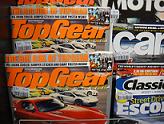
Irregular buyers are the ones most frustrated by bagged titles in my experience. Take the latest issue of Top Gear. Two shoppers I spoke with were about to dismiss this issue because it was in a sealed package. They like the magazine for its content and didn’t care about freebies which caused it to be packaged this way. I opened it for them – one bought and the other did not.
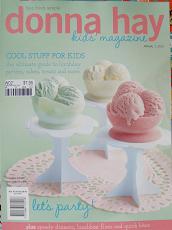
I also spoke to a couple of shoppers looking at the latest issue of Donna Hay magazine which is bagged with a gift. Both said they would not even consider buying this issue if they could not see what recipes were available.
Browsers are frustrated but move onto another title they can browse while passing time. They prefer in packaged magazines but note that they can always find something to read.
Regular buyers. I only spoke with a four. They said they’d prefer magazines un-bagged but didn’t really care. Three said the freebies usually didn’t add value in their view.
Friends didn’t care as they were buying because they had been told to or for a gift.
Newsagencies are, usually, browser friendly places. I certainly want to encourage browsing of magazines. Otherwise, we become like other retailers where the magazine category is not a destination but there for building a basket on top of destination purchases. Our channel was build on magazines as a point of difference and browsing is vital to that.
Bagged magazines impact on browsing. In talking with customers, my sense is that bagged magazines cause us to miss sales opportunities. While publishers say they have data which refutes this, I can only go off what my customers have told me in recent weeks.
I acknowledge that my sample is not representative since those who are happy with bagged magazines will have made their purchase and left before I notice them browsing.
I have been talking with a couple of smaller publishers this week about the damage which early returns can do to newsagency businesses and to publishers. Here are two concerning stories:
I understand why this happens. Newsagents early return for three broad reasons – at the time the stock comes in because their software indicates they have received significantly more stock than they will sell, during the month when they see a title is not moving and they need the space and/or in response to the need to manage magazine cash-flow.
It is the third type of early return, in a scramble to manage cash, where less rational decisions are made. Indeed, I have seen situations where early returns are selected almost randomly. While this will frustrate publishers, they need to understand the extraordinary pressure on newsagents to settle their magazine accounts on time.
The best approach to early returning is to select titles based on sales data. There is no commercial sense in returning stock you are likely to sell in a reasonable timeframe.
Media Week in the UK has published the full text of Rupert Murdoch’s speech this week at the Centre for Policy Studies where he delivered the inaugural Margaret Thatcher lecture. While it does not contain content of direct commercial interest to newsagents, I am sure many will find it interesting.
We moved our main Halloween display from a window to the centre of the store. This reflects the shift in approach as October 30 draws near. For the first few weeks our goal was to attract shoppers from the mall into the store to browse our Halloween range. Now, our goal is to drive impulse purchase business. While this new location can be seen from outside the store, it is not as strong as when in the window.
We needed the window space for our expanded range of calendars which are generating anything from $100 to $300 a day in sales.
Our Tatts syndicates for the October 30 $20 million superdraw are central to our overall Halloween promotion. Being able to promote the superdraw as part of a season is certainly helping push sales along. We are promoting the syndicates in a couple of locations in store – using traditional Halloween colours and with some appropriately scary treatments.
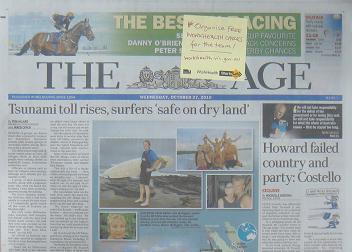
The promotion for a wonderful feature in today’s Good Weekend magazine has been defaced on the front page of The Age newspaper today with an ad stick on for Millel Cheese and Coles supermarkets. My other complaint is that the Good Weekend comes separate to the newspaper and we have to assemble these.
VANA members voted in unprecedented numbers in the election which closed this morning. The incumbent independent director Robert Wade achieved 159 votes. Trevor Mason achieved 48 votes. It is good to see so many newsagents participating in an election.
This vote is a vote for VANA to not head down the road of VANA getting into more commercial activities. I think it says that Victorian newsagents want their association to be, well, an association.
Giving Australia Post the role of operating a people’s bank to take on the big four would be a mistake.
The bloated government owned retail network of 865 corporate Australia Post stores disregards the Act under which it operates and is protected by and uses its monopoly to take business from small businesses like newsagencies.
Giving them a banking business would be an invitation for them to reach even further than they do today and to take more business from small business.
Australia Post apologists say that the network needs new products to keep it operating. I’d say who cares? Let the government owned stores close. Move to a 100% independently owned and licenced network. This makes the network operate in a more competitive situation than today.
Every day, the federal government takes sales from independent small businesses like newsagencies because of the protection offered by politicians who do not really care about small business.
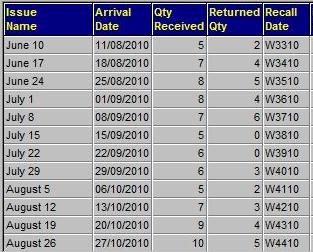
I am grateful to the newsagents who have shared magazine sell through rates data over the last couple of weeks. Yesterday, I emailed Tower Newsagents and received more than 600 pages of data which I will work through over the weekend.
Seeing magazine distributors supply a title for six months and more with a 100% return rate is evidence of appalling behaviour. In one newsagency for which I have the sell through rates in front of me right now, this is the situation for at least thirty titles.
This perpetual 100% return rate is like rolling over a loan from the newsagency to the magazine distributor. While magazine distributors have excuses, I can see no reason for the continued gross oversupply.
I am using this data, and magazine cash flow data, to build a fact based case on the magazine supply model as it relates to newsagents.
I have published another video to help newsagents better manage magazines. How to Better Manage Magazines in Your Newsagency looks at how to use a Non Performing Titles Report and a Magazine Sell Through Rates Report to better manage the quantity of magazines in your store. While designed for the 1,700+ newsagents using Tower Systems’ newsagency software, the video should be of interest to other newsagents as well. Click here to play the video.
Magazines are vitally important to our businesses, for the short to medium term especially. However, newsagents need take steps to control their exposure if they are to be held responsible for paying the distributor bills on time.
Related videos: How to Drive Basket Efficiency in Your Newsagency and How Disruption of Print Media Will Affect Newsagents.
The cover of the latest issue of Delicious magazine is, well, delicious! It is the best food magazine cover I have seen this year. It’s everything a food cover should be – aspirational, inspirational and delicious. We have the magazine out on full face display – this is not a cover to be left in traditional newsagency magazine racks.
Of course, you’d need to be a sweet tooth to like it as much as I am gushing here. While I like to cook and do okay, I think this amazing pavlova is beyond me.
With Wilson Stationery and Dixons having just been taken over by Stationers Supply, newsagents are left with GNS and Stationers as core stationery suppliers – except for those who buy from Corporate Express (Staples).
In my view it is imperative that newsagents support GNS as it is the national stationery supplier we own.
I was fortunate a few months ago to meet with the entire GNS field team at their national conference and like some other suppliers, their work for newsagents goes beyond their core focus of stationery. It is this broader support which is vital to the channel.
Yesterday was magazine account payment day for October. Newsagents who missed the cut will be getting calls, emails and letters from today.
One newsagency is facing a bill which is 80% higher this month than last month. I have data from other newsagencies here magazine revenue for September was less than what they were charged for stock delivered in the month.
I am collecting this data for a submission to various parties on the magazine supply problem. Rather than write a long submission with a log of claims, which has fallen on deaf ears before, I plan to let the data speak for itself.
The evidence of a magazine supply model designed to maintain a certain level of indebtedness of newsagents to distributors is compelling.
Newsagents who want to share data to participate in this should email me.
Finally, magazine distributor Gordon and Gotch has seen the light and become more transparent with newsagents about the end of month cut off for submitting magazine returns data. here is the email newsagents received today:
Please be advised that the final time and date for submission of returns to achieve a credit on this month’s statement is
3 PM – Sydney time on Thursday 28 Oct 2010.
Please adjust for your own time zone.
Returns submitted to us after this date and time will be processed in the next Calendar month.
I suspect that this change has been brought on by agitation by some newsagents in complaints to the ACCC. The rest of the channel ought to thank them for working on their behalf.
Yesterday I published a video offering suggestions on How to Drive Basket Efficiency in Your Newsagency. This video is another slice of content from my recent Newsagency of the Future workshop series. Newsagencies today have excellent traffic. While I do see challenges ahead for print, our future has three parts: today, short to medium term and long term. Right now our focus has to be on today and the short to medium term. We MUST extract the best value possible from existing traffic. Hence the importance of working on basket size. I hope that newsagents find the video useful. Click here to see the video.
In the video I seek to share examples of how newsagents view and act on opportunities. It is more about the process than telling people what to do in each situation.
I published a related video yesterday on what I see as the impact of media disruption.
In creating our temporary and much smaller newsagency we worried about what to do with newspapers. We ended up giving them prime position on the main line from the front door to the counter at the rear of the store. This presents a professional and easy to shop newspaper display. It also gives us plenty of opportunities to promote other products to newspaper-only shoppers – the photo does not show what shoppers pass walking to and from newspapers.
I committed the best space to papers because today they generate excellent traffic and so today they are tremendously valuable.
Too often, newsagents talk down newspapers and magazines and manage them so that sales will decline. While I bang on here a lot about the magazine and newspaper supply models, I continue to robustly support them in my stores because I understand their importance to our channel in the short to medium term.
We are promoting That’s Life Reader’s Recipes cookbook at the end of our women’s magazine section. The last issue was a huge hit with our customers so we are promoting this one in a couple of locations – with That’s Life. On the weekend we plan to place this title with our newspapers.
This is not a title customers will look for so it makes sense that we chase them for sales.
The cover story of the latest issue of the National Geographic magazine ought to drive some good impulse business. While the huge gulf oil spill is off the front page, I suspect it is still reasonably top of mind. The coverage in the magazine is stunning – so much so that we have placed this in a good impulse location in pursuit of additional sales.
While I like the cook book collection promotion being run by the Herald Sun, I am sorry for anger the team at one of my stores had to put up with today. There, we received enough copies of the free Jamie Oliver cookbook for the number of newspapers we received. This meant we had no real capacity to satisfy the many customers who came in with coupons from home deliveries and newspapers purchased elsewhere. While some customers understood, others were downright abusive.
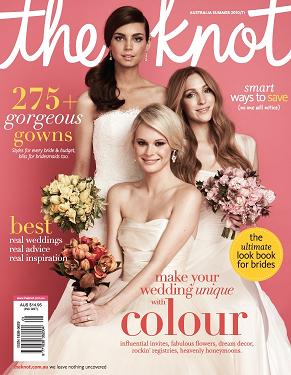
The Knot, a US wedding website, has announced what is being hailed as a “groundbreaking” iPad magazine app. Read the review here. If the iPad is anything like their website I’d expect it to be a huge success.
From a publisher’s perspective, the only distribution cost is 30% to apple, no shrinkage, better reader engagement stats and more advertising options.
At my recent Newsagency of the Future workshop series I presented to more than 400 newsagents my thoughts on the current state of play of the newsagency model and shared how we might navigate to a future. Part of the workshop was a presentation on print media disruption. I edited that section down to focus on one key aspect of disruption (there are several) and yesterday recorded a video for anyone wanting to find out more about this. Click here to see the video. While it is lacking in production values it is designed to get newsagents thinking about their model in the context of medium term and long term business planning.