With both News and Fairfax announcing plans to apps for the new Apple iPad, maybe now newsagents will start to take notice of the emerging digital channel.
For years most newsagents have remained silent, even ignorant, of the new channel for news and information. As servants of publishers, magazine and newspaper, many Australian newsagents act as if their suppliers, those who created the channel in Victoria in the 1800s, would provide a future path.
The writing has been on the wall about news and information distribution for a long time. Back in 2005 the risk to our print centric channel became obvious:
“Within our lifetimes, the distribution of news and information is going to shift to broadband,” Sulzberger says. “We must enter the broadband world having mastered the three key skill sets — print, Internet, and video — because that’s what’s going to ensure the future of this news organization in the years ahead.” Arthur Sulzberger, Publisher, New York Times. Business Week, Jan. 17, 2005
This was the first time a major publisher has spoken so openly about the digital future. Rupert Murdoch joined in…
“So, media becomes like fast food – people will consume it on the go, watching news, sport and film clips as they travel to and from work on mobiles or handheld wireless devices..” Rupert Murdoch speaking at Worshipful Company of Stationers And Newspaper Makers, March 2006.
Fast forward to today and the message is clearer, more specific:
“If you have less newspapers and more of these [iPads] … it may well be the saving of the newspaper industry.” Rupert Murdoch, April 2010
Last week, The Australian announced the imminent launch of an iPad app. Today, The Australian reports that Fairfax has announced their iPad app plans.
Newspaper publishers are chasing this new channel. They say they are doing it while remaining focused on print. Revenue will determine how long they focus on print and digital for delivering the newspaper. Paper and distribution costs are high.
Once publishers can achieve the return they want from a digital platform the costs of the print model will come into focus.
While I am not predicting the end of print newspapers, I am suggesting that newsagents need to develop reflect the latest moves in their business plans.
The launch version of the iPad is not a newspaper killer. Maybe it will take several versions to get close to that experience. Maybe it won’t be the iPad at all. There are many devices being developed around the world in this digital news and information delivery channel space. The size of the competition is a testament to the scope of the challenge us print-centric newsagents face.
This is why we have to wean ourselves off print. We need to lead our own life away from our parent as it is possible they may leave the nest. They will deny this is an option as they should. However, we need to plan as if this will happen.
What would a newsagency look like without newspapers? Once you get over laughing at what you probably think is a ridiculous question, think about it.
Some newsagents would see a newsagency without newspapers as a business which is finally free. Others would see it as a business which is dying.
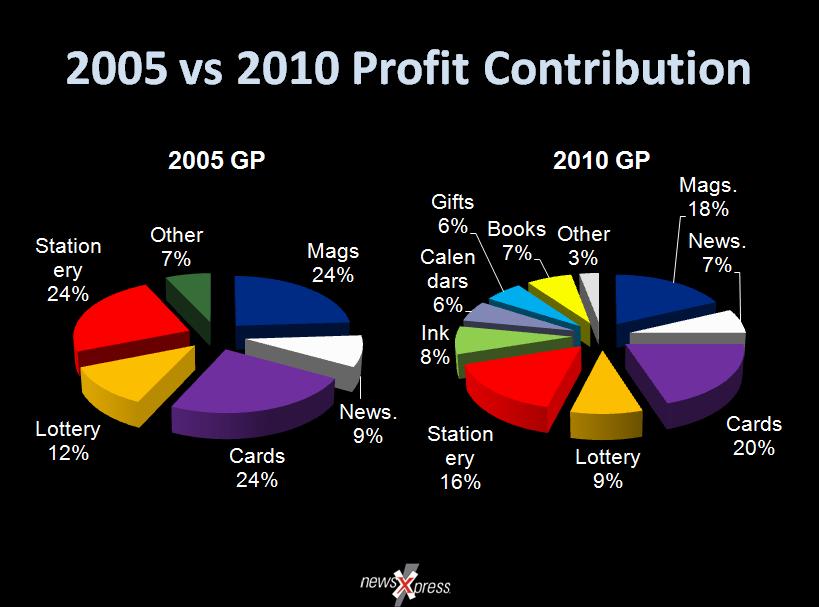
Of course, it won’t happen all at once. The importance of newspapers to newsagencies will face with time. Indeed, we have been seeing this for the last five years even though publishers and many newsagents would deny this.
The iPad is our call to action. It ought to be the topic newsagents and their associations ought to discuss. Its imminent launch here in Australia is the most significant challenge to the print distribution channel, the Australian newsagency channel, since we began.
In the 1800s the publisher of The Bulletin created Australia’s first newsagents because of the need to distribute product. Today, publishers are embracing the iPad because it looks like it may more efficienctly solve their distribution challenge in today’s world.
Unlike the 1800s, our future will come from within. These are exciting times.
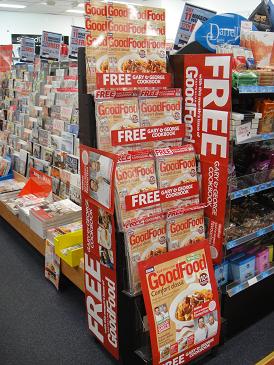
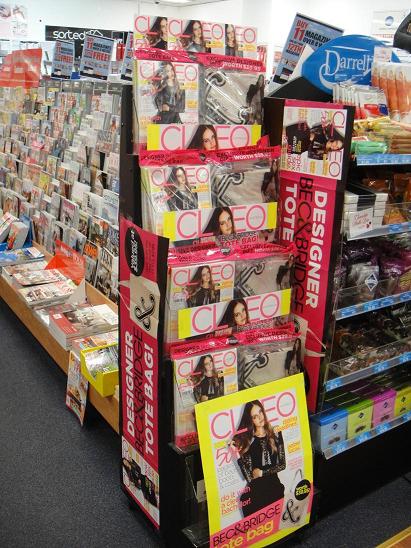 We are promoting Cleo and the free Bec & Bridge tote bag which comes with the magazine at the entrance to our women’s magazine aisle this week. We also have a considerable display of Cleo deeper in the aisle where the magazine is usually located. We have left our Good Food display on the rear of this stand as our view is that this is more likely to generate sales from this location than Cleo. We will leave the Cleo display up for a week at this stage.