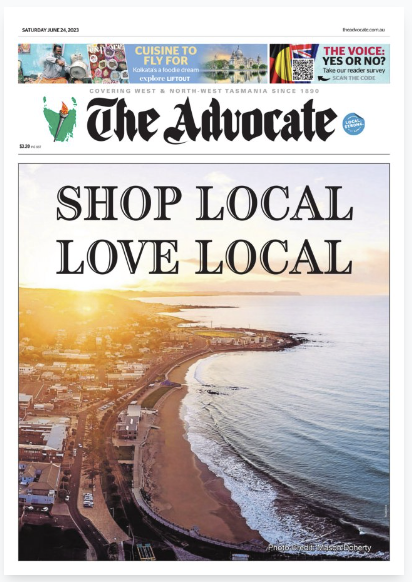
The Advocate in Tasmania pitches shop local love local

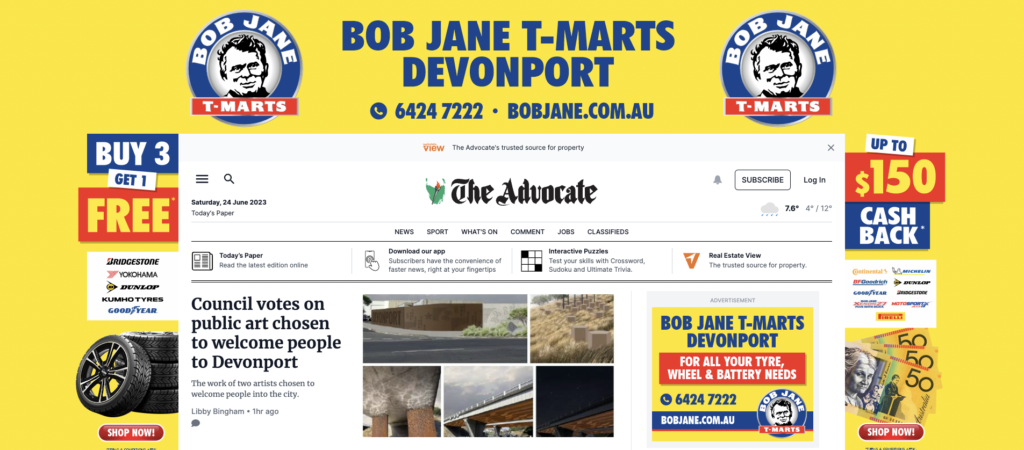
While this is the front page of the paper, at their website stories supporting the front page splash are not obvious.


While this is the front page of the paper, at their website stories supporting the front page splash are not obvious.


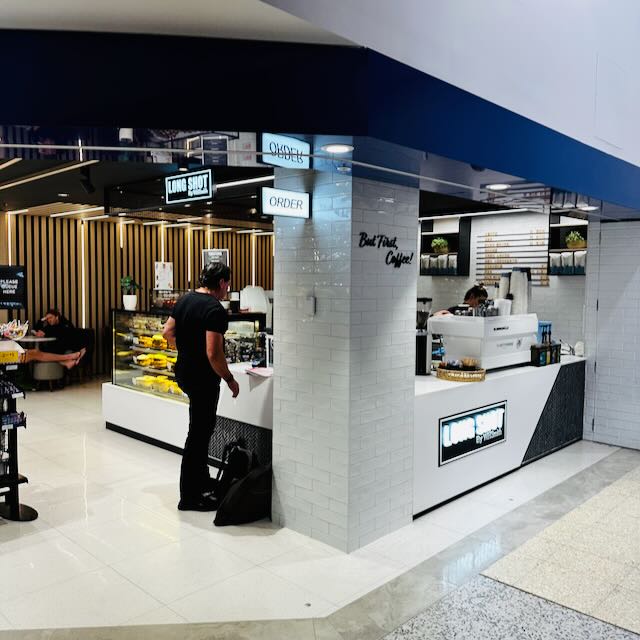
While I know of newsagents who have been successfully doing coffee and related food and beverages in Australia for years, this WH Smith outlet is the first time I have seen a corporate ‘newsagency’ player in Australia offer it, and, they are doing it exceptionally well.

It fits well with their fresh new store design and is sufficiently visually different to be seen as a stand alone business. The Long Shot branding helps with that.
The WH Smith offer in Australia right now is the freshest and most on-point I have seen from them since they arrived in the country. Their new shop layout is excellent, supporting a broad range of products, making the shopper journey good, and I suspect, successful.
The changes are so significant that I would not be surprised to see them engage more in shopping centres and even at major high street locations.
Years ago, if we had a card or some other product with a swear word on it, we’d receive complaints all through the day, many complaints. The same product today would attract one, maybe two, complaints a week.
10+ years ago we had a card from Spirit in one of my shops that had a small balloon on the front as the penis. We had a customer who would come in and cut the penis off.
I think what offends people today is different. Swears on cards and other products attract more laughs than complaints. I think the balloon penis would be the same if we had it.
There is a strength in the way swear words are used on some cards, a cleverness, too.

We are careful, of course, to not shine a light on these cards at the counter. rather, they are in the card mix, where you’d expect the shopper likely to purchase this card to look.
The Affirmations card business released their defamations range some years ago. It’s a raunchy range with plenty of swears. It sells very well. Retailers often tell me of the laughs they hear from the part of the store where the defamations products are located.
I guess my point here is that swear words are not the turn off they were 10+ years ago. Today, they will most likely help you win sales, and they will, for sure, make your shop relevant to a wider group of shoppers.
I’ve used cards with swear words on their in social media posts, with success. A common response is people tagging friends in the post.
There are plenty of suppliers now playing in this space. My advice in case you don’t have these types products in store is have a crack as you are likely to find new shoppers.
In the UK, the Scribbler group has built their business on cards like these. You only have to stand in one of their shops and realise the broad age range appeal of raunchy cards – older women, 75+, especially appear to like the humour.
Personally, I am drawn to the more nuanced used of swear words, like you can see on the card included with this post. I think it’s smart and relevant.
A few months ago in one of my shops we introduced a new product category, something we had never stocked before, something appealing to a demographic we have not pursued with our buying or visual merchandising.
So In the first 16 days of this month we have just clocked over $1,000 in revenue for this new category. This is on the back of a $5,000 investment in inventory.
We are forecasting 12 month revenue at between $20,000 and $20,000 allowing for a seasonal bump, while maintaining that $5,000 inventory investment.
We had no idea if this would work for us. The $5,000 was a gamble we were prepared to take. We thought and hoped it would work, but there was nothing in the store we could point to that would suggest it would work. As I noted, it was new for us.
I’m grateful it is working, that the gamble paid off.
Now that we are around 10 weeks in, we are seeing new shoppers in to shop the category. We know from comments that this is happening because of word of mouth.
What makes the success more enjoyable for us is that we are using a location in the shop that was not performing before.
The whole experience is the reminder of the value for local retailers of:
We’ve not changed anything in the 10 weeks other than top up stock. The plan always was to let it sit for 3+ months before change. With the results as they are, we think only minimal change within the category is necessary.
Anyone can do what we’ve done. And, it’s not about the products we specifically chose. That’s up to you. My core message with this post is to actually try something different and see what the results are for you. Good or bad, you will gain valuable insights.
Decades ago, back when we were agents others made strategic decisions for our businesses. Today, strategy is yours to determine, and one of the most important is to pursuit of new shoppers for they are the lifeblood of local indie retail.
Scottish news publisher Highland News & Media is transitioning print newspapers to a digital only model and announced this late last year. Now that the company has started to publicly action its plan, by encouraging readers to switch from print, newsagents are reportedly unhappy, as Hold The Front Page reports.
The Federation of Independent Retailers has slammed the promotional campaign as “cynical, aggressive and a slap in the face for news retailers”.
Its head of news Brian Murphy said: “Our members in Scotland are shocked and appalled at the aggressive tactics that Highland News and Media is adopting in its bid to steal their loyal customers away from their weekly printed copy to its online version.
“The way the publisher is marketing the digital subscription packages for its papers shows the total disregard it has for retailers who sell its printed products. This is a slap in the face for newsagents.
“Furthermore, we have been given no prior warning about this. The first we knew about it was seeing the heavy – and aggressive – promotion inside the newspaper.”
While I feel for the impacted Scottish newsagents losing print newspaper revenue, it is no surprise the publisher is making this move. It has been on the cards for more than ten years. Indeed, back in 2009 when the Seattle Post-Intelligencer moved to a purely digital model it was considered a crack in the dam wall of print newspapers.
Smart newsagents have adjusted their business model to not rely on revenue or traffic from print newspapers and to cop on the chin the whack the pitches from publishers in their print products to encourage people to move online.
Publishing companies have one prime obligation and that is to their shareholders, just as us retailers have one prime obligation, to our selves as business owners. The issue, I think, is that our channel, certainly in Australia, was birthed as as agency model, one in which we served publisher masters for a modest clip of each transaction. For well over a hundred years, again certainly here in Australia, we were treated as what I’d call last stop agents, the end of the line, the least important.
We were paid poorly, less than award wages, our ability to monetise our position as agents was stifled, we had no control over revenue growth and had to absorb the cost of increased operating costs. And, as the transition to digital for news access began in earnest in the 1990s, many of us were captured in our agent world, because we only understood that world of service for a low percentage.
Too many newsagents kept looking at the ground, barely a step in front of them, ignoring the horizon over which many opportunities could be found.
Publishers have played a role in holding newsagents back, keeping them in. their lane of agency service, because it suited them to keep newsagents subservient as they, the publishers, figured out how to shift eyeballs to screens from paper. And, too often today, as we can see in several places, newsagents are kicked to the kerb once publishers action their plan to encourage and push those eyeballs to screens.
But, as I have said, it’s no surprise when a news publisher quits print for digital. They can only subsidise an out of date news distribution model for so long, and print, for sure, is any out of date model. Heck, it’s been out of date for more than ten years.
My advice to Scottish newsagents (not that they have asked for it or need it) who feel aggrieved by the moves under way by Highland News & Media, is to look at what your business could be without reliance on print newspapers. This means stepping outside the usual lane for a newsagency business. Look at categories beyond those usual for newsagency businesses and usual for convenience businesses. It’s not too late. But, it takes urgent action, investment and courage.
Before I wrap up I want to comment on this quote attributed to Brian Murphy from the Federation of Independent Retailers speaking about the more by Highland News & media:
“It is a proven fact that newspapers are a key footfall driver, and research shows that people buying a paper will often buy something else at the same time.”
I’d be interested to see the data supporting this as here in Australia it’s not the case, and has not been the case since the 1990s. I have looked at basket data from more more than 1,000 retail newsagencies over many years and since the 1990s, newspapers have held their position as inefficient in terms of basket depth, hovering at around 80% of newspaper purchases being for newspapers alone.
Newspaper publishers told us for decades that the commission (margin) is low because they deliver foot traffic. While they did that, those shoppers had a single destination product in mind and nothing could switch them from that mission.
The quote from Brian Murphy also indirectly pitches that traffic, footfall, is important. While it was back in the agency heydays up to the early 1990s, for those of us who transitioned to new product categories with substantially better margins, four and five times better, traffic was not as important. Selling something worth $300 and making 60% delivered margin dollars equivalent to 450 newspaper sales.
Are newsagents selling items worth $300 and making 60% GP? I know plenty who do, in city settings as well as in regional and and rural Australia. I also know plenty selling an item for user $10, but also with a 60% GP.
I guess the heart of this issue for local retail newsagents with what is happening re Highland News & Media is to configure your business so you are not reliant on any single supplier. It’s your business, rely on you, not them. Sometimes that can mean upsetting suppliers. So be it. If your decisions are right for you, that is what matters.
What you want, of course, is to be in control of the decisions about your business, because – suppliers will make decisions that are right for their business and that can be risky if the decisions are made by a supplier that is critical to your business success.
Look out over the horizon, leek for change opportunities and lean into them. You decide what your business, what it stands for. Don’t be constrained by history. Don’t be limited by your shingle.

Here is an update to my 2022 post on this topic.
Never pay an outside party to do your stocktake and never do a stocktake outside of your POS software. Outside stocktakers cost more than it would be for you to do it yourself.
The most accurate stocktake result for any retail business is doing it yourself, using your POS software.
Actually, if you properly use your POS software, it’s unlikely you will need to do a full stocktake on or around June 30. But in case you do …
This time last year, I got together with one of the stocktake experts at Tower Systems to discuss this and answer common stocktake questions we are asked.
Again …
This is the best approach for maintaining accurate stock on hand data and for valuing stock prior to a change of hands of the business.
June, July and August are tough months in many local shops like ours. There is no major season, and, it’s winter. Brrr. Some who have been in retail for ages call these months the months of death – because it separates strong businesses from weak.
This year could be tougher because of interest rates and the penchant in newsrooms for stories negative about the economy and the future.
Here are 7 ways you could make these three months work for you.
My point with this list is that this valley, June, July and August, separates retailers. Those who do well tend to be engaged, they tend to embrace opportunities to make their own success.
This advice was first shared with newsXpress members as part of a broader regular series of business advice for making the most of every opportunity.
Jennifer Coolidge is in Sydney for the Vivid Festival. I got to see and hear her last night which was a treat. She is also getting plenty of media coverage, in part because The White Lotus is such a hit. Anyway, right now is a good time to promote Harper’s Bazaar as people are more likely to purchase it on impulse.

SUper=markets and other competitors are unlikely to promote based on newsworthiness. It’s an opportunity for us.
I know of newsagents today using AI (artificial intelligence) tools in their businesses to save time and provide a competitive advantage. Here are some AI use examples I have seen:
Writing product descriptions and longer form product descriptions is a good use of the ChatGPT AI integration my newsagency software company delivered to newsagents early this year. You put in a few keywords and in seconds you have description text ready for your review or edit.
Managing customer chat for your shop’s website can provide a response to simple to modest queries without labour cost.
Writing an email to a supplier requesting a refund for product that is not performing. By providing ChatGPT some contextual prompts, the AI platform wrote an email making a sound case for refund consideration.
Writing a letter to the landlord seeking reduction in the rent. After providing ChatGPT some business details, the AI platform wrote a good two page letter with economic data that checked out.
Writing disposable social media content. If you have a product image and some keywords, AI could generate cohesive sentences for you in seconds.
Giving employees broader experiences and thereby making working in the newsagency more interesting. Let them show you what could be possible.
Finding new product category opportunities.
In some of these examples, the key to successful use is rooted in the prompts you feed to AI. It can take considerable experience to land results that are genuinely useful to you. Equally, you can botch this, get bad output and think AI is useless, which would be a mistake, of course.
There are other uses of AI already in systems and other tech in use in businesses, including in newsagency businesses, just under the surface. I could list some other uses of AI but I won’t for commercial reasons.
While it is appropriate to be cautious in using AI, generating content and other results for review is itself a time saver for any newsagency business.
I think every retail business should be using AI in at least some parts of their businesses today. It makes sense. Even as a starting point. Take the rent reduction email request. While anyone could write the email, that AI generated in seconds was well structured and provided a basis for quick review, tweaking and then sending – all in a minute or so, saying maybe half an hour.
I think what we will soon see is more cost-effective shop floor bots that can answer questions, price products and provide customer service beyond what we expect today. We’ll also hear them answer phones in shops too. Yes, all of the things will come in newsagency businesses.
Where more benefits will flow is in areas like buying where, too often, emotion gets in the way of good business decisions.
While there will be some in local small business retail who resist a greater reach of AI, soon enough it will be like the fax machine was a year or so after launch, an everyday part of business.
While, for sure, there is plenty to worry about with AI, especially in military and policing settings, there are so many other uses, like in newsagency businesses, where we can benefit and improve what we offer our customers.
It’s good to hear the federal Treasurer, Jim Chalmers, say cheques will be phased out in Australia. From the Guardian:
In a speech to be delivered to the Australian Banking Association in Sydney on Wednesday, Chalmers will say there has been a 90% decline in the use of cheques over the past 10 years alone but it remains a legacy payment method, while other economies have transitioned to digital payments.
In my shops, cheques not been sent or received for many years. In my software company, we’ve not sent a cheque for many years but we have several customers who steadfastly send cheques.
Cheques take more time to process.
I’ll be glad to see them go.
And, as for the whiners out doing the media rounds today saying the move would be ageist and discriminatory I’d say go find something real to whine about.
Find the July Issue of magazine at your local newsagents and supermarkets!
Subscribe to Healthy Food Guide for your chance to WIN 1 of 9 watches from Victorinox valued at up to $1,495 each! ➡️ https://t.co/i7kz5tt3GT pic.twitter.com/U4wGvrkJSp
— HFGAustralia (@HFGAustralia) June 5, 2023
This tweet by Harry Wallop is interesting to me in that it is happening here too – not in big or significant numbers, but it is happening. The challenge, of course, is the shingle and the expectations it carries.
Yesterday in central London I went into two newsagents – both with ‘News’ in their shop name – selling no newspapers nor magazines.
Profoundly depressing. pic.twitter.com/LEhGN4Qunm— Harry Wallop (@hwallop) April 14, 2023
Not that it’s my business but this shop in the photo appears focussed on convenience lines. To me, that would include newspapers at least.
The Herald Sun has a story, not behind their usual pay wall, complaining about the ad ban announced this morning by the Victorian Premier.
Concerns have been raised over an Andrews government halt on print advertising in the Herald Sun and The Age, with fears that Victorians will miss out on vital information such as campaigns to reduce the road toll, bushfire safety initiatives and public health alerts.
That opening paragraph made me laugh. I live in Victoria and doubt that many outside News Corp would have raised such concerns.
The Herald Sun is Victoria’s most influential media brand and the most-read newspaper in Australia from Monday to Saturday.
That influence was on show in the recent federal and state election results. Despite pages and pages of false and misleading stories and daily shouting at Victorians, Victorians did not listen, they were not influenced.
The Herald Sun is not important, not influential.
Technology today provides governments more timely and effective platforms through which to communicate vital information. The print newspaper medium is of rapidly diminishing value for anything, the News Corp versions of print newspapers even more so.
In my opinion, the decision makers at News Corp. have for too many years tried to interfere in our our democracy. One only has to look at their treatment of newsagents over the decades to see the extent of their selfishness.
I get it. Sometimes, the road ahead can have so many obstacles and the air is so heavy with fog that a pathway can be hard to find.
In the Aussie newsagency channel you can collect a ton of obstacles and feel surrounded by fog if you are drawn to the end is near talk and have your business rooted deep in the past for our channel.
If you feel like closing is your only option, I am writing this for you.
Stop. Collect data – your sales data, your financial situation information, local economic circumstances. Gather all the facts together, and go over them – not the emotion, the hearsay – stick to the evidence, the facts.
Usually, in the evidence, there is opportunity. The challenge is that often opportunities cannot be seen because of the noise of obstacles and fog. That’s why I say stop, get your evidence and sit with that.
My hope is that in your evidence there is sufficient opportunity to find a path forward for the business, and for you.
Turning a situation away from closing is my only option can only come about by one or a mix of:
It’s pretty simple when you read the list. The hard part is the action, that’s where retailers can get stuck. I mean, attracting new shoppers is difficult, especially in small business where the levers we can pull are limited.
The best way to attract new shoppers in any local retail business is to introduce a completely new product category, to represent it well in-store and to pitch it appropriately on social media.
Your existing suppliers won’t have helpful advice in this area because they are your existing suppliers. You have to look outside your current pool of advice and influencers and look outside what people know your shop for. Choose a category that is fun, appealing and for sure traffic-generating. Ideally, it will be something not easily found locally, something that interests you. That last bit is important because one way to drive traffic for a new category is to be a bit of a local expert.
I get that it may be challenging to find the energy and money to make things work with a new category. If the survival of your business matters you’ll find a way.
The best way to get existing shoppers spending more is through a smart loyalty mechanic and having a shop people enjoy.
The best way to make more from what you sell is by charging more or buying better, or both. Don’t go crazy. A modest increase in GP% could work wonders.
Key to the success of any turnaround is starting on the road early, before fog and debris block the past. It’s important to all of us who own businesses to be looking well ahead, over the horizon, cultivating assets we can deploy when we think change may be needed.
Before I leave the topic I want to touch on reducing costs. That’s a common approach to saving a business. While it could help, rarely in my experience have I seen reducing costs alone be enough to save a business. Sure, it can be in the mix, but it alone is not enough. And the truth is that a well run business has trimmed costs already.
If you think closing your newsagency is the only option, reach out. There are plenty of us in the newsagency channel who will listen, and offer advice if you’d like it.
You are not alone.
Mark Fletcher
mark@towersystems.com.au mark@newsxpress.com.au
https://www.linkedin.com/in/mark-fletcher-tower/
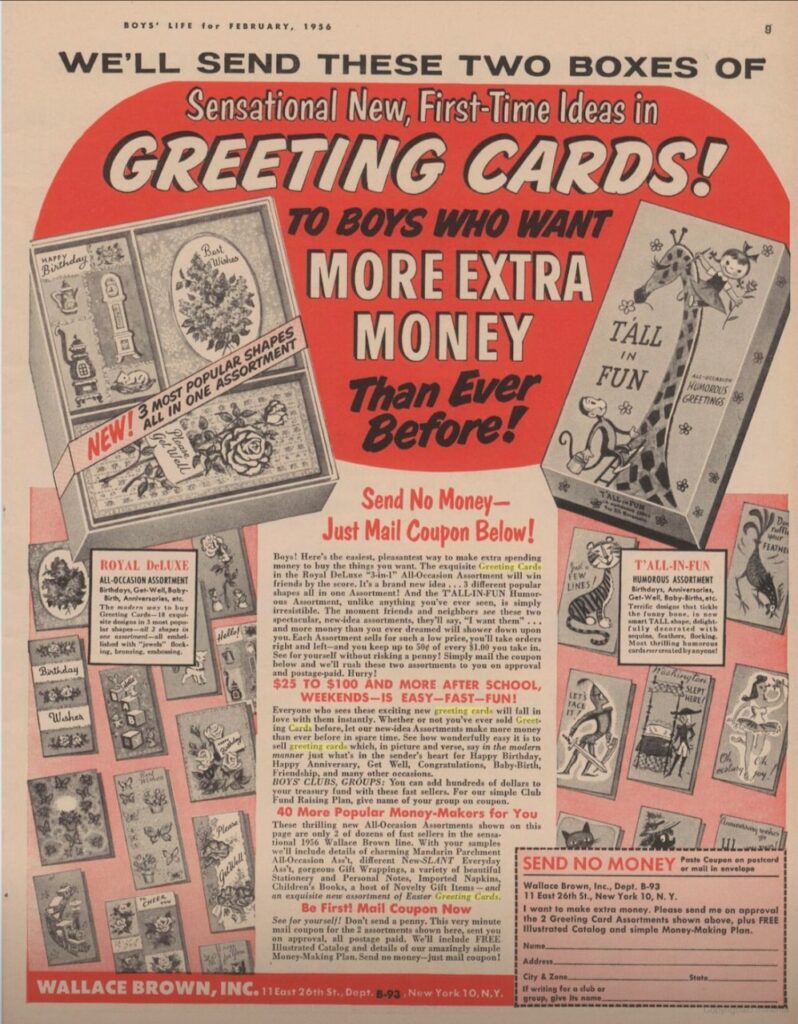
From the February 1956 issue of Boys’ Life magazine:

I saw this from Andy Meehan posting at the Greeting Card, Stationery & Gift Industry Gurus forum on LinkedIn.
Maybe it’s just me but it feels like shoplifting is on the rise based on the number of posts on social media by retailers with photos of people in their shop who appear to have forgotten to pay for what they left with.
The Guardian has published a report on shoplifting in the UK. It’s worth a read as it’s written from a street-level journalism perspective, and while it is stories from Manchester, it could be from parts of Australia.
This small corner of Manchester is no anomaly. The British Retail Consortium (BRC) estimates that there were 8m “theft incidents” in British shops last year, costing £953m. The BRC says shop theft is a “long-term rising trend”, with incidents more than doubling since 2016-17. Meanwhile, reports abound of increasing desperation among customers stealing to feed their children – claims promoted by opposition politicians, but strongly contested by many retailers.
I think any retailer would find it interesting.
I have seen limited data and they indicate a rise in shoplifting in local indie retail in Australia. I have see more evidence of employee theft tho.
In a newsagency, the best early indicator of possible shoplifting is the magazine returns discrepancy report. Returns are processed weekly anyway so it’s a tiny step to check the discrepancy. If you notice these, consider spot stock-take elsewhere in the shop to test whether theft is a problem for you.
It costs more in Australia to be yelled at by the local paper.

Benchmarks provide business performance data points against which similar businesses can compare their performance.
Here are the recommended benchmarks for newsagencies:
Now, these are goals. I share them here for consideration. You should set your own, based on your own situation. The key is to have goals and understand why they are what they are. That’s the reason I have published this information developed by my POS software company Tower Systems and my newsagency marketing group newsXpress – to offer something of a starting point for individual newsagents to consider.
I made this video Tuesday for one of my shops, to promote it on social media as well as YouTube. below I explain how I made the video and, more important, why I made the video.
I took the photos on my iPhone and used promo.com to assemble these, add text and lay music underneath. All up it took less than 10 minutes. I share these details to illustrate how easy it is for anyone to make a video like this.
This video is important as it is us pitching a narrative for this shop. For decades, the narrative of the local Aussie newsagency has been controlled by others. Today, in 2023, the narrative about our shops is rooted in decades ago. It is out of date. It challenges our relevance. It does not help us.
I wanted to have a crack at recasting the narrative for this one shop in a suburban Westfield centre in the bayside area of Melbourne. While for sure I am biased, I think it’s a good video that does re-cast the narrative for this newsagency, while at the same time making a statement about the channel, calling for others to see us differently and not as others so wrongly and ignorantly pitch us.
I’d love to see more newsagents do this, make videos and other social media content that pitches our businesses with a fresh and relevant to 2023 narrative. Points about lottery jackpots and the major seasons are predictable, expected. The more we play outside of what is expected the better for us, the more we are likely to attract new shoppers to our businesses.
As I noted above, this video took less than 10 minutes all up. There are plenty of platforms you can use to make videos just like this one. While I pay a commercial licence for promo.com, there are others out there that are free.
As for the products I chose to highlight, plenty are made in Australia. In fact, half the air time of the video features Australian made, small business sourced, products.
I want to call out the final frame. This features a pair of colourful stud earrings on a card that says you inspire me. That is a very deliberate choice to pitch that message at the close of the video.
Hopefully all this background is helpful enough that other newsagents create content to recast the narrative of not only their newsagency businesses but the channel more broadly.
But back to the video. In 24 hours it passed 20,000 full views thanks to a nudge through the YouTube ad platform. That’s 20,000 people in the area of Melbourne I targeted who watched the video in maybe the first newsagency pitch they had seen in years.
I appreciate it’s not call to action advertising. It’s not intended to be. As I wrote above, this is about the narrative relating to the Aussie newsagency. We all need to invest in this. It’s far more important than think tank meetings and the like by people who do not have their own capital tied up in this channel.
UPDATE: 26/05 @ 3:11pm. I’m pleased this video has not been played 32,000 times.
UPDATE: 06/06/2023 @ 7:18am. This video has now been viewed more than 102,000 times.
A short history of newsagents and how you bought your American comics from them. https://t.co/pubEBrroWA
— Glenn Miller (@FakeGlennMiller) May 23, 2023
The Vegemite brand is having a moment in the sun thanks to the anniversary this year. Licenced product is selling very well, including the mint coins.

The 100 Years of Happy Little Vegemites – Six-Coin Uncirculated Year Set 2023 and the 100 Years of Happy Little Vegemites – Six-Coin Proof Year Set 2023 are both selling well. Just today alone we have sold more than $600 worth in one shop. People travel for them, and they purchase other items at the same time.
I did not expect this iconic brand anniversary to go this well.
With the federal government set to announce today plans to regulate buy now pay later (BNPL) products under the Credit Act, it could be timely for local independent retailers to pitch LayBy.
The use of LayBy dropped away as BNPL like Afterpay, Zip and others offered shoppers easy access to finance for immediate purchases. While BNPL is used for many products outside the scope of LayBy, I expect the use of LayBy to increase once the BNPL regulations are in place.
While the ACCC defines the LayBy arrangement, LayBy is regulated at the state / territory level. In Victoria, for example, the regulations cover the contract, cancellation, price chan get and more. The level of regulation varies between the states / territories.
There is sure to be plenty of noise about the regulatory changes. I can hear some apologists for the BNPL businesses calling the moves those of a nanny state, lobbyists for the BNPL companies themselves saying that misbehaviour by a few has led to this and oh, self regulation would be better.
As a retailer, I like the BNPL products in that they helped drive terrific sales growth and they provided a level of shopper stickiness with regular BNPL users choosing shops based on their acceptance of the payment method. In one of my online businesses doing close to $500,000 a year, BNPL is the payment method for more than a third of all sales. At Christmas time that can jump to 50%.
In physical stores, the use of BNPL varies by retail channel, but it is a popular payment method, but often expensive to the retailer. Whereas credit card payments today typically cost retailers less than 1%, BNPL payment can cost as much as 6%. The benefit to the retailer is that there is no risk should the shopper default.
The anticipated BNPL regulatory changes give local retailers the opportunity to re-pitch LayBy. But first, we need to ensure our processes are fit for purpose, smooth, understandable, appealing to shoppers and economically viable for us. This is where retail management software comes into play. POS software can offer easy structuring of terms and conditions, managing the appropriate deposit, set different expiry terms for a LayBy based on the products in the LayBy, track payments, following up missed payments and tracking where LayBy products are stored. Plus, you can edit a layBy once commenced – by adding and removing stock, and you can manage partial collection of items in the LayBy.
Introducing a LayBy service fee could be a good way to qualify the LayBy shopper and cover some of the costs involved. There are retailers in Australia charing from $3.00 (Target) to $15.00 (Big W) in LayBy fees. Depending on how you structure it, this could be in addition to a cancellation fee.
My advice to retailers is to focus more on the expectation that all LayBys will be fully paid and collected on time, to consider LayBy as a positive service by the business and opportunity for the customer. Promote it. Welcome its use. Make managing it easy for you and the shopper.
Local retailers can make decisions around offering LayBy that could differentiate their businesses from bigger retailers.
News outlets will carry stories of the BNPL regulatory changes as they make their way to reality. This is why now would be a good time to pitch LayBy in-store and on social media.
While I get that many newsagents are reducing space commitment to magazines on the back of declining sales, at my Malvern store sales are growing. I think this is in part due to our out of store promotions like the video below that we released yesterday.
In one of my other newsagencies we have no magazines while in may third we have 250 pockets, which is under review.
This video shows part of the Malvern range.
This video is part of a weekly promotion outside the shop of magazines, designed to attract new shoppers – and it’s working for us.
It took me all of ten minutes to shoot the video on my phone, strip out shop sounds using iMovie, load it to promo.com, enter the text and lay a music track over iot. Now I have a video that I will use in several places several times over the next couple of weeks.
No other retailer anywhere near our malvern shop is promoting magazine range.
Our crossword sales in the newsagency are up by 29% to $3,343.00, or 308 in unit sales.
There are 2 things we have done that, I think, have helped drive this:
Yes, I am disappointed that we continue to only make 25% GP and that cover price movement has been minimal, not keeping up with inflation. That said, the growth from a small effort is terrific.
I can’t be sure as to why we are seeing this growth in crossword sales. If it is wider than our newsagency then I suspect it is related to the economy or how people feel about the economy at least. If it’s just us then what we have done has to be key here. I do think our small but targeted actions have played a key role.
Overall magazine sales are up 6% year on year, making the 29% growth for crossword titles worth consideration.