Newsagents with Tyro can offer Afterpay in their shops
Through my POS software company I have been working with Tyro to make access to Afterpay (buy now pay later) easier.
If you are a Tryo customer, regardless of the software you use, click here to register your interest. Tyro will contact Afterpay for you.
Afterpay has its own sign-up that you will need to complete, but Tyro will kick that off for you.
Click here to learn how you will process Afterpay payments through Tyro. It includes screen shots to guide you. This is the first step approach. It is available now. The goal is for a tighter integration with the POS software but that depends on Afterpay.
Afterpay could replace LayBy in some instances.
Newsagency marketing advice: use videos on social media
Using a video on social media to pitch a product range can be far more effective that still photos. Experts disagree on time and other factors for videos. I have found that for most products I pitch, a video of between 15 and 30 seconds works best. It needs to be not over-produced. It needs to feel it is from you.
Here is an example of a video I used in a Facebook promotion recently, the engagement was terrific, including plenty of shares of the video. Purchases flowed as a result. It is simple, not produced. Those types of videos tend to work better in my experience.
Newsagency management advice: schedule stock deliveries
When you order stock, consider being specific about when you want stock delivered. Group deliveries together, so that you may roster the business to make for the most efficient arrival of stock.
If you leave it to suppliers you might have stock arrive each day of the week when a more efficient solution could be to have two days set aside for processing this.
Depending on your competitive situation, you may want to leave deliveries coming as they are and only process the new stock on set days.
I appreciate the value of new product hitting the shop floor every day. However, managing the business for efficient use of labour is key given that labour is usually the second or third biggest operating cost for any retail business.
One option is that you arrive the stock, price it and have it ready for shop floor display on the day you nominate.
Lottoland pitches in media for newsagent support
At the same time Lottoland wrote to ALNA offering what appears to be a commission to newsagents they engaged a PR campaign, giving the ALNA letter to journalists. It’s been reported in newspapers and online. Lottoland CEO Luke Brill says Newsagents are an important part of Australian communities… So important that newsagents were mocked by Lottoland.
If Lottoland were serious about mending bridges with newsagents they would make their pitch, apologise for the harm they wreaked on newsagents and their families, negotiate their offer and then talked publicly about it. Instead, Lottoland made a somewhat vague pitch and gave it to at least one journalist as the same time.
Lottoland needs to apologise, publicly. They should promote newsagents on TV in a national make-good campaign. They need to do this first, as a gesture of good faith, to remonstrate their their pitch today is genuine. Apologising and declaring they were wrong is the starting point.
Footnote: I remain firm in my view that online overall is the biggest challenge to newsagent lottery revenue. Here in Australia, the lion’s share of online is driven by Tatts. They are the newsagents competitor.
Is the fax machine redundant in today’s newsagency?
We have not had a fax machine in one of my newsagencies for two years.
There has been no negative impact on customer service or revenue.
Customers who ask to send a fax are offered a lower cost, and easier, email service alternative.
The fax machine is very much yesterday’s technology. It has a limited life before a new machine is needed. Plus, it relies on consumables and often uses an additional phone line.
I can’t see the value in putting a fax machine into any newsagency.
I understand in some locations there could be thought of offering a fax service as a point of difference. To that I’d suggest that you need to understand the break-even point for the capital invested. That analysis may result in the value of offering a fax service being reinforced.
Offering a fax service could pitch your business as old-school to some and that may not match the image you want for the business.
With copiers offering PDF services, it is easy to fill in forms and return them to suppliers. Ideally, however, such forms move online, eliminating paperwork and handwriting.
All of this is about eliminating processes and making our businesses more efficient.
The purpose of this blog post is to get you to think about whether offering a fax service is right for your business and to open a conversation on the topic.
How poor quality NBN is negatively impacting small business retailers including newsagents
The National Broadband Network (NBN) being rolled out in Australia today is not the NBN Australians were promised during the election campaign when it was first pitched.
Instead of (fast) fibre to the premises as was initially rolled out under the Labor government, for some years now under the Liberal/National Party the NBN rolled out has been Fibre to the Node, which relies on the old copper network to get data from the Node to the Premises.
I have the old NBN at my home, the original NBN, NBA fast. It is fast.
I have used the new NBN, let’s call it NBN slow in multiple locations. It is noticeably slower.
While plenty of pro NBN slow people say, there is no issue as most people use the NBN to watch entertainment or use social media.
A fast NBN is key for business productivity. With the amount of data flowing between businesses, websites, suppliers, speed is an issue in commerce today. Slow speed = a less productive experience. This is how NBN slow is an inferior product to the original NBN, it is how what is being rolled out today is hindering businesses.
Beyond retail and in businesses like my POS software company NBN speed is key to overall business productivity. Every day we see examples of the cost of NBN slow and the negative impact it is having on small business.
There is no denying this. A read of the tech specs of the two NBNs leave no possible conclusion than that NBN slow is slower. I say this is bad for the economy.
Globalisation has been a push by politicians for decades. Globalisation only works if all in the party have the same tools and are on equal platforms. Australia at the globalisation party is not on the same platform. It is on a slower, second-rate, platform.
This only came about so one side of politics could defeat the other, by using an argument many in the street would not understand. Unfortunately, it is the many in the street who will suffer consequences for years to come from NBN slow.
The technical platform for NBN should not have been a political decision. It child have been a technical decision, on merits, focussed solely on what is best for Australia.
The impact on small businesses, like newsagencies, will be felt for years to come. Our businesses will continue to evolve, relying more and more on being online 24/7. Plenty will be held back from what they could achieve by NBN slow.
Shelve politics when thinking about this. This issue is about productivity. The cost gap between the two NBNs is minimal, and would have been easily covered by an improvement in productivity.
Looking at the other way, we as a country are paying a high price for a slow service by world standards.
Tech experts elsewhere do not understand d why Australian politicians decided to switch from a best-practice NBN to a worse than mediocre NBN. I agree with them.
Communication from ALNA from an approach by Lottoland
Luke Brill, CEO of Lottoland, visited the ALNA head office to talk newsagents, almost a year after his company started attacking and mocking our channel, calling on shoppers to stop shopping in newsagents.
here is a report from ALNA about the visit:
Lottoland’s Desperate Plea
Lottoland CEO Luke Brill visited the ALNA head office to ask us to join them and refrain from the fierce lobbying campaign that we have been undertaking in the last 18 months.On the top of his agenda was the plan to engage newsagents to sell his product. ALNA CEO Adam Joy made it very clear that Lottoland had damaged the relationship with news and lottery agents by:
- Producing advertisements that intended to harm newsagents and humiliate them publicly by labelling them unable to move with the times.
- Leveraging of the news and lottery agents hard work in the misleading way he communicated to members of the public
- Holding interviews outside newsagencies
- Using imagery and wording so close to the official lotteries that led to confusion for customers
- Ignoring the original and official channel for news and lotteries initially by taking a belligerent approach to proceed without any consideration for the community benefits from news and lottery agents
- Deliberate marketing to undermine current jackpots.
- Promoting large discounts and special offers to gamble with Lottoland instead of playing the official draw
- Misleading social media advising customers they could play all their games in one APP.
- Dishonesty in interviews where Lottoland claimed to not be targeting newsagent customers and claiming they are seeking new customers, Adam challenged this and asked why they use imagery, wording and colours of an Official Lottery? The answer provided by Brill did not answer the question.
Mr Brill said he would happily run a new TV advert where the person went back into the newsagent and was elated they could now access Lottoland. Adam advised that this was patronising and further enhanced the feeling that we were behind the times and late to the party.
Adam challenged Mr Brill on his comments from last meeting, where he claimed they will fly as close to IP replication without infringing, Mr Brill confirmed this was still their intention.
ALNA feel a public Apology in TV, Radio and print apologising to the network and transparently declaring that they have used existing IP and Newsagents to leverage their business and in our opinion that this was misleading.
It is apparent the recent announcements we have achieved by working in unison with the WA VIC, NSW and Tasmanian Governments have them rattled. He tried to talk about Tatts Lotteries with Adam about what Tatts are doing to retailers, Adam advised him that we have a separate discussion with Tatts and that this is irrelevant to the Lottoland plan to leverage newsagent customers.
ALNA continue to work with the other states and federally for a total announcement. We heard in Tasmania on the weekend even if the opposition win the next election they will also ban the wagering on the outcome of lotteries.
Further evidence of Lottoland’s plan for official lottery customers, Lottoland again extended an offer to pay newsagents a monthly marketing fee and a trailing commission on all transactions. Adam challenged why he would do this if he did not want newsagent customers and were focused on new customers? The response was so ALNA would leave Lottoland alone.
Mr Brill then went further and said, “what if we stopped focusing and transacting on domestic lotteries and only focused on overseas jackpots?” Adam advised this was an unanswerable question as there are many variables to this
- This does not stop other lotto wagering companies in the domestic market. E.g. nedd lotto, magpie millions and others.
- Lottoland could trade under another name and do this e.g. the white labelled William Hill product Planet Lottery.
- There is no guarantee of the length of time Lottoland would commit to this
- How could we trust Lottoland going forward?
Adam asked if they could change their name to Bet on Lotto and be transparent to what it is? The answer was that they have built a good brand around Lottoland. Adam interrupted and said on the back of news and lottery agents and the official imagery and words?
Mr Brill ended the conversation advising he will put an offer in writing to Adam, Adam advised he would share it with the Board and members but did not hold high hopes for its adoption.
How the retreat of banks from regional and rural Australia hurts small businesses retailers and the communities they serve
More Australian banks are pulling out of country towns, leaving local businesses and individuals without any over the counter bank services. They are closing branches and agencies.
In one situation recently, a regional town with a population of 2,000 saw its last bank brand close, leaving locals a forty-five-minute drive to the nearest bank. This means local businesses have a round trip of ninety minutes just to bank business takings, increasing business costs by hundreds of dollars a week as banking, which used to be done locally daily, now must be done three times a week resulting in four and a half hours in the can and at least another hour and a half parking, waiting and more.
This impacts on how a business operates.
While some businesses can operate by promoting cashless trading, in regional and rural towns with an older demographic, cash is preferred in everyday retail businesses like newsagencies.
In not banking every day, small business retailers carry more cash on their premises. This increases the risk of theft. Insurance company representatives have said this could result in higher premiums. The costs resulting from banks reducing their level of customer service cascade, hurting further these vulnerable local businesses that matter to their small local communities.
In having to bank far away, this increases the risk on the long journey to and from the bank.
With so many small business retailers in regional and rural Australia, matters such as the closure of local bank branches and agencies matters. Newsagents are being affected as are their customers and their suppliers.
It is possible that a local bank closure is enough to tip a local business owner to closing a local retail business. The knock-on effect on local jobs, local suppliers and out of town suppliers like us would be noticed.
I think there is a role for government here to offer an operating cost subsidy to banks that maintain regional and rural banks in towns with a lower than agreed population threshold. While I am not usually a fan of subsidies, in this situation there is merit, especially for small towns.
I think such a policy of support would not only help small businesses like newsagents, it would improve the appeal of the town for new residents as well as improving security for those who use the bank.
Locally owned small business retail is vital in any situation, but more so in regional and rural towns. The retreat by banks is an operational challenge that disadvantages regional and rural Australia and this is bad for the economy.
Through my POS software company Tower Systems I am actively supporting calls by small business retailers for government action to provide support for local banking services.
Plastic bag issue finally getting resolved
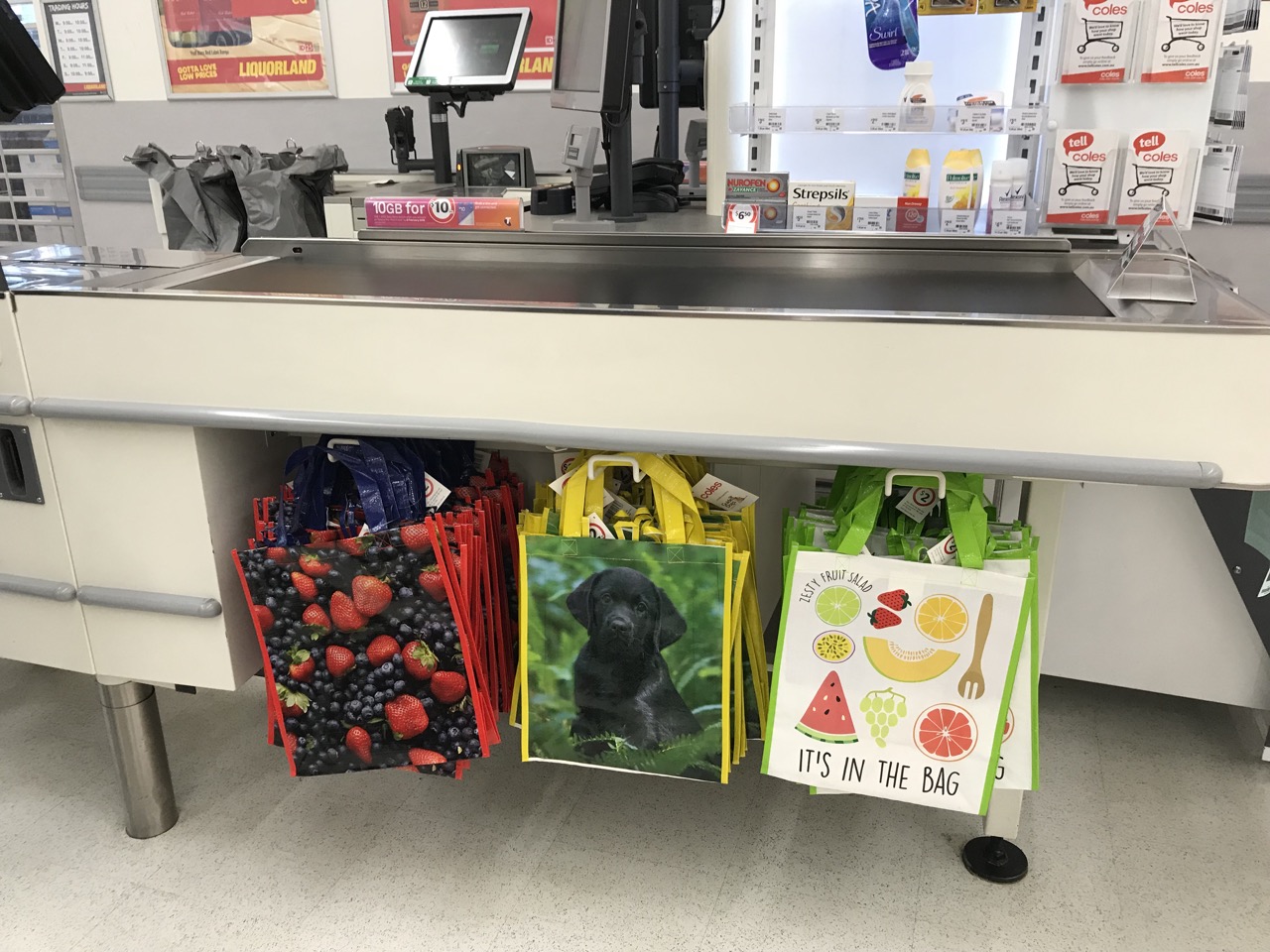
The announcement by the premier of Victoria last night that they will ban single-use plastic bags brings Australia closer to a national resolution of this issue. The opportunity is for retailers to get on the front foot and pitch a bag solution that eliminates not only plastic bags but the degradable bags often put in their place.
This is an opportunity for us to change the conversation about bags.
Sure, there is a challenge with the newspaper customers who often demand a bag so they keep their hands clean. It is time for them to be accountable in my view. These bags are a waste of money. They do not drive shopper loyalty.
On gifts and other items, the opportunity is for a higher quality reusable bag that pitches differentiating points about the business.
Is Lottoland for real in its latest claims?
In commenting about the announcement from the Queensland government that they plan to ban Lottoland, Luke Brill, Lottoland CEO said:
The majority of Lottoland’s customers have never bought a lottery ticket in a newsagency, and are largely online sports betters who are embracing new technologies.
The Lottoland TV campaign that has run for most of this year does not support this opinion. They directly targeted newsagents, in an apparent effort to redirect newsagency shoppers to Lottoland. I call their claim – The majority of Lottoland’s customers have never bought a lottery ticket in a newsagency – as bullshit.
The Lottoland TVC also sought to educate customers about technology. If Lottoland customers are embracing new technologies then why promote it as they did?
Brill goes on to say:
We are open to talks with the Australian Lottery and Newsagents Association about a model that lets newsagents cash-in on online punters. We want to grow the market together, not try to destroy it like Tatts is doing in a bid to maintain its monopoly.
If true, they have left it to late in the day to try and work with newsagents. They have spent most of 2017 mocking newsagents. If they really want to grow the market together they need to apologise for the damage they did to the reputation of newsagents.
I don’t think Tatts is trying to destroy the market as Brill claims. I think the opposite is true. I think Tatts is trying to grow spending on its products. However, I think Tatts’ prime focus by far is on its revenue with minimal regard to revenue for newsagents.
That is an issue separate to the Lottoland issues. It is unhelpful that Lottoland links them.
Lottoland’s behaviour is like the kid who got caught misbehaving and responds by pointing to another kid and saying what about them. Grow up Lottoland. Own your situation and own that you have spent 2017 denigrating newsagency businesses, those who own them and those who working them.
Brill is becoming shrill because successive state governments are acting, like South Australia did earlier this year, to make the sale of Lottoland and similar products illegal.
Campaign promoting no minimum on card use
This Mastercard campaign promoting no minimum for card use to pay for a purchase will further educate shoppers to seek out retailers with no minimum.
I like the benefits for retailers that they list at their website:
- In addition to missing out on up to 40 percent of their business if they impose restrictions on low value transactions, retailers will find that cashless payments are quicker, cleaner and safer: Quicker: With options such as MasterCard contactless technology, payments are virtually instantaneous meaning faster queues and the ability to serve more customers
- More hygienic: Not exchanging money means bills and coins with germs don’t change hands, that is especially important in the food service industry
- Safer: Card transactions reduce the volume of cash handling and the amount of cash exchanging hands, being transported or in the till therefore decreasing the risk of theft
I agree with all of these.
Check out this video illustrating customer engagement with a no minimum:
We have had no minimum in my stores for ages. It makes sense.
I understand the challenge for low-margin product, like agency product. However, for the benefits noted above I suspect I would also offer no minimum and for any agency line where it was not viable I’d stop supporting the agency line.
What I am after at the counter is less friction. To me, a minimum or a surcharge is friction. It is you giving your customers a reason to shop elsewhere. That does not make sense.
If you have a card minimum or have a card use surcharge and you are concerned about declining revenue, consider changing immediately to remove the friction of the current practice.
Successful diary promotion on Facebook
This simple and colourful post on Facebook worked exceptionally well for us. In addition to terrific online engagement, we saw action in-store as a result. What I love the most is that the product gave us a way to pitch diaries in a way that was more engaging, more successful.
The post is from over a week ago. The engagement data shows it to be one of the most successful promotions in months.
Simple is best when it comes to social media.
Promoting the Better Homes and Gardens offer
We have the Better Homes and Gardens Christmas impulse unit located on the lease line, next to key traffic drivers to maximise the opportunity.
The bonus festive cakelet pan is a terrific opportunity for us to differentiate to what is in the two Coles supermarkets in the shopping centre.
We have been running Christmas BHG promotions for years. They always drive excellent incremental business.
Who decided the last 42 issues of Art therapy would not be available in retail?
I am told that any customer wanting the remaining 42 issues of the Art therapy partwork must subscribe. If true, this leaves committed newsagent putaway customers in the lurch and disrespects the work of newsagents who have supported the title.
Like so much of what happens in this channel, communication on this issue is poor. It is frustrating.
The questions that need answering are:
- Is the information correct, has supply to retailers stopped at issue 100?
- Is the title now available only through subscription?
- Who decided this? The distributor? The publisher? In Australia? In the UK?
- What is the reasoning for the decision?
- Why should newsagent support partworks in the future?
Magazine publishers have expressed concern about newsagents reducing magazine space in their businesses. It is decisions like this that play into these floorspace allocation decisions.
Management tip: how to restrict who has access to you
Every day in a newsagency, or any retail business, the owner or manager is interrupted by people who should not have easy access. Some do it because they know the can term their way to some business with most the interrupt.
Here are some ways to reduce these interruptions, if you do want to reduce them:
- Stop answering the phone. Have someone else do it and take the calls you want. If you have no one to answer, consider using a machine to vet calls.
- Have a no appointment no meeting policy with all reps.
- Black list emails from suppliers you don’t want emails from. You can do this through your email server.
- Put all unsolicited marketing mail into a separate pile for you to review at a time that suits.
Reducing the noise from and attention grabbing by unsolicited reps and businesses can de-clutter your time and this could help you focus on what really matters to you in your business.
Interesting interview with Lottoland CEO
David Spears interviewed the CEO of LottoLand on Sky News. Click here for a report of the interview and a story about a looming ban for Lottoland in Tasmania.
Be sure to watch the video in the story. At 7:57, Luke Brill, Lottoland CEO says when talking about Tatts: they’re using the little newsagents as pawns in the game. Lottoland launched targeting newsagents, using newsagents as pawns in the game.
At 8:06, Brill says 15% of Tatts revenue comes from the online space.
Brill is right about this. I also think he is right when he says Tatts has no interest in protecting newsagents.
Sure, Lottoland is a menace and a competitor of newsagents. However, tatts is a much bigger competitor and it is growing faster than Lottoland.
A personal shop local pitch cuts through more
Small business retailers love to call out for people to shop local and save jobs. Often, such pitches consist of sharing art created by others. I think a more personal pitch is more likely to get better engagement.
Make a more personal pitch by using your name and telling more of a story.
Here is a pitch I saw in front of a coffee shop recently. That I noticed it shows some level of cut through.
Here is a close-up of their second sign. I am sharing this as it is an interesting type of engagement – shoppers donating to get a tattoo for the business owner.
This shop is in Copenhagen so there may be local interests and culture at play here. Jack wasn’t there so I couldn’t find out.
I guess my point is that we all have to find our own way on how we engage to pitch shop local. Sometimes it is easy. Other times it takes a few missteps before we find our way.
Discounting Halloween too soon
There is a party shop in Melbourne that is already discounting Halloween products by 50%. This, on top of deals in Coles, the Reject Shop and retailers elsewhere make everyday, low-value, Halloween unprofitable for plenty of retailers.
Our focus is on party, costumes and more specialty themes. These are places where early season discounts are less likely.
No business wins from early season discounting.
$650 in sales between midnight and 4am
It is a good feeling starting the day with $685.00 in revenue in the bank, from online sales overnight. Not a single sale was to someone within easy distance of the shop. These are customers we will never see.
To those who will ask questions about this…
- The product involved is not what this post is about.
- Yes, any newsagent can do this/ However, being in an online-engaged group gets you shown easier and sooner.
- The processing cost of the sale was 3%.
- The GP was 55%.
- Each customer paid full postage costs.
- One customer used click and collect.
- Two customers bought to be shipped to gift recipients.
This is not a one-off. We get sales every day in this specific store. I mention it today because I was talking with someone yesterday who said they could not imagine selling overnight. In fact, 48% of our online recent revenue has been when the shop is closed.
Clever Lottoland TVC
This TVC from Lottoland was in high rotation on free to air TV last night. It is a clever ad, looking like regular, timely, programming. Looking like legitimate lottery products on sale. While I get that state governments are crawling to resolve the Lottoland operation challenge, Lottoland appears to be spending like there is no tomorrow.