When a newsagency closure could have been avoided
This photo is of an inner suburban shop occupied by a newsagency until a couple of weeks ago. As a newsagency it covered the basics: lottery products, magazines, newspapers, cards and stationery. The business stood for nothing special. It did nothing to stop people shopping at card, gift, Officeworks and lotto shops within walking distance.
The business closed because the owner did not create and run a business which demanded attention from those nearby.
As a result of the closure, people living in this inner city residential area will have to walk fifteen to twenty minutes more to buy a paper or a magazine – or they can walk five minutes to a petrol outlet and get most of what they need.
What could the owner of this business have done to stay open?
They could have been a retailer, offering a point of difference relevant to the local shoppers. In this particular community there are many pet owners but not a pet shop in easy walking distance. The newsagency could have become part pet shop and this alone would have significantly broadened the appeal of the business.
But they did nothing.
Within the traditional newsagency framework they could have offered a broader range of gifts serving the interest of local.
But they did nothing.
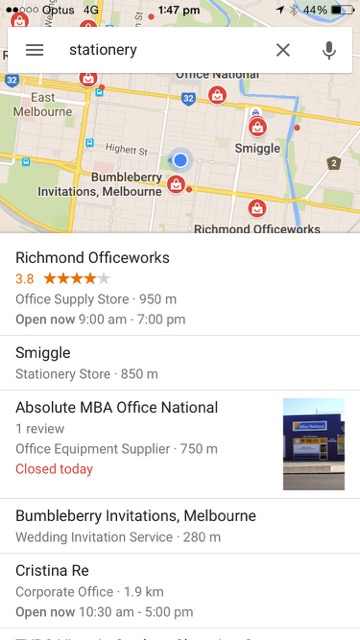
They could have offered a stationery delivery service to the many businesses nearby.
But they did nothing.
Any newsagent operating a business which is completely traditional in approach has no future.
Now more than ever you need to be energetically engaged in chasing your own newsagency of the future – otherwise you end up like this business.
Newsagents need to own their situation, as every business owner must. This means managing the business for success rather than guiding its failure through inaction.
While the newsagent who owned this business did close it in an orderly fashion, closure need not have been the outcome – if they applied the same methodical approach the took survival as they did to the closure.
If you think this post is talking down the newsagency channel it is not. This post is a call for newsagents to fight for their future, to make their own success and to note that this starts with you owning your own situation.
Listening to suppliers can help newsagents find success
I was at the Gibson / Unity showroom Melbourne last week and noticed this kangaroo nativity set in one of their Christmas rooms. I equally didn’t think it would sell as I thought it would offend customers (not me). This set has been a top seller as has the koala nativity set!
Thinking about it later, this kangaroo nativity set helps you pitch Christmas themed products to a different shopper to the one looking for traditional Christmas gear. There is a large opportunity out there for non traditional Christmas lines.
We have suppliers to our channel who can guide us based on their own repeat sales data – they can help us not buy based on our barriers.
Sunday newsagency management tip: buy to tell a story
When purchasing a new range of stock for your business, make sure you purchase enough of the range to enable you to tell a story.
Too often I see newsagents purchase less items from a range to save money. This can end up costing more as the small range is no story and the stock does not sell – until you cut the price and quit the stock sometimes for a loss.
Spending more and carrying a more complete range enables you to tell a story, make a bold statement and, often, through this, attract new traffic.
While I understand the need to be careful with spending, being careful does not necessarily mean you should spend less. There are plenty of situations where spending more enables you to achieve more.
A newsagent I know last year got into a new product category for their business. The supplier advice was an opening order of $800. They decided to spend $350. The new range did not sell. A couple of months ago on my advice they topped up the under performing stock with an extra $500 from the same range. They creat6ed a fresh display with more items from the range. In the last two months they have sold more than they did in the six months prior.
When introducing a new range to any retail business you need to do it in a way that gets noticed and through which you can make a statement whoch demonstrates your commitment to the range.
Sunday newsagency marketing tip: pre-sell and beat your competitors
If you carry products that are added to with new launches consider offering pre-sell opportunities where by your customers can lock in orders well in advance of the release of new product. Take a deposit, track their pre-order and let them know the progress of delivery.
This locks your customers in before your competitors get the product on their shop floor.
I class this as a marketing tip as the pre-release pitch is part of marketing – it gives you a reason to reach outside your business and connect with shoppers based on their interests.
We promote pre-release orders with flyers, via social media and by connecting with customers we know the new range will appeal to. Each time we find new shoppers, many of who comment on the value of the service.
Newsagency of the future workshops next week
I will explore changes which will affect us in the next few years, new traffic opportunities and changes newsagents can make today. I will also discuss the magazine supply model and the proposed magazine supply rule changes. Each session is free and open to any newsagent.
- Adelaide. May 18 @ 11am. Rydges South Park, 1 South Terrace Adelaide
- Melbourne. May 19 @ 11am.Best Western Premier Hotel 115, 115 Cotham Road, Kew
- Sydney. May 20 @ 11am. The Boonie Doon Golf Club, Banks Avenue, Pagewood
- Brisbane. May 21 @ 11am.Quality Inn Airport Heritage, 620 Kingsford Smith Drive, Brisbane
You can also book by emailing bookings@towersystems.com.au. There will be more locations including Tas., WA, Cairns and Newcastle.
Australia Post taking a supermarket approach to self service
A government owned Australia Post outlet I see regularly has someone now next to their self-serve units to help take more customers through these than at the counter. Is this is a concerted education campaign to get more shoppers using the self-serve units?
In recent visits I have noticed the line for the human counter is shorter than the line for the self-serve counter.
Supermarkets do this and the result for them has fewer human counters and more self-serve locations.
3D printer partwork interest strong in the newsagency
Our pre-release promotion of the Build Your Own 3D Printer partwork is driving interest. We are promoting this with partworks as well as near a range of items appealing to male shoppers we suspect are the target market for this partwork launch.
We are also using social media to reach outside the business to promote tis title ahead of the launch. I see it as a terrific opportunity.
Even though the title will not be out for three weeks we are making the most of the opportunity today as it is a point of difference for us.
Promoting Aussie magazines and newsagencies
We are promoting four Australian magazines and newsagencies as the places to purchase these and other magazines on my newsagency Facebook page. I have also paid to boost the post – to reach more people.
This promotion is part of a shop local campaign in the newsagency. Shop local means different things to different people. To me, these magazines fit as they are local publications from local companies.
The four magazines I have selected are good and diverse titles with terrific content.
While I get that social media is ideal for promoting our businesses, we can also use it to promote our channel.
Studio Ink cards appealing to a new card shopper
The Studio Ink range of cards from Hallmark is selling very well. Even better – I see it selling to a new card shopper, someone who would often not shop the traditional newsagency card department. Seeing this, we are planning on using Studio Ink as a call out away from the card department to attract new traffic. We will probably do this as a co-location with a range on the wood as well as elsewhere.
Daily newspaper circulation declines
The latest newspaper circulation results reveal all dailies experiencing declines for print. The Fairfax numbers leave me wondering how long they can continue printing a product seven days a week.
Newspapers present a bigger challenge right now for newsagents than magazines. These latest declines are not unexpected given the trends we have seen over recent years.
Weekly magazine circulation declines
Check out the magazine circulation numbers comparing the March quarter with last year. All nine titles with year on year data experienced declines. the declines fall within the data I presented in the recent newsagency sales benchmark report covering the same period. Even considering the declines, most of these titles remain important to us and deserving of our in-store support.
Magazine supply workflow from MediaScope
I like this infographic from MediaScope showing the position of newsagents in the magazine landscape and our uncompetitiveness due to out of date supply rules. It makes a complex issue understandable. It makes the case for fairness for us so we can compete.
MediaScope infographic of the magazine landscape in Australia
MediaScope has produced this terrific infographic on the magazine landscape in Australia. I’ve loaded it here to show how extensive this is and illustrate how the majority of publishers have not been consulted as part of the MPA new magazine supply rules pilot program.
Ignorant commentators come out against the small business instant asset write off in the 2015 federal budget
I write this as the owner of an Australian software company serving several specialist retail channels, as a newsagent and as the owner os a couple of other businesses serving small businesses in Australia.
I am disappointed at some of the commentary about the instant asset write off announced in the federal budget this week. I have heard media commentators call it a tax break, a gift, a hand out, a return to the age of entitlement and a more. I have also heard commentators question whether small business owners will do the right thing and spend the money honestly.
These comments are ignorant, they do not reflect the thinking of small business owners. Small business owners are a passionate breed, usually putting the needs of our businesses ahead of much else in our lives. We don’t engage in tax schemes to avoid paying Australian taxes, we don’t domicile in tax havens to avoid tax, we don’t use visa programs to import workers ahead of Australians.
Most small business owners are too busy in their businesses to even dream of the schemes we read others use.
Small business owners work long hours, usually for below award rate wages – because they love the independence of working for themselves and, yes, the feeling of making a genuine contribution. I happily work a minimum of 80 hour s a week and have done for decades.
Let’s look at what the instant asset write off actually is. Check out this from the federal government’s budget website:
ACCELERATED DEPRECIATION
All small businesses will get an immediate tax deduction for any individual assets they buy costing less than $20,000. (Currently, the threshold sits at $1,000).This $20,000 limit applies to each individual item. Small businesses can apply this $20,000 rule to as many individual items as they wish. These arrangements start from Budget night and continue until the end of June 2017.
There is no extra money, no grant or gift. All that is being done is speeding up the writing off of the expense. The budget measure improves cash flow.
A small business owner wanting to buy a new TV, to take one comment I heard several times, will still have to fund the TV – meaning they will want a business purpose for the TV.
I own a few businesses and while none is eligible for the instant asset write off, they serve small businesses which will be eligible for the instant asset write off.
Based on comments from small business owners to me since the budget, I am confident the instant asset write off is a valuable step needed to get many small business owners thinking about their businesses, considering what investments they could make knowing they get a deduction in the year of purchase and not spread over time.
Yes, I am conflicted as I stand to benefit. I mention this in case it has not been clear up to now. The economy benefits too. Take my POS software company:
- More small business owners like newsagents will purchase our newsagency software.
- Used how we train them, the newsagency software will help the businesses cut costs, increase sales, reduce theft and make better quality business decisions. In short, their businesses will be worth more. I have seen newsagents do this and hire more staff. Others have paid off loans sooner – making more funds available to banks for more lending.
- My software company benefits from more revenue and more customers. More customers = more staff. We benefit, the new staff benefit and the economy benefits.
- The software we sell is Australian. Any support for this is good for the country.
- The tax we pay is higher as a percentage of sales than the big companies in the news recently. Boos us and you boost the economy. You boost us by supporting our customers. You support our customers by encouraging them to invest in their businesses.
To the commentators making noise about a possible surge in TV and car sales, take a moment to think that there are ethical Aussie companies with productivity tools servicing small Aussie businesses – and that together we can deliver measurable economic benefits.
Stop talking us down.
Now, to my politics. I voted Greens at the last election as I thought their small business policy was better than the major parties. I have not voted Liberal for many elections. While this is none of your business, I felt it important to say to show I am not writing this as an ideologue.
We are only as strong as the weakest newsagent
The most common reason newsagents give me for not wanting to be called newsagents is the weakest members of our channel – the stores that have half the lights off, empty shelves, people serving wearing dirty clothes or where the floor is cluttered with junk.
Other indications of weakness are the business practices used. While using an approved computer system to manage magazines has been a requirement for more than ten years, that we still have newsagents labelling magazines manually suggests we have businesses not embracing even basic management requirements.
These weak businesses allow some suppliers and others to exploit our channel.
An after market for magazine posters
Check out this seller on eBay offering old magazine posters as supplied to newsagents from years ago. This New Idea poster from 2007 is offered for $9.00.
Go check your back room now!
Fairfax just staff in regional NSW
Fairfax is cutting 34 journalist jobs from regional newspapers. Click here to see the report from The Guardian.
Supermarkets called to stop selling Zoo magazine
ABC local radio in Sydney today carried a story about Zoo magazine that included calls on Coles and Woolworths to stop selling Zoo. Listen here. Click here to see an opinion piece by Jo Stanley about this.
Unmerchantable product from Network Services
This photo shows the state of one magazine title distributed by Network Services to a newsagent recently. This magazine is unmerchantable: not fit for retail, yet Network Services sent it.
Network is part of Bauer Media and Bauer thinks newsagents need help to manage and display magazines. They ought to tidy their own house first.
No wonder newsagents don’t trust Bauer when they receive products like this.
This Sponge Bob title is a good example of unmerchantable product.
While I expect the company would have an excuse and offer an apology, it happens too often for it to not be the result of poor leadership and poor management in Bauer when it comes to managing the newsagency distribution side of their business.
Cool sign to discourage browsers damaging magazines and books
I like this sign I saw in a magazine / book / music shop in Auckland on the weekend: it’s direct, fun and in a style appropriate to the shoppers this business attracts yet clear in the point it makes.
This sign is far better than a dry sign saying don’t damage the books. Sure it is in your face – but in a style appropriate to eh magazines it is placed above.
Interestingly, I did not see one damaged magazine or book in this shop.
WH Smith products in Whitcoulls in New Zealand
While we are still to see what WH Smith will more fully look like and do in retail in Australia, in New Zealand I see plenty of WH Smith branded products available. In the Whitcoulls bookshop / newsagency businesses, for example, they are a considerable range of WH Smith products.
I think this is the key interest of WH Smith in Australia – retail outlets for items they source directly from factories around the world. It is why I think the current number of stores they have is not enough for their longer term plans.
Further submission to the ACCC on proposed trial of magazine supply rule changes
Yesterday, I lodged another submission with the ACCC in relation to the application by the MPA to trial new magazine supply rules for newsagents. Click here to download the submission. The submission is also on the public register of the ACCC.
Like my first submission which the ACCC already has to consider, this submission was made on behalf of newsXpress members, based on my experience through Tower Systems serving 1,800+ newsagents and in pursuit of fairness for all newsagents. Here is the submission in full:
——————
Our view remains that the proposed MPA Pilot is ill-conceived, poorly constructed and not appropriate to meet the public benefit claims made in Section 4 of the application.
No information was presented at the Pre-Decision Conference or since to address the concerns raised in the newsXpress submission of April 23, 2015 nor the oral submissions newsagents at the Pre-Decision conference.
We urge the ACCC to embrace the opportunity to more thoroughly explore the anti-competitiveness of current and proposed magazine supply arrangements to newsagents compared to those applied to competitors of newsagents. While this issue is considerably larger than the issue of the Pilot, it goes to the heart of the future of the small business newsagency channel in Australia.
While the Pilot has been proposed to test what is claimed to be a new approach to the supply of magazines, we note it only relates to newsagents.
Competitors of newsagents are already treated with supply rules considerably more beneficial than the magazine supply rules the MPA proposes to trial for newsagents.
This difference between the supply of magazines to newsagents versus their competitors sits at the core of concerns held by newsXpress and newsagents more generally. The proposed Pilot does nothing to address these concerns.
At its heart, this Pilot seeks to test the continuation of magazine supply rules to newsagents that ensure their inability to compete with supermarkets, petrol outlets and convenience stores in the magazine category.
PRE-DECISION CONFERENCE
Every newsagent who presented to the conference spoke against the proposed magazine supply rules at the heart of the Pilot.
The MPA did not directly address any specific issue raised by newsagents nor did it directly address the comprehensive and specific complaints raised by newsXpress. Instead, the MPA relied on generalities.
Considering various points made by MPA and Bauer Media representatives at the conference, there is a gap between what has been documented to the ACCC about the Pilot and what has been said will be done as part of the Pilot.
For example, newsXpress and others expressed concern that the Pilot is to test rules that deny newsagents the opportunity to early return magazines. On page 4 of the minutes of the Pre-Decision conference we can see Mr Varricchio of Bauer Media and the MPA to say the MPA plans to allow early returns after 30 days. While we say the 30-day moratorium on early returns is unfair, it is not referred to in the documentation submitted to the ACCC for authorisation.
Mr Varricchio advised that newsagents participating in the pilot will have control over the range of magazines they stock. This is not covered in the submission from the MPA to the ACCC. There has been no evidence presented by the MPA as to the extent of control newsagents could have over the range of magazines they stock, whether the claimed control is being or can be applied uniformly, what the claimed engagement of participating newsagents looks like for them in the Pilot and in the future and or the magazine distributor processes to be put in place to enable such newsagent control over the range of magazines they stock.
Ms Azer, Director of the MPA, said the MPA would use POS data, among other data, to research how customers shop the magazine category. We note that while such data has been available for years, the MPA has made no effort to access same.
Mr Alf Maccioni, CEO of the Australian Newsagents’ Federation, told the Pre-Decision conference that the ANF had informed its members about the Pilot, with articles in newsagency magazines and newsletters. We can only find brief and passing comment about the Pilot by the ANF: to its members once in one paragraph in its magazine; and, once in as a topic in a general email to members. In neither case did the ANF adequately inform its members. We therefore say the ANF itself is not appropriately informed to speak on behalf of newsagents on this topic.
The most comprehensive information from the ANF information was published May 6, 2015. The ANF has not actively engaged with its members about the Pilot.
Every newsagent who spoke at the Pre-Decision conference spoke against the Pilot rules and the inequity of newsagent magazine distribution arrangements. No newsagent endorsed or supported the position taken by the ANF.
While the Pre-Decision conference was a welcome airing of concerns, the disconnect between claims made by the MPA and the documentation supplied by the MPA is considerable. Newsagent concerns about the disconnect are heightened because of a lack of trust that has built up over decades of oversupply and anti-competitive treatment.
HOW NEWSXPRESS FORMED ITS VIEWS
newsXpress actively sought feedback from its members at face to face meetings, via a private online forum, through face to face in store visits and through thorough telephone consultations.
The concerns raised by newsXpress are the concerns of the vast majority of its members following this comprehensive consultation process.
Following the Pre-Decision conference, newsXpress invited further feedback from members and this feedback has helped inform the views reflected in this submission including our advice that all concerns in the initial submission remain of concern to us.
MPA NOT PRERESENTATIVE OF ALL PUBLISHERS
The MPA is made up of three publishers, less than 5% of all magazine publishers in Australia. The vast majority of publishers who supply magazines to the newsagency channel have not been consulted as part of this process yet the Pilot seeks to test magazine supply rules that will impact their businesses.
It appears to us the Pilot has been constructed for the benefit of MPA members to the possible detriment of newsagents and other magazine publishers.
The MPA developed its Pilot and associated rules without consultation with newsagents. While it sought endorsement from the ANF, there has been no consultation with newsagents by the MPA nor by the ANF.
Any Pilot ought to be constructed with a more representative group of stakeholders including more publisher representatives and more newsagents.
WHERE ARE THE SAVINGS?
The MPA says that the Pilot is about reducing costs. There is nothing in the Pilot that reduces costs for newsagents and no evidence was presented to the Pre-Decision conference about expected cost savings for newsagents. It appears to us that the cost savings will be to the benefit of the magazine distributors and some magazine publishers over others.
Whereas newsagent competitors can be certain they will not be supplied more magazines than they have space to display, newsagents have no such certainty.
The only way for newsagents to reduce costs associated with magazines would be for them to be supplied such that more than 60% of all stock of each magazine title supplied is sold within 30 days and that full copy returns are eliminated.
IF THE MPA WAS SERIOUS
If the MPA was serious about its intent to optimise the supply of magazines to newsagents and to assist newsagents to more efficiently manage the magazine category (MPA ACCC application 4.a) it would have undertaken a study of the current performance of newsagency businesses to uncover the most efficient, the most successful at year on year sales uplift and the most engaged with the category. It would have thoroughly analysed these businesses and provided best practice advice to the newsagency channel.
Coming at the problem as a supply problem but not looking completely at the supply challenges and issues, the MPA has come up with a draft set of rules, what they call a Code of Conduct, that inadequately address the key financial and operational concerns of newsagents, the key factors which drive current newsagent behavior.
If the MPA was serious about its intent to optimise the supply of magazines to newsagents and to assist newsagents to more efficiently manage the magazine category it would engage with the magazine distributors on:
- Supplying magazines based on actual sales data supplied by newsagents and to a sell-through target which makes these magazines financially viable for newsagents. As put already by newsXpress, the print run / supply matrix proposed in the draft rules are not viable for newsagents for most categories of titles noted.
- Understanding from each newsagent the total space available for magazines so as to put in place rules to ensure no supply beyond the physical space allocated to magazines.
- Ensuring newsagents had absolute control over all new titles to carry.
- Stopping the need for newsagents to return unsold stock. The current system requires many newsagents to pay to return stock that has not sold while not giving those newsagents the ability to control supply.
Instead, the MPA, and in particular the Bauer Media controlled Network Services, has participated in a process which as recently as this past week has seen newsagents reissued magazines which have failed, newsagents supplied magazines to a volume based on previous sales which will deliver a loss-making sell through rate of 40% or less and introduced new titles without any regard as to their appropriateness for the newsagent businesses to which they have been sent.
In short, for all its statements of wanting to help newsagents some organisation in the MPA have most recently been treating newsagents in ways which are contrary to what are claimed to be the goals of the Pilot.
THE DISCONNECT OF COMMERCIAL REQUIREMENTS
At the heart of the unprofitability of magazines for newsagents is the commercial requirements of the two main magazine distributors Network Services (owned by Bauer Media) and Gordon and Gotch (owned by PMP Limited).
Gotch and Network are effectively trucking companies – they make money on delivering bundles of magazines. They have complete control over what they ship to newsagents whereas they to not have the same control over what they ship to all other magazine retailers.
The ability of Gotch and Network to control magazine supply to newsagents is vital to their commercial performance. It is understandable that Gotch and Network make decisions to serve their commercial needs ahead of newsagents.
The supply decisions of Gotch and Network are the single biggest factor in the financial losses endured by newsagents from magazines as well as the single most significant driver of behavior of newsagents toward magazines.
The impact of deregulation has been Gotch and Network having less control over the volume of magazines distributed outside the newsagency channel. With newsagents the only channel over which they do have control through pre-deregulation contracts distributors engage in practices that have driven up costs to newsagents, creating the problem the MPA says it wants to address.
WHY THE IMPACT OF THE 1999 DEREGULATION NEEDS TO BE ASSESSED
At the heart of the Pilot is the goal to optimise the supply of magazines to newsagents and to assist newsagents to more efficiently manage the magazine category.
The situation today of magazine supply to newsagents being unfair and a hindrance to their ability to be competitive is a consequence of deregulation.
Given the ACCC role in deregulation, we consider it is appropriate for the ACCC to more completely assess the various magazine distribution models as we are certain that thorough research would reveal significant differences in the supply of magazines to newsagents compared to their competitors – differences that make newsagents less competitive, differences not addressed by the proposed Pilot.
THE MPA PILOT RELIES ON PROCESSES AND SERVICES THAT CANNOT BE REPEATED
newsXpress has become aware that some processes engaged in as part of the MPS Pilot will not be able to be part of any changes delivered outside of the pilot. These include personal in-store visits to change approaches to magazines and a level of labour involvement setting allocations.
Our concern is that the Pilot results could not be reasonably repeated unless equivalent in-store services and manpower are invested.
CONCLUSION
For newsagents to be viable with magazines, they need the access to business management levers that enable them to act in the interests of their businesses and in the efficient service of their customers.
The current magazine supply model applies what is effectively a tax on newsagents that is a major factor in the closure of many newsagencies in recent years. The proposed MPA Pilot does not address this unfair cost.
——————
This second submission runs to five pages. I wrote it to be read in-conjunction with the first submission. I encourage newsagents to read the entire document. I am not going to post it all here. Click here see the entire document.