PC Magazine launches Amazon Kindle edition
MediaPost reports that a digital version of PC Magazine for the Amazon Kindle reader hgas been launched. The subscription cost is US$1.49 a month. The print edition of PC Magazine closed in January.
Apple pulled an iPhone app this week which provided access to images of topless women. (The LA Times has more on this.) It will be interesting to see if the device continues to be used as a censorship tool because if it does, maybe this is a green shoot for some publishers.
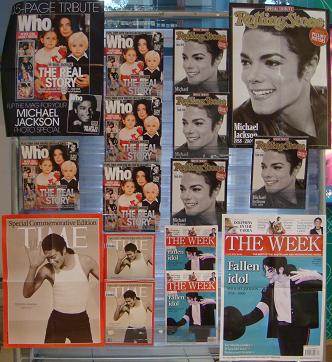
The death of Michael Jackson, and Farrah Fawcett to a lesser extent, this morning makes an already intense trading week busier for newsagents. It’s a good thing.
The $90 million Oz Lotto jackpot has resulted in considerably increased traffic since Wednesday morning. The news today will take that further as people turn to the brands (newspapers and magazines) they know for coverage. When they purposefully set out to purchase a newspaper or a magazine, more will head for a newsagency. While some may say that is wishful thinking, our recent experience in Victoria with bushfire coverage showed this to be the case.
The key is for us to make the most of these converging opportunities – with special offers and promoting of categories we handle well. This is our opportunity to remind people of our relevance.
The intensity of the Michael Jackson story was demonstrated by the Gold Coast Bulletin publishing a special issue delivered to newsagents around lunchtime today. We received a special edition of the Herald Sun mid afternoon.
We are promoting Wheels magazine at the exit of our men’s magazine aisle for the weekend. We did have Zoo in this location but sold out so this morning we had to make a quick move.
We have been using this ‘created’ location for several months now with excellent browsing and sales success. It is terrific to watch people engage with the display as they head to the counter with a purchase or leave the shop. It disrupts enough of them for the display to be worth it to us.
With Hannah Montana The Movie opening this weekend we have opportunistically placed the magazine next to TV Week as well as in our teen section. This is one of those titles which will be purchased on impulse and this weekend is our big opportunity to shift stock thanks to the publicity for the movie and the start of school holidays.
Sticking out of the window of the Australia Post shop on Park Street South Melbourne is an Australia Post branded ATM. This ATM has appeared in an area well serviced with ATMs by banks and other commercial operators.
There was no need for Australia Post to enter a well serviced marketplace, no need for this government owned monopoly to leverage its protected name and status to take business from private enterprise.
This is what Australia Post has been doing for years – under successive Governments. There appears to be no stopping of the extent to which this wholly Government owned and protected enterprise will go to take revenue from the private sector.
The only value associated with this ATM is the Australia Post brand. The Australia Post brand only has value because of its government protected mail service. The government backing and guaranteed foot traffic makes it easier for Australia Post to make this move.
There is no point in complaining about this to the regulators, they will look into it and say that Australia Post is acting within the Act. I have been down that road before. This is a political problem which requires a political solution. What we need is politicians who care about business and, in paticular, small business.
Where will one of these Australia Post ATMs appear next? I will be interested to see how far this network grows.
I am grateful to a reader of this blog for the tip and photo.
Even though the Oz Lotto jackpot is soaking up plenty of attention, we are still finding time to promote other categories. We have given the latest issue of Better Homes and Gardens a prime display thanks to the free cookbook which comes with the new issue out now. The display has been up since Wednesday and has generated excellent sales already. Better Homes and Gardens is one of those titles which we move several times through the on-sale, especially at weekends when we sell the most copies. In addition to the aisle end display, we have it in the garden section as well as two pockets in with our women’s weeklies.
B&T is reporting this afternoon that Australia Post is standing firm on its price increase (3.6% for magazines) despite publisher and printer representations yesterday. magazine publishers ought to engage with newsagents on a hybrid model which does not use Australia Post. Make newsagencies the collection point. The consumer saves on the cover price and we benefit from the traffic. While this will not suit every subscriber, it would be worth running a pilot.
While I mentioned this a couple of days ago, here is more information on how this could work:
I’d see a collect subscription costing more because of the additional services provided.
Australia Post has a monopoly. 3.6% this year, who knows what next year. Publishers and newsagents working together could come up with a solution which benefits both sides. However, for it to work, there needs to be no middleman between publishers and newsagents taking a clip.
The Norwich Evening News ran a story yesterday about the challenges facing UK newsagents. The story reports that they are closing at the rate of one a day in the face of tough competition from national retailers.
While I understand the pitch of use us or lose us, consumers will shop in newsagencies only if they see them as relevant. This is our challenge here and in the UK – to be relevant in today’s marketplace.
We are challenged by history, supplier relationships, rules and a cost basis which is not as flexible as could be useful to changes to our model.
The newsagency of the future will not be a newsagency.
While researching how others have merchandised major lottery jackpots overseas, I also found these terms offered to lottery retailers in New Mexico:
In terms of the initial search, I could not find anything which was useful to our circumstances. The $90 million jackpot is really new territory for us.
Today’s Daily Telegraph has a story about alleged rorts being perpetrated by newsagents and convenience stores against customers buying bus tickets.
The problems with NSW bus tickets started in 2004 when the State Government decided to go to a new ticketing system. The commission earned by retailers was likely to be less than 1% of the ticket value. During representations by newsagents made at the time, the Minister said that the Government understood that the lower margin presented a challenge but that the retailers could rely on the traffic to drive other sales. I know because I was involved in one such discussion with the Government when on the Board of the ANF.
While retailers of tickets should not breach the agreements they signed, the real story here is the drop in margin forced on the retailers by the State Government and onerous conditions in a contract. I’d suggest that the folks at the Daily Telegraph go back to the source of the problem and write about why we are at where we are at today. Give us real information and not a poorly researched biased piece which tells the reader what to think without specific evidence.
The argument that retailers can make money selling other products to transport ticket customers is weak. I have not seen any research other than my own as to the basket efficiency of transport tickets. On average, 25% of transport ticket sales include another item. While retailers play a role in this efficiency result, the nature of the product plays a role too. Buying a ticket is part of a journey – they are not shopping, but travelling.
As for the comments in the article by the Transport Ministor, he ought to go back and look at his role and the role of the government in reducing retailer margin.
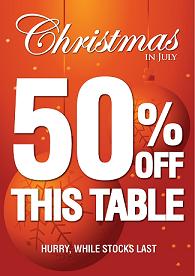
This is the poster our creative team has put together to promote the $90 million Oz Lotto jackpot as our Tattersalls collateral will not arrive until Friday.
We have created A4, A3 and A6 sizes. The A6 are flyers with our store details to be given to non lottery customers.
We are dressing the store cleverly at high traffic points to make the most of the opportunity.
We are also working in an A6 flyer to give every Oz Lotto customer to lure them back. We are finalising those details overnight.
A new record has been set with the announcement that first division in OzLotto is worth $90 million next Tuesday. Our newsagency already has syndicates up and selling. Our in-house creative people are developing collateral we can use to promote the unexpected $90 million prize.
Suppliers to newsagents need to understand that this next week will be challenging for everyone. Don’t expect too much time spent on anything else as we all focus our attention on achieving as much as we can from the $90 million opportunity. For other suppliers this is good news because we can leverage lottery traffic into other business.
We are promoting the July issue of Australian Women’s Weekly at our busiest and most successful (for magazines) counter position from today. The free eating in mini cookbook and stunning looking cover are sure to drive good impulse purchases.
It was great to get good collateral with stock of AWW this morning – we have enough for our week 2 plan – a display in the front of our newsagency.
A representative of ACP Magazines visited our shop this week to ask us to remove the $50 million OzLotto posters from the side of the ACP Magazines basket builder stand. They did so because of the photos I posted here.
We had a representative of Tattersalls in our shop just over a week ago who asked us to remove all non Tattersalls product, including magazines from ACP Magazines, from our Tattersalls counter.
The ACP representative did not thank us for the additional coverage we are giving their titles outside their usual location.
The Tattersalls representative did not thank us for the additional coverage we are giving their products outside the Tattersalls dedicated area.
This is all very silly stuff – it gets in the way of newsagents being entrepreneurial.
The ACP stand still serves its purpose well – presenting impulse opportunities to people approaching our counter. The OzLotto message is only seen on the side.
The Tattersalls counter is easily navigated and the pitches for the various games quite clear.
Newsagencies are finely balanced businesses. A range of product categories and major suppliers need to work with each other. Their interests and the interests of newsagents would be better served if they imposed fewer rules and invested their policing budget instead on business building. We provide access to our retail space, including premium counter space, free. I have heard that magazine publishers pay 7-eleven in Australia hundreds of dollars a year per title on the counter.
I think that our use of the ACP basket builder stand is clever. I am told that it was not until they saw photos here that ACP realised how the back of the basket builder stand could be used for displaying and selling product.
UPDATE: (10:20am) I have just spoken with a senior manager of ACP who has confirmed that the company is happy for the side of the basket builder to be used for rare promotions such as the OzLotto jackpot. They would, understandably, not want it used to promote competitive titles.
Nothing else will matter for newsgaents with lotteries over the next seven days with OzLotto not going off last night. The first division prize pool has officially jackpotted to $60 million. However, given that the first division pot for last night reached $59 million, I would not be surprised to see the pot reach $80 million by next Tuesday night.
Australia Today is a new magazine being launched by Australia Post on June 29. Priced at $3.50 per issue, the first issue will be free from Australia Post outlets. Judging by the cover, Australia Today will have broad appeal: entertainment, food, lifestyle and travel.
This is an interesting move on a range of fronts including: magazines getting into Australia Post and the Government owned business pulling advertiser dollars from current magazines.
No matter how you view the launch, it is a disruptive move by this government owned operation. It is another example of Australia Post using the protection of their monopoly to take revenue from other businesses.
Newsagents wanting to read advertising for Australia Today should turn to the back page of TV Week.
The official guide for the 2009 Tour de France is selling well. We have this located next to our newspaper stand as well as with our sports magazines. The newspaper stand location is working best – as one would expect. While some have asked for the Guide, most customers purchase on impulse. Our goal is to sell out before the tour starts on July 4.
Click here for a copy of the magazine cash-flow study I first published in March 2006. This outlines the cash-flow implications of the current magazine distribution. I am posting it here in response to an earlier comment.
We are soon to hear about the magazine publisher / distributor code of conduct which is being prepared in consultation with the ANF. From what I have been told, this code of conduct will not address the core issues which cost us the most.
My blog post about the Men’s Health iPhone app drew no comments yet a blog post yesterday afternoon about magazine subscriptions drew plenty. Our thinking remains rooted in the old world, the world with which we are more familiar.
The Men’s Health iPhone app demonstrates a smart way for a masthead to engage with its community – and to do so without a traditional distribution channel.
Publishers are rallying to vent anger at the price hike announced by the Government owned Australia Post for postage of newspapers and magazines. Meadibiznet has more on this including a letter sent from D&D mailing Services on this matter.
In addition to lobbying Australia Post to reverse their decision, publishers could engage with newsagents on an alternative magazine distribution model. I know that from a software perspective, newsagents could provide an infrastructure solution which results in the subscriber accessing their magazine in better condition than one might find from a letterbox.
Newsagents can compete with Australia Post on this. Based on work already done, we could have a trial running quickly.
All it takes is one extra copy to make a magazine unprofitable in a newsagency. Publishers and distributors allocate based on what they think you need and this is done within the framework of what works for them. They do not understand the costs newsagents operate with, the challenges of even one extra copy nor the risks associated with this. If we complain about an increase in supply by one copy they will usually come back with disbelief that we would complain about one extra copy.
It’s not their money at risk, their retail real-estate, their labour managing the stock on the floor nor their obligation if the extra copy is stolen.
I can understand extra stock being sent if there is a promotion or some other activity by the publisher to drive sales. Where there is no such activity and where the title is not within fair range of selling out, sending the extra copy is an abuse of newsagents – especially when you consider that enwsagents have to fund returning the magazine.
I cannot understand extra stock being sent when there is no justification in the sales data. Indeed, I am suspicious that I am again being used to act as a bank – providing cash-flow to an unfair magazine distribution system.
Last week we received one extra copy of Renovate & Extend from Universal magazines. There is no justification for this.
I am happy to take the extra stock if someone else carries the risk and funds the decision – if the business making the decision ensures a return for me. As it stands, I will lose more money on Renovate & Extend thanks to their decision.
The more often this happens, the sicker the magazine distribution model becomes.
Some publishers, distributors and the ANF are working on a magazine code of conduct. From what I understand of this, it will not address most of the distribution issues I write about here including this one.
As a result of discussion here I have reviewed the financial benefit measured in my newsagency from last night’s $20 million lotto superdraw. I only looked at yesterday because this is when we saw the biggest increase in traffic driven by the $20 million on offer.
We prepared our business for the traffic with good-value impulse offers carefully placed at each counter and key traffic areas such as our newspaper stand and women’s weeklies magazine section. We also pitched the OzLotto $50 million prize at the counter and elsewhere in the business as achieving an impulse purchase of lottery product in a lottery sale is easy.
At the front of our shop we ran carefully considered offers associated with the newsXpress STOCKTAKE SALE – this shows off to new visitors that we have great deals and drives impulse business.
To assess the results I compared yesterday with an average Saturday. In determining an average Saturday I looked at a collection of Saturdays outside of major seasons and lottery superdraws.
Here are the numbers as reflected in revenue:
Many of these numbers are off good bases. In overall measurement, we achieved considerable more from each customer than we usually achieve.
In addition to using the shop to drive impulse, we ensured that the traffic generated by the superdraw did not overly impede business – we were strong on queue management and over the counter service. We understand the importance of not having a line snaking out the shop and acting as a barrier to would-be shoppers.
As a pondered yesterday, maybe there are other factors which determine the efficiency of superdraws for newsagencies. It could be our demographic. That said, the numbers suggest that our preparation is a key factor to our success.
We had to re-think our weekend counter strategy yesterday with Who selling out from our counter display by lunchtime. In its place we put Diabetic Living.
Diabetic Living is a successful title for us and while it does not come with a free gift (something we prefer for this premium location) we know it will sell well from here over the rest of the weekend.
We will not leave a display empty. If it’s been successful and sold out, we are ready with a plan B right away – especially in a counter location. We are anal in managing this part of our newsagency.
In response to queries here and privately, here is a quick overview of how we do Syndicates. The photo (click for a larger version) shows the syndicate wall for tonight’s $20 million draw. It is deliberately not too slick. My view is that if it is too slick it loses the value of being fresh or immediate – a key factor in syndicates for our customers at least as we have people who watch our syndicate wall daily.
We start syndicates for superdraws two weeks out – we used to start them earlier but found two weeks works better for us. We offer a range of prices from $10 through to $100. We have tried higher values but they did not work so well.
The A4 sheets promoting each syndicate list the numbers – we found this to be very important. The sheets are white for Saturday, blue for Thursday, Green for Tuesday and pink for Monday / Wednesday.
We played with naming the syndicates but found that our customers like a straightforward offer. We number each and this is how customers ask for them.
We track sales in folders at the counter – customers provide their details on a master sheet for each syndicate. Staff selling a share sign on the sale. Customers sign for winnings when they collect.
We got into syndicates around seven years ago. Significant growth came once one of our syndicates won $11 million two years ago.
There are others who are far more professional and sophisticated at syndicates than we are. The key is to start slow, be careful and talk to your customers about what they would like.