A blog on issues affecting Australia's newsagents, media and small business generally. More ...

Having a website will be as common as having a photocopier or a fax machine

Having a website for a retail business is part of the new normal of 2020 and beyond. It is the common tech tool as the fax machine was for a while and as the phone was, and still is for many.

While corona has demonstrated the value of having a website, the reality is the need has been there for years and early adopters have been benefiting for years.

Here are several reasons for a website for any retail business. More than one reason may apply, it all depends on your circumstances:

  • Pitching your knowledge. A website is a terrific way to show off what you know, to pitch your specialist status. It reinforces credibility.
  • Price comparison. Whether you like it or not, it is common. If you are not online you are not even part of the consideration.
  • Stock availability. Some shoppers prefer to find out is something is available through online searches rather than in-store shopping or calling. If you are not online you are not even part of the consideration.
  • Selling 24/7. Some businesses do more online selling when their shop if closed than when it is open.
  • Expanding your shopper reach. A website can have no borders, introducing you to shoppers you will never see in-store.
  • Pivoting. A website can leverage your infrastructure and allow you to experience with products and or services that have no connection with your current shop.

The most common learning for retailers who go online is the discovery of what they didn’t know.

The challenge newsagents present most often when considering a website is what do I sell online. This is a decision only you can make.

My advice is start somewhere, anywhere, knowing that you will end up somewhere else, and, at some point, change again. yes, a website is a journey, a sort of never ending journey.

For ease, start with what you know, what you sell today. Alternatively, start with a single product or category.

Worry less about the usual – what others are selling or charging and how they pitch themselves. Work out ways for your pitch to be different. One way to do this is to have a personality through which to sell what you sell. This can feel like hard work but once you get into your groove you can see the website differently.

The key is start, start now. Online is big and growing.

5 likes
Newsagency management

The fatigue of the second corona wave in Victoria

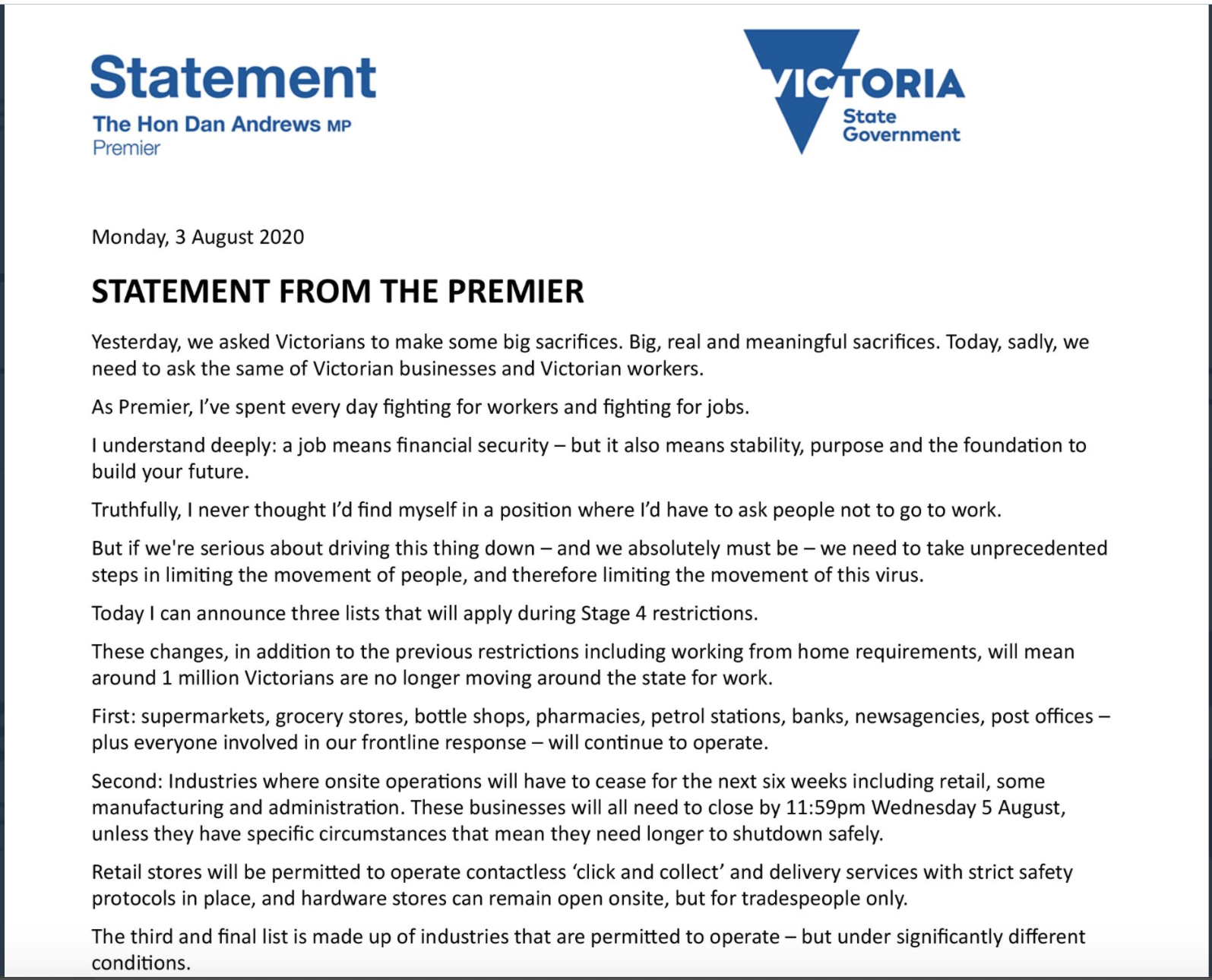
The second wave of coronavirus infections in Victoria this month is a challenge for all Victorians. It is especially challenging for retailers and their team members.

Before getting into some of the challenges, my view is that masks are essential, not only in Victoria but New South Wales, too, based on the numbers. Bill Bowtell, one of the experts who guided the Australian response to HIV/AIDS, called for mask wearing early in the pandemic. he was right.

The new mask rules in Victoria have not been welcomed by everyone.

Dealing with customers who are not wearing a mask but demand to shop, yelling and even pushing, is difficult. While there is the option to call the police, the need is more immediate. I’ve told our people that if there is a risk and it is the only option, closing the shop until the situation has passed is okay. Older customers are more likely to be angry than younger in our experience, more demanding, more likely to lie about why they don’t have to wear a mask. It is disappointing to see.

The fatigue of the second wave is considerable. You can see it from shoppers, hear it in the voices of suppliers, and more. It is testing the supply chain, too, with some wholesalers closing until this wave passes.

The fatigue of retailers is readily obvious in shopping malls. From the signs on closed shops to comments from some who are open.

The biggest contributor to fatigue in my view is mixed messages. These are put about by politicians and non health expert commentators, often leveraging a News Corp platform. In Victoria, for example, the opposition decided early on to deal with corona by daily attacks on the government. Loud attacks, emotive. First it was criticism for the first lockdown. Then it was open up, open the schools, open business. Then it was shut everything down and make us safe.

All this shouty stuff from politicians and the likes to Bolt, Jones and Credlin harms people and puts them on edge and this plays out into retail as people feel empowered to be disagreeable and shouty too.

Our retail spaces, our work places, benefit from calm. In situations where achieving this is challenging it is no wonder shop retailers close for the duration.

As business owners our priority has to be for a safe workplace where our employees are not put at risk. By far is is the top priority. The fatigue of the second wave makes this challenging to achieve and maintain.

8 likes
Ethics

Newsagents wonder about the XchangeIT / The Lott project

XchangeIT sent out an announcement yesterday that looked like it was from the clip art days of the early 1990s, about a new project they are pushing for with The Lott. With the ink barely dry on basic specs, they are promoting something that is not yet available. Based on the 50+ newsagents I heard from yesterday about it, something newsagents don’t want.

As is usually there case with these supplier related initiatives, the owners of the software companies doing the work are expected to be the major investors in these projects dreamed up by others.

Why is this XchangeIT / The Lott project a thing? I suspect it has more to do with XchangeIT trying to ensure relevance than anything else. Knowing a bit about what is actually planned, I am doubtful sufficient numbers of newsagents will use it if delivered as currently specced. However, the engagement will be up to newsagents to determine.

5 likes
Ugh!

Bauer ceases titles paused due to covid

This announcement just in from Bauer Media:

BAUER AUSTRALIA CEASES PAUSED TITLES DUE TO COVID-19 

Sydney, 21 July, 2020: Bauer Media Australia has today announced the closure of eight of its brands due to the ongoing impact of COVID-19. Affected titles include Harper’s BAZAAR, ELLE, InStyle, Men’s Health, Women’s Health, Good Health, NW and OK!.

Bauer temporarily paused these publications in May due to the significant impact of travel restrictions on transit-reliant titles such as NW and OK!, and declining advertising revenue to support Harper’s BAZAAR, ELLE, and InStyle, as well as Men’s and Women’s Health and Good Health. Consequently, a number of staff across these titles were stood down due to a stoppage of work.

Brendon Hill, Bauer Media ANZ CEO, says: “It has been a challenging time for Bauer and our team with exciting highs and devastating lows in recent months. We were delighted to acquire Pacific Magazines in May and were thrilled to recently announce a new future under Mercury Capital. However, these positive changes have taken place amidst an unexpected, uncertain and unrelenting economic downturn. No one could have anticipated the swift, widespread and ongoing impact of the pandemic on our business and industry.”

Recent Nielsen AdQuest (AQX) data revealed the economic impact of a full month of COVID-19 lockdowns with a 38.8% MOM drop in media advertising expenditure in April equating to a $303m decrease in spend. June recorded a 32.7% drop when comparing the same month in 2019*.

“We, like many other media companies, have deeply felt the impact of COVID-19. The reinstatement of these titles and teams was always dependent on the advertising market bouncing back and the return of domestic and international travel. Despite promising signs from advertisers in recent weeks, this has not outweighed the medium-term outlook for these titles.

“Additionally, with a second lockdown in Victoria and minimal travel, it is not feasible to sufficiently distribute NW and OK! without transit channels. The financial impact of these factors and the ongoing economic uncertainty makes the return and sustainability of these titles no longer viable. We have been forced to reset and future-proof the business like all of the media industry has.”

As part of the closures, Bauer will lose valued editorial, sales and production staff. Some of the staff affected by the paused titles were offered temporary work during the period, and Bauer will hold further conversations with the affected teams with the aim to find alternative employment across the business.

“The real and significant loss is that of our exceptionally talented and loyal colleagues as part of these closures. We have been optimistic about bringing our team back, however, the market has only seen further decline since stand-downs were implemented in May. We wanted to give direction and clarity to our staff as early as possible, rather than create further uncertainty with irregular publishing schedules. This is a devastating blow to those who are directly affected, the entire Bauer team and the industry as a whole.  I would like to acknowledge and thank the hard-working staff across these titles for their commitment and significant contribution to these brands.”

Bauer will work through the appropriate consultation process with impacted staff.

On Friday Hill announced the return of a Bauer operation in New Zealand after COVID-related restrictions have eased. Government-led distribution restrictions meant that Bauer New Zealand was not able to operate during the lockdown period with the office ceasing in April.

“The return of a New Zealand operation is a green shoot for our staff, brands and readers. The New Zealand market is very different to Australia at this point in time with people back in the office, a more promising advertising market and many Kiwis enjoying domestic travel. The easing of restrictions has meant we have been able to bring back around 40 editorial and advertising staff and much-loved titles such as Woman’s Day, New Zealand Women’s Weekly, The Australian Women’s Weekly, Kia Ora, Your Home & Garden and The Listener which is fantastic. As conditions improve, we hope to continue to expand operations there.”

The recent sale of Bauer Media Australia to Mercury Capital received regulatory approvals and was completed on Wednesday 15 July. Mercury will work closely with the Bauer executive team to form a new strategy for the business and identify key areas for investment and growth. Bauer Media Australia will launch its new brand and strategy in the coming months.

3 likes
magazines

Corona stimulus package proposal: targeting local small retail businesses and their communities

A while back I pitched this package of stimulus ideas to federal politicians and here with little interest. I pitch a modified version today as what I’d like to see

Covid stimulus package for local small business retailers and the communities in which they serve.

Small business retailers are nimble and able to lift local economies faster than big businesses and certainly better than online businesses.

Here are six tips for politicians on steps they can take, decisions they can make to help lift retail, especially small business retail, as well as those local businesses with which small business retailers can quickly connect.

  1. Local shops refresh grant. Give every local retail business a grant of at least $25,000 with the stipulation that it is spent locally (at least within the state or territory) on capital works for the shop, to improve the shop. It could be for painting, carpentry, electrical, new aircon, new carpeting, staff training or similar. Proof of local spending in the form of an invoice from a local tradesperson or small business company with and ABN and more than a year of trading as recognised by the ATO – to avoid fraud. The management of this should be online with quick approval and payment. Note: the $25,000 is suggested to provide sufficient local economic stimulus.
  2. Local visual merchandising support. Keeping in-store displays can be a challenge for small business retailers. Fund a network of merchandisers to make a 2 hour call weekly on qualified independent small retail businesses, sub $1M retail product turnover (i.e. not including agency), ABN registered, trading for six months or more. With each visit to be about visual refresh of the shop. Cap the campaign at six months and then assess the economic value. Only local merchandisers to be used – i.e. not an overseas agency who hires local contractors.
  3. Local artists grants. Offer cash grants to fund buskers for local high streets, to make shopping locally more entertaining. Make the application easy. Focus on local artists entertaining in their local community. This serves the dual purpose of injecting cash locally as well as fostering the local arts. The application process should be online, approval fast and payment immediate.
  4. Direct all politician electorate spending to be with local small businesses. For printing, subscriptions, gifts, parties, cards, everything for a year purchased through a politician’s electorate to be through a a business in their electorate. Have the results assessed independently. Ensure that spending is fair, too, to benefit a variety of local businesses, and not dolled out as political favours. Shop local, shop small.
  5. Run a national shop small shop local ad campaign. Make it educational, smart, encouraging … guiding Aussies on the value to them from shopping local, shopping small. Help to understand the true value of shopping local, shopping small compared to the alternatives. The ad campaign should run regionally across multiple media platforms, giving preference to locally owned platforms with a track record for not managing their business to minimise tax. Yes, Amex does this. We need a campaign that is not credit card supported.
  6. Establish local currency systems. These work overseas on regional towns where local currency has more value than the national currency. It supports shopping local through a smart value structure. the government role could be on the tech back end to manage the currency – taking away capital cost from local councils. To find out more ab9out this, read up on the Bristol Pound.

This list could be much longer. It is offered here as a start, to get people thinking of practical ways to support shopping small, shopping local.

Corona is challenging the economy. While I am no economist, I suspect that giving money to people likely to spend it quickly and spend it locally would be good for the economy and at a pace that is helpful to overall economic performance.

This is all about boosting local.

5 likes
Newsagency opportunities

Why margin matters to newsagents more than ever

The thread on the Wrapaway margin cut for NSW/ACT newsagents includes a discussion on the broader issue of fair pay for service.

Our channel had its origins in Victoria in the 1800s as an agency model. I suspect that margin control had something to do with that. The agency model through last century and even into this century has been maintained for origin products like newspapers and magazines and more recent categories such as lotteries because, again, it offers the best way for suppliers to manage margin.

With many newsagents experiencing value from more commercial arrangements it is no wonder there are more fired up today when they experience disrespect from suppliers when it comes to margin.

Our businesses exist in a traditional commercial world. Our business overheads are set by commercial terms, tied often to performance of the economy outside of our small businesses.

Seeing agency suppliers push effective margin for retailers of their products in the opposite direction of economic factors intensifies the financial harm to businesses that stock them. This is an issue only with agency lines as they are the ones newsagents tend to want to keep and it is this desire that agency product suppliers leverage when they make decisions that disadvantage newsagents.

What has changed is that there are more newsagents now who care less about agency lines, there are more newsagents prepared to ditch agency lines rather than having to fight the fight to maintain a low and disrespectful margin.

Newsagents are finding their feet to make a stand on margin. As their businesses are confronted by disruption from the move online and more competitors stocking agency products, it stands to reason that they look for more equitable relationships. No longer are they prepared to let agency suppliers dictate take or leave it terms.

The Wrapaway decision to slice margin in half saw swift responses by plenty of newsagents. The company responded saying it needed two weeks to work on an alternative. Other suppliers need to take note as I suspect newsagents will react similarly, even with the small downward margin creeps driven by the newspaper publishers and the effective downward margin creep driven by magazine publishers who stifle needed cover price increases.

Experience is giving newsagents more confidence and power. It is good to see them exerting it.

10 likes
Ethics

Australian made sells

This Proudly Australian Made shelf-talker, in the card department, attracts shoppers, it starts conversations and brings appreciated comments of kudos at the counter. The artwork is smart and noticeable.

This Australian made pitch works in other parts of the business too, which feeds into social media messaging. It is topical.

9 likes
Greeting Cards

How is the News Corp. managed delivery of Ovato product going for you?

Here is information from one newsagent about their experiences with News Corp. delivery of magazines for Ovato:

  • Thursday, July 2:  We arrived at work 1 hour before we open as we do every magazine day to enable us to process the magazines and have them on the shelves before the customers arrive. No magazines. We eventually tracked them down to the News Limited depot, from where we picked them up ourselves.
  • Monday, July 6: No magazines when we arrived at work. We eventually located them, they were on the supermarket run and thus did not get them until 2pm. Yes, 2pm.
  • Thursday, July 9:  The same as Monday we thought they had sorted the issue but not so.
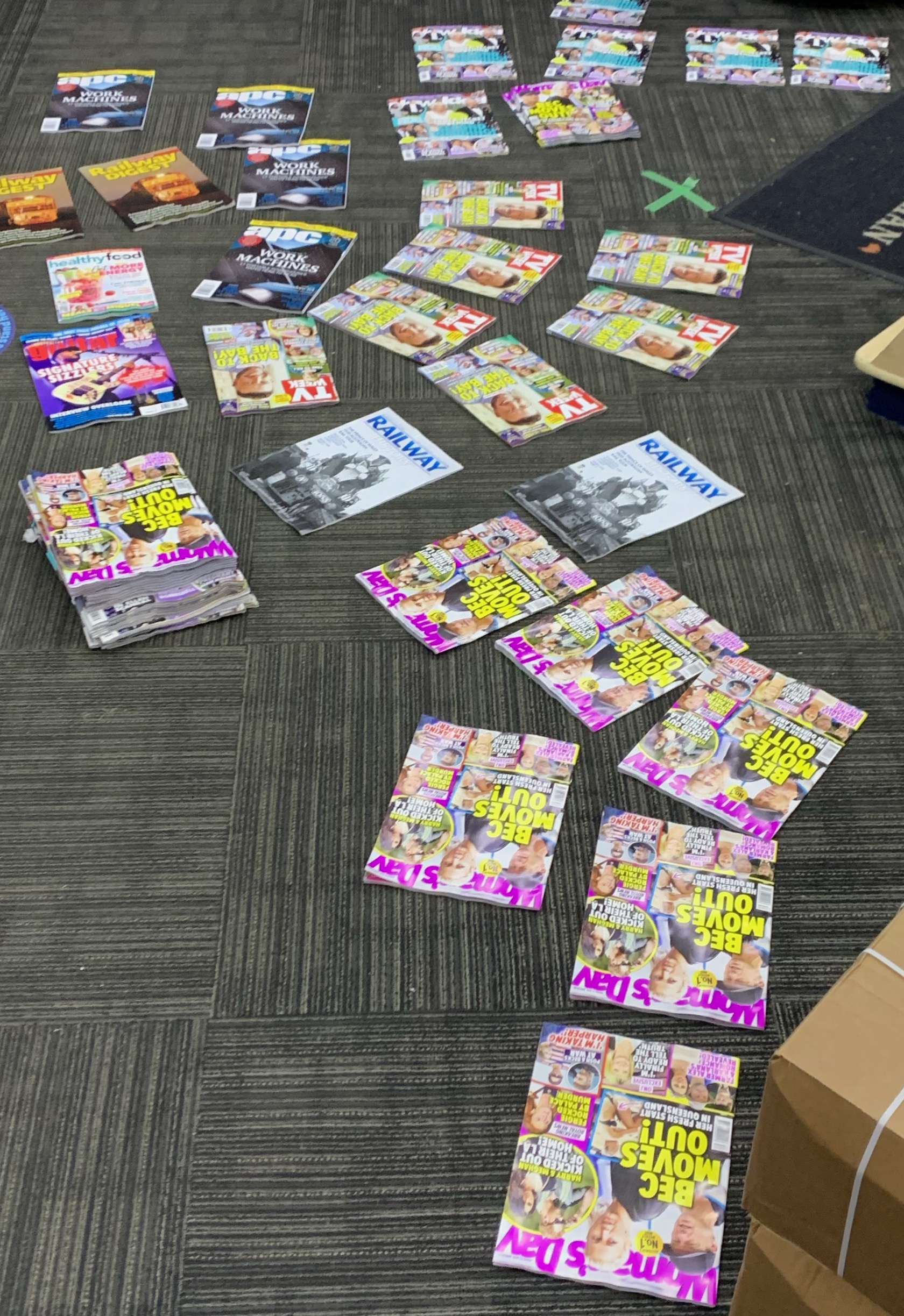
  • Monday, July 13:  We received our key parcels – they were on the newsagency run but our bulks New Idea, Woman’s Day and TV week were on the supermarket run.
  • Thursday, July 16 (mid morning):  Have been informed they are again all on the supermarket run.

I have had several newsagents call upset at the situation, upset at the anger from customers, upset at now being able to run they business they want to run, upset at the lack of communication from News Corp and set at the disinterest from Ovato.

This is a mess made by Ovato and News Corp. They are killing interest in magazines through this change and no one seems to care.

If they have the excuse of teething problems, I would reject that. They had time to get this right.

If they have the excuse of others are not affected, I would reject that as it would be a stupid excuse.

If they have the excuse of we are sorting it out, I would reject that because this should never have happened.

The poor management of the change by Ovato and News Corp. is costing newsagents time and money, it is impacting their mental health. yet, neither Ovato nor News Corp. is offering any support or assistance to the newsagents affected.

The other question is where are the magazine publishers in this? It is their product that is not reaching newsagents on time. Maybe they don’t care as long as supermarkets get their stock on time.

This is an own goal by all involved. Newsagents and their customers are the victims.

13 likes
magazines

Reuters: Rupert Murdoch’s big investment headache: Australia

This report by Byron KayeRupert Murdoch’s big investment headache: Australia, which dropped at Reuters yesterday makes for a fascinating read.

SYDNEY (Reuters) – The birthplace of Rupert Murdoch’s media empire, News Corp’s (NWSA.O) Australian business, is shaping up as a trouble spot for the global firm, following a billion dollar writedown and a move to stop printing more than 100 regional newspapers.

People interested in print media in Australia should find the article interesting regardless of your views of the Murdoch controlled company. The report has been widely shared on Twitter since its release yesterday. Here are some of the tweets where a link to the article was shared:

  • News Australia dinosaur drag on whole company…Reuters.
  • analysis of why the short sellers are moving in on the Murdoch empire. #auspol
  • Newscorp the most shorted stock in Aust says Reuters. “Rupert Murdoch‘s big investment headache: Australia”
  • “I’ve had a view it’s worth nothing for a long time.” Death rattle.

Yesterday, Crikey published a report by Christopher Warren on the closure by News Corp of a printing plant in Queensland. This, too, is worth a read.

As News Corp closes down more printing presses, it threatens to lock out new players.

Australia’s press took a big step this week in its decades-long journey from venerable manufacturing process to nostalgic metaphor with the accelerated closure of those production plants where newspapers are — or were — printed.

The resulting consolidation will see News Corp making a further change, reducing the size of its metropolitan papers to the shorter size technically-known as the “bastard measure”, beginning with The Courier-Mail.

The Yandina press will use a single press to print the company’s remaining south-east Queensland papers — The Courier-Mail and Sunday Mail, the Gold Coast Bulletin and the Toowoomba Chronicle. It will also print local copies of The Australian, The Daily Telegraph and Nine’s The Australian Financial Review.

There’s form here that will concern independent publishers. When Horton Media, Queensland’s last independent printer, closed two years ago, some small independent papers had to shift printing to Sydney and truck their copies to the state due to local capacity constraints. Fairfax’s print plant at Ormiston (and in NSW’s Hunter), closed the same year as part of a printing and distribution agreement with News Corp.

This is all part of the disruption. newsagents, as we have seen in recent weeks, will get caught in the changes, left without papers, left dealing with angry customers. Communication from News Corp has been and continues to be appalling. It is a selfish company with a history of bullying small business newsagents. Top be fair though, plenty of newsagents have willingly made themselves available for this.

From the perspective democracy, we have to hope that there are more genuinely independent news outlets and that they have more journalists asking tough questions of politicians from all sides. The current concentration of news outlets in Australia is unhealthy for democracy. You only have to look at the biased Daily Telegraph.

4 likes
Ethics

Opportunities for newsagents in the cancellation of gift fairs

With the Reed gift fairs cancelled, more suppliers are keen to connect with new retailers in different ways. They are also keen to connect with retailers outside of their usual retailer channels.

Those with stock certainty in the back half of this year that they need to clear are especially keen.

I am seeing suppliers who would not usually connect with our channel, even with highly evolved gift and homewares retailers in our channel, pitch to newsagents individually and through some of the groups.

This is a good trend to see as it will further break down the borders between channels. Newsagents will, overall benefit from this while some could lose business as traditional Newsagency suppliers also trade more outside they channel as they, too, seek growth.

In a related topic, it is terrific seeing more suppliers engaging with Zoom and other platforms for virtual showroom tours and mini supplier / retailer conferences.

How we do business has changed for the long term and through this those doing well and those leveraging new platforms and skills for safely transacting business.

4 likes
Newsagency management

Palace papers promotion

Placement of this issue of The Australian Women’s Weekly at the counter as the palace papers story is top of mind is tactical and smart. Regardless of where you stand on the issue, the Queen was involved at the time and in seeking to block access to the papers.

3 likes
magazines

Victorians showing signs of understanding the need to socially distance

The second lockdown in Victoria a week old and we can see that people are reacting to it. They are distancing more carefully and shopping less for non-essentials. Malls across Melbourne are all but empty. Even supermarkets in malls have been hit – harder than in the first lockdown. On the high street, for essential businesses there is a business as usual, but safe, feel.

After talking with a range of retailers and looking at sales data, I put together these trend notes for retailers in my POS software company community. I share it here as some insights may interest:

Here are trends from the latest Victorian lockdown:

  • Relaxing products. The jigsaw surge from March and April is back but in an expanded form – adult colouring, art and craft, journaling, cross-stitch, knitting, games and art. Smart retailers are selling these items as well as offering customers opportunities to connect with others doing this.
  • Nesting. This category is surging not only in Victoria but nationally. Nesting includes candles, diffusers, essential oils, rugs, cushions, homewares, pets, cooking and related.
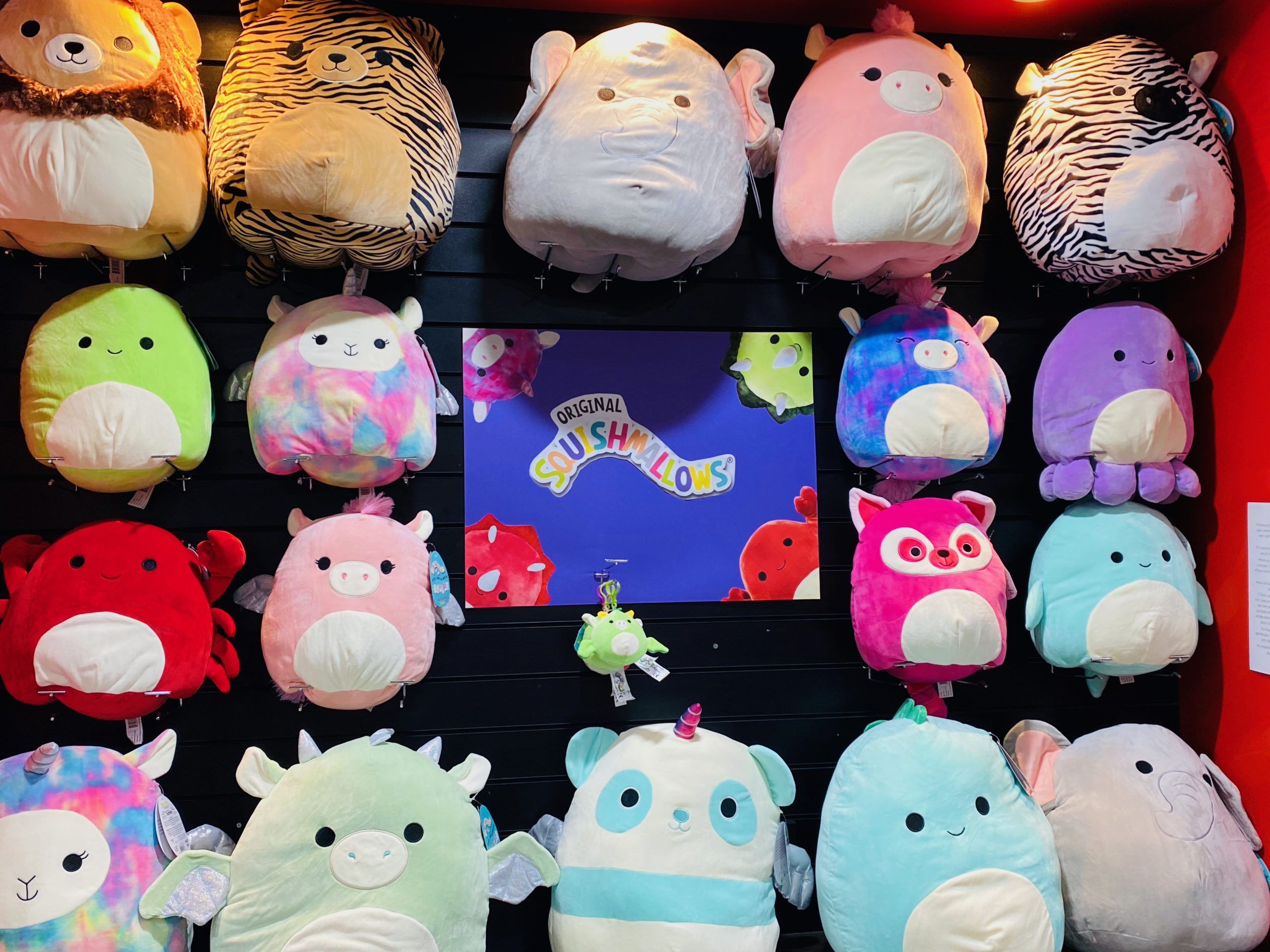
  • Tactile products. We have seen a surge in cuddleable (not a word I know but it best describes it) products. This segment includes plush and other soft toys, pets, rugs, blankets, pillows and similar. With touching and hugging discouraged, it stands to reason that people seek out alternatives.
  • Easy shopping. We have seen retailers gain sales by making shopping easier through packaging items often bought together and having these placed front of store and at the counter.
  • Postable gifts. People are loving that they can easily send a gift to people they are unable to see.
  • Working from home. For some, this is now a permanent arrangement. Many retail channels have offers they can make to those working from home and businesses with employees working from home. The opportunities are usually broader than retailers think.
  • Contactless retail. Having the EFTPOS machine shopper facing and situated for easy tap and having in place arrangements for the lowest cost possible to the business for EFTPOS.
  • Online. Having an online offer matters. While people like the safety of having goods shipped, they also like click and collect and they like to use the website to ensure you have something in stock before they visit the shop.
  • Online events. More retailers are hosting events to show off new products and offer education –  Zoom, Facebook live and similar events. Unboxings, educating on new products meet the maker and more.
  • Christmas has started early. Yes, we are seeing Christmas purchases already in businesses that are offering Christmas stock.

While the pandemic has disrupted business, in that disruption are opportunities. The Victorian situation is a reminder that disruption is not temporary. We think history will show that winners will be those businesses that adapted early and were able to finesse their offering and processes as the market demanded.

4 likes
Newsagency management

The value of being online

Being online with the right product and the right mix of purchase options can deliver sales like this one, $1,082.99, at 7:48am yesterday, Sunday, on a day the store connected to the website is closed. This was one of 5 sales in the day for the store, $2,000+ in revenue, which the shop remained closed. Every sale above 50% GP.

This website, like all websites I have been involved with for my shops and others connected to groups of newsagencies, the online pitch is not through a newsagency related shingle. I think this matters. Indeed, the most successful online pitches are through either a known product brand or a widely loved product category.

Newsagents can sell online and doing so successfully can help you adjust physical store operations to be more overhead cost efficient.

The key thing to understand about what you an do online is … the only barrier is you and what you think you can and cannot do.

4 likes
newsagency of the future

Newsagents face a 50% cut to margin following News Corp. fee hike

Wrapaway, a niche magazine and newspaper distributor, late yesterday wrote to NSW / ACT newsagents advising them of a cut to their commission (gross profit) from 25% on their titles to 12.5%. Their letter to newsagents explains that the move has been brought about by a 500% increase in what News Corp. charges them to deliver their product.

This is another of many changes in the News Corp. that are impacting and will impact newsagents.

The challenge for impacted newsagents is when is it too much, when do you quit suppliers. While financially  such a move may make sense, when it comes to niche titles, such as foreign language titles, you may accept a reduced margin to maintain your specialist status.

The other options of course, is to increase the cover price.

If the Wrapaway letter is accurate and News Corp. has increased their charges by 500% the company needs to fully explain the basis for this increase, it needs to prove that such an increase is necessary.

12 likes
Ethics

Sunday marketing tip: use products to speak for you

This iconic jigsaw at the front of the shop in Victoria makes a timely and powerful statement right now.

While the image on this jigsaw represents a message from another time, the simple words resonate today. I was at the shop Thursday and heard a couple of customers comment positively about it. It reminded me that sometimes products can be a better advocate than pretty signage.

3 likes
marketing

Advice for newsagents confronting another lockdown

Based on what we have seen over the last few days in Victoria since the government announced a second lockdown, people are nervous. While the news reports show empty toilet paper, pasta and baby formula shelves, it is more than this, people are distancing again and they are touching products in-store less. So, it’s back to basics in retail, back to what we know is important:

  1. Show that your shop is clean, safe and easy to shop. Uncluttered, easy access is key to safe shopping.
  2. Have hand sanitiser at the entrance and at the counter with a sign encouraging people to use it.
  3. Encourage staff to wear face masks. This helps set the tone for safe shopping. I saw first-hand the value of this on Thursday. In an area serving older customers it was appreciated.
  4. Ensure the counter is setup for safety of staff and customers.
  5. Have suggested product packs ready to purchase easily – as appropriate to your business.
  6. Offer curbside pickup.
  7. Offer home delivery where possible.
  8. Be positive in-store.
  9. Be positive on socials and on the front foot. This is your opportunity to be clear with o=your messaging outside the business.
  10. Bring to the front of the store things that were popular during lockdown. If appropriate to your business: jigsaws, books, adult colouring books, activity sets, knitting / crochet / craft packs, music, art supplies, home nesting products and tactile products for kids.
  11. Clean regularly and let people see you doing this.

I get that this list is common sense. I mention it as a reminder.

Part of what has happened in Victoria, I think, is complacency within the population due to people thinking we were through it. This has been encouraged by some media reporting on top of corona fatigue. Indeed, some in the media and some politicians have driven the push to get back to normal with dumb Dictator Dan headlines and labels.

As an employer my my primary interest in the shops is employee health and safety. This is why I have taken a strong position on face masks. I am grateful to have a team that gets it.

7 likes
Newsagency management

Newsagency businesses selling

Newsagency businesses are selling through the covid challenges. While retail businesses in some other channels are not selling, newsagency businesses are selling and some have sold quickly, in a week or two of going on the market.

This is good for the channel. The number of buyers looking speaks to how the channel is viewed as an investment opportunity.

I have heard of a couple of instances where the purchasers were able to obtain bank finance, too, which is a nice shift from recent times.

Being essential through the pandemic is helping to reset how the channel is viewed.

5 likes
Newsagency