Behind a great magazine app
Check out this interview from MediaBistro with John Lima, CEO of ScrollMotion, the company behind the new Esquire magazine app.
This new digital channel is all about delivering a new experience, different to print.
Check out this interview from MediaBistro with John Lima, CEO of ScrollMotion, the company behind the new Esquire magazine app.
This new digital channel is all about delivering a new experience, different to print.
We have had these App Magnets in for a week today and have sold 80% of our initial stock. We placed them at the counter, in an excellent impulse purchase location.
Their success reinforces for me the value of existing good traffic in newsagencies and how careful buying is central to leveraging the traffic for good value impulse business. Their success also demonstrates the value of tactical placement over attractive displays for some products.
I thought Ralph magazine ceased publication dur to poor sales. This morning we received another Ralph related title which is apparently recycling Ralph content including photos of girls. While it may sell in some newsagencies, I don’t see it working in most. Call me a cynic but the girls of Ralph did not save Ralph so why roll them out now?
Now, more than ever, every magazine on our shelves need to pay its way. In a shopping centre newsagency this means 60% sell through or better. I am not expecting a 60% sell through for the Girls of Ralph.
Retail is tough in Australia right now, consumers are reducing discretionary spending and looking for deals on non discretionary spending. We feel this across our counters and we read about it in reports into the state of retail in Australia.
Thanks to the interest rate rise decision by the Reserve Bank yesterday and moves by the banks to pass on, at a premium in the case of the Commonwealth Bank shortly after the Reserve announcement, retail is set for a tougher than expected Christmas.
As I wrote here recently, I have seen signs of a nice kick in every day sales in newsagencies. Only time will tell if this is short lived.
Until yesterday I was anticipating a better Christmas than 2009 – that was a tough year because of the GFC fall out. Now I am not so sure. It all depends on how consumers react to the interest rates rise over the next few weeks.
I know that some newsagents will be devstated by the rate rise while others will not feel an impact at all.
Newsagents are more challenged in a tough retail environment than many retailers given the percentage of our traditional turnover which is from items over which we have little or no control of the selling price and given the limited control over our stock levels in the same product categories.
Now more than ever, I am focused on products which generate their own traffic, deliver better than average margin and over which I have far more control.
Creating a better Christmas includes better buying, better marketing, better in-store presentation and better selling.
Media Bistro, has published an interview with Doug Carlson, magazing director of Zinio, a digital magazine publishing platform. It’s a video newsagents and others involved with magazines will find fascinating.
Of course, Carlson is going to talk up the digital platforms. Here in Australia we are still a couple of years behind US trends but I suspact we are catching up fast.
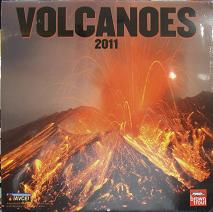
We enjoy the opportunity of demonstrating our social conscience through the promotion of products in our newsagencies. Take the Amnesty International calendar. Making it a feature calendar for the week demonstrates our support for their work while at the same time providing an opportunity for supporters to support the cause. Yes, our support could be seen as commercially focused. However, if that were the case we would only promote calendars with cute dogs on the front as they sell the best. We have deliberately sourced a range of calendars which support causes about which we feel strongly. This calendar from Amnesty International is one from that range. We are proud to promote it.
Ross Dawson, a leading futurist, strategy advisor, and bestselling author predicts that newspapers in their present form will be irrelevant in Australia by 2022. He has published at his blog his reasoning for this prediction as well as predictions for other countries in his newspaper extinction timeline.
Dawson is well credentialed to write about these matters as he is Chairman of the Future Exploration think tank.
There is evidence in newspaper publisher activity indicating that they do not disagree with Dawson’s predictions.
As I have said here previously, it all comes down to the medium. As tablet computers and mobile phones become more ubiquitous, easier to use and have a lower cost, the new channel will replace the old. There is also the environmental issue which will be a key factor in change.
The best response from newsagents today is to ensure that our shops have the physical flexibility necessary to change with the times, to demand more control over our exposure to print media products and to make the most of print media sales opportunities in the short to medium term. Yes, there are good opportunities in our businesses if we are aggressive and tactical in our approach to handling magazines and newspapers.
I am aware of a number of newsagents receiving the following message from Network Services yesterday:
Return Claim (REF #2783726) has been rejected by Network Services as it does not meet the required file specification. Please follow up with your POS vendor accordingly.
• Document reference is not a valid return form number
My understanding is that there is a problem at the Network end which caused these to be issued. The Network advice to one of my stores was to not send that stock back this week. The problem for us is that the returns had been collected already.
UPDATE: (10:37am) This just in from Network:
The issue was that the forms where created but not sent out in VIC. They are being sent out now. We are also reviewing the Q&A that was set up for this as it should have been identified earlier. A new alert is being set up to assist.
For all forms received yesterday that were rejected at our end, we will push them through as supplementary returns today/tomorrow, it will require some time as each file needs to be manually edited and pushed through, some agents may also get duplication emails for the supps that were in those files that did make it through.
This is a good solution and a timely response.
We use shelf talkers to show the price of ink during our regular ink sales. We know from customer feedback that these professional shelf talkers are a key reason for our continued growth in the ink category.
For years, newsagents have bemoaned that they are price competitive with Officeworks and others on stationery yet shoppers prefer the majors. Officeworks and others do an excellent job in giving the impression that they are competitive on price. We can too.
Newsagents have historically not presented themselves in-store in a competitive way. This is what the shelf talkers are about, in part at least. They promote brand and price in an easy to read format. Looking at an ink wall it feels like the prices are competitive. Anyone checking will see that the prices are good.
We are promoting Christmas issue of Family Circle magazine at an aisle end as well as with our newspapers for the next week.
In our temporary 97 square metre location we have little space for displays and have to choose the titles we promote carefully. Our selection of Family Circle is based on good sales history and our theming of the store around getting ready for Christmas.
We returned all stock of Good Gardening, Grow Your Own Organic Food today. After a month on the shelves we have not sold a single copy. My initial blog post about this title on September 30 generated plenty of discussion including comments from the publisher. I’d like them and others to comment now that I have had four weeks of no sales. from where I sit, my sense is that my comments of a month ago were right.
While I support new titles, I am frustrated at the cost to newsagents for supporting them. We invest retail space and our time in the hope of making our 25% margin. The magazine distributor is paid regardless. Ad agencies and other service providers are paid regardless. Not us. The cost of the failure of this new title to sell in my store is for me to bare – including the cost of financing the publisher as it will take me until the end of December to get a credit for the stock being returned today.
We should be paid a fee by publishers for new titles until they pay for themselves.
The task of managing magazine cash flow in my newsagencies begins on the first Monday of the month. That’s today for November. Here is a summary of what we will do between today and the 20th of the month – our own internal end of month cut off:
I try and not early return out of spite or anger. However, on some heavy magazine arrival days there is certainly the temptation to do this.
We should not have to do this work. I would certainly like to not have to early return. It adds unnecessarily to our labour cost.
The only reason we have to do this work to manage cash flow is because we cannot trust the magazine distribution model.
Magazine distributors, when questioned about the fairness of the newsagent magazine distribution model, say that newsagents can early return – insinuating that this protects newsagents. Returns have considerable costs. A considerable portion of the costs is due to poor and unfair decisions by the magazine distributors.
The Australian is reporting this morning that apps will soon be launched for The Daily Telegraph and The Herald Sun and other News Limited capital cities dailies. My understanding is that these apps will be an advancement on the app for The Australian. They will also have a monthly fee.
For my money, I still like the New Zealand Herald app – it’s free and funky.
The Sunday Age today has a report on the growth in Halloween popularity.
More than 4 million people – or 20 per cent of the population – will celebrate Halloween this year according to a survey by McCrindle Research.
I have certainly seen the interest in Halloween grow in my own stores. This year is the best ever. Excellent sales thanks to new traffic and good business from existing customers.
What makes Halloween especially rewarding is the 50% (and more) margin.
In 2006, newsXpress was the first newsagency marketing group to embrace Halloween. Today, the group is one of the largest retailers of Halloween product around the country.
We decided to give jamie magazine – the Jamie Oliver food title – a go a in one of my stores few months ago and are glad to have made that decision. The latest issue has sold four of the five allocated copies. I mention this because I am sure that magazine distributors miss achieving sales for titles as the process of discovering and adding titles is a challenge. Newsagents are left to rely on a process which was out of date twenty years ago.
Newsagents need better facilities for identifying and ordering new titles without the risk of the oversupply part off the model kicking in.
British weekly magazines is another segment which works well for us in terms of habit based purchases. Attract customers because you have titles which interest them and they will travel to shop with you. People buying these titles often present with other products – adding to their value.
My point with these three posts this morning is to show that there can be nuggets of gold in your magazine department is you look at your sales data carefully and nurture these opportunities. While mass is important, sometimes under the surface you will find more valuable and consistent magazine business. This, to me, is what habit based sales are all about.
Special interest titles, like model railroad titles, are another excellent habit based opportunity. Model rail enthusiasts are loyal once they know you share their commitment. Place these titles away from the main traffic area as they will find them and appreciate not being jostled while browsing.
Outside of model rail, there are plenty of special interest segments worth pursuing.
I plan a few posts today about habit based categories. These are important for newsagents because they bring customers back to feed their habit. Success with habit based products depends on range, location and consistency in layout. In writing about habit based titles, I want to draw attention to a valuable positive opportunity in our magazine departments – if we assess our data and cultivate our store appropriately.
Crosswords are an excellent habit based category for newsagencies. Carry the right range and you can even budget for sales your customers will be that consistent.
PaidContent has published a table of the top 25 newspaper daily e-editions. It makes for fascinating reading. Some rocky numbers as you would expect for a new channel but some solid numbers too. Look at the Detroit Free Press – they replaced five days of print editions with online subscriptions. Read the PaidContent assessment of the numbers here.
Publishers who have said that readers will not move online will especially find the numbers interesting.
With recent discussion on magazines, newsagents may like to calculate back their occupancy cost of magazine retail space.
Determine the cost of the space magazines occupy in your store for a month or a year and divide this by your total magazine sales for a month or a year. The percentage returned from the calculation is your occupancy cost.
In one store I did this for yesterday the occupancy cost for magazines was 20%. leaving 5% for wages, shrinkage, operating costs and newsagent margin.
The space allocated to magazines in the store is a function of history both of this store and the channel more widely. The solutions are to reduce the space and magazine range without killing sales an to try and address thecost of space.
The challenge is the processes in place (or not) with magazine distributors relating to achieving this and the difficulties in negotiating better rent deals.
Given the margin and operating costs of a newsagency, an occupancy cost goal ought to be 11% in a shopping centre situation.
With supermarkets and other retailers reinventing their positioning in the traditional newsagency space, newsagents need to be looking at how they (we) handle traditional items such as stationery. I am a fan of peg board for this and already use it in three of my stores. As the photo of the Post It / Scotch / Copmmand display shows, we are able to efficiently and professionally display stock.
The traditional newsagent displays of five and more years ago don’t cut it with today’s shoppers.
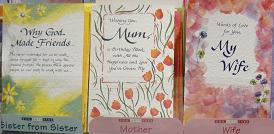
Again this year we are seeing Christmas cards which are connected with a charity sell better than those which are not. In our large boxed Christmas card range, around 60% of what we have is charity connected. They are easily outselling the non-charity products. Besides the two stands of products in the photo, we have an extensive range of Cardpac Christmas Cards – supporting the Peter Mac cancer centre.
We moved our newspapers around to make the most of the Spring Racing Carnival opportunity. Winning Post, Sportsman and Best Bets get the prime position for a few days to drive sales. We then choose the best daily to go next to these based on Spring racing coverage on the front page. While only a small tactical move, it is relevant to our customers and maximises the opportunity for us.
Spotted in a Franklins supermarket recently when they offered a free Daily Telegraph if you spent $5 or more on groceries – two customers making multiple purchases in $5 lots. Around 25 copies of the Daily Telegraph ‘purchased’ this way. This sure makes you wonder about newspaper circulation figures.
I have now received magazine sell through rate data from more than 150 newsagencies. The 800+ pages of reports lists titles with a sell through of 40% OR LESS. This is an extraordinary body of evidence of magazine supply abuse against newsagents.
I am certain that newsagents are the only magazine channel experiencing this. Not supermarkets, convenience stores or petrol would experience and permit a 40% sell through.
This data is currently being collated and assessed to form the basis of submissions to a number of parties on the magazine supply model.