Another day another discount newspaper home delivery offer covering page 1 news on the newspaper

 Do you hand out the Wellness catalogue promoting Chemist Warehouse and circulated in at least some cities with News Corp. newspapers? I ask today because a newsagent mentioned to me recently they trash Wellness rather than push it on newspaper customers. They found little interest in what is essentially an ad catalogue. That and lack of fair compensation got them refusing to hand out the title.
So, do you hand out Wellness?
Thinking about this issue more broadly, it is time advertisers and publishers respected retail newsagents more. Every action has a cost. Publishers reflect this in their pricing of advertising. Sadly, they do not respect newsagents in the same way.
The decades-long expectation that newsagents will go the extra mile for free for publishers because of the broader relationship, usually through distribution services, is not relevant today with so many of us retail agent and accessing newspapers as sub agents and thus earning very little from newspapers.
Every extra service has a cost. We need to be compensated fairly. Otherwise, we should not provide the service.
Penalty rates under the award that applies to newsagency businesses were cut further from July 1. This means we could pay people less to work on a Sunday. In March last year I wrote about why I was not embracing the first cut in penalty rates introduced by the Liberal/National government. I have reviewed what I wrote then and share it today to reinforce the decision I have made to not apply the second penalty rate cut…
Here are my reasons for deciding to not embrace the Sunday penalty rates decision in my retail businesses:
This is not a permanent decision. It is possible I will modify my position as the marketplace situation evolves. If I did and thereby embraced a saving in labour costs, I anticipate savings would be invested in more hours.
All business owners need to reach their own conclusions on this matter. Unfortunately, as a country we are bereft of leadership on broader issues that should be confronted in any economic setting adjustment as has been done with Sunday penalty rates.
There will be some here who will say I own multiple businesses and subsidise my newsagencies. This is not the case.
My hope is the decision to not cut penalty rates is met with a commitment by team members to drive revenue and thereby help the business afford the higher labour cost.
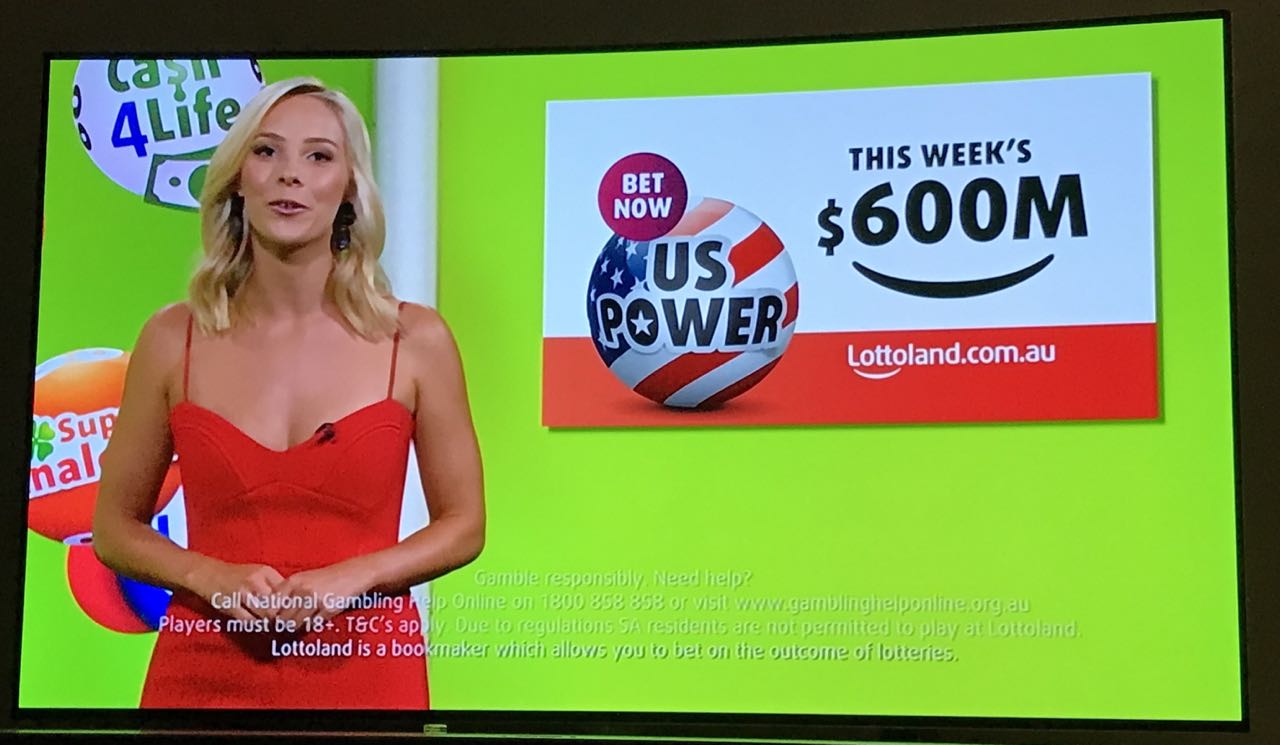 While what they sell has been outlawed from early 2019, that has not slowed Lottoland’s advertising. Their relentless pitch of online lottery related purchases is not good for over the counter lottery retailers.
 We made the decision to not use plastic bags of any sort for customers and, so far, the reaction has been good. I think this is due to several major retailers investing in educating shoppers about their similar moves.
Our pitch is in-store at the counter, on the front window and in our social media feeds. The only challenge has been with some newspaper shoppers and for them it is usually about newsprint more so that carrying convenience.
By eliminating the plastic bags, even those that are degradable, altogether, we eliminate the frustration for people who would complain if we say no to a bag for a newspaper. It proved an easier to implement and explain mode, one that is good for the environment too.
By explaining our reasoning and doing so without being too preachy it has gone okay for us.
I think we are a moment in time opportunity eight not to make such a move. If you think you might reach the point of offering NO plastic bags sometime in the next year, I suggest doing it now, right when the two major supermarkets are making the same move. It could be easier to fo this now than to do it later this year.
We continue to offer paper bags and a range of bags with handles for gifts and other items bigger than cards or magazines.
Here is the email I sent to newsagents yesterday calling for sales data for the next benchmark study:
Q2 2018 NEWSAGENCY SALES BENCHMARK STUDY.
I am preparing a new benchmark study for the newsagency channel to look at the latest sales trends overall and in key product categories for the second quarter of 2018. This quarterly newsagency sales performance study will help newsagents see the future based on the data trends. Click here for my last report.How to participate.
- Please run a Monthly Sales Comparison Report for 01/04/2018 – 30/06/2018 compared to 01/04/2017 – 30/06/2017.
- Tick the category box. IMPORTANT.
- Tick to exclude home delivery and sub agent data.
- DO NOT tick the supplier box.
- Preview the report on the screen. Save as a PDF and email this to me at mark@towersystems.com.au.
- Read the report yourself and see what it shows you about your business.
I will email the results to all participating newsagents and publish the results on theAustralian Newsagency Blog as a service for all newsagents.
My work with this channel goes back to 1981 when I wrote newsagency software to manage newspaper home deliveries. That software evolved into Point of Sale software and has been rewritten as software technology has changed.
I own and run three newsagencies. Over the years I have had three others. I am a 50% shareholder in and CEO of newsXpress, the newsagency marketing group.
Tower Systems serves 1,750+ newsagents with best practice newsagency software, 60% of all newsagency businesses with newsagency software. Overall, Tower Systems serves in excess of 3,500 small business retailers.
Mark Fletcher
M | 0418 321 338
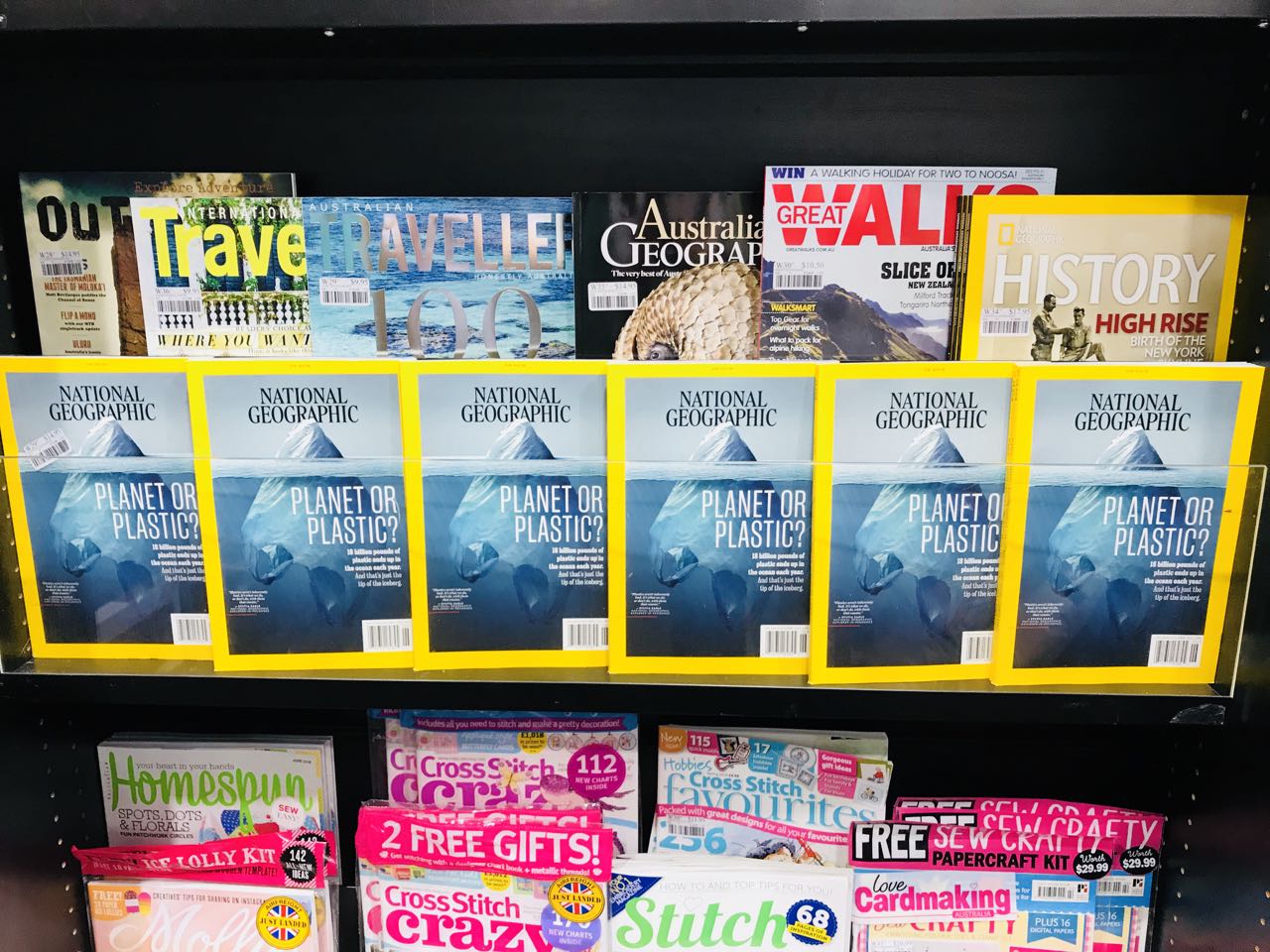
 We are promoting the latest issue of National Geographic magazine to leverage the cover story on the damage being done by plastic. This is timely with moves by state governments on plastic bags as well as moves by our two major supermarket chains. The topic is timely. Also, it fits with our own moves on plastic and the elimination of bags for newspapers, the most wasteful use of bags in the business.
We are featuring the title with a horizontal run close to its usual location in-store. Here is that placement. It is the only area in our magazine department where we currently run a single magazine issue in this way.
 The three free Lindt chocolate bars with the latest issue, the 40th birthday issue, of Better Homes and Gardens will help us sell out of this issue. The cover looks terrific and tasty. The chocolate adds to the temptation.
We are making the most of the Better Homes and Gardens promotion opportunity with the magazine featured next to our weeklies as well as at the front of the store for passers-by to be tempted and on our social media pages.
This offer is a good example of how we can attract traffic with a magazine. At Knox we have two Coles. They don’t have the chocolate with their copies of BHG. So, we are pitching it for all it is worth.
The BHG shopper is attractive to us for other items they will be more open to purchasing. There is no doubt shoppers for some titles are more valuable for us than shoppers for other titles. BHG shoppers are consists neatly valuable for basket depth.
 The newspaper subscription discount marketing sticker stuck on the front page of The Saturday Age today makes it look like Nathan Buckley is 50% off.
It makes no sense to me that retailers of newspapers leave these newspaper home delivery subscription advertising stickers on newspapers they sell in-store.
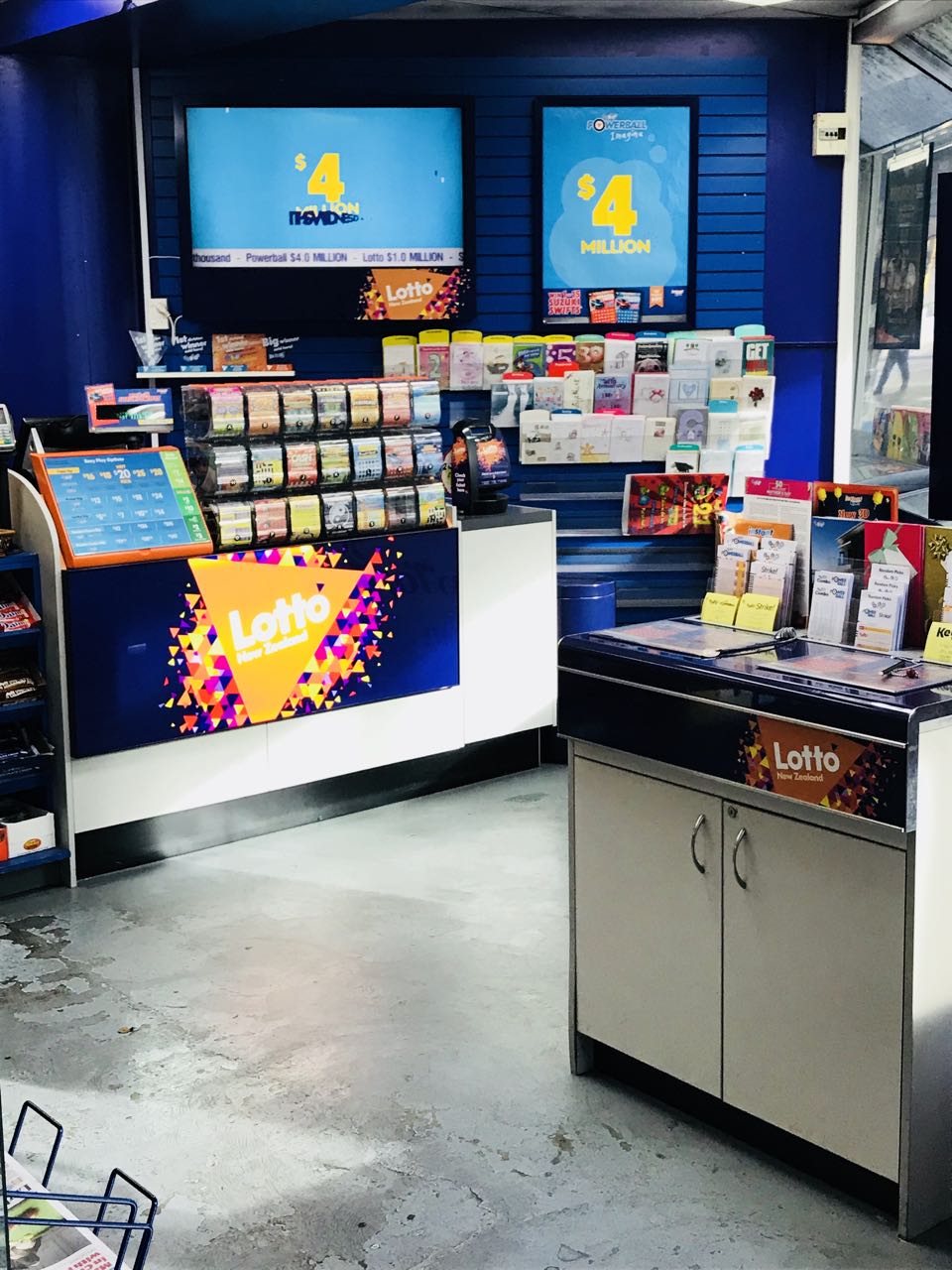
Here is the current small store format lottery fit out in New Zealand.
Here is a brief video we produced in-house at Tower Systems where I discuss connecting POS software to e-commerce sites. I am sharing this here as more and more newsagents are curious about webstore connections.
A press release from ALNA yesterday:
Turnbull Government banishes lotto betting from Australia – delivering for small business and consumers
Australia’s national industry body for newsagents welcomes the passing of the Interactive Gambling Amendment (Lottery Betting) Bill, to protect consumers and assist small businesses that sell lottery products
FOR IMMEDIATE RELEASE
Australia, 28 June 2018: Australia’s national industry body for newsagents and lottery agents, the Australian Lottery and Newsagents Association (ALNA), is pleased that the Turnbull government has successfully legislated an amendment to the Interactive Gambling Bill, which will make lotto betting prohibited in Australia by early 2019.
Adam Joy, CEO of the Australian Lottery and Newsagents Association said, “The Interactive Gambling Amendment (Lottery Betting) Bill 2018 was recently unanimousy passed by the House of Representatives, and today it has been passed with an overwhelming majority in the Senate. This will protect Australia from synthetic lotteries and will bring important new consumer protections by closing the loophole that lotto betting sites have been operating out of.
“I want to acknowledge the government and particularly the Minister for Communications Mitch Fifield who has had carriage of this important Bill and whose leadership has seen this loophole closed. I would also like to thank Labor’s Shadow Minister for Communications, Michelle Rowland MP, for supporting this bill and listening to local newsagents and consulting widely. Lastly and importantly, we want to acknowledge and thank One Nation Senator Pauline Hanson, who put this issue on the agenda and who has supported enabling legislation to amend the Interactive Gambling Act to banish lotto betting from Australia.
“ALNA has been very firm in our stance against lotto betting for a long time. That’s because it confuses Australian consumers, it damages newsagents’ businesses, and it is an irresponsible and harmful model. The lotto betting model encourages highly repetitive bets that may risk problem gambling, promote higher risk spending, and may be misleading regarding the winnings available. This increases risk and it comes at a significant cost to state taxes, and to local family-run small businesses – that employ locally, pay Australian taxes and support the local community.
“Given the dishonest and divisive campaign run to try and prevent the passing of this Bill, we are pleased to know that there will be an end to misleading businesses trying to
denigrate and use newsagents for their own advantage. We represent over 2,000 small business members and have continually received overwhelming feedback from them that they are concerned about the tactics of these online bookmakers. And the Australian Lottery and Newsagents Association is pleased that their voices have been heard. We now call on all synthetic lottery operators to do the right thing by Australians and cease offering these products immediately.
“Lotteries don’t operate in a free market – most gambling products haven’t existed in a free market for decades. Arguing about monopolies is very convenient for online bookmakers who don’t want to have to follow the usual rules, but gambling products aren’t like other products, which is why governments regulate their access to consumers. Lotto betting bookmakers currently operate only because of a loophole that exists in current regulations.
“The Federal Interactive Gambling Act already made it illegal to sell a scratchy online and play a poker machine online, and the federal government moved last year to further strengthen the act with an amendment to ban online in-play betting on sports and banning credit betting, as well as making it illegal for unlicensed operators to offer online poker. And today, we welcome the passing of an amendment that closes a further loophole in the Act by banning online betting on all lottery outcomes.
“The Australian Lottery and Newsagents Association will continue to provide strong advocacy for our members, including to help newsagents receive better deals on the products that they are legally permitted to sell,” concluded Mr Joy.
The Australian Lottery and Newsagents Association is the only national association representing newsagents and lottery agents in every state and territory of Australia, and are the only newsagents’ association with a national ACCC collective bargaining authorisation. As such, it is the only association that is negotiating nationally with Tatts/Tabcorp for further improvements.
ALNA represents over 2,000 small businesses, mostly family owned, who rely on the sale of official government regulated lottery products.
On behalf of those businesses and their staff, the ALNA thanks the government for its efforts to bring forward this important reform to protect Australian consumers and to support these Australian small businesses.
Footnote: I’ve not been asked to publish this. I am not an ALNA member and have no commercial relationship with ALNA. I say this because of some who love ill-informed gossip in our channel.
Newspaper supporters have, over recent years, pointed to Warren Buffet and his investment in newspapers to support their view that newspapers have a future. This, yesterday, from Crikey:
How Warren Buffett abandoned newspapers. Rather than sell or close his 70 or so weakening newspapers now clustered in BH Media, CEO Warren Buffett has decided to outsource the management of 30 daily papers to a rival print group in middle America. The deal shows he’s all but abandoned newspapers. Under the deal, Lee Enterprises, an Iowa-based regional newspaper group, will manage BH Media’s 30 dailies for the next five years for a fee of US$50 million. Lee owns 46 dailies and more than 300 other publications. BH Media’s print circulation has dropped about 15% since 2015. It has struggled to build digital subscriptions and advertising as audiences have shifted from print to online.
Buffett told CNBC earlier this year that be believes only two newspapers, The New York Times and the Wall Street Journal, are assured to survive the current climate, because people will pay for them online.
The 15% circulation decline mentioned in this piece is less than the decline achieved by many Australian capital city newspapers in the same period.
We need to run our businesses to not rely on newspaper traffic whatsoever.
While I do not want newspaper sales to decline or daily newspapers to close, the former continues apace and thew latter will happen. The only reasonable topic of discussion is when. This is why every newsagent needs to fortify their business to ensure it can withstand the decline in shopper traffic following the closure of a daily newspaper or more.
The way we do this is by attracting new traffic. This can be done anywhere. While it is hard work, it can be done.
 In my opinion, newsagents should request News Life Media and Gordon and Gotch not supply them Inside Out magazine.
For years, News Corp’s News Life Media has supplied Inside Out to Coles with a price of $6.00 while small business newsagents have a price of $8.20.
The Coles retail price is less than our cost price.
I think we need to match this disrespect by refusing to stock the title. It makes us looks expensive. That is what News and Coles want. Shame on them.
Beyond making other retailers look expensive for this magazine compared to Coles, there are other issues here that concern me, issues that I think the authorities like the ACCC need to consider.
At $6.00, Inside Out is sold at Coles supermarkets at below the established cost price for the magazine title.
The ACCC website has something to say about selling items at below cost including this:
While selling goods at a below-cost price is usually okay, it may be illegal if it is done for the purpose of eliminating or substantially damaging a competitor. This is known as predatory pricing.
Coles has been offering Inside Out magazine at $6.00, discounted from $8.20, at least since June 2014 when I first wrote about it on this blog.
The ACCC has something to say about two-price comparison advertising including this:
Statements such as ‘Was $150/Now $100’ or ‘$150 Now $100’ are likely to be misleading if products have not been sold at the specified ‘before’ or ‘strike through’ prices in a reasonable period immediately before the sale commences.
Such statements are also likely to be misleading if only a limited proportion of a product’s sales were at the higher price in the period immediately before the sale commences. The volume or proportion of sales that may result in such statements being misleading will depend on the circumstances of each case.
The length of the period will depend on factors such as:
- the type of product or market involved
- the usual frequency of price changes.
If a business has a policy or practice of discounting goods when not on sale and uses two-price advertising in relation to sale periods, there is a significant risk that the use of two-price advertising will involve conduct that is misleading. The business would be representing to consumers that they will make a particular saving if they purchase the item during the sale period, when this is not necessarily the case.
While I am no lawyer, I think it is possible that the Coles Inside Out magazine pitch is what the ACCC would consider to be misleading conduct based on its position on two-price advertising.
I wrote to the ACCC seeking their consideration of evidence Coles has been running this campaign for two an half years. They expressed no interest.
The only option I see is to get attention of News by refusing to stock this title and maybe other titles. A commercial strike if you will.
UPDATE: 13:49 28/06/2018: This good news from the National Sales Manager at Bauer Media:
Hi Mark,
I saw an article today in Media Week regarding the disparity in price positioning of Inside Out magazine between Coles and Newsagents and calling for a boycott of the title. I am pleased to inform you that Bauer Media are now the publisher of Inside Out magazine, along with Country Style, having purchased these mastheads from News Life Media this month. As part of the title transition process we have informed Coles that we will be reverting the masthead to a national price parity point of $8.20. This will be effective from the August issue.
It continues to be important to Bauer to support the newsagent channel by maintaining competitive balance in the market place.
I trust this email finds you well. Please let me know if you have any questions.
Regards,
Julie
 Small seasons matter. Today is the day to feature all things pineapple, because we need to attract people for more than the major seasons for which we are known.
There are around 20,000 searched for the term pineapple in Australia every month.many more for phrases with the word.
Pineapple gifts, cards, homewares and novelty items and more are popular. A day like today is an opportunity to shine a light and to make your business attractive beyond the everyday. This type of activity is vital for a transforming newsagency business, it is vital for attracting shoppers who might otherwise not shop with you.
Happy pineapple day!
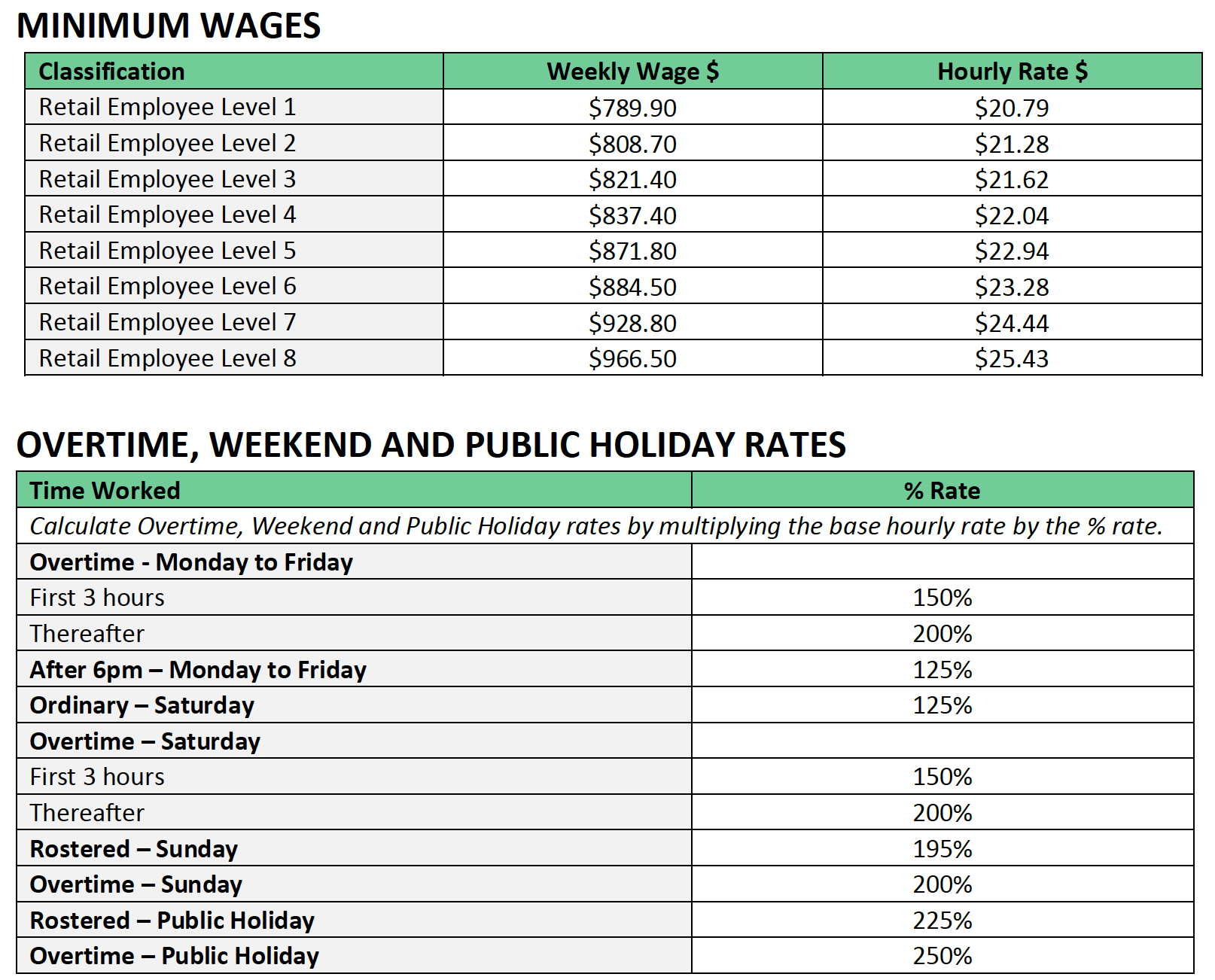 If you are in a marketing group be sure to get the new pay rates that kick in from July 1 so you are ready with the first pay run from next week. While Fair Work will publish these, they have not done so at the time of writing, which makes it tight for people who work ahead with their pay runs. The groups have access to all the changes to award rates, hence the advice you tap into their resources now.
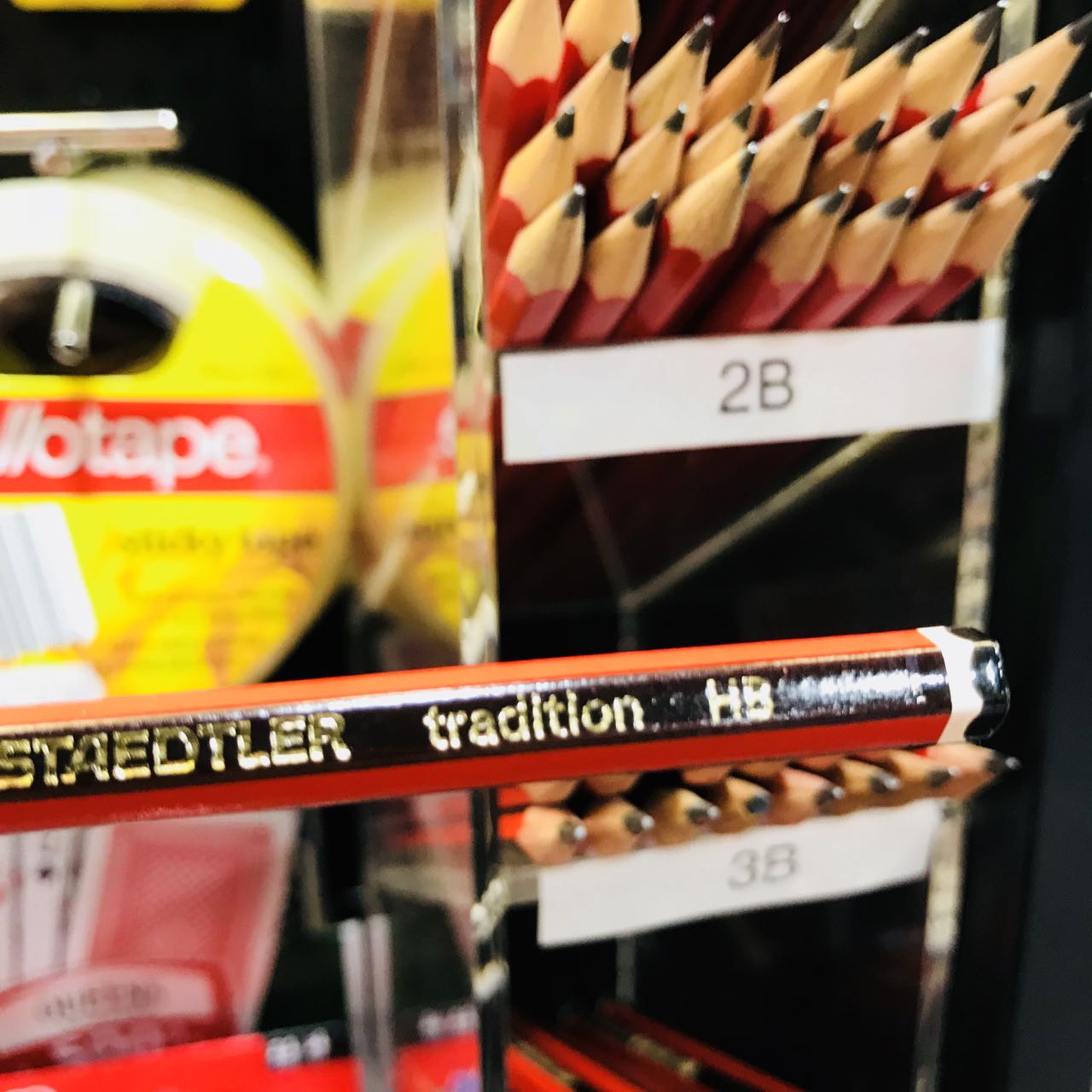 It falls to us as retailers to remind shoppers what we sell, even everyday items that we think people would come to us for first. We need to do this in our front windows, in advertising and using social media. We need to attract shopper traffic by pitching items so when they do need them they think of shopping with us.
Take the old HB pencil. It is easy to think people will think of shopping in a newsagency ahead of every other retailer if they want a HB pencil. That might have been true years ago but I doubt it is true today. Today, I think the HB pencil shopper would think of checking out a newsagency down on the list of shops they would consider.
Officeworks, supermarkets, discount variety and online would be high on the list of possible sources for a HB pencil. I say this partly because we have tended to stop promoting everyday stationery, partly because stationery is a poor cousin on the shop floor and partly because there are other outlets that are top of mind for stationery.
One way we can counter this is by promoting stationery ourselves. I have been doing this for one of my shops with a series of posts for everyday stationery department times, including the old HB pencil. I do this reasonably regularly to remind shoppers we have everyday stationery products they may need. Most recently, I did a week of posts about stationery items: HB pencils, NO JUNK MAIL signs, L and P plates, playing cards and more.
On social media it is free to pitch these items. There is no downside as long as the posts are interesting.
Every day we need to be pitching our businesses outside the business. These pitches need to include in their mix core items for which we were the destination retailer users ago.
The end of the financial year is less than a week away. Here is some advice for those wanting to be prepared. If stock on hand data in your computer system is accurate through structured and consistently followed inventory arrival, sales and return processes, a stock take is not necessary according to ATO advice. However, you need to provide a stock listing that can be relied upon.
Here is end of financial year advice:
The end of the financial year is an opportunity to reset and reconsider. If you are not happy with the performance of your business, change is essential.
The stories in the media this week about underpayment of employees in cafes and other retail businesses is a reminder of the need to ensure you are paying your team members according to the law.
No, family members should not be treated different to any other employee.
Employees can easily lodge a complaint with the Fair Work Ombudsman. They investigate every claim. Even the smallest oversight can have cost and reputational consequences for a business. Ignorance is no excuse.
I regularly hear from current and former newsagency employees with stories of claimed under payment. In each case I refer them to the Fair Work Ombudsman. When I have the opportunity I make it clear that I don’t want to know the business name as I am not the regulator. The thing is, however, people come to me after months of getting nowhere with their current or former employer, they come to me out of frustration and, often, anger.
I don’t want our channel to be the subject of the types of stories we are hearing right now about cafes where underpayment and other crimes are getting considerable media attention. We avoid this by obeying the law and encouraging our colleagues to do the same.
The most challenging story put to me is of a close relative of an owner, an adult male, being paid $15 cash in hand for 40+ hours a week that includes 8 hours every Sunday. This have gone on for three years. My rough calculation suggests that there is at least $50,0009 owed plus superannuation plus likely penalties. I am told this would kill the business. As I see it, the person who contacted me has to go to Fair Work for themselves and the likely other employees being treated similarly while the owner lives a more luxurious life. I suspect the owner has the money to fulfil their obligations.
A newsagent sent me this:
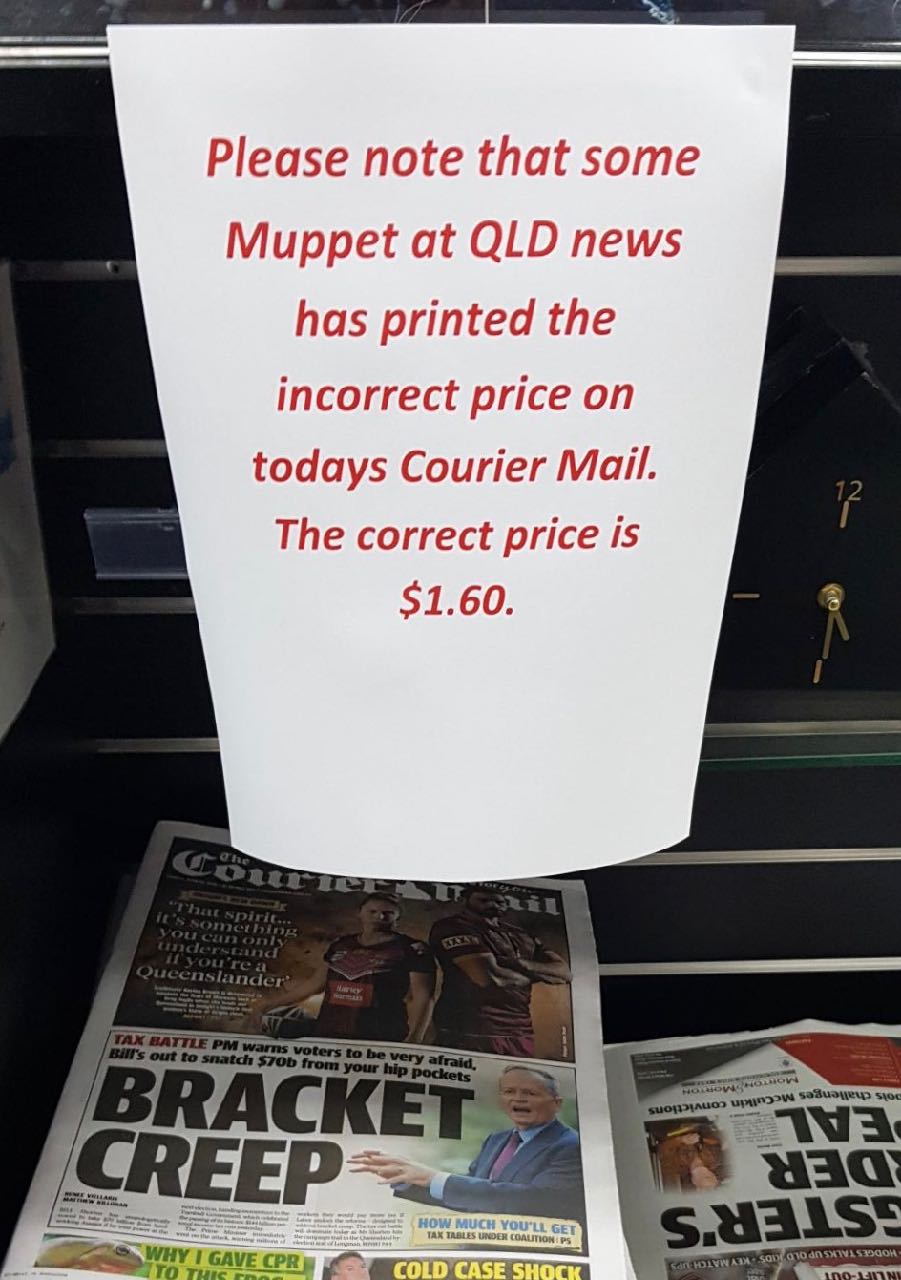
Reminds me of when news magazine covers sold plenty of extra copies in Australia.

There are some expensive financiers pitching easy to obtain finance to newsagents and other small business retailers at the moment. Two of these pitching for business in recent weeks are charging interest at close to 20% with escalating penalties for late payment.
Their pitch is similar to discredited payday lenders – fast access to easy to arrange finance. They sometimes say there is no interest, because they call it something else and charge the full amount up front regardless of whether you pay out the loan early.
Some of these lenders are outside of banks and second and third tier lenders. They are in a field of their own, at the fringe, and for good reason. I say this based on what I have heard of their tactics at collection based on a missed payment or two. A pressured situation quickly escalates.
I understand that small business owners short on cash may feel they have no choice, usually because of pressure from creditors. However, if you take out such a loan without a cashflow model showing you can meet the payments as and when they fall due you could be making your situation considerably worse – because of cascading costs and and often heavy-handed approach to collection.
You could be better off letting your current situation play out rather than making matters worse by taking out a loan you can’t pay. It all depends on your cashflow projections based on a realistic view of the business. A loan from a lender of last resort may only delay the inevitable.
Insolvent trading is a serious matter. Seeking a loan from outside the usual lending circles at a higher than fair cost could be an indicator of insolvent trading. This is something else to contemplate prior to entering into such a funding arrangement.
I appreciate these are complex matters to consider as you can be caught between being prepared to do anything to save your business and not having the clarity to understand whether the business is actually saveable. Talking to someone not reliant on the business could be a useful step to help guide your thinking.
I have seen a spike in requests from charities and community groups for donations this year. Every day there is another request.
What is most interesting is the increase in what I’d call anonymous requests. These are from groups or people you have never heard of and they are made anonymously by impersonal email, letterbox flyer or Facebook message.
As I have written here and here before, my preference is to support groups local to my business, made up of members who support the business. This reinforces the necessary commercial nature of charity and community group support.
I have a standard email or letter I provide to explain the policy. This includes an opportunity for them to submit again at a later stage if they meet the local community objectives of the business.
Some requests that are challenging are those from people seeking product and cash donations for a fund raiser for someone with a health issue. I have received three in the last week. The business already actively supports two health related charities. There is only so much we can do.
Another request that is challenging is the person physically in the business. Their request can go badly. Hence the need to handle these in a structured, consistent and documented way. It is the only way I can see. Otherwise, the business loses goodwill if people see you handling donation requests in a way that is not ideal.
For what it’s worth, here is a recap of key advice I have provided previously:
HOW TO PICK GROUPS TO SUPPORT
Focus on community groups that support you. That is, groups with members who support you. The more they support you the better you are able to support the community.
Be prepared to ask where people shop for the items you sell in your business. Ask if they will change in return for your support.
Asking these questions underscores to you the importance of approaching the decision as a business decision.
Be thoughtful and deliberate. Support the groups that support you. This is important as it helps you stay within a budget.
REWARD ENGAGEMENT
In addition to any direct gift, consider an offer whereby anyone who is a member of the group who shops with you accrues an amount you donate to the group. You could manage this through your software. It could be you offer a discount to the shopper as well as accruing a value for the group.
This type of program could also be in addition to your core giving program as the value here is driven by sales – hopefully, incremental sales.
EDUCATE GROUPS ABOUT GOOD ENGAGEMENT
Here are things groups you support can do to help your business. You should ask them to do these things:
WRITE ABOUT YOUR ENGAGEMENT
Once you have a decision on which groups you will support, write about this in your newsletter and on Facebook. Not just once but multiple times. Invite them to provide you with content to publish too. Talk about their good works.
Ask them to write about you too.
GNS yesterday announced the closure of the OfficeSmart B2B discount stationery program it has run for more than twenty years. It has replaced this with a partnership with Office Choice, a marketing group for independent stationery businesses.
Here is the GNS announcement:
Dear OfficeSmart member,
Since OfficeSmart was launched in 1995, the stationery and office supplies market has evolved significantly, with the rise of specialist independent dealer groups, a change in the role and emphasis of stationery within newsagencies and the emergence of Officeworks’ SME offering.
OfficeSmart members have also evolved and are no longer a homogenous group of large successful newsagents looking to drive success in the B2B market: many are ecommerce-first businesses, there is a very wide range of member stationery revenue, and there is a significant variation in views of how OfficeSmart should be marketed.
Having conducted a review of the OfficeSmart programme over recent months, member feedback suggested:
- the relaunched website, catalogue and brochures for OfficeSmart were unlikely to be capable of satisfying members’ needs now or into the future;
- members’ needs had evolved (both in terms of breadth and depth) to the point that it would be virtually impossible for GNS to implement or manage a cost-effective programme that would fulfil these successfully;
- some members’ only reason for membership was access to discounted pricing for their retail newsagencies; and
- members’ expectations of OfficeSmart programme features were not aligned with the true costs of such a programme.
On that basis, we have concluded that a partnership model for OfficeSmart – leveraging existing proven solutions for member services – is the right approach for the future and best safeguards members’ and shareholders’ interests. We are therefore excited to announce the entry into a partnership with Office Choice Limited, one of Australia’s major B2B office supplies and business solutions groups, to support OfficeSmart members’ needs into the future.
Office Choice has the resources available and in place today to provide the appropriate level of marketing support to OfficeSmart members wanting to maximise the stationery opportunity. Office Choice’s strong brand and marketing activity – including a bespoke B2B-focussed full line catalogue, seasonal sales catalogues and promotional flyers – drive foot traffic and sales enquiries. And having invested significantly in their website in recent years, Office Choice’s e-commerce platform is a powerful and proven solution to drive stationery revenue.
Office Choice will provide a high service, low cost membership model that will provide a compelling offer to OfficeSmart dealers, offering an unrivalled level of customised service, marketing and support. Both GNS and Office Choice are confident that the partnership will greatly assist active OfficeSmart members to accelerate their office supplies objectives within their businesses.
Importantly, nothing will change as to how you source or purchase your stationery and office supplies: GNS will still supply to you in full on the same delivery schedule and terms as you are used to today.
I’d like to personally thank you for being part of OfficeSmart and for the feedback from those members who provided it. I fundamentally believe that these changes will result in an improved offering for your customers and better position your business for success.
The new partnership will take effect on 1 July and as such, May/June 2018 will be the final OfficeSmart invoice cycle, reflecting the continued provision of advantageous pricing and hosting/support of the website.
I have no doubt many of you will have questions about how the transition will work. Given the significance of this change, further communications will follow in the coming week regarding seminars, state road shows and videos. In the interim please feel free to contact Jamie Keyzer (Office Choice National Operations Manager on 0439 060 962) or Dragi Ristevski (GNS General Manager – Sales on 0417 663 260).
I am very excited about this partnership and the positive impact this should have on your business. Please feel free to reach out to me in the meantime if you have any questions.
Yours sincerely,
Paul Yardley
CEO | GNS Wholesale
Disruption of the traditional newsagency business continues. I expect we will see more announcements from the new management team at GNS.